WALTER MIGNOLO
Presentación El cine en el quehacer (descolonial) del *hombre*
Introduction: Cinema in the (decolonial) endeavours of *man*
I
Comienzo con una breve historia. Durante la década de 1960, en Córdoba, Argentina, el cine vivió una notable efervescencia, aunque no fue el único ámbito cultural en expansión. Podrían sumarse Buenos Aires y Montevideo. Tomás Eloy Martínez lideraba la crítica cinematográfica en la primera y Alsina Thevenet en la segunda. Todo esto sucedía a pesar del clima convulso, marcado por el golpe militar que, en 1966, llevó a Juan Carlos Onganía al poder y dio inicio a dos décadas de represión militar.
I begin with a brief history. During the 1960s, in Córdoba, Argentina, cinema experienced a remarkable boom, although it was not the only expanding cultural sphere. Buenos Aires and Montevideo were leading the way. Tomás Eloy Martínez led film criticism in the former and Alsina Thevenet in the latter. All this occurred despite the turbulent climate, marked by the military coup that, in 1966, brought Juan Carlos Onganía to power and ushered in two decades of military repression.
Viví el cine, en esa época, “desde dentro” por así decirlo. Junto a varios compañeros — Simón Banhos, Daniel Salzano y Enrique Stolavaglia— fundamos el Cine Club Sombras. Oscar Moreschi, desde la secretaría de la Escuela de Artes de la Universidad Nacional de Córdoba, aportaba a ese grupo de jóvenes entusiastas por el cine en el que también participaba. Hay otros nombres que sería extenso enumerar aquí; todos figuran en el primer y único número de la Revista Sombras, publicación del Cine Club, editada en 1964.[1]Revista Sombras, 1964, academia. Contábamos además con el apoyo de Canal 10, la televisión universitaria, y del diario La Voz del Interior, donde escribía Daniel Salzano. En este contexto, produjimos dos cortometrajes en equipo: Más de la mitad (Miguel Angel Biasutto, Simón Banhos, Oscar Moreschi y yo mismo), que obtuvo el primer premio en el Festival del Cine Experimental organizado por la Universidad Católica de Córdoba en 1964. El cortometraje fue producido con dinero recaudado en el Cine Club Sombras. [2]Más de la mitad, artes
I experienced cinema, in that era, “from the inside,” so to speak. Along with several friends and partners—Simón Banhos, Daniel Salzano, and Enrique Stolavaglia—we founded the Sombras Film Club. Oscar Moreschi, from his position as secretary of the School of Arts at the National University of Córdoba, contributed to this group of young film enthusiasts, in which he also participated. There are other names too numerous to list here; all appear in the first and only issue of Revista Sombras, the Film Club’s publication, released in 1964. We also had the support of Channel 10, the university television station, and the newspaper La Voz del Interior, where Daniel Salzano was writing. In this context, we produced two short films as a team, One was Más de la Mitad (More Than Half), made by Miguel Angel Biasutto, Simón Banhos, Oscar Moreschi and myself), which won first prize at the Experimental Film Festival organized by the Catholic University of Córdoba in 1964.[3]themoviedb rehime.com The short and experimental film was produced with money raised at the Sombras Film Club.[4]Más de la mitad, artes
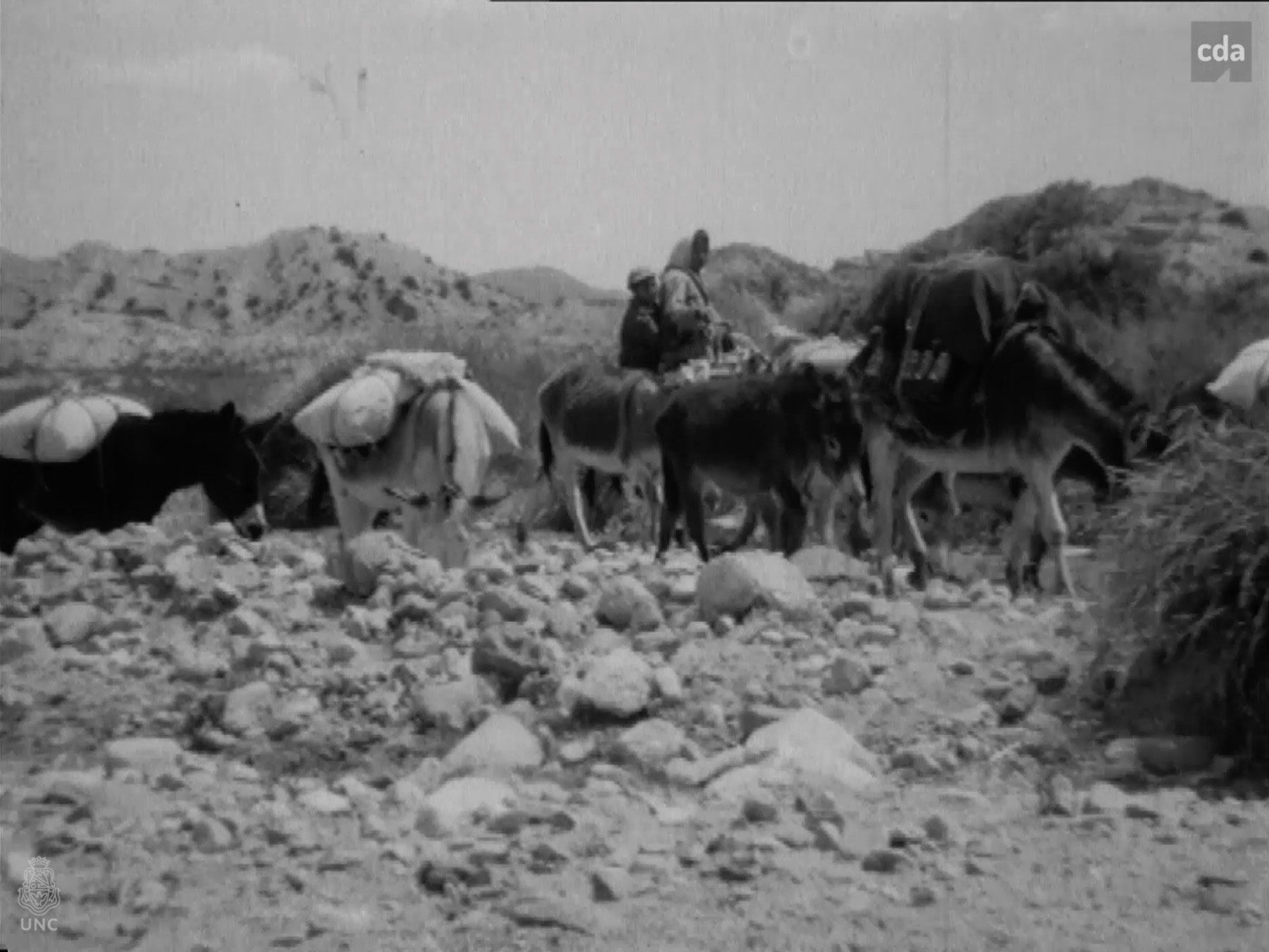
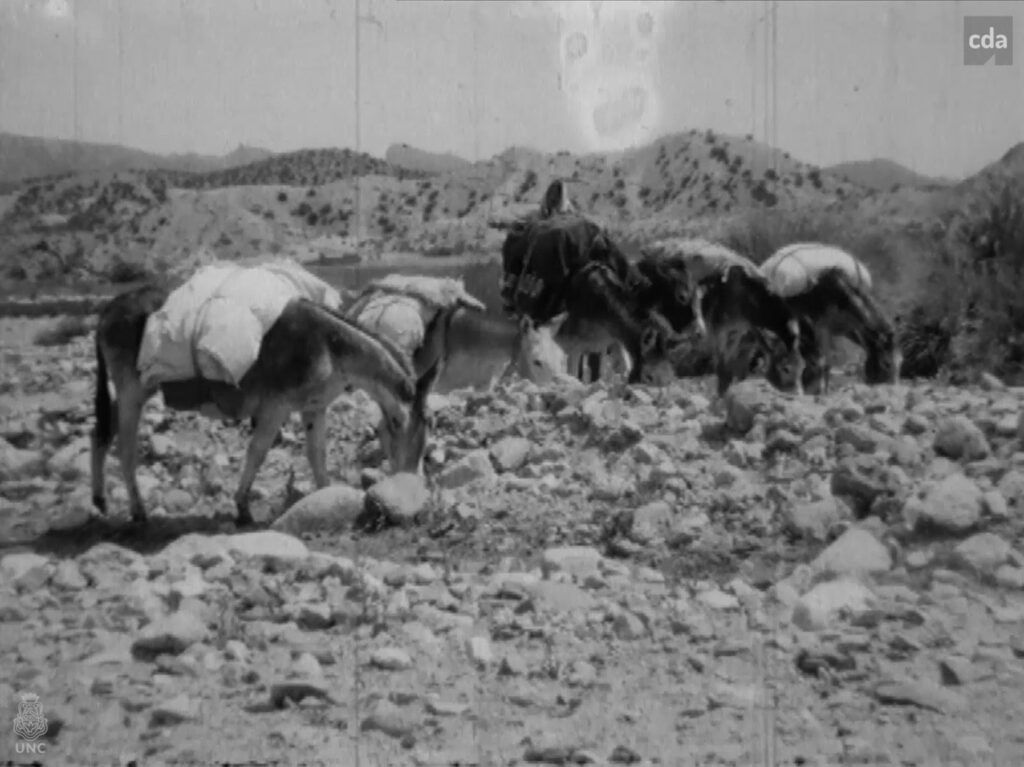
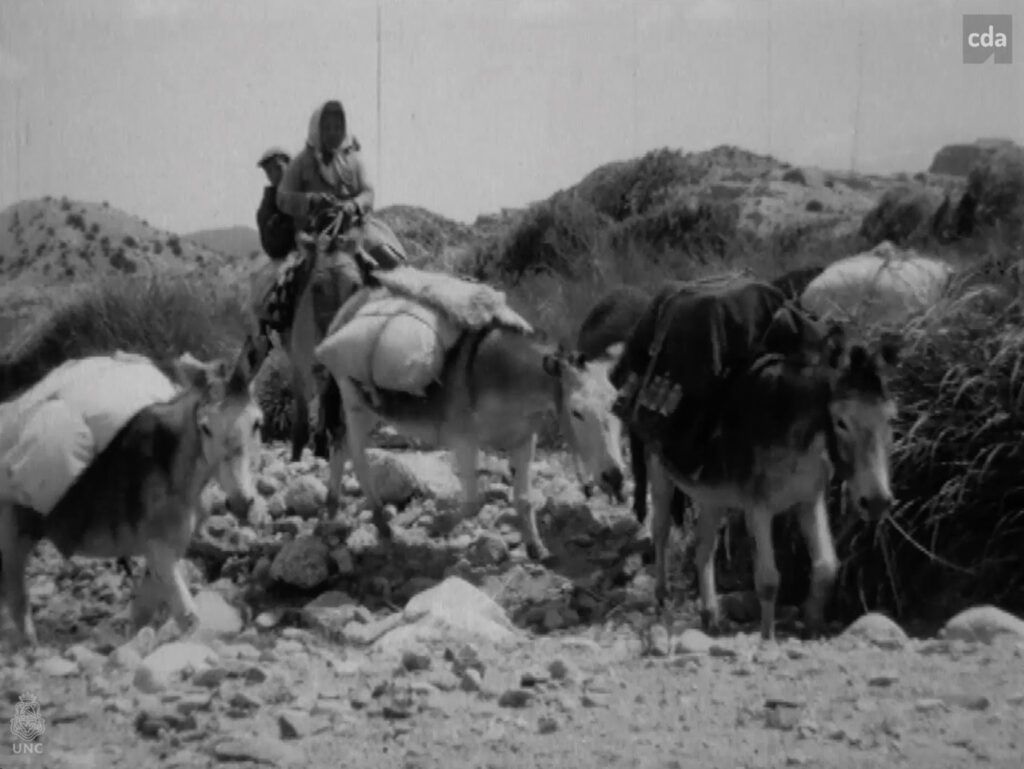
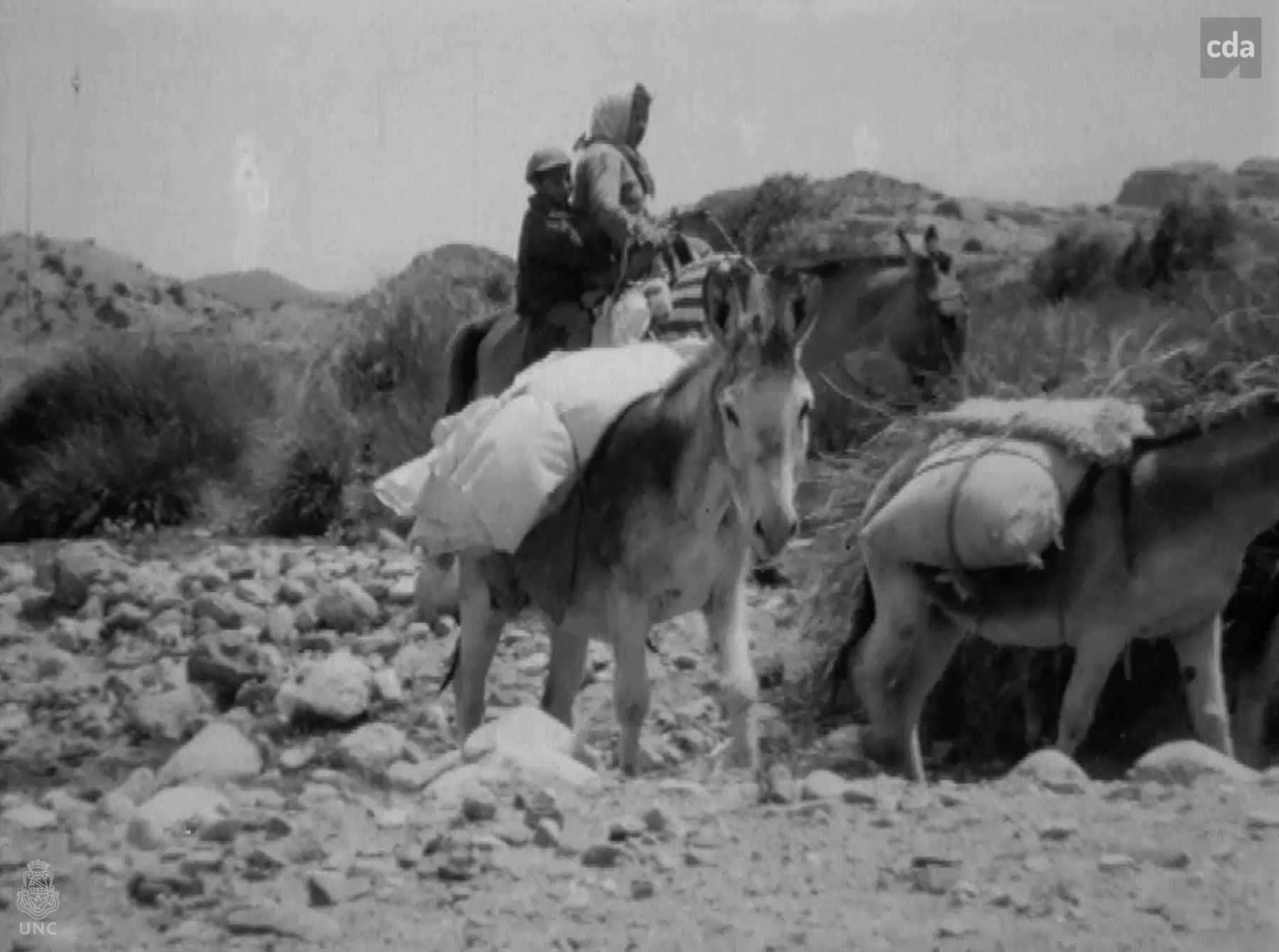
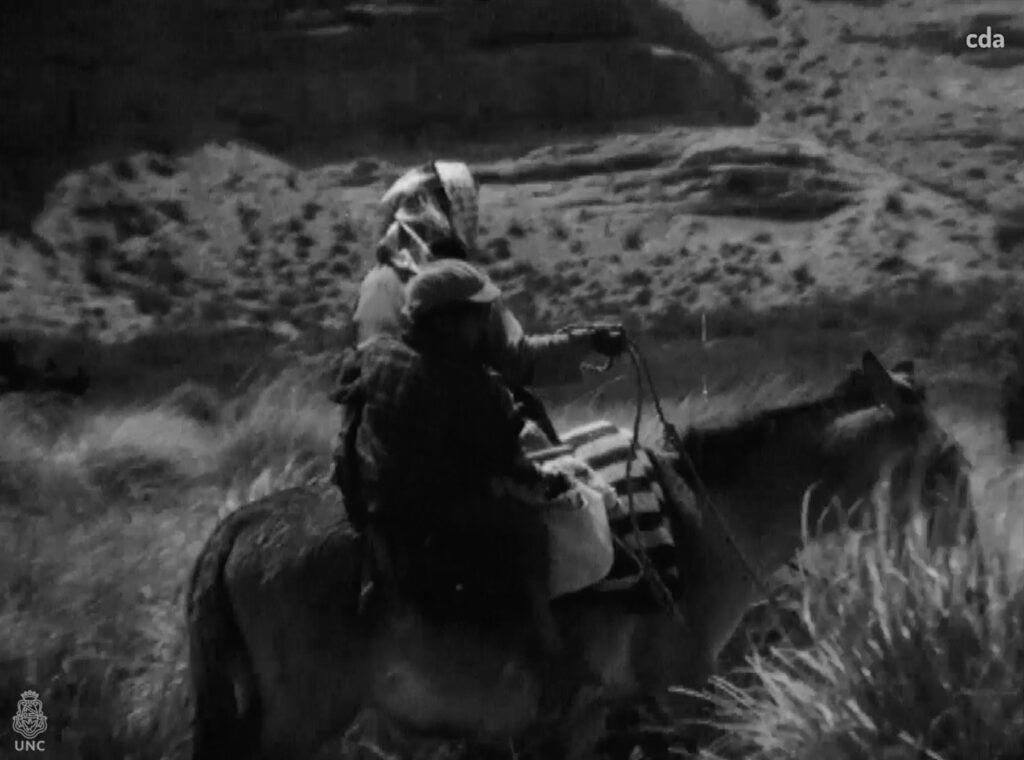
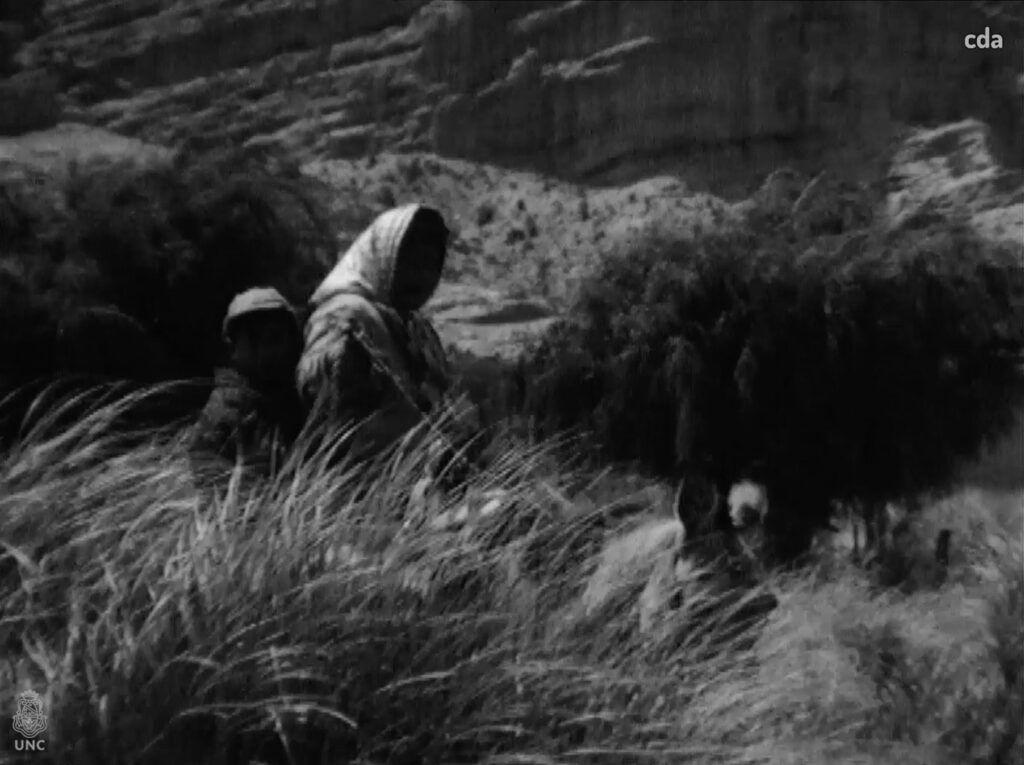
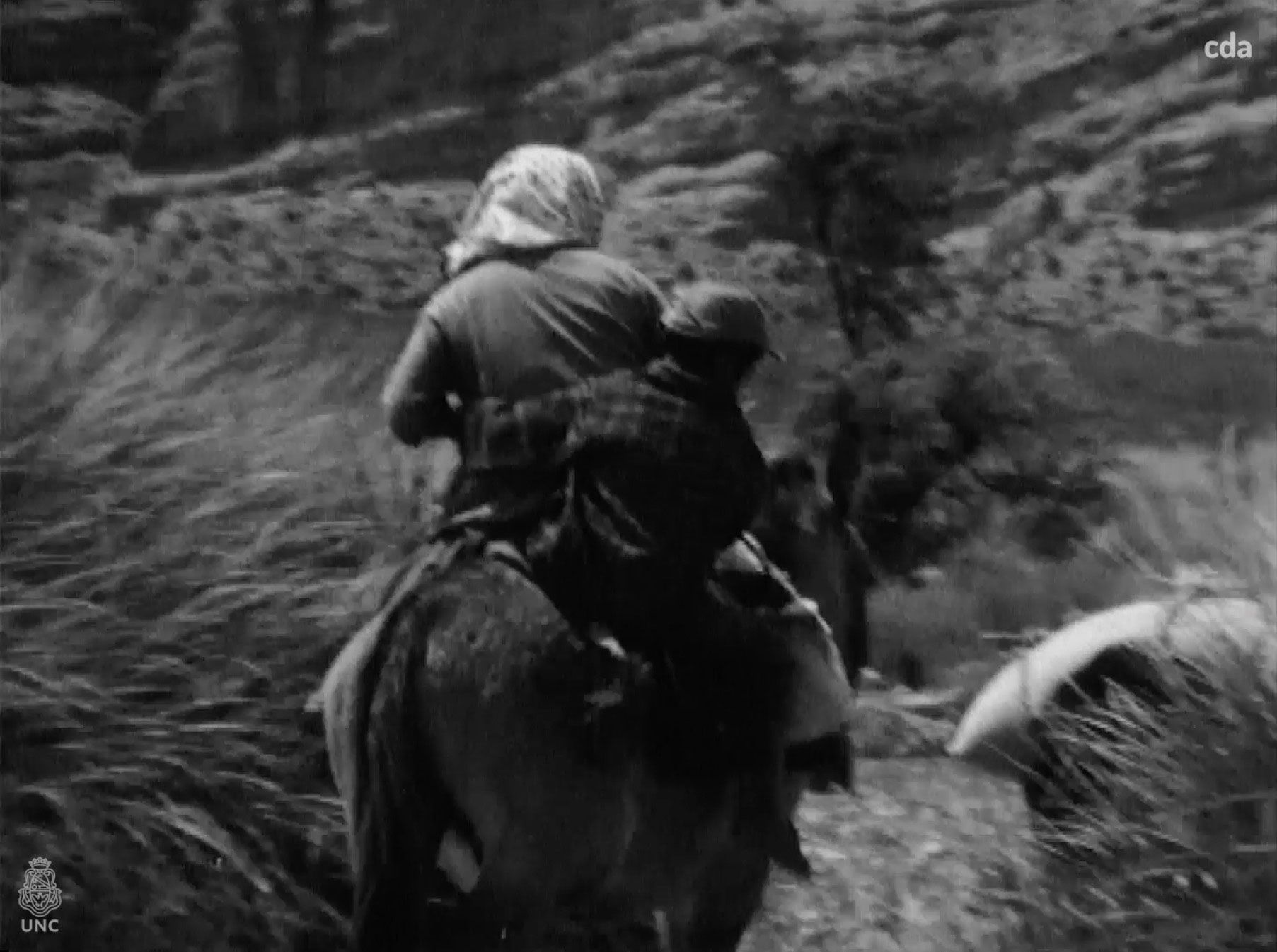
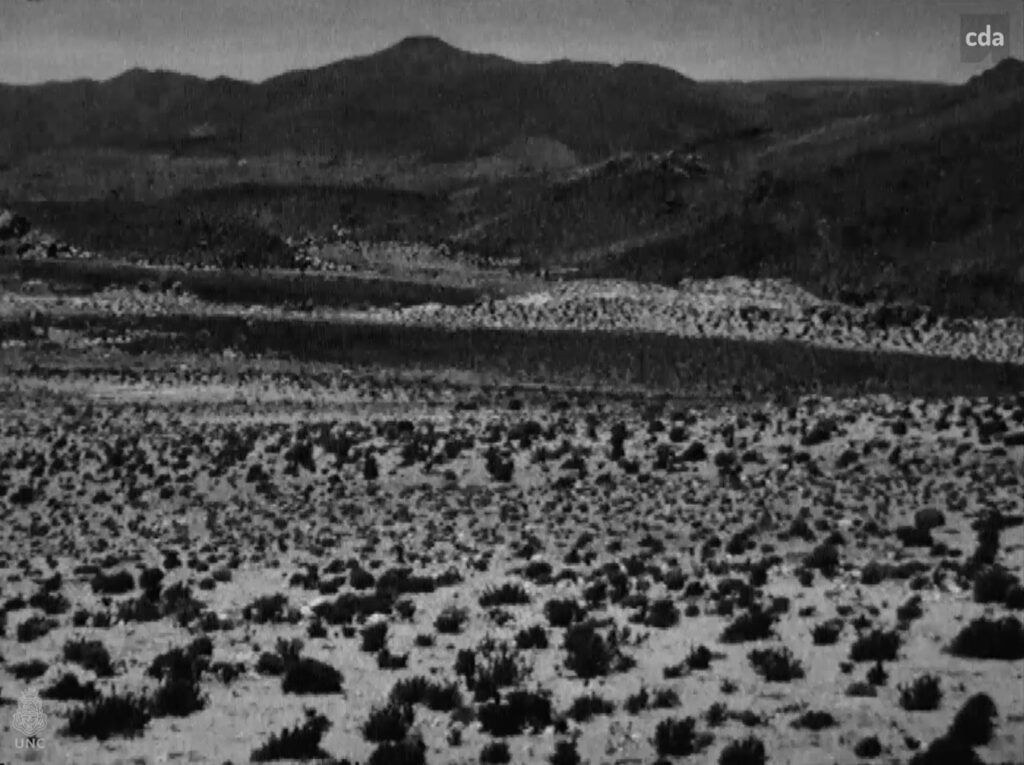
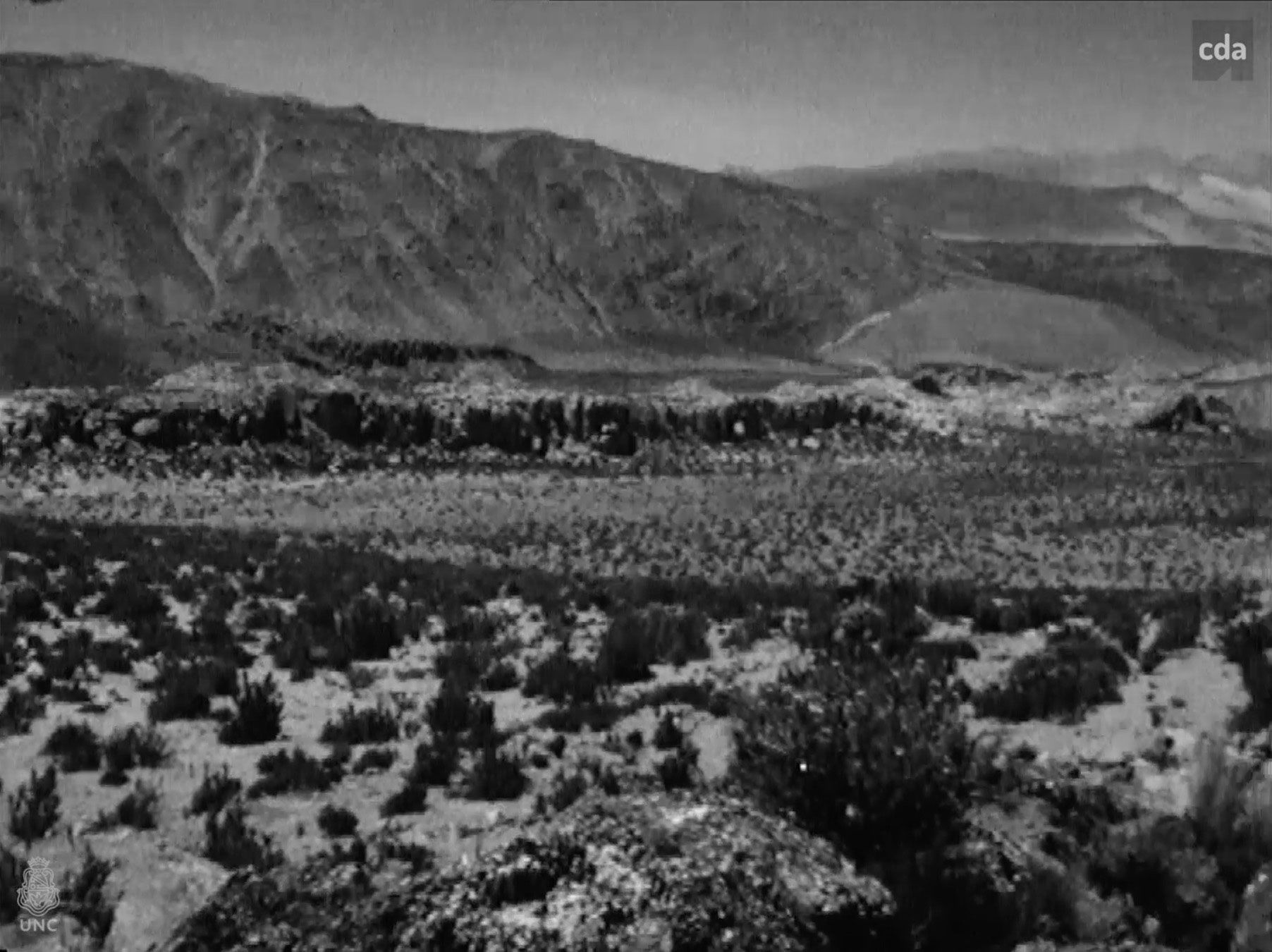
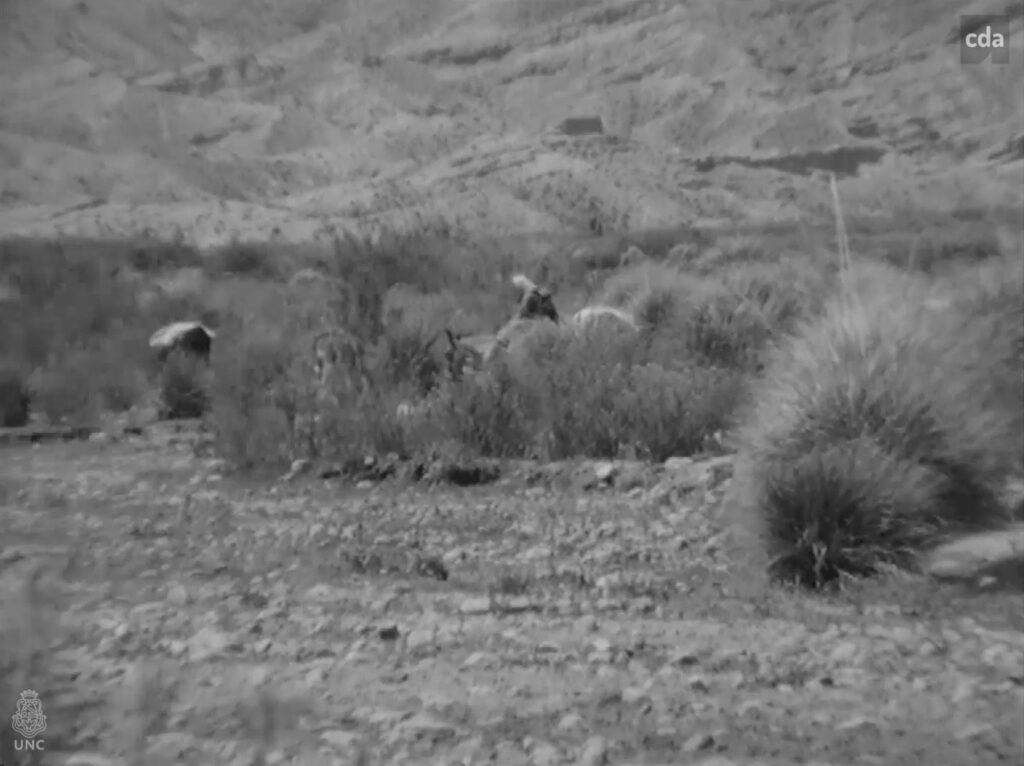
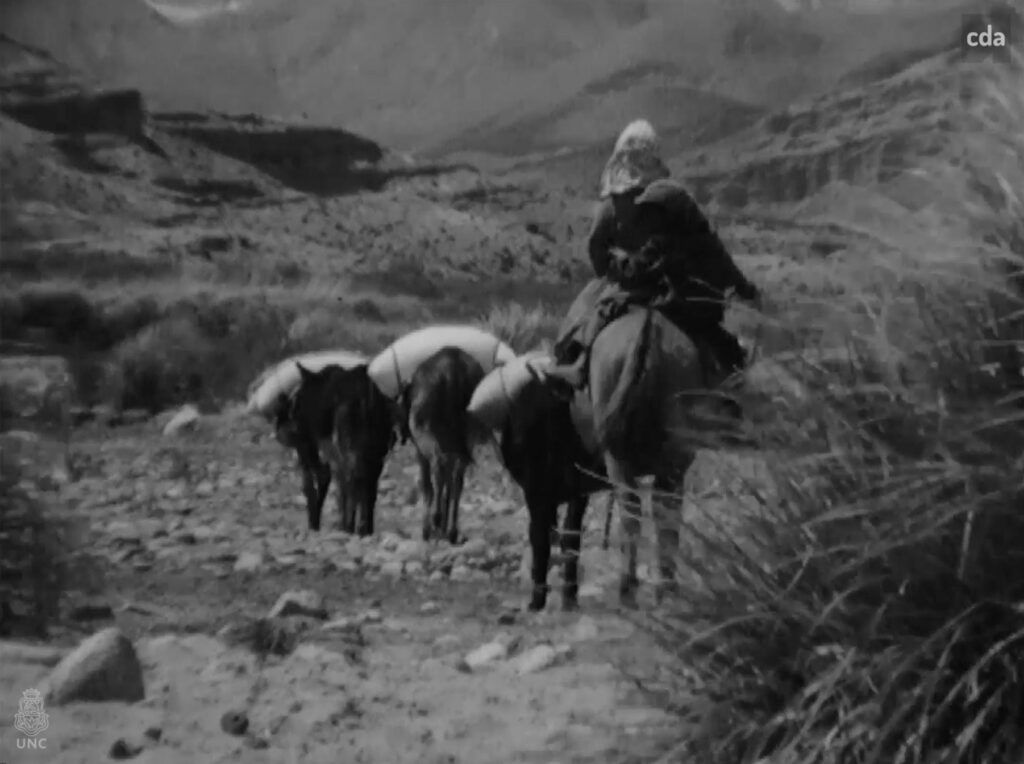
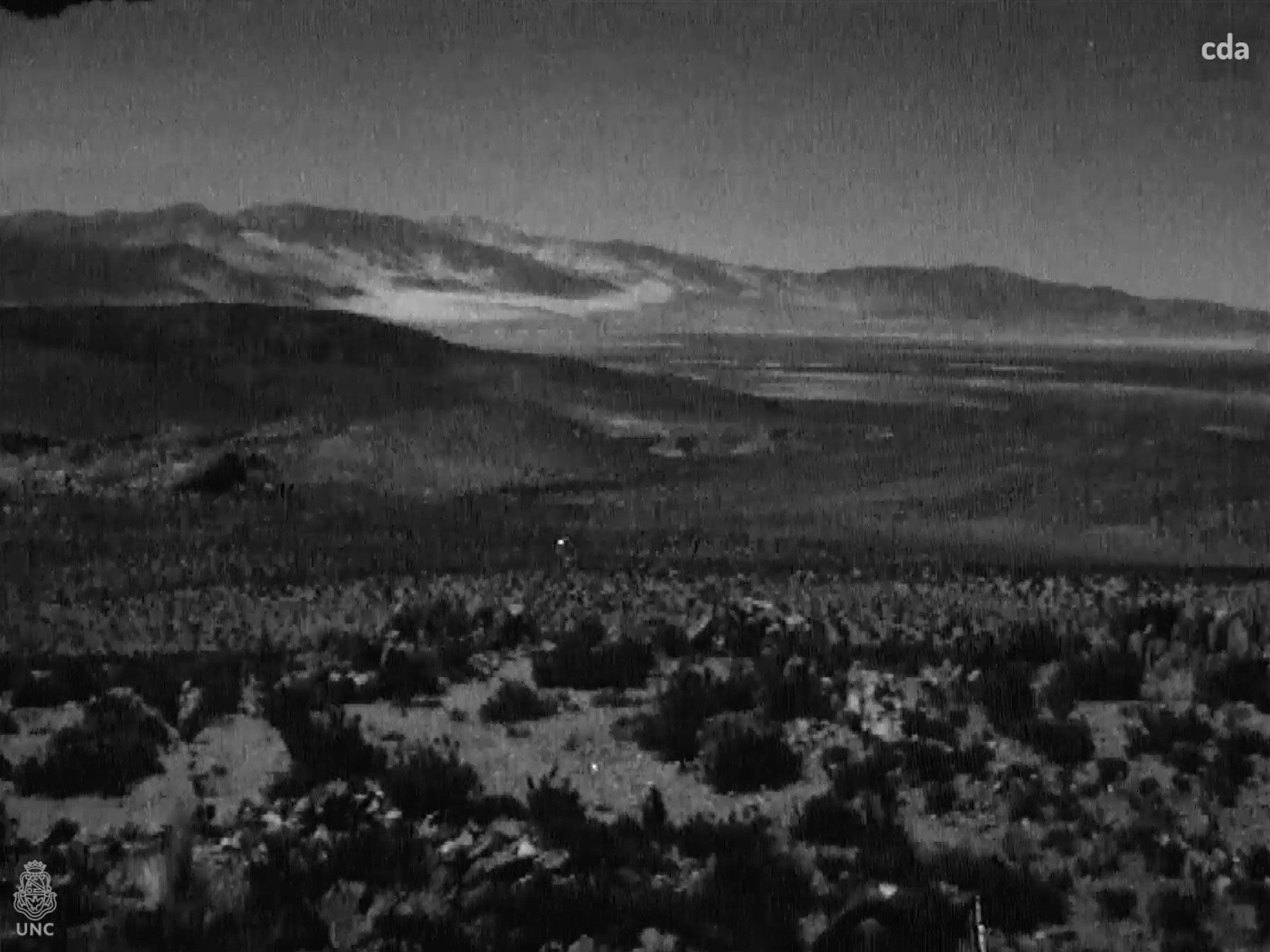
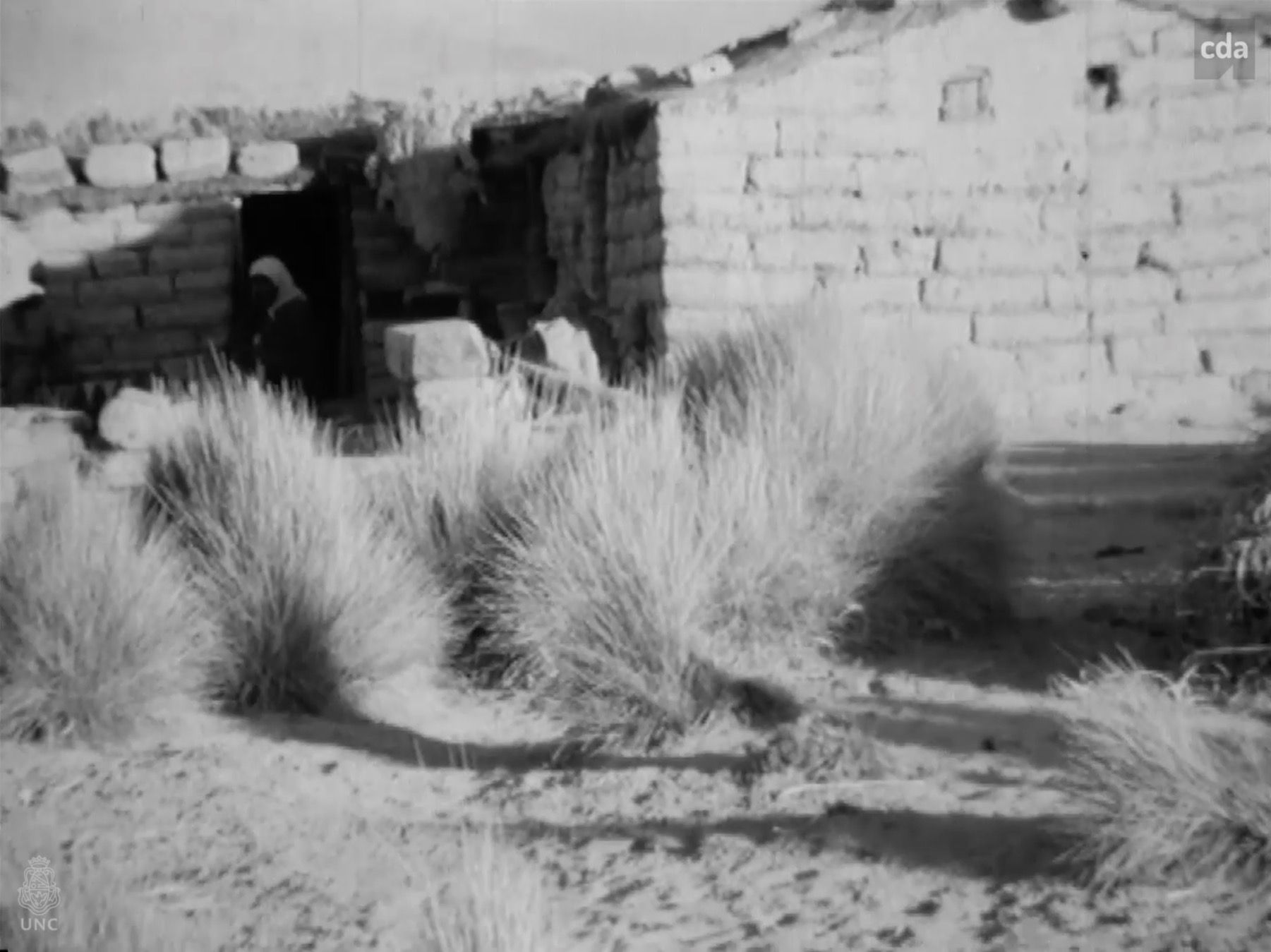
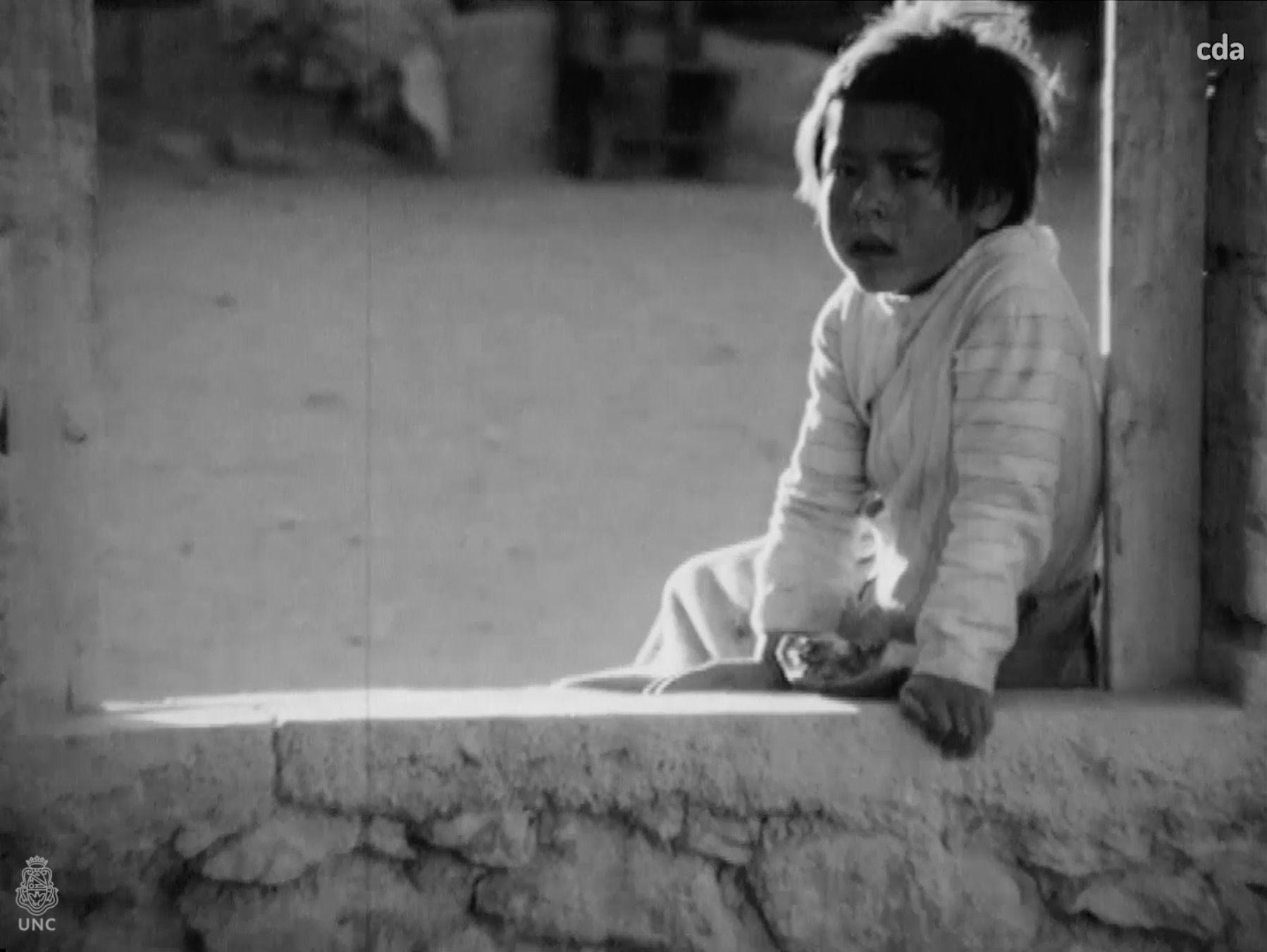
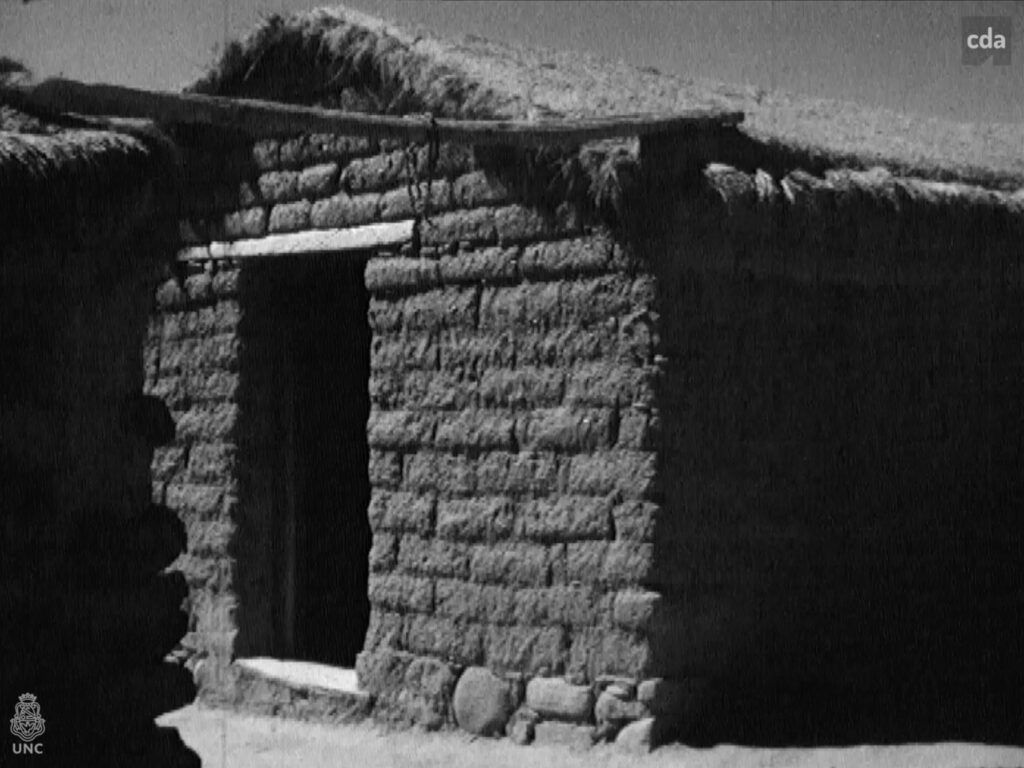
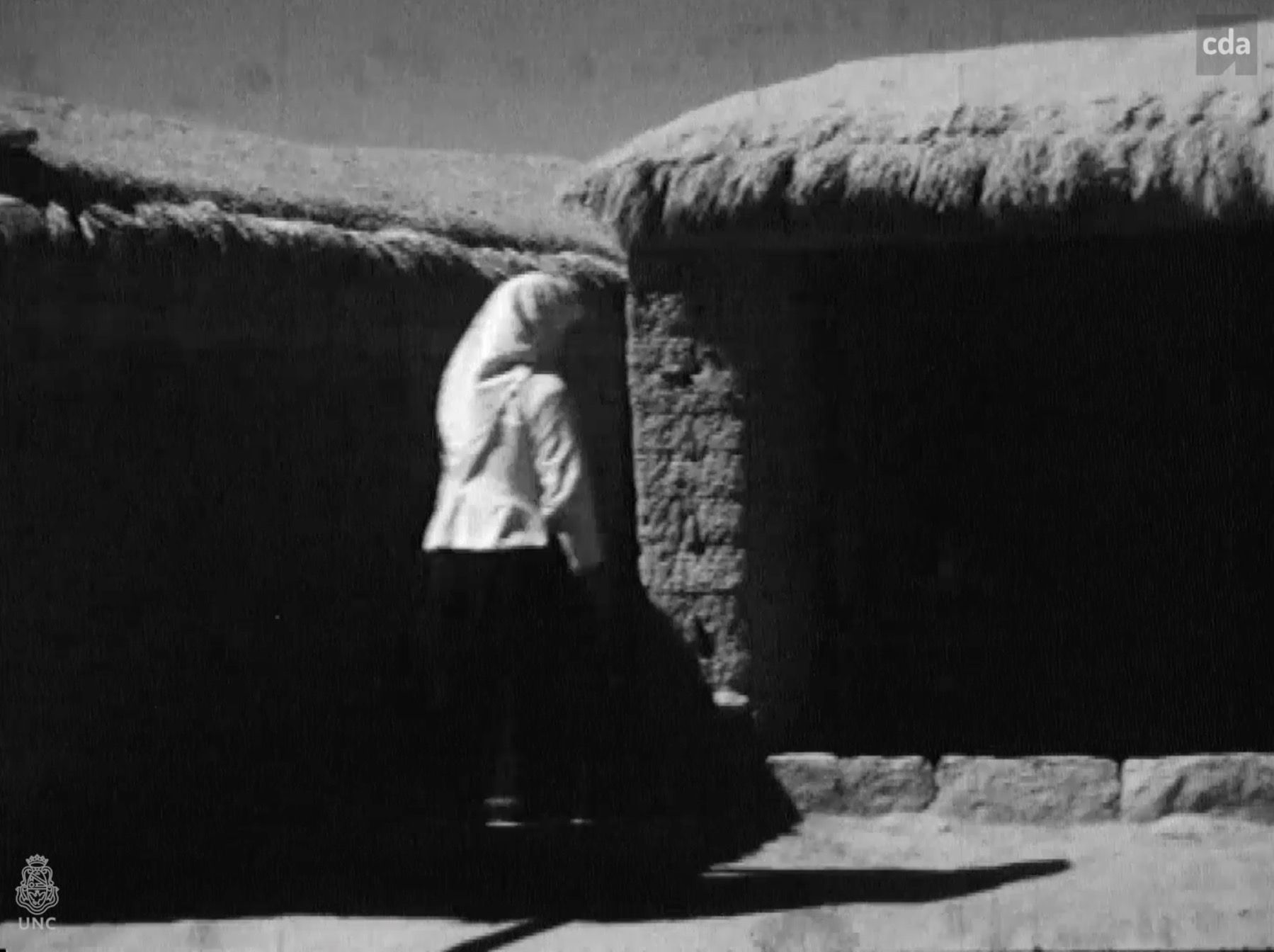
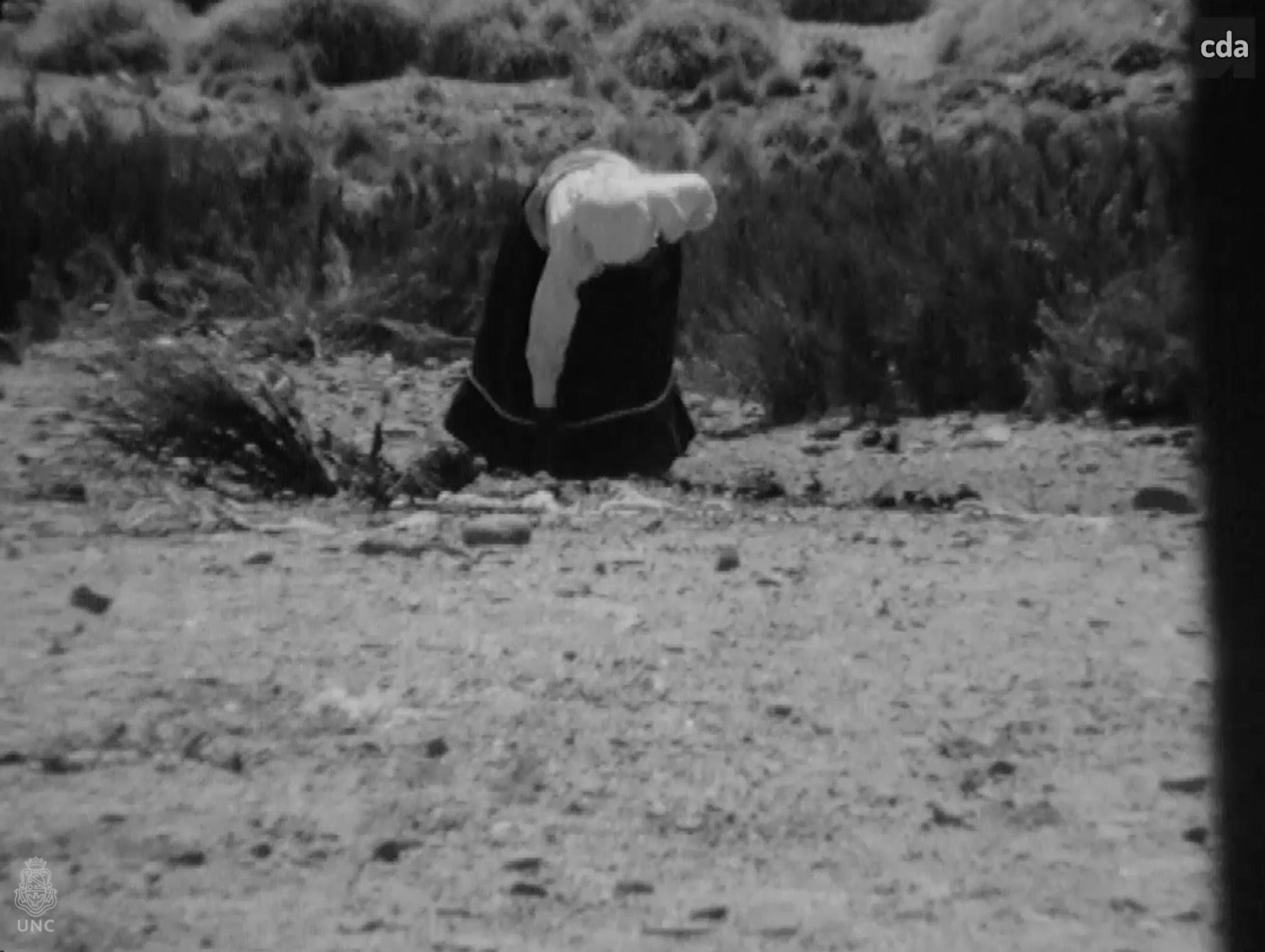
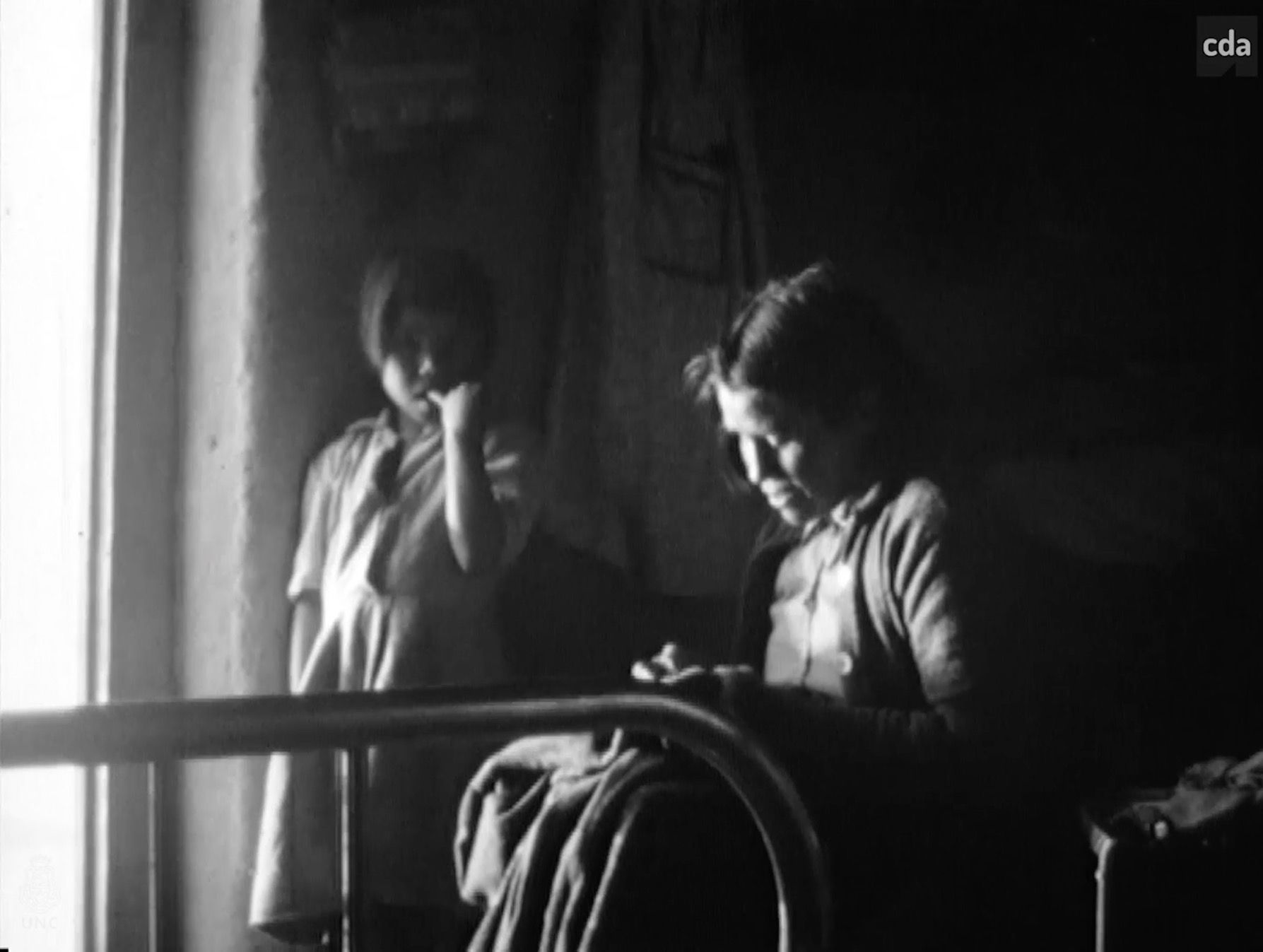
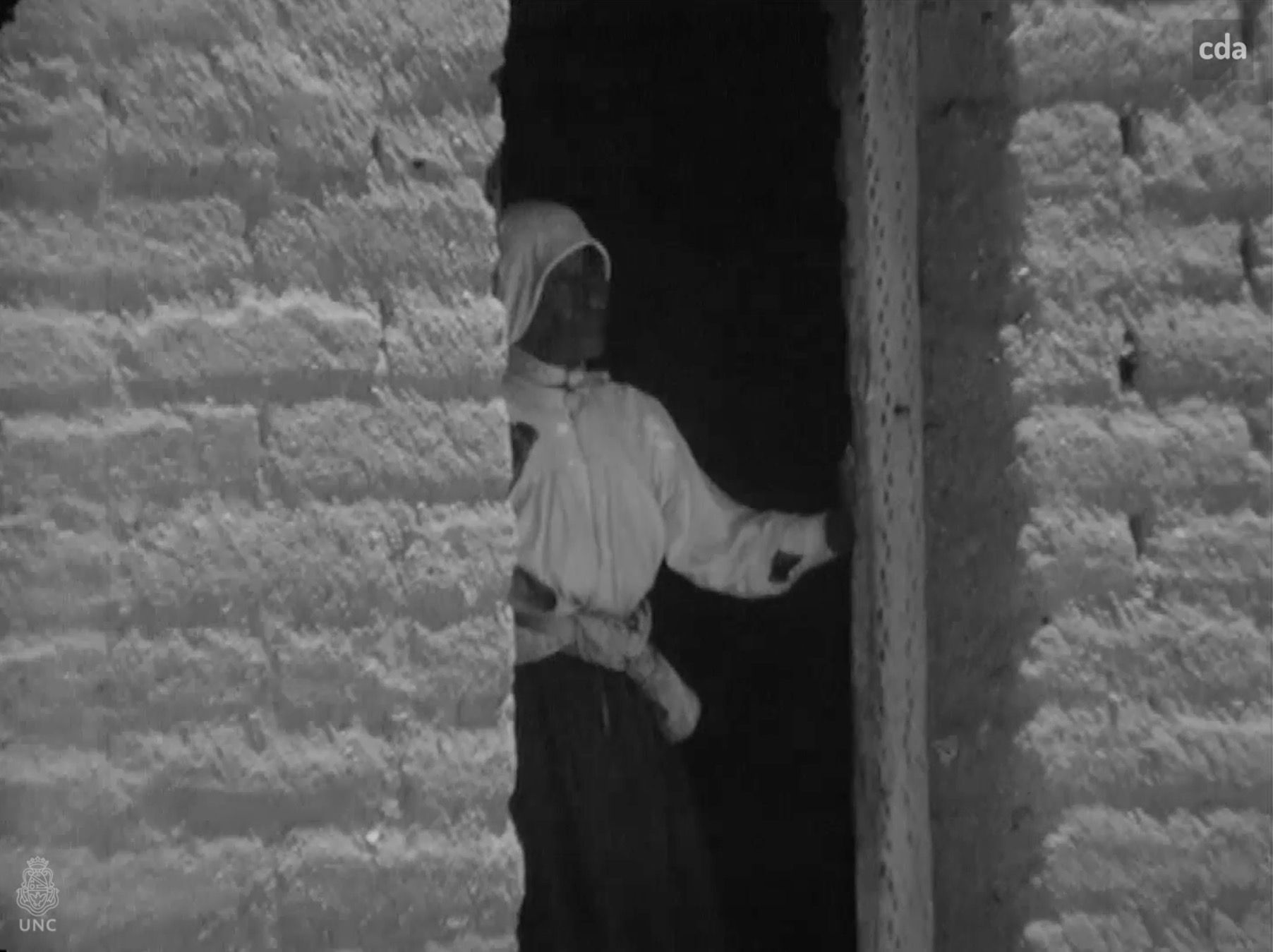
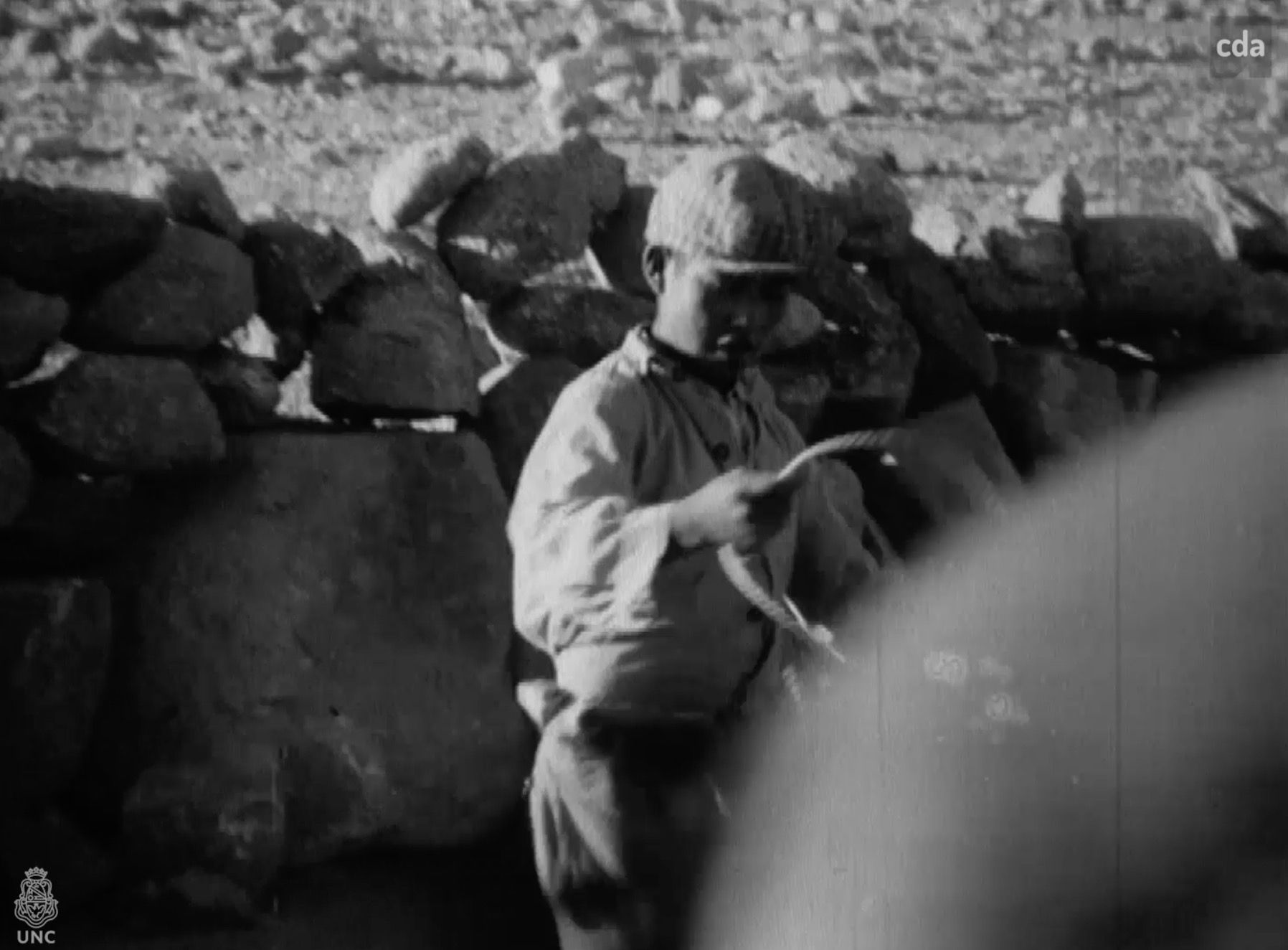
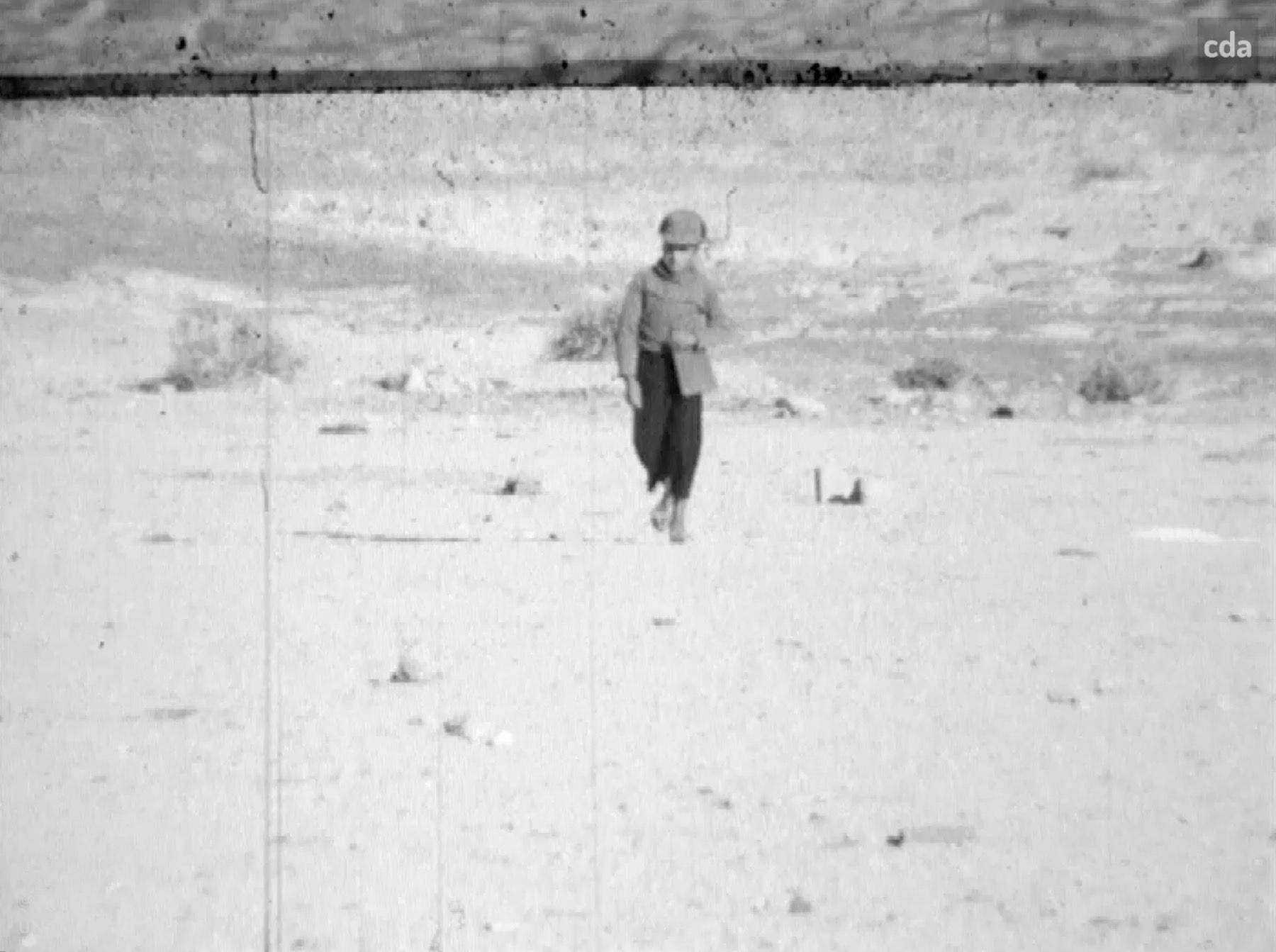
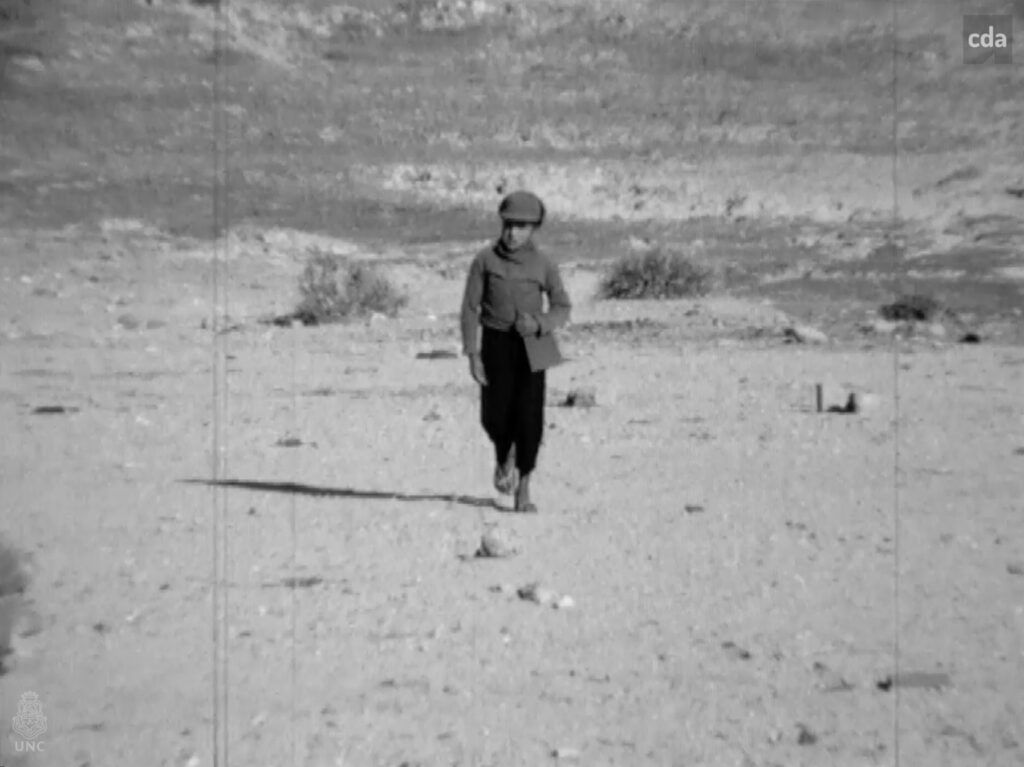
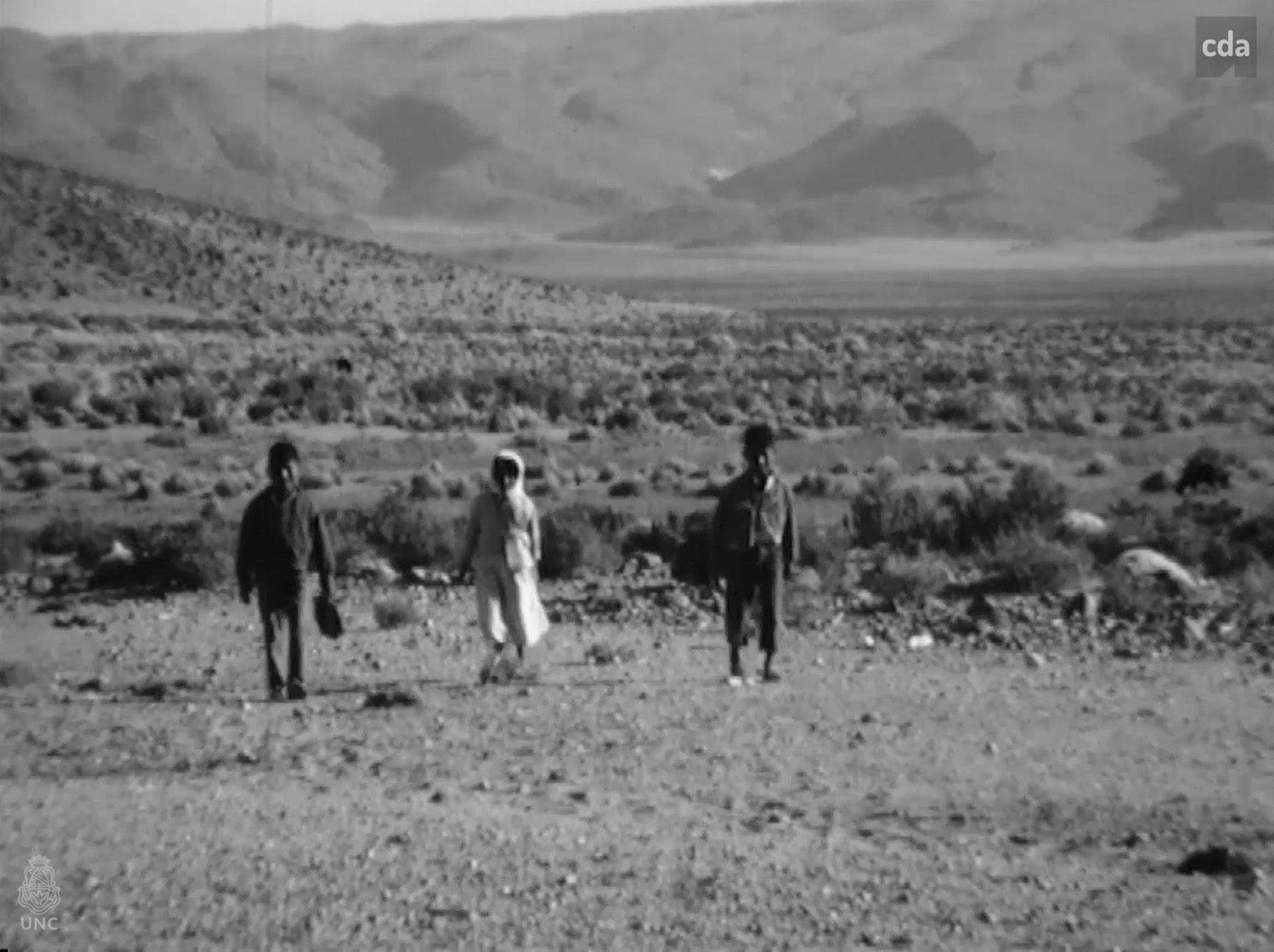
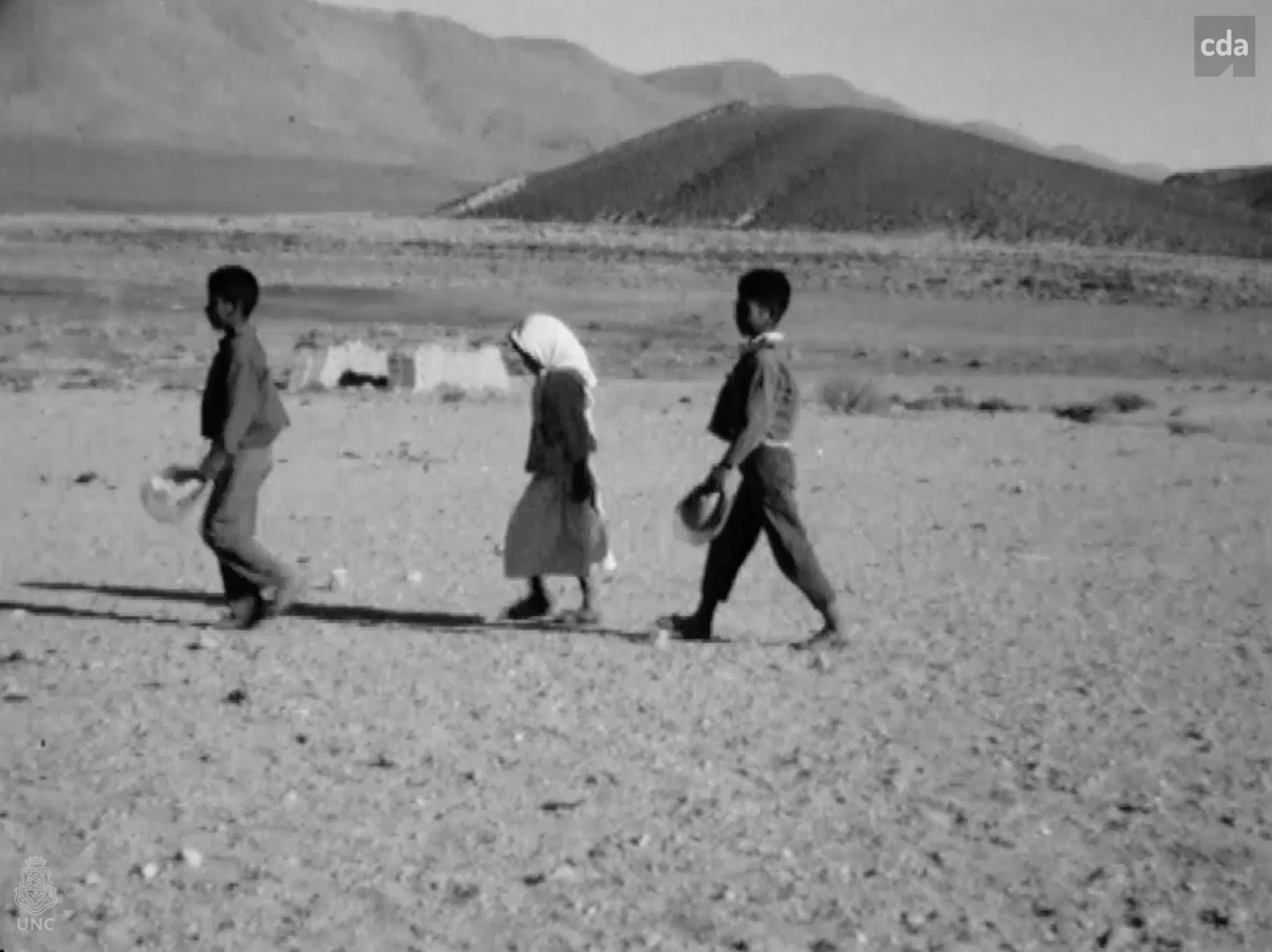
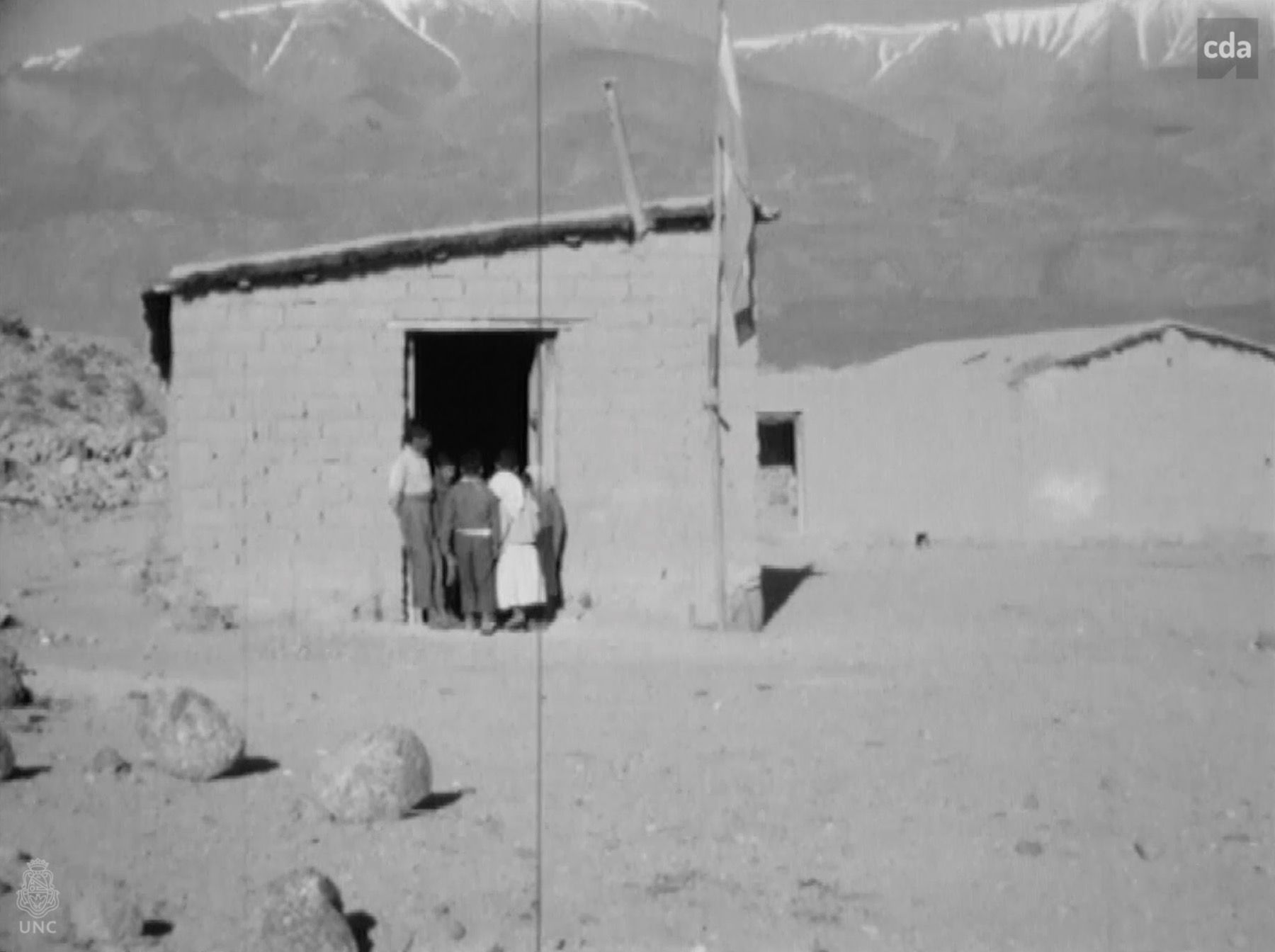
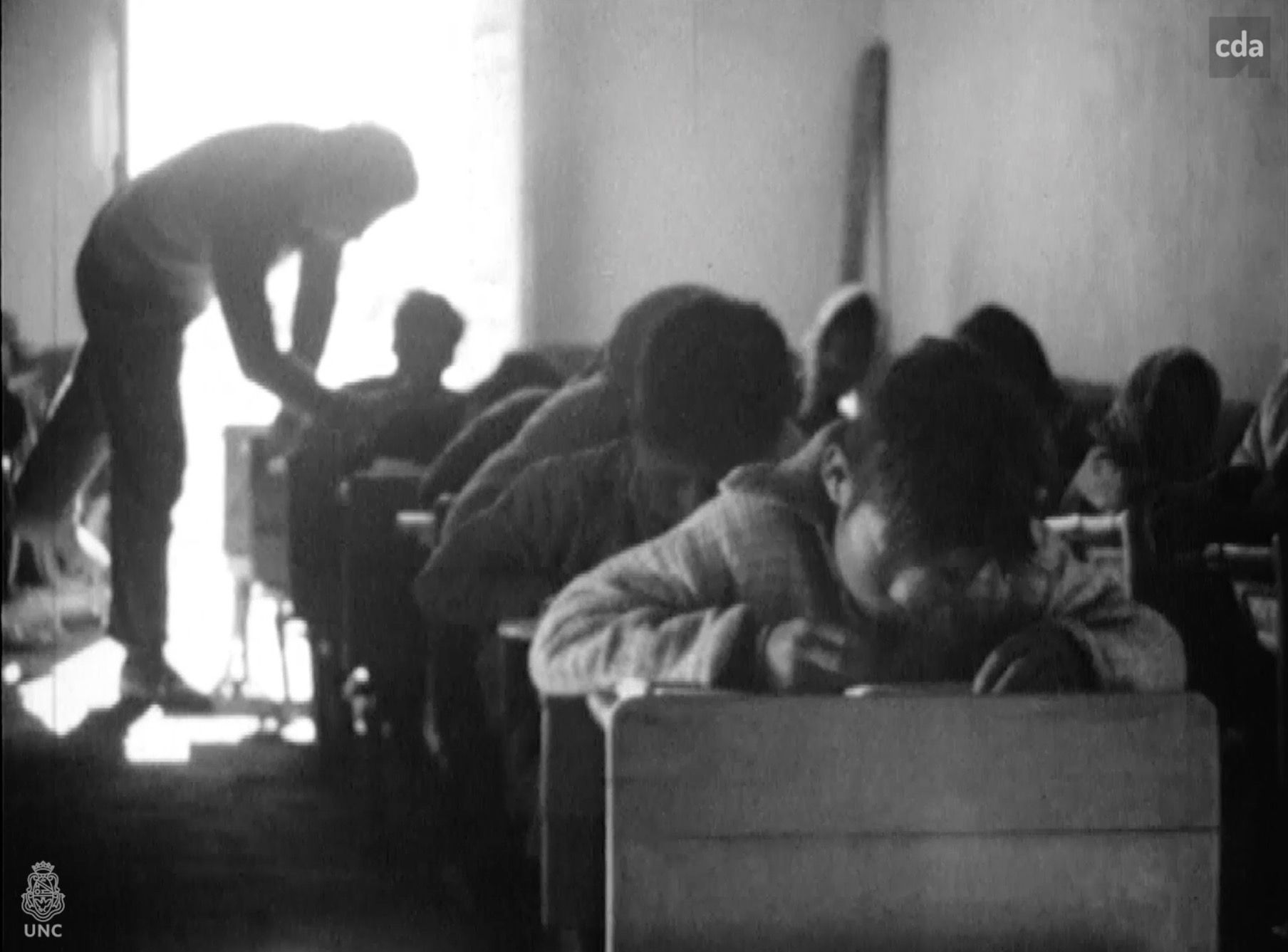
Un segundo documental, fue Laguna Blanca, basado en una investigación del antropólogo José Cruz. Fuimos con él un grupo de estudiantes de sus clases (Jorge Tula, Oscar Baigorria, José María Gatti y yo mismo). Dado que yo estaba en el ámbito del cine, el profesor Cruz me sugirió que llevara una cámara de filmación. Y así lo hice, con varios rollos de película de 16mm en la mochila. El encargo era documentar imágenes, durante dos meses, completando la investigación antropológica. Al regresar a Córdoba, vimos el material con nuestros amigos y colegas del Canal 10, Guillermo López y ¨Cachoito¨ De Lorenzi. Había material para hacer un cortometraje, pero no era suficiente. Hacían falta tomas específicas. Aquí ya no era cuestión de documentar la investigación en imágenes, sino ya pensar en términos de cinematografía. Con ¨Cachoito¨ regresamos a Laguna Blanca por una semana y completamos las tomas que había- mos planeado, más un par de imágenes que surgieron en el momento.[5]publicaciones El montaje lo hicimos ¨Cachoito¨, Nelly Mosconi y yo mismo. La banda sonora la gestionó ¨Cachoito¨ con un folklorista local. El costo de producción fue mínimo.
A second documentary, Laguna Blanca, was based on research by the anthropologist José Cruz. A group of students from his classes (Jorge Tula, Oscar Baigorria, José María Gatti, and myself) accompanied him. Since I was involved in filmmaking, Professor Cruz suggested I bring a camera. So, I did, with several rolls of 16mm film in my backpack. The assignment was to document the research over two months, supplementing the anthropological investigation. Upon returning to Córdoba, we reviewed the footage with our friends and colleagues from Channel 10, Guillermo López and “Cachoito” De Lorenzi. There was enough material for a short film, but it wasn’t sufficient. Specific shots were needed. At this point, it was no longer a matter of simply documenting the research visually but rather thinking in terms of cinematography. With “Cachoito,” we returned to Laguna Blanca for a week and completed the shots we had planned, plus a couple of images that emerged spontaneously.[6]publicaciones The editing was done by “Cachoito,” Nelly Mosconi, and me. “Cachoito” arranged the soundtrack with a local folk musician. The production cost was minimal.
En la Revista Sombras me tocó escribir el ensayo de apertura. Lo titulé “El cine en el quehacer del hombre”. Repito aquí el título de aquel ensayo publicado hace la friolera de 60 años, y agrego aquí los asteriscos en el sustantivo “hombre”. El sustantivo ¨hombre¨ por humanidad no estaba en cuestión. Frantz Fanon lo emplea a lo largo de Los Condenados de la Tierra (1961). Hoy sabemos ya que el concepto de lo Humano está modelado sobre la experiencia del Hombre. Por eso Sylvia Wynter en un notable ensayo sobre el tema escribe, en inglés H/M (Human/Man) que deberíamos escribir en castellano H/H (Humano/Hombre).[7]Unsettling the Coloniality of Being/Power/Freedom, New Centennial Review, 2003, savac Aunque Humanidad hoy es también un concepto problemático porque separa la ligazón con todo viviente que hace posible la existencia de lo Humano y la Humanidad, lo mantengo puesto que nos llevaría por otros caminos discutir su conceptualización en el Renacimiento Europeo.
In the Sombras Journal, I was tasked with writing the opening essay. I titled it “Cinema in the Making of Man.” I repeat here the title of that essay published a whopping 60 years ago, and I add the asterisks here around the noun “man.” The noun “man” as in humanity was not in question. Frantz Fanon uses it throughout The Wretched of the Earth (1961). Today we know that the concept of the Human is modeled on the experience of Man. That is why Sylvia Wynter, in a remarkable essay on the subject, writes in English H/M (Human/Man), which in Spanish would be H/H (Humano/Hombre). Although Humanity today is also a problematic concept because it separates the connection with all living things that makes the existence of the Human possible from Humanity itself, I maintain it since discussing its conceptualization since the European Renaissance would lead us down other paths.
La tesis y propuesta de aquel ensayo lejano consistía en invitar a quienes habíamos asumido la responsabilidad de trabajar en el ámbito cinematográfico —ya fuera a través de cursos, debates, mesas redondas, o incluso con la realización de dos modestos cortometrajes en ese contexto, además de clases en la Escuela de Arte— a reflexionar sobre el sentido de lo que hacíamos. Aunque no lo formulaba de esa manera entonces, la pregunta central era: ¿por qué hacemos lo que estamos haciendo? La disyuntiva era la de contribuir a la difusión del cine entre- tenimiento, del cine alienación del cual Hollywood era la referencia, y así quedarnos en el placer disfrutar las posibilidades mágicas del séptimo arte, o trabajar en el cine y por el cine con otros fines. La respuesta era simple: lo hacíamos porque creíamos que la esfera cinematografía (no sólo hacer y ver películas) era un medio privilegiado para la transformación social. Dejando de lado expresiones de aquella época, como todas las referencias al *hombre* y otras expresiones de época como “transformar la realidad” y crear un ¨hombre¨ nuevo, me doy cuenta de que en definitiva la semilla de lo que tengo que decir hoy fueron plantadas allá lejos y hace tiempo.
The thesis and proposal of that long-ago essay was to invite those of us who had taken on the responsibility of working in the film industry—whether through courses, debates, roundtables, or even by making two modest short films in that context, in addition to teaching at the School of Art—to reflect on the meaning of what we were doing. Although I didn’t phrase it that way then, the central question was: why are we doing what we’re doing? The dilemma was whether to contribute to the dissemination of entertainment cinema, the alienating cinema of which Hollywood was the benchmark, and thus remain in the pleasure of enjoying the magical possibilities of the seventh art, or to work in and for cinema with other aims. The answer was simple: we did it because we believed that the sphere of cinematography (not just making and watching films) was a privileged means for social transformation. Leaving aside expressions from that era, such as all references to *man* and other expressions of the time such as “transforming reality” and creating a new “man”, I realize that ultimately the seed of what I have to say today was planted far away and a long time ago.
II
Dado que este número especial, en el que participo con estos comentarios, está dedicado a explorar las relaciones entre cinematografía y decolonialidad, continúo la breve historia con algunas observaciones sobre lo decolonial. Actualmente, el término se emplea en una amplia variedad de ámbitos y contextos, incluidas las disciplinas académicas y saberes profesionales como la ingeniería, la medicina, el derecho o la computación. Pero también en la moda y el arte culinario. Lo cual no debe extrañarnos: si la imagen de modernidad, progreso, desarrollo invade la existencia, ello significa que también la colonialidad lo hace. Por tanto, la decolonialidad surge de la percepción de los conflictos que la colonialidad genera. De modo que es importante aportar algunas precisiones, no con la intención de normar, restringir o vigilar su uso, sino simplemente para especificar el significado que lo decolonial tiene en mi experiencia y reflexiones.
Since this special issue of La Otra Isla (Hi Andrea I do not yet have this link, will find it for you, please leave it red highlighted for now), to which I contribute with these comments, is dedicated to exploring the relationship between cinematography and decoloniality, I continue this brief history with some observations on the decolonial. Currently, the term is used in a wide variety of fields and contexts, including academic disciplines and professional fields such as engineering, medicine, law, and computer science. But also, in fashion and culinary arts. This should not surprise us: if the image of modernity, progress, and development pervades existence, is all over it means that coloniality does as well. Therefore, decoloniality arises from the perception of the conflicts that coloniality generates in all areas of existence. Thus, it is important to offer some clarifications, not with the intention of regulating, restricting, or monitoring its use, but simply to specify the meaning that the decolonial has in my experience and reflections.
En primer lugar, el uso y la referencia a la descolonización durante la Guerra Fría en África y Asia era claro. Se trataba de terminar con el colonialismo de asentamiento, enviando a los colonos agentes del imperio a sus respectivos estados imperiales y crear estados nacionales gestionados por personas nativas, lo cual suponía el desprendimiento de la cultura imperial impuesta por los colonos y la creación de culturas nacionales arraigadas en las historias locales. El verbo descolonizar significaba así, simplemente, las acciones (la palabra empleada era luchas) por erradicar la dominación construyendo la liberación. De modo que ¨descolonizar¨ nunca fue sinónimo de ¨deconstruir¨ puesto que descolonizar significaba deshacer para rehacer.
To start with, the use of and reference to decolonization during the Cold War in Africa and Asia was clear. It was about ending settler colonialism by sending the colonists, agents of the empire, back to their respective imperial states and creating nation-states governed by native people. This implied shedding the imperial culture imposed by the colonial settlers and to create nation-states rooted in local histories. The verb “to decolonize” thus simply meant the actions (the word used was “struggles”) to eradicate domination by building liberation. Therefore, “decolonize” was never synonymous with “deconstruct,” since decolonizing meant undoing in order to redo. Liberation displaced and replaced the modern/colonial concept of emancipation.
En la actualidad, tanto el verbo descolonizar como el sustantivo descolonización han perdido el sentido que tuvieron durante la Guerra Fría, y es imposible que lo conserven por varias razones. Una de ellas es justamente que ya no vivimos el contexto bipolar del capitalismo liberal (Primer Mundo) y el comunismo estatal (Segundo Mundo), dos ideologías occidentales que competían por el dominio global. En los márgenes de ese sistema estaba el Tercer Mundo y el grupo de Estados No Alineados. Ese era el escenario en 1964 y durante la década de los 60, cuando, por ejemplo, Fernando “Pino” Solanas y Octavio Getino fundaron el Grupo de Cine Liberación, estrenaron La hora de los hornos en 1968 y en 1969 publicaron su manifiesto Hacia el Tercer Cine. En ese Manifiesto, emplearon los términos “liberación” y “descolonización” en el significado propio de aquella época.[8] Hacia un Tercer Cine, 1969, umh3593 Sin embargo, había una diferencia fundamental. En Asia y África, el horizonte decolonial era la expulsión de los colonos y la fundación de estados nacionales gestionados por las propias comunidades.
Today, both the verb “to decolonize” and the noun “decolonization” have lost the meaning they held during the Cold War, and it is impossible for them to retain it for several reasons. One of these is precisely that we no longer live in the bipolar context of liberal capitalism (First World) and state communism (Second World), two Western ideologies that competed for global dominance. On the margins of that system were the Third World and the Non-Aligned Movement. That was the scenario in 1964 and throughout the 1960s, when, two Argentinians filmmakers, Fernando “Pino” Solanas and Octavio Getino founded the Liberation Film Group, premiered *The Hour of the Furnaces* in 1968, and in 1969 published their manifesto *Toward a Third Cinema*. In that manifesto, they used the terms “liberation” and “decolonization” in the sense they had at that time. However, there was a fundamental difference. In Asia and Africa decolonial struggles were at their height. As I just said, the decolonial horizon was the expulsion of the settlers and the founding of nation-states managed by the natives.
En cambio, en Iberoamérica, los procesos de liberación—llamados independencias— ocurrieron en el área continental, en el siglo XIX, mientras que las islas caribeñas hispanohablantes tienen su propio trayecto histórico que no voy a explorar aquí. Argentina era estado-nación (o república) fundado en 1810. La descolonización en el contexto en el que operaban Solanas y Getino significaba fundamentalmente liberación cultural y, en el ámbito cinematográfico, era la emancipación frente a Hollywood, al cine de entretenimiento, el cine industrial y el cine de alienación. Propusieron realizar cine-verdad y cine-acto orientados a la liberación de las mentes, por usar la expresión de Ngugi wa Thiong’o. Hacia 1986, ya era evidente que los estados nacionales estaban implicados en las tramas de la imperialidad, ya fuera estadounidense o so- viética. Ante esta realidad, la tarea que permanecía vigente era descolonizar la mente (decolonizing the mind).[9] Ngugi wa Thiong’o, Descolonizar la mente. La polítivca lingüística de la literatura africana. Primera publicación en inglés, 1986, agoradeeducacion.
In contrast, in Iberoamerica, the liberation processes—called independence movements—occurred on the mainland during the 19th century, while the Spanish-speaking Caribbean islands have their own historical trajectory, which I will not explore here. Argentina was a nation-state (or republic) founded in 1810. Decolonization, in the context in which Solanas and Getino operated, fundamentally meant cultural liberation and, in the realm of cinema, liberation from Hollywood, entertainment cinema, industrial cinema, and cinema of alienation. They promoted making cinema-truth (cinema verité, a la Jean Rouche) and cinema-act aimed at liberating minds, to use Ngugi wa Thiong’o’s expression. By 1986, it was already evident that nation-states were implicated in the machinations of imperialism, whether American or Soviet. Faced with this reality, the task that remained and remains relevant was and is the decolonization of the mind, in the wider sense of regulation of knowing, knowledge and understanding in all areas of education. Hence the important role of the moving image in the decolonial spectrum.[10]Ngugi wa Thiong’o, Descolonizar la mente. La polítivca lingüística de la literatura africana. Primera publicación en inglés, 1986, agoradeeducacion.
Fue en 1992 cuando el sociólogo y activista peruano Aníbal Quijano introdujo el concepto de colonialidad y lo distinguió del colonialismo. El colonialismo refiere a los procesos geohistóricos específicos de control económico, político y cultural que, desde 1500. Remite a la expansión de Europa Occidental y Estados Unidos, y—por otro lado—la expansión del Zarato/ Imperio Ruso desde 1550 hasta 1917, continuada por la Unión Soviética. Estos colonialismos son los que están regidos por la lógica de la colonialidad. Los conceptos no aplican al colonialismo romano o a otros supuestos imperios como el Incanato en los Andes o el Sultanato Otomano. Existen distintos colonialismos históricos, aunque todos responden a una lógica común: la lógica de la colonialidad. Esta puede entenderse como la “estructura profunda” de todas las formas de colonialismo, de manera similar a cómo el inconsciente articula la psique de las personas según Freud o cómo la gramática profunda estructura todas las lenguas en la teoría de Noam Chomsky. Tanto la modernidad como la colonialidad no se restringen a la esfera política, económica y militar, sino que invade la existencia social. La cinematografía es por un lado consecuencia y, por otro, respuesta a las ramificaciones de la colonialidad.
It was in 1992 that the Peruvian sociologist and activist Aníbal Quijano introduced the groundbreaking concept of coloniality and distinguished it from colonialism. Colonialism refers to the specific geohistorical processes of economic, political, and cultural (meaning the spheres of subjective and intersubjective relations) control that, since 1500, have encompassed the expansion of Western Europe and the United States, and—on the other hand—the expansion of the Tsardom/Russian Empire from 1550 to 1917, continued by the Soviet Union. These colonialisms are governed by the logic of coloniality. The Russian empire entred on the logic of Western coloniality with Peter the Great when he changed his titled from Czar to Emperor and started a politic of Russia modernization, The concept coloniality doesn’t apply to imperial expansion before 1500, like Roman colonial expansion or other supposed empires such as the Incanate in the Andes or the Ottoman Sultanate in Western Asia. Before 1500 all expansionists’ states were not capitalist. Western imperial/colonial formation since the sixteenth century, inaugurated a colonial logic pegged to an imperial logic of salvation. Since then there were different historical colonialisms (Spanish, Portuguese, French, Dutch, British), although they all respond to a common logic: the logic of coloniality and a common rhetoric, the rhetoric of modernity and modernization. This can be understood as the “deep structure” of all forms of colonialism, similarly to how the unconscious shapes the psyche according to Sigmund Freud or how deep grammar structures all languages in Noam Chomsky’s theory. Both modernity and coloniality are not confined to the political, economic, and military spheres, but rather permeate social existence. Cinematography is both a consequence and a response to the ramifications of coloniality. Today the logic of coloniality, and its instrument, the colonial matrix of power escaped Wester administration and the control and the structure of the colonial matrix of power is disputed by what President Donald Trump described as the “three great powers” (China, Russia and the US. In other words, the dispute is between de-westernization and multipolarity on the one hand, and re-westernization and either unipolarity or multipolarity controlled by the U.S. (President Trump projecting the G5 (China, India, Japan, Russia and the U.S.) to replace the G7, but securing control of the US, with Japan in the East and Israel in the Middle East.
Así como las lenguas difieren en su estructura superficial, pero comparten una base común, también los colonialismos se diferencian, aunque subyace siempre la lógica de la colonialidad. Esta lógica condensa dos componentes fundamentales: la voluntad colonial de poder y el patrón (o estructura) colonial de poder. La voluntad colonial de poder es una instancia cultural que no afecta a todas las personas por igual, sino que incide en quienes, por su estatus social, cultural o institucional, pueden y quieren in-corporarla. Así, la voluntad colonial de poder es reproducida y expandida en distintos niveles: desde las grandes agencias de control hasta los agentes secundarios, que operan como intermediarios entre las instancias superiores y aquellos actores e instituciones que contribuyen a que la voluntad colonial de poder se mantenga y expanda en el tiempo. El otro componente, estrechamente vinculado a la voluntad colonial de poder, es el patrón colonial de poder. Este patrón constituye el mecanismo que organiza y materializa la voluntad colonial de poder. Se articula en torno a cuatro dominios interrelacionados y a dos niveles complementarios.
Just as languages differ in their surface structure but share a common base, so too do colonialisms differ in their local manifestations, although the underlying logic of coloniality always exists. This logic condenses two fundamental components: the colonial will to power and the colonial pattern (or structure) of power. The colonial will to power is a cultural instance that does not affect all people equally, but rather impacts those who, by virtue of their social, cultural, or institutional status, can and want to incorporate it. Thus, the colonial will to power is reproduced and expanded at different levels: from the major control agencies to secondary agents, who operate as intermediaries between the higher levels and those actors and institutions that contribute to maintaining and expanding the colonial will to power over time. The other component, closely linked to the colonial will to power, is the colonial matrix of power. This matrix constitutes the instrument by mean of which the colonial will to power is implemented. It is articulated around four interrelated domains and two complementary levels.
El primer nivel, visible y tangible, abarca los cuatro dominios que configuran y especifican los contenidos —o la semántica— de la dominación y el control:
The first level, visible and tangible, encompasses the four domains that configure and specify the contents—or the semantics—of domination and control:
1. Dominio del conocimiento y la comprensión: donde se ejerce el control sobre lo que se sabe, se estudia y se reconoce/establece como válido.
1. Control and management of knowledge and understanding where control is exercised over what is known, studied, and recognized/established as valid.
2. Dominio del gobierno o gestión: que regula la administración de la población bajo dicho patrón de poder.
2. Control and management of governance, that regulates the administration of the population in all their strata as well as regulation of foreign policies
3. Dominio económico: donde se regula la producción, distribución, intercambio y consumo de bienes.
3. Control and management of the economy, where the production, distribution, exchange and consumption of goods are regulated.
4. Dominio del vivir y la vida: donde se inscriben todos los organismos, y en el que se esta- blece la separación entre los organismos humanos y el resto de los seres vivos.
4. Control and management of living and life, where all living organisms are inscribed, and in which the separation between human organisms and the rest of living beings is established. Sexism and racism are core issues here, as well as the separation between human and nature.
Esta última separación fue instaurada, en el proceso de la constitución del patrón colo- nial de poder por quienes ejercen el control y la gestión del conocimiento y la comprensión. Así, en el dominio del vivir y la vida, se instituyó la distinción entre cultura (atributo exclusivo de lo humano) y natura (atributo de todo lo viviente, incluido lo humano). El concepto de H/H es el centro de este dominio en el cual se estableció el sexismo (heteronormatividad), el racismo religioso (cristiandad occidental) y secular (blanquitud) y el control y gestión de las relaciones intersubjetivas.
This latter separation (culture from nature) was established during the process of constituting the colonial matrix of power by actors and institutions who exercise control and management of knowledge and understanding. The separation is not ontic ( a “reality” so to speak) but ontological (an interpretation of “reality”). Thus, in the domain of living and life, the distinction between culture (an exclusive attribute of humanity) and nature (an attribute of all living things, including humanity) was instituted. The concept of M/H is central to this domain in which sexism (heteronormativity), religious (Western Christianity) and secular racism (whiteness), and the control and management of intersubjective relations were established. You can imagine what the impact that cinematography can have to preserve or alter subjective and intersubjective relations.

El segundo nivel sustenta los dominios y sus interrelaciones. Sus bases son actores e instituciones que operan en las seis lenguas imperiales modernas basadas en el griego y el latín. Así, por ejemplo, ni el mandarín, ni el ruso, ni el árabe o el persa, y menos el aimara o el náhualt, tienen cabida en el nivel enunciativo que regula los dominios del patrón colonial de poder. Ni tampoco el acceso está abierto a cualquier actor ni a cualquier institución religiosa, económica, política o educativa.
The second level underpins the four domains and their interrelations. The domains consist in what is said and done, that is, the enunciated and the managed. The level that underpins the domain, is the level of the enunciation, the processis of managing. Its foundations relies on actors and institutions enacting the colonial will to power that operate in the six modern imperial languages based on Greek and Latin. Thus, for example, neither Mandarin, nor Russian, nor Arabic or Persian, and even less Aymara or Nahuatl, have a place at the enunciative level that regulates the domains of the colonial power structure. Nor is access open to just any actor or any religious, economic, political, or educational institution.
III
¿A qué viene todo esto y qué relación tiene con la cinematografía?
Al terminar la Guerra Fría y ante la evidencia de que los estados-naciones formados en los procesos constructivos de la descolonización (sobre la base de los procesos de expulsión de los colonos), continuaron atados y dependientes al patrón colonial de poder, tanto en Iberoamérica como en Asia y África, ya no era posible imaginar la descolonización en los mismos términos de la Guerra Fría. La descolonización ya no era pensable en términos de la creación de estados nacionales, o la toma del poder de los existentes (erg., la revolución cubana en 1959) por dos razones. Porque ya no quedaban colonias de asentamiento y porque la descolonización así entendida mantenía la formación de estados nacionales dependientes.
What is the point of all this, and what does it have to do with cinematography?
After the Cold War, it became clear that the nation-states established through decolonization—primarily by expelling colonizers—remained dependent on and connected to the colonial matrix of power, not only in Iberoamerica but also in Asia and Africa. This realization made it impossible to continue imagining decolonization in the same terms as during the Cold War. Decolonization could no longer be envisioned simply as the creation of new nation-states or the takeover of existing ones (such as the Cuban Revolution in 1959). This is due to two main factors: first, the absence of remaining settler colonies; and second, because this approach to decolonization continued to produce nation-states that were ultimately dependent on the colonial matrix of power and the internal colonial will to power manifested by the native controlling the state. A situation that Frantz Fanon had already foreseen in The Wretched of the Earth (1961).
La descolonización durante la Guerra Fría permitió la liberación de vastos territorios en África y Asia del control de las colonias de asentamiento. Si bien se eliminó la presencia de las colonias de asentamiento, la colonialidad persistió transformándose en colonialismo interno, fenómeno también presente en América del Sur tras las independencias del siglo XIX. El colapso de la Unión Soviética y sus secuelas desplazaron el eje del debate hacia la des/colonialidad del saber y del ser involucrados en la colonialidad del poder (estado, economía, orden policíaco y militar) conceptos profundamente interrelacionados y mutuamente constitutivos. Hacia ello ya apuntaba Thiong´o a finales del 80, lo planteó Quijano también en el 1992 en la predominancia que le otorga a la colonialidad del saber y a las relaciones intersubjetivas de las gentes. Lo acentuó Wynter en su ensayo canónico, arriba citado, y Nelson Maldonado-Torres lo esbozó sin tapujos.[11] Nelson Maldonado-Torres, La topología del ser y la geopolítica del conocimiento. La modernidad, imperio y colonialidad. Revista de Ciencias Sociales. 80, 2008, enriquedussel En este vuelco, si bien la creación de estados nacionales no era un horizonte plausible (aunque los reclamos continúan en una suerte de segunda descolonización como lo vimos ocurrir en el SAHEL francés en África y en los recientes acuerdos con Nueva Caledonia, en el Pacífico), los legados ideológicos-conceptuales descoloniales son imprescindibles (Mahatma Gandhi, Amílcar Cabral, Patrice Lumumba, Frantz Fanon, Steve Biko).
Decolonization during the Cold War allowed for the liberation of vast territories in Africa and Asia from the control of settler colonies. While the presence of settler colonies was eliminated, coloniality persisted, morphing into internal colonialism, a phenomenon also present in Iberoamerica after the 19th-century independence from Spain and Portugal. The collapse of the Soviet Union and its aftermath shifted the focus of the debate toward the de/coloniality of knowing, knowledge and understanding and being imbedded in and managed by the coloniality of power (state, economy, police and military order)—concepts that are deeply interrelated and mutually constitutive. Thiong’o was already pointing in this direction proposing the decoloization of the mind in the late 1980s, and Quijano also raised it in 1992 redefining decolonial as epistemological reconstitutions, both placing the accent on the coloniality of knowing, knowledge and understanding that controls and manages people’s subjective and intersubjective relations. Silvia Wynter accentuated this in his canonical essay, cited above, and Nelson Maldonado-Torres outlined it frankly. In this shift, prompted because the creation of nation-states was no longer a plausible horizon (although claims continue in a sort of second decolonial wave as we saw occur in the French SAHEL in Africa and in the recent agreements with New Caledonia in the Pacific), the decolonial ideological-conceptual legacies (Mahatma Gandhi, Amílcar Cabral, Patrice Lumumba, Frantz Fanon, Steve Biko) are essential to rework the decolonial horizon today.
La reorientación que introdujo Quijano abarcó los tres ámbitos (colonialidad del ser, del saber y del poder), y distinguió la descolonialidad (el horizonte de la de colonialidad del saber, que implica descolonialidad del ser) de la descolonización (las reconstituciones locales y específicas que ocurren y deben ocurrir en la diversidad de historias locales interferidas por la colonialidad en los procesos de occidentalización).
The reorientation introduced by Quijano (decolonization as epistemological reconstitution) encompassing the three areas of experience (coloniality of being, of knowledge, and of power), implies the distinction between decoloniality (the horizon) from decolonization (the local and specific reconstitutions the march towards the decolonial horizon). This movement emerged in dissenting parallelism with modernity and modernization, and their darker side, coloniality and colonization.
En ese contexto Quijano reorientó el horizonte decolonial y lo definió la reconstitución epistemológica, como la tarea básica de la que se derivan y se montan todas las otras. Ello implica desprendernos de la constitución epistemológica moderan controla las subjetividades y relaciones intersubjetivas.[12]Aníbal Quijano, Colonialidad y Modernidad/Racionalidad (1992), SIEP, 2020.
If then the basic decolonial task consists in epistemological reconstitutions, it requires the consisting and constant processes of detaching ourselves (delinking) from the epistemological constitution that moderates and controls subjectivities and intersubjective relations vis a vis the state, the economy, knowledge and the relation of the human with planetary living. All of which was and is implied in my non-modern (indigenous) cosmologies in which the separation humanity with the all the living (nature), was never formulated.
La liberación de las relaciones interculturales de la prisión de la colonialidad entraña también la libertad de todas las gentes, de optar individual o colectivamente en tales relaciones; una libertad de opción entre las diversas orientaciones culturales. Y, sobre todo, la libertad para producir, criticar y cambiar e intercambiar cultura y sociedad. Es parte, en fin, del proceso de liberación social del poder organizado como desigualdad, como discriminación, como explotación, como dominación.
Hence, the liberation of subjective and intercultural relations from the prison house of coloniality also entails the freedom of all people to choose, individually or collectively, within such relations; a freedom of choice among diverse cultural (political, economic, educational, gnoseological, aesthetical) options. And, above all, the freedom to produce, critique, change, and exchange culture and society. It is, in short, part of the process of social liberation from power organized as inequality, discrimination, exploitation, and domination. For the time being these are tasks in the hands of the political society (the active and activist sector of civil society), and cannot be expected to be taken over by the state.
La reconstitución epistemológica implica un vuelco decolonial del saber y del ser. En los textos de Quijano, el término epistemología no se utiliza en su sentido restringido de las ciencias (naturales o sociales). De hecho, la epistemología resulta un concepto incómodo en las humanidades, cuya labor principal es la interpretación de significados más que la explicación de causas. Por ello, introduje el concepto de gnoseología (del griego gnosis, conocimiento; logos, razonamiento, argumentación o instrucción; e -ía, sufijo de cualidad).[13]Historia Locales/Diseños Globales. Colonialidad, conocimientos subalternos y pensamiento fronterizo. Madrid: Akal, 2003 En castellano e italiano, gnoseología a veces se emplea como sinónimo de epistemología; sin embargo, aquí reservo epistemología para las disciplinas académicas, mientras que utilizo gnoseología en su sentido originario—las facultades de conocer que incluye a la epistemología. Esto no es todo, puesto que para Quijano las cuestiones del conocimiento están ligadas a la subjetividad y relaciones subjetivas. Es decir, la gnoseología implica la esthésica (esthesis): Aisthesis” (αἴσθησις), traducido al castellano por “sensación” o “percepción”. Es decir, las vibraciones del sensorio, las sensaciones del organismo, no de la razón con la que otorgamos sentido a las sensaciones.[14]Walter D Mignolo and Rolando Vázquez, “Decolonial aestheSis: Colonial Wounds/Decolonial Healings”. Social Texts Online. July 15, 2033, socialtextjournal. No es necesario insistir que la aesthesis es un componente fundamental de toda obra cinematográfica, incluidos el cine-industria y el cine-entretenimiento.
Epistemological reconstitution implies a decolonial a turnaround (a Pachacuti in Quechua/Aimara word) of knowing and being. In Quijano’s texts, the term epistemology is not used in its restricted sense of the sciences (natural or social). In fact, epistemology is an uncomfortable concept in the humanities, for which hermeneutic is more appropriate, whose main task is the interpretation of meanings rather than the explanation of causes. For this reason, I introduced the concept of gnoseology (from the Greek gnosis, knowledge; logos, reasoning, argumentation, or instruction; and -ia, a suffix of quality; which at its turn was derived from the earliest root, ǵ nō translated as to know, recognize, or understand. This ancient Aryan root, mutated into gnōsis in Greek and jñāna in Sanskrit).[15]Historia Locales/Diseños Globales. Colonialidad, conocimientos subalternos y pensamiento fronterizo. Madrid: Akal, 2003 In Spanish and Italian, gnoseology is sometimes used as a synonym for epistemology; however, here I reserve epistemology for academic disciplines, while I use gnoseology in its original sense—the faculties of knowing of all living organism that includes the provincial sphere of epistemology in the Western vocabulary. But this is not all. For Quijano all the sphere of knowledge and understanding implicate subjectivity and subjective relations (being in the larger sense of relationality, like the Ubuntu, I am because you are). Furthermore, epistemology that regulates knowing was complemented in the XVIII century with aesthetics that regulates sensing and subordinated esthesis (aisthesis” (αἴσθησις), translated into English as “sensation” or “perception,” to the sphere of fine arts. That is, the vibrations of the senses, the sensations of the organism, not of reason, have been, and still are, regulated by aesthetics. It is unnecessary to emphasize here that esthetics is a fundamental component of all cinematic works, including both commercial and entertainment films. Consequently, the power of cinematography to entertain and preserve subjectivities and subjective relations (aesthesis is the root of anesthesia) or to move and mobilize colonial into decolonial subjects, is enormous.
Lo decolonial, en la perspectiva introducida por Quijano, no es una disciplina, ni una teoría ni menos un campo de estudio, sino una forma no-disciplinaria de conocer para vivir, recordando la conocida sentencia de Rodolfo Kusch. Las disciplinas funcionan como instrumentos que regulan el dominio del conocimiento y la comprensión bajo el patrón colonial de poder y controlan las relaciones intersubjetivas, revestidas de un aura de superioridad y verdad. En este sentido la decolonialidad del saber comienza por cuestionar las formaciones disciplinarias. En este sentido, la cinematografía—sea de entretenimiento, cine de autor, cine-verdad, cine-acto o cine del hambre—es una manifestación gnoseológica del narrar que puede contribuir a preservar o descolonizar los ámbitos del saber que controlan el ser (subjetividades y relaciones intersubjetivas).
From Quijano the decolonial is not a discipline, a theory, or even a field of study; rather, it is a perspective—a non-disciplinary way of knowing oriented toward living, recalling Rodolfo Kusch’s well-known statement, we know in order to live, not simply for the sake of knowing). Disciplines are functions of the colonial matrix of power and the colonial will to power regulating and managing the domain of knowledge and understanding. A quick example the measures taken by Harvard and Columbia University control the knowledge and understand that student possess of Israel genocide in Gaza. Or, if you possess that knowledge and understanding, you are not supposed to make it public. In this sense, the decoloniality of knowledge begins by questioning disciplinary formations and the regulation of truth, which means the danger of a single story, as Chimamanda N. Adichie brilliantly puts it. Thus, cinematography—whether entertainment, auteur cinema, cinéma vérité, cinéma vérité, or cinema of hunger—is a technique to regulate or question knowing and sensing, with gnoseological and aesthetic potential. The potential of storytelling that can contribute to preserving or decolonizing the domains of knowledge, knowing and understanding that control and manage being (subjectivities and intersubjective relations).
Digamos entonces que los objetivos de la descolonización hoy ya no consisten en expulsar a los colonos del territorio y formar estados nacionales dependientes gobernados por nativos o criollos, sino en abocarse a la reconstitución gnoseológica de las regulaciones moderno/ coloniales del saber y del ser (sensorio). ¿Y qué significa esta propuesta? Significa, primero, la identificación y el conocimiento de las estructuras profundas (colonialidad del poder y patrón colonial de poder) de la dominación, la explotación y la opresión. Es decir, entender en qué con- siste la voluntad colonial de poder y el patrón colonial de poder para entender cómo operan en el control de la población mediante actores, instituciones y lenguas imperiales que asignan las funciones del conocimiento y la comprensión, de la gobernabilidad, de la economía y la conceptualización de lo humano y lo viviente.
Let us say, then, that the decolonial objectives today no longer consist of expelling colonists from the territory and forming dependent nation-states governed by natives or Creoles (in cases like South and North America, Australia and New Zealand) but rather of undertaking epistemological reconstitutions of the modern/colonial regulations of knowing, understanding and being (sensory experience). And what does this proposal mean? It means, first, the identification and understanding of the deep structures (coloniality of power and colonial matrix of power) of domination, exploitation, and oppression. That is, understanding what the colonial will to power and the colonial matrix of power consist of in order to understand how they operate in the control of the population through imperial actors, institutions, and languages that assign the functions of knowledge and understanding, governance, the economy, and the conceptualization of the human and the living. If I were asked to provide a cinematic example of what I am saying here I will mention the two films of Gillo Pontecorvo: Burn, 1969 and The Battle of Algier, 1966.
IV
Descendamos de la estratósfera. La cinematografía se inscribe de lleno en el dominio del conocimiento y la comprensión regulando —por medio de imágenes en movimiento y sonidos- las relaciones intersubjetivas, clasificaciones, jerarquizaciones y formas de organización. La cinematografía, en toda su amplitud, es una técnica que puede emplearse para promover y am- pliar las estructuras de dominación o para cuestionarlas. En ninguno de los dos casos hay una solo vía para hacerlo. El cine de autor puede contribuir tanto a mantener la dominación como a cuestionarla. En cambio, el cine en el Tercer Mundo, cuando los y las realizadoras asumen su terceridad, postulan de entrada el disenso tanto en la desobediencia a las normas que regulan (por ley o por consenso) la creatividad cinematográfica. La esfera del arte (habilidad para hacer) y de la estética (regulación de la aesthesis) constituyen un componente básico del domin- io que comprende los textos, entrevistas, etc., de los realizadores como la crítica periodística y especializada. Arte y estética son conceptos que delimitan ciertas praxis destinadas tanto a regular como a disentir del orden establecido.[16] Walter D Mignolo and Rolando Vázquez, Decolonial aestheSis: Colonial Wounds/Decolonial Healings. Social Texts Online. July 15, 2033, https://socialtextjournal.org/periscope_article/decolonial-aes- thesis-colonial-woundsdecolonial-healings/ Hollywood, por ejemplo, es una institución que disciplina el arte y la estética cinematográfica controla y gestiona el sensorio de las audiencias y, por ende, interviene en la configuración de subjetividades y en las relaciones intersubjetivas. Lo hace no sólo a través de las películas, sino también mediante componentes mediáticos que sacralizan a las estrellas de cine, la publicidad, las revistas en expuestas en los supermercados al entrar en las filas de pago; en fin, en toda la infraestructura de la industria del entretenimiento.
Let’s come down from the stratosphere. Cinematography is fully inscribed within the domain of knowledge and understanding, regulating—through moving images and sounds—intersubjective relationships, classifications, hierarchies, and principles of organization. Cinematography, in all its breadth, is a technique that can be used to promote and expand structures of domination or to challenge them. In neither case is there only one way to do so. Auteur cinema can contribute either to maintaining domination by mean of entertaining cinema or to confront and reveal existing patters of dominations in society at large and in the history of cinema. Of course, the spectrum between these two poles is diverse but at the same time helpful to understand the relations between cinema and decoloniality. In contrast to entertaining cinema which also could be auteur cinema (cine de autor), emerged the Third World cinema (Third Cinema). In it filmmakers embraced their third-world status, postulated their dissent from the outset, disobeing the norms that regulate (by law or by consensus) cinematic creativity. The sphere of art (the ability to make) and of aesthetics (the regulation of aesthesis, the sensorium) constitutes a basic component of the domain that includes scripts, interviews, criticism, manifestos, etc., of filmmakers, as well as journalism and cinema critics. Art and aesthetics are concepts that define certain practices intended both to regulate or to defy the established order. [17]Walter D Mignolo and Rolando Vázquez, Decolonial aesthetics: Colonial Wounds/Decolonial Healings. Social Texts Online. July 15, 2033, https://socialtextjournal.org/periscope_article/decolonial-aes- thesis-colonial-woundsdecolonial-healings/ Hollywood, for example, is an institution that disciplines cinematic art and aesthetics, controls and manages the sensory experience of audiences, and therefore intervenes in the shaping of subjectivities and intersubjective relationships. Although today, with the service platforms you can wat movies at home of platforms like Netflix that became a producer, like Warner Brothers or Paramount, Hollywood is no longer what it was, its legacy is undeniable and still influential. It does so not only through films, but also through media components that sanctify movie stars, advertising, magazines displayed in supermarket checkout lines; in short, through the entire infrastructure of the entertainment industry.
Como todo fenómeno que instaura formas de dominación —por suaves o seductoras que estas sean—, la cinematografía moderna genera conflictos en las audiencias, que perciben tanto los medios como los fines con todas sus ramificaciones, desde la técnica y la industria hasta la exhibición de los productos. El manifiesto Hacia un Tercer Cine, las películas producidas bajo esta inspiración, los circuitos alternativos de distribución y las situaciones de debate generadas en torno a ellas, son manifestaciones de disenso no sólo anti-Hollywood, sino sobre todo a favor de un cine-verdad y un cine-acto. Esto implica que no se trata únicamente de oposición, sino fundamentalmente de crear desde premisas ajenas a las que regulan el dominio del conocimiento y la comprensión. El Tercer Cine sería, en el ámbito cinematográfico, un ejemplo paradigmático de reconstituciones del saber y del ser, es decir, gnoseológicas y estésicas.
Like any phenomenon that establishes forms of domination—however subtle or seductive they may be—modern cinema generates conflict among audiences, who perceive both the means and the ends with all their ramifications, from technique and industry to the exhibition of the products. The manifesto “Towards a Third Cinema,” the films produced under its orientations, the alternative distribution circuits, and the debates generated around them are manifestations of dissent not just against Hollywood, but above all in favor of a cinema-verité and a cinema-act. That is why this cinema is not merely a matter of opposition, but fundamentally about creating from foundational premises outside, delinking from the Hollywood industry that regulates the cinematic sphere. Third Cinema would be a paradigmatic example of the reconstitution of knowing, sensing and being—that is, gnoseological and aesthetical.
Así, el cine en el Tercer Mundo, en Argentina o América del Sur, presenta particularidades propias a la vez que distintas, por ejemplo, a las del cine de Ousmane Sembène en Senegal y en África, considerado padre de la descolonización cinematográfica independiente. La obra de Sembène está intrínsecamente ligada al contexto histórico senegalés y al sueño panafricanista: su cine es un acto de memoria, resistencia y esperanza. Ver sus películas significa adentrarse en los procesos de descolonización, la afirmación de identidades africanas plurales y la apues- ta por un futuro en el que África narre su propia historia, desde adentro y para el mundo. De modo que Solanas y Getino, por un lado, y Sembène, por el otro, además de contemporáneos, comparten la decolonialidad entendida como orientación general de la descolonización en la cinematografía. Sin embargo, la forma en que lo llevan a cabo está enmarcada en sus respectivas historias locales.
Thus, Third World cinema, in Argentina or South America, created its own particularities. Although different from the cinema of Ousmane Sembène in Senegal and Africa, considered the father of independent decolonization cinema, because of their respective local histories, the difference of the surface has the similar underlying grammar, the grammar of cinematica decolonization. Sembène’s work is intrinsically linked to the Senegalese historical context and the Pan-African dream: his cinema is an act of memory, resistance, and hope. Watching his films means delving into the processes of decolonization, the affirmation of plural African identities, and the commitment to a future in which Africa narrates its own history, from within and for the world. Therefore, Solanas and Getino, on the one hand, and Sembène, on the other, besides being contemporaries, share the grammar of decoloniality understood as a general orientation of cinematic decolonization. However, the way in which they carry it out is framed within their respective local histories.
V
El cine del Tercer Mundo no estuvo aislado del cine del Primer Mundo. La dependencia opera en todos los órdenes. Dependencia no es sinónimo de obediencia, sino de algo inevitable en la constitución del patrón colonial de poder. El cine del Primer Mundo no necesitó conocer el cine del Tercer Mundo. En los años 60 en América del Sur, a la par de los influyentes filmes italianos de posguerra y la Nouvelle Vague francesa, surgieron corrientes como el Tercer Cine en Argentina, Cinema Nuovo en Brasil y el Cine Revolucionario de Jorge Sanjinés en Bolivia, que también recurrieron a Manifiestos: El Cine del Hambre (Rocha) y el Cine Revolucionario con- (Sanjinés).[18]Glauber Rocha, Estética del Hambre, 1965, crearensalamanca.; Jorge Sanjinés, Problemas de la forma y del contenido en el cine revolucionario (1978). Ver el interesante artículo de Moira Fradinger, ¨Leer los manifiestos del Tercer Cine latinoamericano en la urgencia de nuestro presente¨, Comparative Cinema, IV, 9, 2016, 46-54 ocec.eu
Third World cinema was not isolated from First World cinema. They were entangled in a power differential. Dependence operates on all levels and is integral to the colonial matrix of power. Dependence is not synonymous with obedience but, rather, with something inevitable in the constitution of the colonial matrix of power. First World cinema did not need to be aware of Third World cinema and in general the first ignores the second, but the reverse doesn´t obtain. Hence the power differenital. In the 1960s in South America, alongside the influential Italian postwar films (Neorealism) and the French New Wave, the young generation of film makers nmade therir present felt: Third Cinema in Argentina, Cinema Nuovo in Brazil, and Jorge Sanjinés’s Revolutionary Cinema in Bolivia, which also drew on manifestos: The Cinema of Hunger (Rocha) and Revolutionary Cinema (Sanjinés).[19] Glauber Rocha, Estética del Hambre, 1965, crearensalamanca.; Jorge Sanjinés, Problemas de la forma y del contenido en el cine revolucionario (1978). Ver el interesante artículo de Moira Fradinger, Leer los manifiestos del Tercer Cine latinoamericano en la urgencia de nuestro presente, Comparative Cinema, IV, 9, 2016, 46-54. ocec.eu
En África no se publicaron Manifiestos como ocurrió en los casos previamente mencionados. La obra de Ousmane Sembène, en Senegal, junto a la de sus seguidores, despertó el interés por el papel del cine en los procesos descolonizadores. En lugar de Manifiestos, se dieron numerosos encuentros y debates en torno a este tema. El Festival Panafricano de Cine y Televisión de Uagadugú (FESPACO), fundado en 1969 y celebrado en Burkina Faso, se convirtió en un espacio clave para la reflexión sobre el cine africano, la descolonización cultural y la responsabilidad política de la cinematografía y de quienes la crean (por ejemplo, directores en el lenguaje institucional que este tipo de cine rechaza). Estas confluencias revelan que la cinematografía en África acompaña a los procesos políticos de descolonización, junto con los ensayos que revierten la justificación del colonialismo y su misión civilizadora y desarrollista. Algo semejante ocurre en América del Sur un siglo y más después de las llamadas independencias que los debates de la dependencia se ocuparon de mostrar las falacias.
In Africa, manifestos were not prevalent as was the case in South America. The work of Ousmane Sembène in Senegal, along with that of his followers, sparked interest in the role of cinema in the processes of decolonization. Instead of manifestos, numerous meetings and debates took place on this topic. The Pan-African Film and Television Festival of Ouagadougou (FESPACO), founded in 1969 and held in Burkina Faso, became a key space for reflection on African cinema, cultural decolonization, and the political responsibility of filmmaking and those who create it (for example, directors working within the institutional frame that this type of cinema rejects). These confluences reveal that cinema in Africa accompanies the political processes of decolonization, alongside essays that confronted the justification of colonialism and its civilizing and developmental missions. Something similar happens in South America hundred and plus years after the so-called independences: the debates on dependency (known as dependency theory) the philosophy and theology of liberation, the pedagogy of the oppressed exposed the fallacies of what was taken for granted.
Tanto en África como en América del Sur, el cine del Tercer Mundo se apropia de las técnicas de la imagen en movimiento y aprovechan las transformaciones narrativas que venían gestándose en Europa y en Estados Unidos después de la Segunda Guerra Mundial. El cine de autor introdujo, en Europa y Estados Unidos, una rebelión intramuros y desprendimiento del cine espectáculo (Ben-Hur, Los diez mandamientos) y también el cine que no va al espectáculo sino a la narración fluida, escenas cotidianas, fundamentalmente producidas en los grandes estudios cinematográficos (20th Century Fox, Warner Brothers, Paramount). Los filmes de Humphrey Bogard, o Doce hombres en pugna (Henry Fonda), ilustran este aspecto de la industria cinematográfica. Este cine, como el de espectáculo, es un cine industrial, comercial, en los cuales el guion y las estrellas de cine son fundamentales. El director es un artesano que hace un buen trabajo, como lo muestran las películas mencionadas. Ambos responden al régimen industrial y publicitario de Hollywood.[20]Edgar Morin, Las estrellas de cine, Bueno Aires: Eudeba, 1964.
In both Africa and South America, Third World cinema appropriated the moving image techniques and capitalized on the narrative styles that had been established in Europe and the United States after World War II. In Europe and the United States, auteur cinema (el cine de autor) introduced a sort of internal rebellion and a break from spectacle and entertainment cinema (Ben-Hur, The Ten Commandments), as prioritizing fluid storytellings and everyday scenes over spectacle, primarily produced in major film studios (20th Century Fox, Warner Brothers, Paramount). Films starring Humphrey Bogard or Twelve Angry Men (Henry Fonda) illustrate this aspect of the film industry and of auteur cinema. This cinema, like spectacle cinema, was industrial and commercial, where the script and movie stars are fundamental. The directors of these films were craftsman that enhanced the possibilities of cinematic narrations, as the films of this type demonstrate. Both were expressions of Hollywood and both styles took cinematic narratives to a new high.[21]Edgar Morin, Las estrellas de cine, Bueno Aires: Eudeba, 1964.
Es tarea decolonial coadyuvar el cine de autor que en el Primer, Segundo o Tercer Mundo (siempre pensando geopolítica y geoestésicamente) exploran diversos aspectos de lo que podemos llamar, con Hannah Arendt, la condición humana: la mera supervivencia (labor), la construcción de mundo, world-making, (trabajo) y la posibilidad de actuar libremente junto a otras personas (acción). El archivo de Arendt es occidente. Importa reflexionar, decolonialmente, en el cine de autor en el Tercer Mundo (sección VIII) y del Segundo Mundo (sección IX). Mantengo la división geopolítica de tres mundos durante la guerra fría. Me resulta más clara que Sur Global, puesto que Rusia, actor principal en la geopolítica de hoy con un pasado y presente cinematográfico de primer orden, juega fuera del Sur Global y con un rol fundamental en la creación de los BRICS.
It is a decolonial task to support auteur cinema in the First, Second, or Third World (always thinking geopolitically and geo-aesthetically) that explores diverse aspects of what we can call, with Hannah Arendt, the human condition: mere survival (labor), world-making (work), and the possibility of acting freely alongside others (action). Arendt’s archive is the West. However, it is important to reflect, decoloniality, on auteur cinema in the Third World (section VIII) and the Second World (section IX). I maintain the geopolitical Third World division during the Cold War, more appropriate to me than Global South, since Russia, a major player in today’s geopolitics with a first-rate cinematic past and present, operates outside the Global South and plays a fundamental role in the creation of BRICS.
El cine de autor del Primer Mundo fue apropiado en el Tercer Mundo y abrió las puertas para la exploración de fenómenos sociales y psicológicos locales. Torres Nilson exploró aspectos de la burguesía porteña (muy distinta a la que explora Michelangelo Antonioni en Italia), Lautaro Murúa exploró las dificultades de la educación en zonas marginales, en Santiago del Estero (difícil de encontrar algo semejante en Francia, quizás en el sur de Italia sí). Sin embargo, el cine de autor ofrece aperturas en relación con el cine industria, pero asume el rol autoral del realizador. De ahí el proyecto del Tercer Cine impulsado por Solanas y Getino, del cine del hambre, impulsado por Glauber Rocha y el cine-con (la comunidad indígena) de Jorge Sanjinés, una generación posterior a Solanas-Getino y Glauber Rocha.
First World auteur cinema was appropriated in the Third World and opened doors for the exploration of local social and psychological phenomena. In Argentina Leopoldo Torres Nilsson explored aspects of the Buenos Aires bourgeoisie (very different from the Italian bourgeoisie explored by Michelangelo Antonioni in its classic tetralogy), Lautaro Murúa explored the difficulties of education in marginalized areas of Santiago del Estero (something not common in Europe, except cinema telling Southern stories). Nevertheless, auteur cinema broke away from mainstream cinematic narrative style even if, like mainstream cinema, adopted the filmmaker’s authorial role. Hence the Third Cinema project promoted by Solanas and Getino in Argentina, the cinema of hunger, promoted by Glauber Rocha in Brazil, and the cinema-with (the indigenous community) of Jorge Sanjinés in Bolivia, a generation after Solanas-Getino and Glauber Rocha.

En La hora de los hornos (Solanas-Getino), la relación con las comunidades indígenas se aborda desde una mirada crítica que expone el abandono estatal. Aquí, el cine-verdad se manifiesta en el testimonio, mientras que el cine-acto busca que la audiencia participe activamente y tome posición frente a las problemáticas presentadas. Cabe destacar que la audiencia principal de esta obra no es indígena. Por otro lado, el cine de Jorge Sanjinés en Bolivia se enfrenta a una realidad distinta: allí, aproximadamente el 60% de la población es indígena, lo que impide al cine ignorar a este segmento. Sanjinés apuesta por un cine hecho “con” la comunidad, donde la figura del director se transforma en la de un coordinador, y las voces, relatos y experiencias de las propias personas indígenas nutren la narrativa fílmica y el guion.
In The Hour of the Furnaces ( La hora de los Hornos, Solanas-Getino), the relationship with Indigenous communities is approached from a critical perspective that exposes state neglects. Here, cinéma vérité manifests itself in testimony, while cinéma-act seeks to actively engage the audience and encourage them to take a stand on the issues. Cinema-verité invites to think on the narrated, the story told while cinema-act invites to reflection on the narration, the story telling. It is worth noting that the primary audience for this film is not Indigenous population, who know so well what Sola and Gettino are telling, but the non-indigenous population scholed to ignore the existence of the indigenous population. On his side, Jorge Sanjinés’s cinema in Bolivia confronts a different reality: there, approximately 60% of the population is Indigenous, which prevents cinema from ignoring this sector of the population. Sanjinés advocates for a cinema made “with” the community, a sort of cinema-act with the community, where the director’s role moves into that of a coordinator, while the voices, stories, and experiences of the participation of Indigenous population themselves enrich the film’s narrative and script and final outcome. [22]CEFREC, proyectoidis
Esta metodología sentó las bases para el surgimiento del CEFREC (Centro de Formación y Realización Cinematográfica), una organización sin fines de lucro establecida en Bolivia des- de 1989. Su objetivo central es fortalecer la producción audiovisual desde la perspectiva de las organizaciones sociales de base y de las comunidades indígenas y campesinas. Entre sus referentes destacan el Grupo Ukamau de Jorge Sanjinés, el Movimiento del Nuevo Cine y Video Boliviano, el Taller de Cine Minero —con quienes colaboraron estrechamente— y el Centro de Promoción de la Mujer Gregoria Apaza, dedicado a la producción conjunta con mujeres aimaras urbanas migrantes en El Alto. El actual director de CEFREC, Iván Sanjinés, señala que la propuesta se nutre de dos grandes corrientes del cine mundial: el cinéma vérité y el cine militante latinoamericano. El enfoque es vincular la práctica cinematográfica con los aspectos sociales, antropológicos y políticos de la realidad. En estos procesos, las personas involucradas han ido ganando mayor protagonismo, llegando incluso a tomar las cámaras y ser quienes narran sus propias historias.[23]CEFREC, proyectoidis.
This methodology laid the groundwork for the emergence of CEFREC (Center for Film Training and Production), a non-profit organization established in Bolivia in 1989. Its main objective is to strengthen audiovisual production from the perspective of grassroots social organizations and indigenous and peasant communities. Among its key influences are Jorge Sanjinés’s Ukamau Group, the Bolivian New Cinema and Video Movement, the Mining Film Workshop—with whom they collaborated closely—and the Gregoria Apaza Women’s Promotion Center, dedicated to collaborative production with urban Aymara migrant women in El Alto. CEFREC’s current director, Iván Sanjinés, points out that the approach draws from two major currents in world cinema: cinéma vérité and Iberoamerica militant cinema (cinema-action). The focus is on linking filmmaking practice with the social, anthropological, and political aspects of reality. In these processes, the people involved have gained greater prominence, to the point of taking the cameras and narrating their own stories, made possible by the use of hand-held cameras, and moving away from film-making in the studio and from using heavy cameras mounted on dollies.
Varias veces en su Cine del hambre, Glauber Rocha marca comparativamente los rasgos de su cine en relación con una hipotética audiencia europea:
Several times in his manifesto Cinema of Hunger, Glauber Rocha comparatively imagined the landscapes and the characters of his own movies (think of Deus e o Diabo na terra do sol, 1964) in relation to a hypothetical European audience:
Al observador europeo, los procesos de la creación artística del mundo sub- desarrollado sólo le interesan en la medida en que satisfagan su nostalgia del primitivismo; y este primitivismo se presenta híbrido, disfrazado sobre tardías herencias del mundo civilizado, mal comprendidas porque fueron impuestas por los condicionamientos colonialistas. América Latina permanece colonia, y lo que diferencia al colonialismo de ayer del actual es solamente la forma más perfecta del colonizador; y además de los colonizadores, las formas sutiles de aquellos que también, sobre nosotros, arman futuros golpes.
To the European observer, the processes of artistic creation in the underdeveloped world are only of interest insofar as they satisfy their nostalgia for primitivism; and this primitivism appears hybrid, disguised as belated legacies of the civilized world, poorly understood because they were imposed by colonial conditioning. Latin America remains a colony, and what differentiates the colonialism of yesterday from that of today is merely the more perfected form of the colonizer; and, in addition to the colonizers, the subtle forms of those who, also, are plotting future coups against us. (My emphasis, WM)
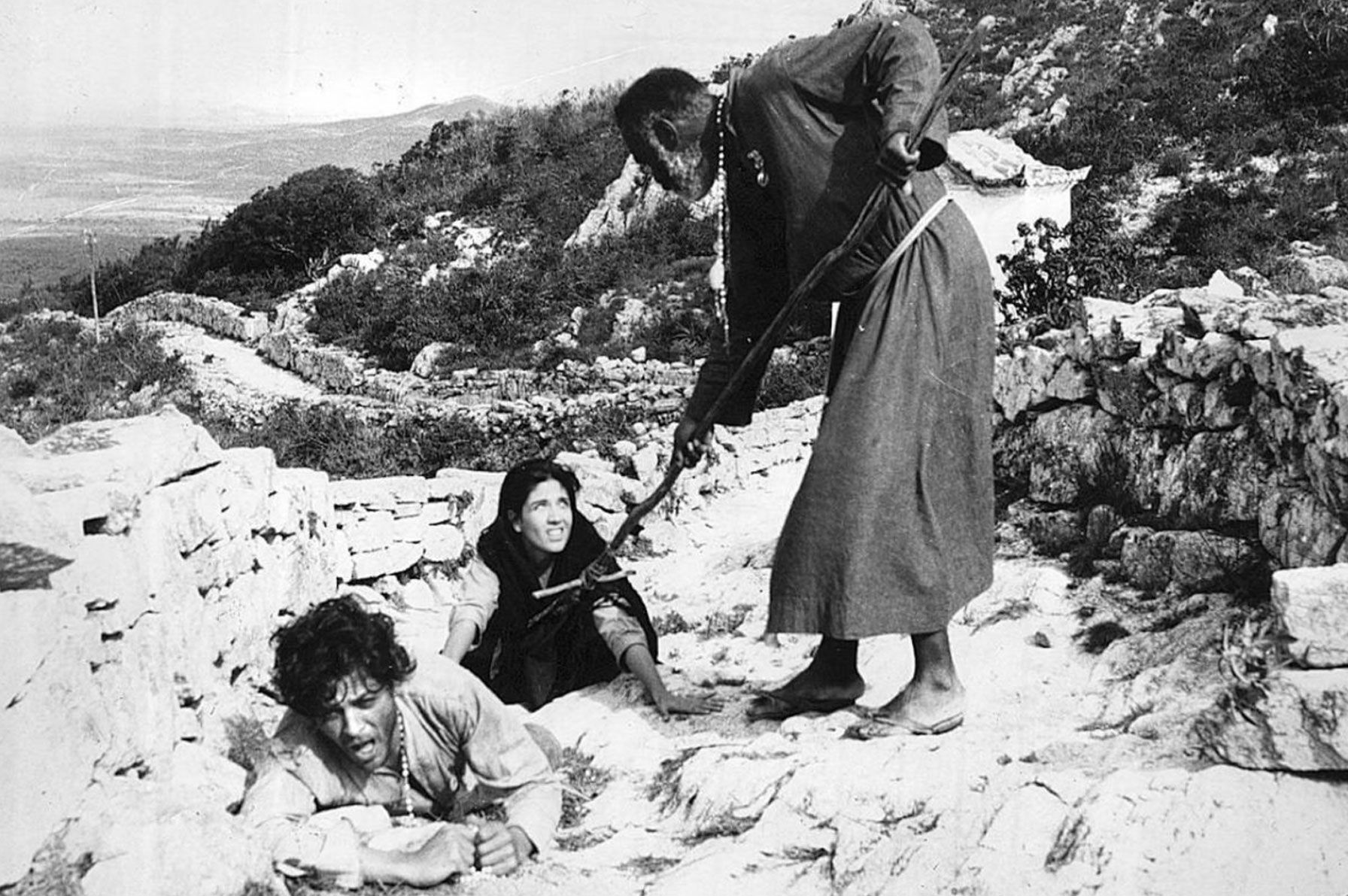
A fotograma of Deus e o Diabo…
El Cine del Tercer Mundo es inevitablemente relacional en su factura política, enfrentada tanto al cine espectáculo como el cine europeo de autor. Quiero decir, para el cine europeo y al estadounidense el cine del Tercer Mundo no cuenta, mientras que el Cine del Tercer Mundo no puede evitar la relación con el Cine del Primer Mundo. El diferencial de poder (dependencia) está inscrito en el patrón colonial de poder, por medio de la diferencia colonial. En ese sentido, el cine del Tercer Mundo que explícitamente se enfrenta para despertarse del cine del Primer Mundo es un cine ya decolonial en el sentido de reconstrucción gnoseológica (no solo epistemológica referido a los principios del conocimiento disciplinario). La razón es simple: todos ellos, incluido Sembène en África, saben que están en el Tercer Mundo y coexisten con la Guerra Fría entre el Primer y el Segundo Mundo. Sus haceres, empleen o no el vocablo decolonial, están marcados y enmarcados por la necesidad de ¨reconstitución epistemológica y estética¨. Es decir, reconstitución de los saberes y los sentires regulados por la voluntad colonial de poder mediante los dominios del patrón colonial de poder.
Third World cinema is unavoidably relational in its political construction, confronting both mainstream and European/US auteur cinema. That is to say, for European and American cinema, Third World cinema doesn’t matter, while Third World cinema cannot avoid its relationship with First World cinema. This is the power differential, indeed the colonial difference that entangles First and Third World Cinema. The power differential (dependence), in other words, is inscribed in the colonial matrix of power, through the colonial difference. In this sense, Third World cinema that explicitly confronts (entanglement) and delink from First World cinema is already decolonial in the sense of gnoseological and aesthesic reconstitution The reason is for both simultaneous moves is simple: all them in Iberoamerica, as well as Sembène in Africa, know that they are in the Third World and coexist with the imperial differential that entangled during the Cold War, the First and Second Worlds. Movie makers in the Third World whether or not they use the word “decolonial,” are oriented by the existential engagement towards in liberation working on gnoseological and aesthetic reconstitutions. That is, reconstitution of subjectivities regulated by the colonial will to power through and with its instrument, the colonial matrix of power.
En el ámbito académico, el reparto de la labor científica de las ciencias sociales en el mundo también es evidente y así lo hace saber quiénes viven la dependencia epistemológica. La teoría de la dependencia no es sólo una teoría que cuestiona el contenido (la dependencia económica) sino que en su propia praxis cuestiona la dependencia de las ciencias sociales. En este reparto de la labor científica, al Tercer Mundo se le asignó la antropología, partiendo de la idea de que el Tercer Mundo no produce ciencia sino cultura. En este sentido el Tercer Cine, el cine del Hambre y el Cinecon (junto a la literatura del boom literario) fueron manifestaciones artísticas que se desprendieron y crearon arraigados en el suelo histórico y no ya en la mera técnica cinematográfica o literaria. Aunque no sólo se trata de la “novela del boom”, sino también de la literatura africana, como la obra de Chinua Achebe (Nigeria) y de Ananta Toer (Indonesia), autor del “Cuarteto Buru”. Tal como Mulk Raj Anand (India), y Raja Rao (India). Resumiendo, las reflexiones y acciones frente a los legados coloniales son comunes en todo el Tercer Mundo, hoy el Sur Global.
In academia, the division of scholarly labour in the social sciences is also evident worldwide, as those who experience epistemological dependency make clear. Dependency theory is not only a theory that questions content (economic dependency) but also, in its very practice, they called into question the dependency of the social sciences themselves. In this division of scientific labor, anthropology was assigned to the Third World, based on the idea that the Third World produces culture, not science. In this sense, Third World Cinema, the Hunger Cinema, and Cine Con (along with the literature of the Latin American Boom) were artistic manifestations that emerged and were grounded in historical context, not merely in cinematic or literary technique. This includes beyond the “Boom of the novel,” but also African literature, such as the works of Chinua Achebe (Nigeria) and Ananta Toer (Indonesia), author of the “Buru Quartet,” as well as Mulk Raj Anand (India) and Raja Rao (India). In summary, reflections and actions in response to colonial legacies are common throughout the Third World, today the Global South.
VI
Un corto desvío por la semioesfera y el cine del Tercer Mundo, mencionada más arriba. La cultura abarca todo aquello que ha sido creado por las gentes: desde el arco y la flecha hasta los tanques de guerra y los drones. Por su parte, la semioesfera es el universo de los signos en el ámbito cultural, es decir, el espacio en el que los signos —verbales, visuales, sonoros— son creados y utilizados para coordinar acciones y significados entre integrantes de una sociedad.
A brief digression into the semiosphere and Third World cinema, mentioned above. Culture encompasses everything created by people: from the bow and arrow to tanks, drones and AI. The semiosphere, for its part, is the universe of signs within the cultural sphere; that is, the space in which signs—verbal, visual, and auditory—are created and used to coordinate actions and meanings among members of communities and societies.
Aunque casi cualquier cosa puede funcionar como signo, no todo objeto material cumple la misma función: por ejemplo, un tanque de guerra está diseñado para destruir, mientras que un martillo sirve para clavar o desmontar muebles. Los signos, en cambio, constituyen sistemas complejos que emergen de procesos de semiotización, en los que intervienen actores, instituciones, lenguas, idiomas y metalenguajes (es decir, reflexiones sobre los lenguajes y los discursos que regulan las prácticas semióticas). En este vasto terreno se inserta la imagen en movimiento, desde el cine de ficción tradicional hasta el documental y el cine experimental, como un campo donde los signos se ponen en juego, se interpretan y se reinventan constantemente.
Although almost anything can function as a sign, not every material instrument serves the same purpose: for example, a tank is designed to destroy, while a hammer is used for nailing or dismantling furniture, although a tank may be placed in a military museum and a hammer used to kill. Signs, on the other hand, constitute complex systems that emerge from processes of semiotization, involving actors, institutions, languages, and metalanguages; that is, reflections on the languages and discourses that regulate semiotic practices. A tank and a hammer are not just made and used, they both presuppose language coordination to their making and uses, or abuses. The moving image, from traditional fiction film to documentary and experimental cinema, is situated within this vast terrain as a field where signs are constantly being used, interpreted, and reinvented.
¿Qué relación existe entre la cinematografía, la colonialidad y la decolonialidad? Analicé- moslo. Es necesario iniciar por la colonialidad, ya que la decolonialidad solo adquiere sentido en la medida en que propone alternativas a la colonialidad del ser, del poder, del ver, del sentir, del saber y del imaginar. Si bien la semioesfera surge junto con la extensión de las actividades de organismos vivientes que, al liberar las extremidades superiores y erguirse sobre dos, utilizaron las manos y los dedos para crear instrumentos y procurarse alimento, también este proceso implicó liberar la boca, anteriormente dedicada a proveer la alimentación, tal como aún ocurre entre otros mamíferos, y no solo entre ellos.
Now, what are these relationships between cinematography, coloniality, and decoloniality? Let’s look at it closely. It is necessary to start with coloniality, since decoloniality only acquires meaning insofar as it reveals how coloniality works and proposes alternatives to the coloniality of being, power, seeing, feeling, knowing, and imagining, many of them already exist but have been silenced or demonized by the coloniality of knowing and knowledge. While the semiosphere emerges alongside the expansion of the activities of living organisms that, upon freeing their upper limbs and standing upright, used their hands and fingers to create tools and obtain food, this process also implied freeing the mouth, previously dedicated to providing nourishment, as still occurs among other mammals, and not only among them.
Al liberar la boca, fue posible fabricar sonidos que sirvieron de signos para coordinar conductas en la comunidad, y luego, con las manos, crear signos gráficos en piedras y árboles para contar historias y recordar acontecimientos. Durante un extenso proceso que abarcó miles, sino millones de años, llegó un momento en que los signos orales ya codificados permitieron coordinar conductas con mayor detalle. Más importante aún, aquí se encuentra el punto esencial: nuestros ancestros comenzaron a contar historias (storytelling). Narraban la creación del sol, la luna y las estrellas, los árboles y las plantas, y los organismos vivos como nosotros que, pero que, por alguna razón, no llegaron a liberar las manos y la boca y fabricar complejos sistemas semióticos. La capacidad de contar historias es un salto tan grande como el surgimiento de la agricultura, hace unos 12,000 años.
By freeing their mouths, our ancestors became able to produce sounds that served as signs to coordinate behavior within the community, and later, with their hands, create graphic signs on stones and trees to tell stories and remember events. During an extensive process spanning thousands, if not millions, of years, a point was reached where these codified oral signs allowed for more detailed coordination of behavior. More importantly, and this is the crucial point, our ancestors began to tell stories. They narrated the creation of the sun, the moon, and the stars, the trees and plants, and living organisms like us who, that for some reason of the biosphere, never freed their hands and mouths to create complex semiotic systems. The ability to tell stories was a leap as significant as the emergence of agriculture some 12,000 years ago.
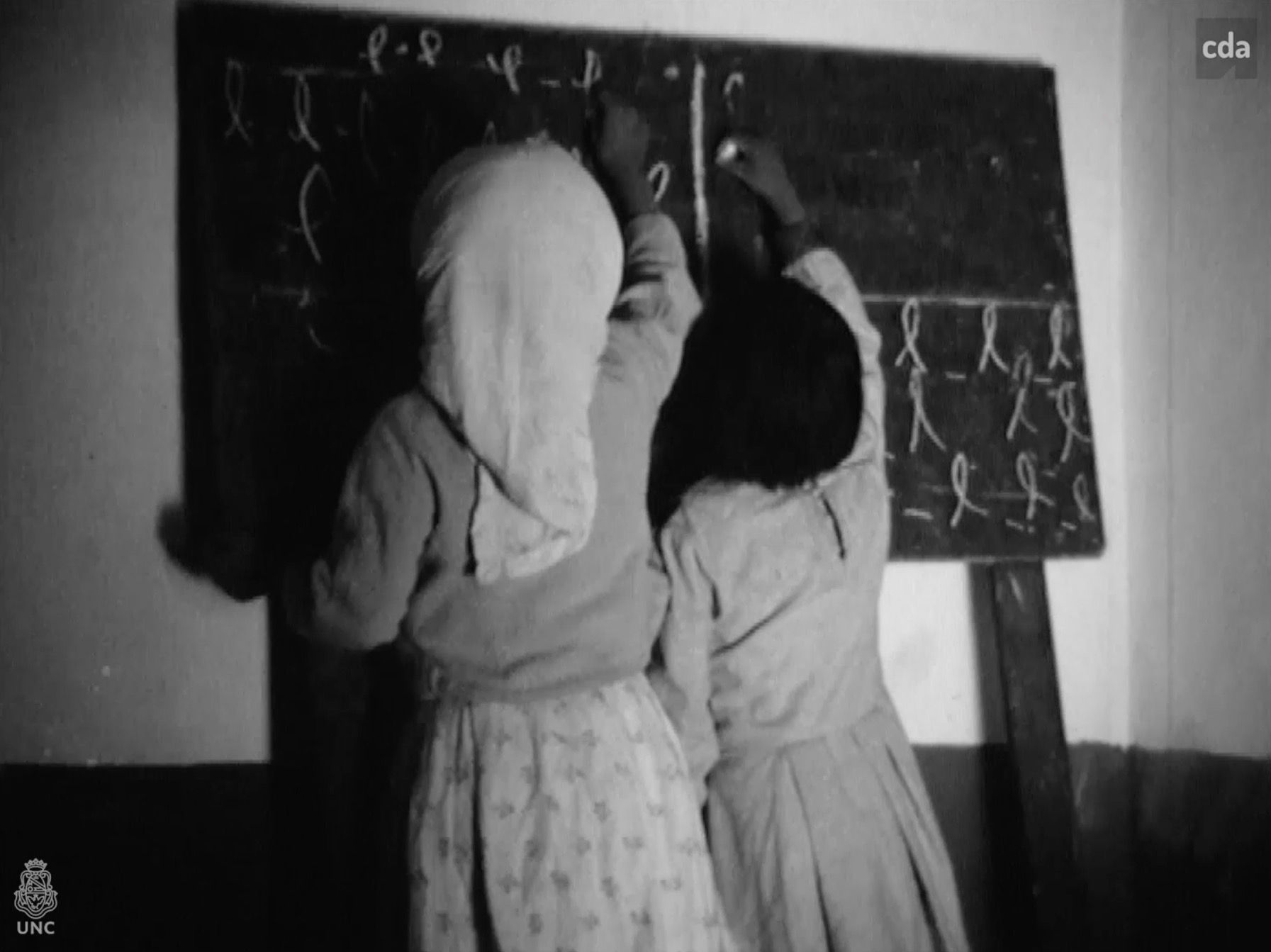
Los relatos orales fueron canalizados por signos gráficos, que hoy conocemos como siste- mas de escritura. Los Vedas, por ejemplo, eran relatos orales que mucho más tarde se plasmaron en sánscrito védico. Lo que hoy conocemos como el Popol Vuh eran relatos orales muy anteriores a la invasión hispánica de la península de Yucatán. Ya bajo el régimen hispánico, fueron escritos en escritura alfabética romana y en lengua maya-quiché y escondidos por más de un siglo y medio, para uso de la comunidad. Desde Homero, unos ocho siglos a.C., hasta la Divina Comedia, Don Quijote y la novela realista, el arte de contar historias fue adquiriendo comple- jidades técnicas y también complejidades a través de los metalenguajes creados para regular e interpretar relatos. En el renacimiento, por ejemplo, no sólo se contaban historias, orales, escritas, en imágenes, sino que también se escribían tratados con instrucciones de cómo contar historias o formar argumentos.
Oral narratives were channeled through graphic signs, which we know today as writing systems. The Vedas, for example, were oral narratives that were later written down in Vedic Sanskrit. What we know today as the Popol Vuh were oral narratives that predated the Spanish invasion of the Yucatán Peninsula. Under Spanish rule, they were written in Roman alphabetic script and in the Maya-Quiché language and hidden for more than a century and a half for the use of the community. From Homer, around the eighth century BC, to the Divine Comedy, Don Quixote, and the realist novel, the art of storytelling acquired technical complexity as well as complexity through the metalanguages (poetics, literary art, aesthetics, etc) created to regulate and interpret narratives. In the Renaissance, for example, stories were not only told orally, in writing, and through images, but treatises were also written with instructions on how to tell stories or construct plots in writing, images, material forms (architecture, sculpture). [24]On this trajectory see Walter D. Mignolo, “Ars, Aesthesis, (De) Coloniality.” Investigaciones Artisticas. Bogota: Universidad Distrital, Vol 11/19 2025, revistas
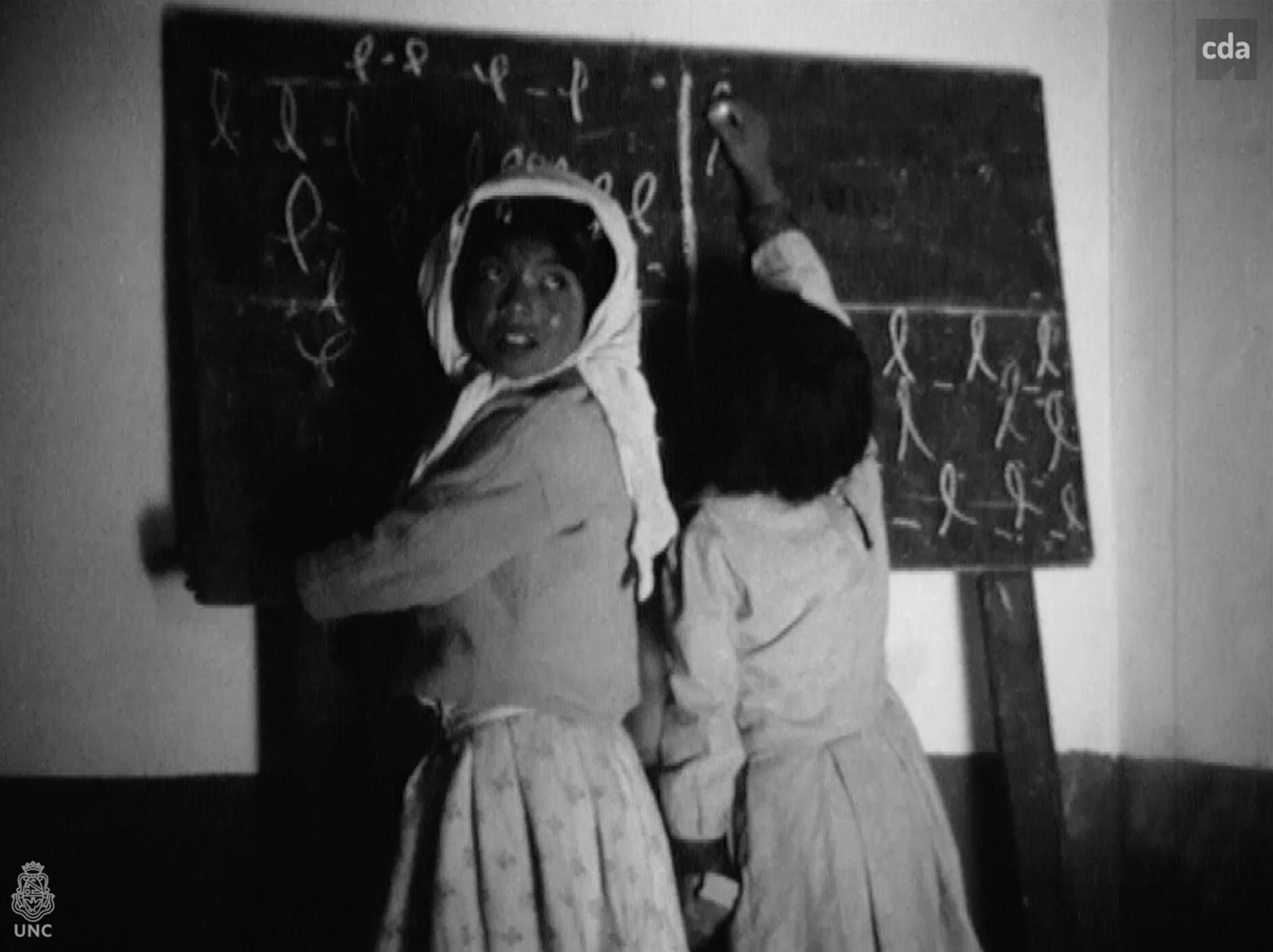
VI
La cinematografía y la imagen en movimiento surgen en la intersección entre el arte de narrar, la técnica fotográfica y la creación de imágenes visuales móviles. Es decir, se empieza a contar historias por medio de imágenes en movimiento. Por otro lado, la materialidad de con- tar historias con imágenes móviles se materializa en la palabra “cinematografía”, que combina raíces griegas: “kinema” (κίνημα), que significa «movimiento», y «graphein” (γράφειν), que significa “escribir” o “dibujar”: kinema + grapheme. En esencia, significa “escribir con movimiento”, capturando imágenes visuales con una cámara que permite crear el efecto de movimiento. Las primeras películas de Charles Chaplin fueron mudas, así como El acorazado Potemkin. Con el agregado de la banda sonora a las imágenes en movimiento tenemos entonces kinema + graph- eme+ phoné, que significa tanto sonido como voz.
Cinematography and the moving image emerge at the intersection of storytelling, photographic instruments, and the creation of moving visual images. In other words, stories begin to be told through moving images. Furthermore, the materiality of telling stories with moving images is embodied in the word “cinematography,” which combines Greek roots: “kinema” (κίνημα), meaning “movement,” and “graphein” (γράφειν), meaning “to write” or “to draw”: kinema + grapheme. Essentially, it means “writing with movement,” capturing visual images with a camera that allows the creation of the effect of movement. Charles Chaplin’s first films were silent, as was Battleship Potemkin. With the addition of a soundtrack to the moving images, we then have kinema + grapheme + phoné, which means both sound and voice.

Va de suyo que tanto grafía, grapheme (signos visuales en superficies planas), como phoneme (sonidos fabricados por personas, distinto al trueno por ejemplo que no lo fabrican personas), fueron y son tipos de signos inherente a toda civilización existente en el planeta desde la Era Axial, expresión de Karl Jasper, a partir de unos siglos AEC, y kinema es inherente a todo organismo viviente con condiciones de desplazamiento. El tipo de grapheme que fabrica la cámara fotográfica y la cinematográfica, fueron técnicas posibles debidas a la Revolución Industrial. De modo que el instrumento cámara es inseparable del capitalismo industrial, que desplaza al capitalismo mercantil de los dos siglos y medios anteriores. Es decir, la cámara es un invento técnico de la burguesía que generó la Revolución Industrial y desplazó el control de las monarquías y de la iglesia.
It goes without saying that both writing (grapheme, visual signs on flat surfaces) and phoneme (sounds produced by people, unlike thunder or snowing, for example, which is not produced by people) were and are types of signs inherent to every civilization existing on the planet since the Axial Age, a term coined by Karl Jaspers whom located its advent around the 8th century BCE. Kinema is inherent to every living organism capable of movements and displacements. But graphemes are only possible for living organisms that liberating their hands to inscribed visible traces of flat surfaces.[25]See Walter D. Mignolo, “(Re) Modelling the Letter. Literacy and literature at the intersection of semiotics and literary studies. In On Semiotic Modeling. Myrdene Anderson and Floy Merrell, eds. Holland: De Gruyter, 1991, 357-394 More closely to us photographic and cinematographic cameras became possible because of the Industrial Revolution, a revolutionary technique to create machines to produce objects in series, like the automobile. Thus, the camera is inseparable from industrial capitalism, which displaced the mercantile capitalism of the previous two and a half centuries. In other words, the camera is an instrument, a technical invention of the bourgeoisie that fueled the Industrial Revolution and displaced the economic and political control held by monarchies and the church.

En 1895, los hermanos Lumière filmaron la primera película. La complicidad entre la cámara y la industria quedó evidenciada en este primer filme: *La salida de la fábrica Lumière*. Mientras esto sucedía en Francia, de este lado del Atlántico, se fundó en 1888 la revista *National Geographic Magazine*, conocida como *National Geographic*. Notemos que en 1888 todavía no existían las técnicas para fotografías en color ni en *glossy paper*. Sin embargo, *National Geographic* puso sobre la mesa el potencial de la imagen para moldear el sentido del mundo. Con esto quiero decir que Occidente fue la primera civilización, entre las varias existentes hasta 1500—pues antes de esa fecha la civilización occidental aún no era imaginable—, en articular la narración visual y verbal de su entorno. En ese momento, el mundo occidental se encontraba conformado principalmente por la Cristiandad de Occidente.
In 1895, the Lumière brothers recorded the first moving image narrative. The close relationship between the camera and the film industry was evident in this first movie: Workers Leaving the Lumière Factory. While this was happening in France, on this side of the Atlantic, National Geographic Magazine, known as National Geographic, was founded in 1888. It’s worth noting that in 1888, techniques unfolded colour photographic images while glossy paper didn’t yet exist. However, National Geographic, highlighted the potential of images to shape our understanding of the world. By this, I mean that the West was the first civilization—among the various ones existing up to 1500, since before that date Western civilization was still unimaginable—to articulate the visual and verbal narrative of its surroundings. At that time, the Western world was primarily comprised of Western Christendom.
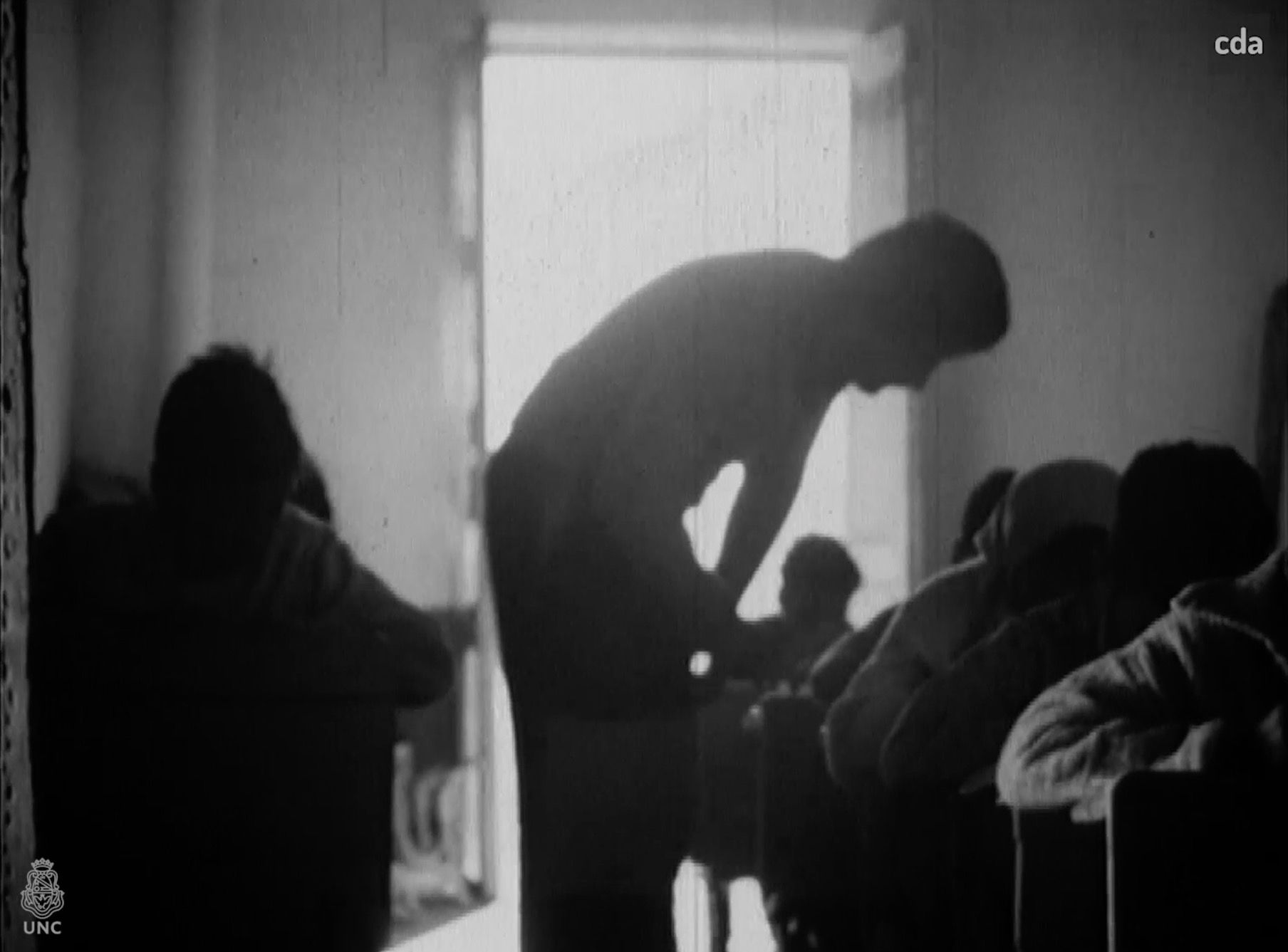
Fue la expansión colonial la que permitió no solo la materialidad de la navegación, la explotación laboral y la producción para el comercio global, sino que también posibilitó los primeros relatos escritos en Europa sobre el resto del planeta. *National Geographic* amplió el alcance de los relatos verbales acompañados de imágenes ilustradas de flora, fauna y mapas, y, posteriormente, de fotografías que documentaban el planeta en color y papel brillante. La civilización occidental fue la última en llegar y la primera de apoderarse del mundo en los dos niveles, la materialidad de las navegaciones, del comercio, de la expropiación, del trabajo y la apropiación narrativa y descriptiva acaparada por los relatos verbales, primero ilustrados con diseños a mano, la litografía utilizada por los viajeros del siglo XIX, luego la imagen fija (fotografía) en blanco y negro, luego a color y finalmente la imagen móvil del cine documental.
It was colonial expansion, since 1500, that enabled not only the tangible realities of navigation, labor exploitation, and production for global trade, but also the first written accounts in Europe about the rest of the planet. National Geographic broadened the scope of oral and written narratives accompanied by illustrated images of flora, fauna, and maps, and later, by photographs that documented the planet in color and glossy paper. Western civilization was the last to arrive and the first to seize control of the world on two levels: the tangible realities of navigation, trade, expropriation, and labor, and semiotically through narratives and descriptives appropriation captured by oral and written accounts, first illustrated with hand-drawn designs, the lithography used by 19th-century travelers, then the still image (photography) in black and white, then in color, and finally the moving image of documentary film.

En 1911, Ricciotto Canudo lanzó una bomba. Propuso que el cine debiese considerarse como el séptimo arte. Aquí entramos en otra veta compleja de la semioesfera: la cinematografía ya no sólo consiste en hacer películas sino también de reflexionar sobre el sentido de hacer películas, va acompañada del metalenguaje que reflexiona sobre la cinematografía. En 1953, la imagen móvil cinematográfica amplió su impacto en la audiencia con la llegada del cinemas- cope y el sonido estereofónico. Ya conocemos la composición de la palabra cinema. Agreguemos scope, presente en telescope y microscope que proviene del griego scopein, es decir, mirar. A esto se sumó el sonido estereofónico. El término estéreo procede del griego antiguo stereos, que significa sólido o tridimensional. Así se describe a los sistemas de sonido que emplean dos o más canales para generar una experiencia auditiva inmersiva.
In 1911, Ricciotto Canudo dropped a bombshell. He proposed that cinema should be considered the seventh art. Here we entered another complex disposition of the semiosphere: cinematography no longer consists solely of making films but also of reflecting on the meaning of filmmaking The cinematic metalanguage emerged to reflect on cinematography itself. In 1953, the moving image of cinema broadened its impact on audiences with the arrival of cinemascope and stereophonic sound. We already know the composition of the word “cinema.” Let’s add “scope,” present in “telescope” and “microscope,” which comes from the Greek “scopein,” meaning “to look.” To this was added stereophonic sound. The term “stereo” comes from the ancient Greek “stereos,” meaning solid or three-dimensional. This describes sound systems that use two or more channels to generate an immersive auditory experience.

Una vez más, resulta evidente cómo las innovaciones técnicas y el léxico de las lenguas europeas modernas han delimitado y dirigido el significado tanto de la imagen verbal como de los avances técnicos. Es decir, lo tecnológico no es la técnica, sino la narrativa sobre la técnica: techno + logos. Son los relatos, los discursos, los argumentos, a través de sus procesos semióticos, los que configuran y dan sentido, situando la semiosfera en el vasto campo de la cultura, entendida como el conjunto de creaciones humanas. Las técnicas constituyen una dimensión de la cultura, los relatos, discursos, argumentos sobre la técnica constituyen una dimensión de la semioesfera.
Once again, it becomes clear how that technical innovations in the fabrication of instruments and the lexicon of modern European languages have defined, detented and directed the meaning of both the verbal image and the advances of technical instruments. In other words, the technological is neither the technique itself nor the instrument or the object, but rather the narrative about the technique (techno + logos), consisting in a will and the need to create instruments for survival, domination, liberation, re-existence, etc. Technology refers to the stories, the discourses, the arguments, about the semiotic processes, that shape and give meaning to living. If the biosphere engendered the living, the semiosphere gives meaning to the living by both creating instruments that facilitate living conditions and creating metalanguages that interpret the meaning of the instruments and their uses and abuses. While technique names the will to do (and relates to being in the Heideggerian senses) technology names the the stories, discourses, and arguments techniques, instruments, uses and abuses. In this sense the semioshere is tantamount to a general meaning of cultura distinguished from natura.
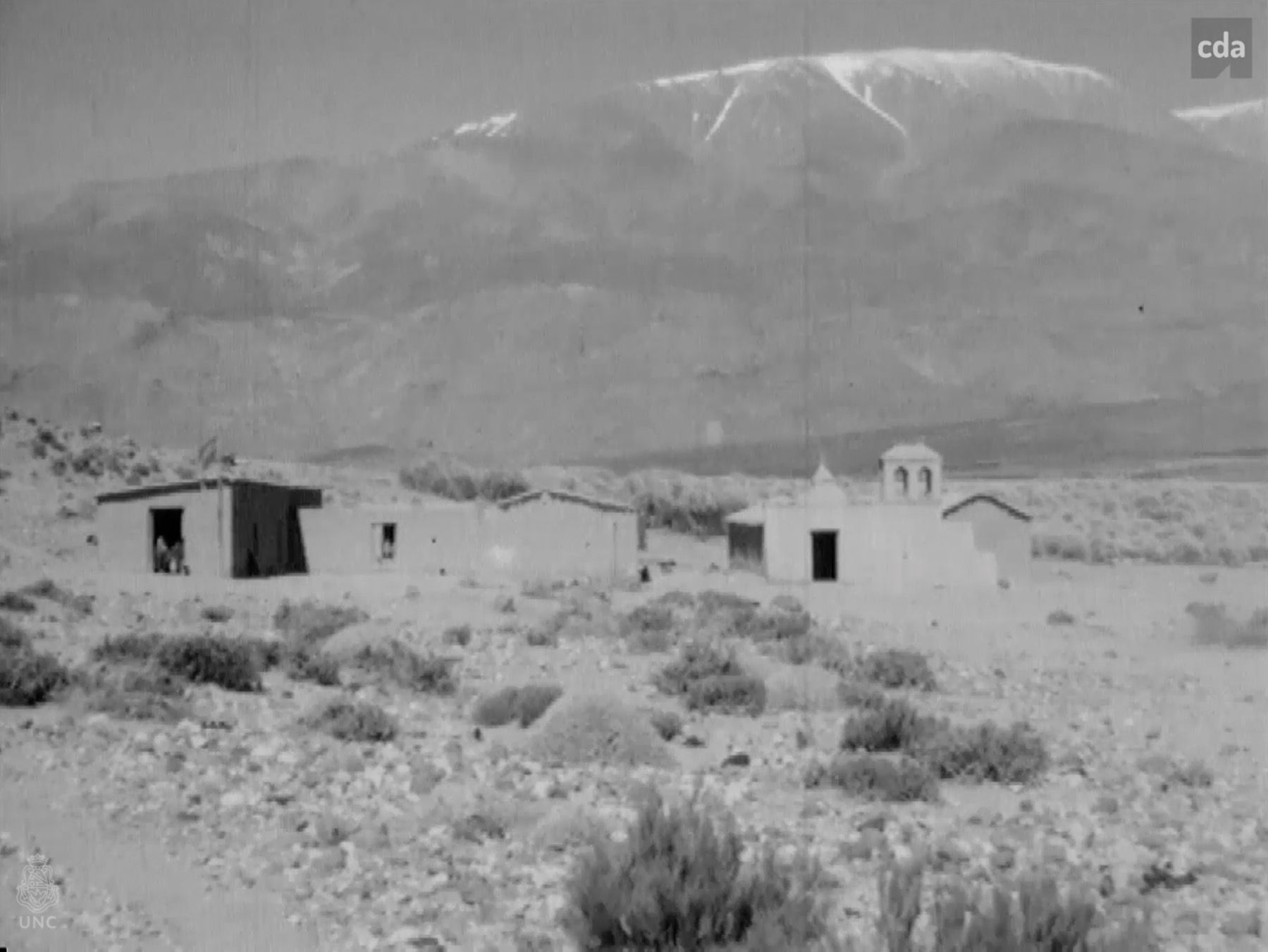
En la medida en que la técnica industrial se expande, las posibilidades para narrar historias visuales en cinemascope y con sonido estereofónico aumentan y, con ellas, el efecto en las subjetividades de las personas espectadoras. Ya no observan la imagen móvil a distancia; ahora son envueltas por las imágenes en grandes pantallas y el sonido que, en vez de salir solo desde la pantalla, rodea la por completo. Esta transformación fue más intensa en Estados Unidos que en Europa. Las películas producidas en cinemascope y con sonido estereofónico marcaron un momento relevante para Hollywood, así como la oportunidad de celebrar y proyectar la historia occidental (Los diez mandamientos, Cecil B. De Mille, 1956) y la imagen de Estados Unidos (Big Country, traducida al castellano como Horizontes de grandeza, William Wyler, 1958). Hollywood se consolidó como *la fábrica de los sueños*, en la conocida frase de Hortense Powdermaker, Hollywood, The Dream Factory. An Anthropologist Looks at the Moviemakers, 1950.
As industrial technique expanded, the possibilities for telling visual stories in cinemascope with stereophonic sound increased, and with them, the effect on the subjectivities of viewers. They no longer observed a moving image from a distance; now they/we were/are enveloped by the images on large screens and the sound that, instead of emanating only from the back of the screen, surrounds as completely. This transformation was more intense in the United States than in Europe. Films produced in cinemascope with stereophonic sound marked a significant moment for Hollywood, as well as an opportunity to celebrate and project Western history (The Ten Commandments, Cecil B. DeMille, 1956) and the image of the United States (Big Country, William Wyler, 1958). Hollywood consolidated itself as the dream factory, in the well-known phrase by Hortense Powdermaker, Hollywood, the Dream Factory: An Anthropologist Looks at the Moviemakers, 1950.
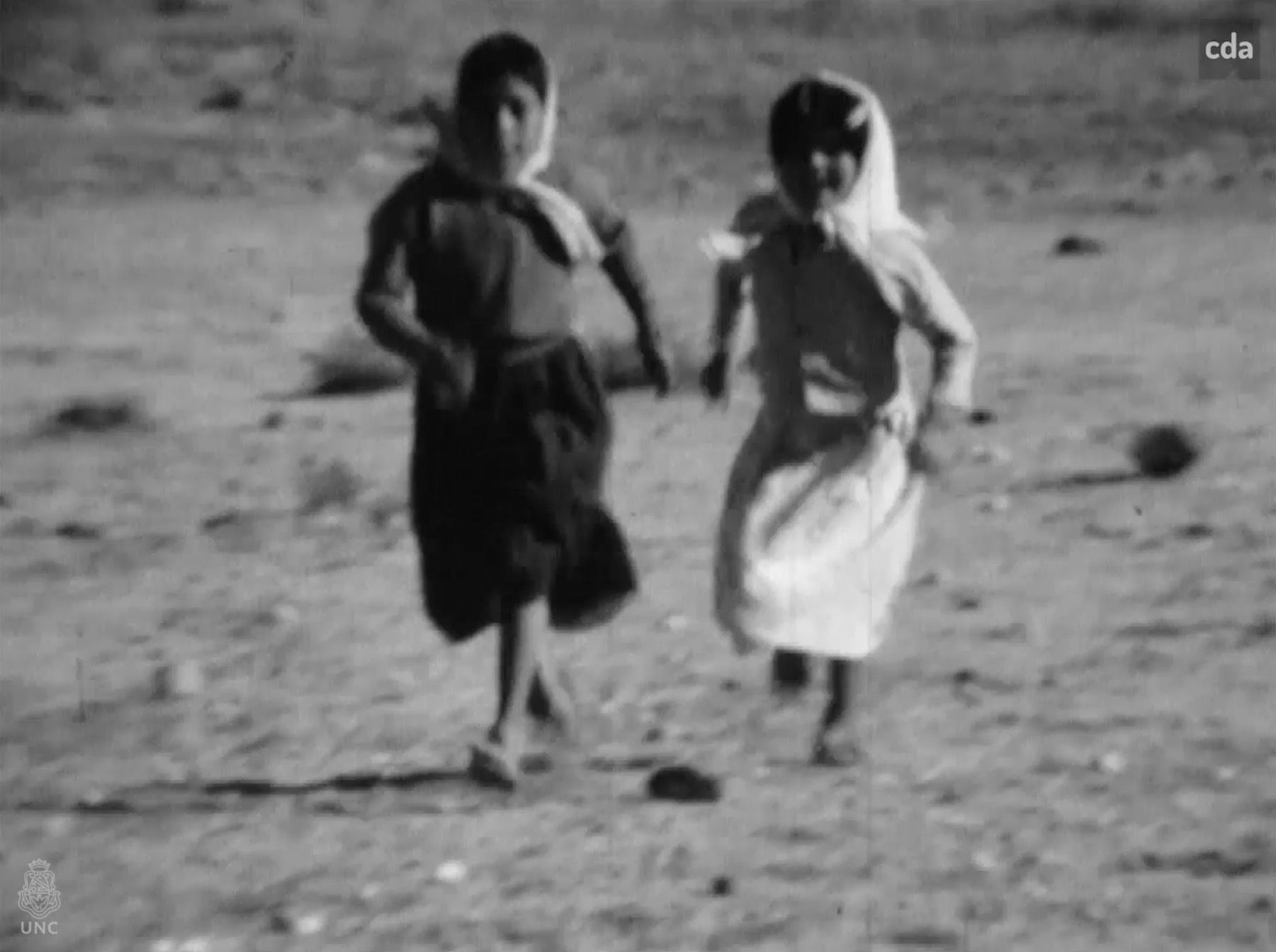
En la década de los 50, surgió el cine de autor, sin que lo anterior deje de existir, a vec- es mezclados ambos estilos como en Horizontes de grandeza (Gregory Peck) o Gigante (James Dean) en Estados Unidos. Dos películas memorables del cine autor son las de Elia Kazán: A Streetcar Named Desire/Un tranvía llamado deseo (1951) y On the Waterfront/Nido de ratas (1954). El cine de autor no fue sólo una renovación técnica en la narrativa y un desprendimiento del cine espectáculo, sino que fue paralelo y complemento de preocupación y atención a las tensiones sociales de postguerra. El cine italiano de Luchino Visconti (Rocco e i Suoi Fratelli (1960), Il Gatopardo (1963) así como en filmes precursores como Ladri di biciclette/Ladrón de bicicletas de Vittorio De Sica (1948), mostraron la complicidad del cine de autor con la exploración de conflictos sociales. Adelanto, para explorar con más detalle luego, que el cine de autor puede y ha ido en distintas direcciones. Puede por un lado enfatizar el individualismo a la vez que puede explorar e invitar a la audiencia a pensar, mediante el impacto estético que la imagen genera en la sensibilidad de la audiencia.
In the 1950s, auteur-cinema emerged, without the earlier styles ceasing to exist. Sometimes both styles were blended. In Hollywood films like The Big Country director by William Willer (1958, Gregory Peck and Jean Simmons) or Giant, directed by George Stevens (1956, James Dean, Elizabeth Tylor, Rock Hudson). But perhaps the most remarkable and memorable auteur-cinema are those by Elia Kazan: A Streetcar Named Desire (1951) and *On the Waterfront* (1954), both performed by the impeccable Marlon Brando. Auteur cinema was not only a technical renewal in narrative and a departure from spectacle cinema, but it also ran parallel to and complemented the social tensions of the postwar era. Italian cinema, from Luchino Visconti (Rocco e i Suoi Fratelli (1960) and Il Gatopardo (1963)) to precursor films like Vittorio De Sica’s Bicycle Thieves (1948), demonstrated the auteur cinema’s complicity with exploring social conflicts. I will elaborate on this point later, noting that auteur cinema can and has taken different directions. On the one hand, it can emphasize individualism, while on the other, it can explore and invite the audience to reflect through the aestheSic impact of the image on their sensibilities.
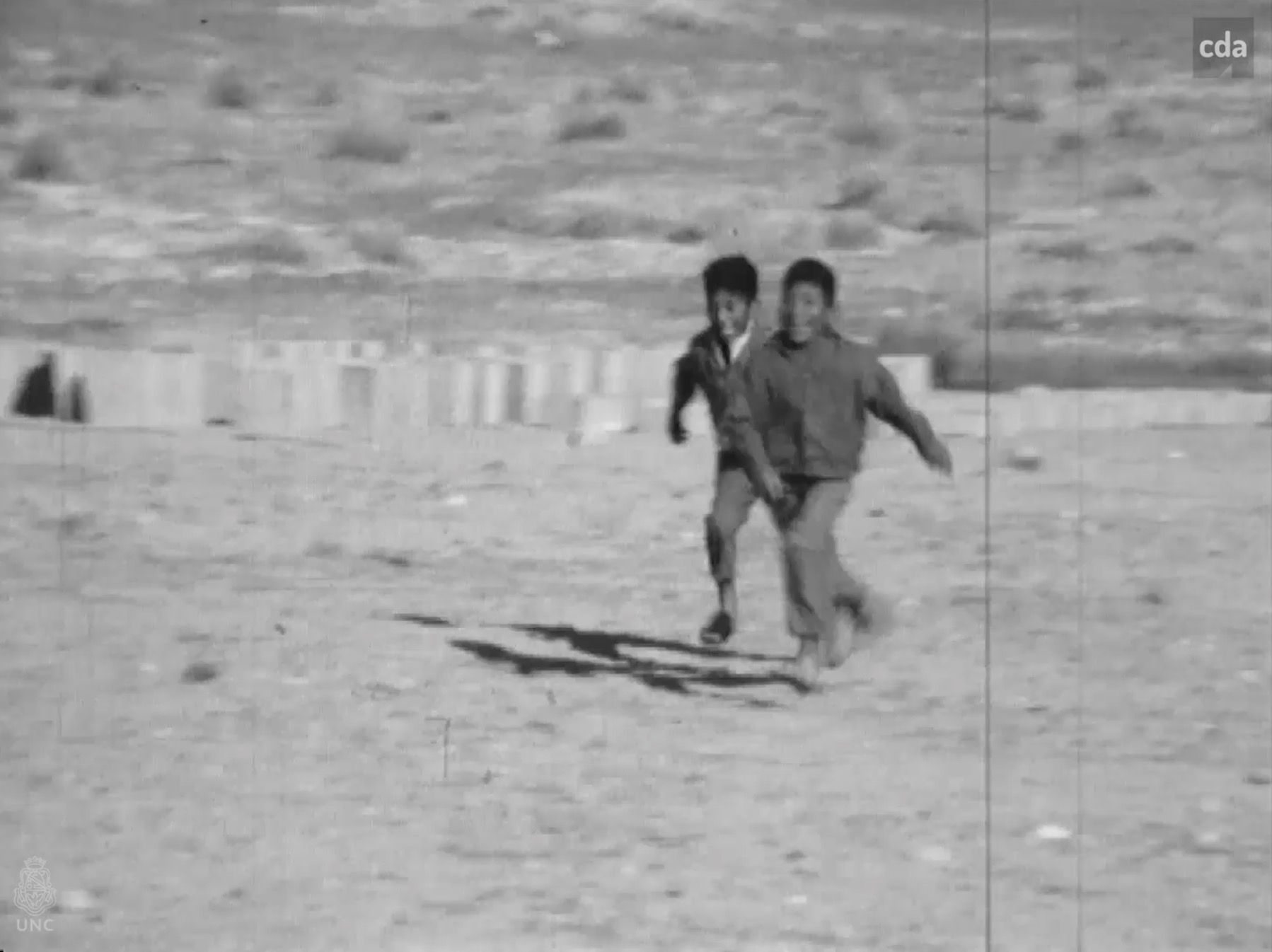
Del otro lado del Atlántico, la década de los 60 marcó nuevas rutas para la narración en imágenes móviles, especialmente en Italia y Francia. En Italia, la tetralogía de Michelangelo Antonioni (Eclipse (1962) La Notte (1961), L’Avventura (1960), Deserto Rosso (1964)) empleó la imagen móvil, el encuadre y el uso de luces y sombras (o el color en Deserto Rosso) para explorar aspectos poco visibles de la experiencia humana. Antonioni llevó al cine lo que las novelas del siglo XIX lograron con palabras: analizar la vida burguesa italiana de los 60. Luchino Visconti, con películas como Rocco e i suoi Fratelli e Il Gatopardo, abordó las relaciones entre el sur y el norte de Italia. En Rocco, una familia del sur se traslada a Milán en busca de mejores oportunidades. En Il Gatopardo, se retrata la transición de la aristocracia frente a una burguesía emergente, desde la visión de quienes ya no pueden ignorar ese cambio. Federico Fellini, por su parte, introdujo una dimensión personal en su reflexión sobre el cine y la escritura. Sus pelícu- las, entre la burguesía de Antonioni y la aristocracia de Visconti, exploran vivencias de la clase media italiana, como muestran los personajes de Marcello Rubini en La Dolce Vita (1960(y Gui- do Anselmi en 8 ½ (1963).
Across the Atlantic, the 1960s charted new courses for storytelling by auteur cinema in moving images, especially in Italy and France, but also in Japan, Polland and Russia. In Italy, Michelangelo Antonioni’s tetralogy (L’ Eclipse (1962), La Notte (1961), L’Avventura (1960), Il Deserto Rosso (1964)) employed the moving image, framing, and the use of light and shadow (or color in Il Deserto Rosso) to explore less visible aspects of the human experience. Antonioni brought to the screen and at the second half of the twentieth century what 19th-century novels had achieved with words. Antonioni created an anatomy of bourgeois Italian life in the 1960s. Luchino Visconti, with films like Rocco e i suoi Fratelli and Il Gatopardo, explored the relationship between southern and northern Italy. In Rocco, a family from the south moves to Milan in search of better opportunities. In The Leopard, the dawn of southern aristocracy and the emerging southern bourgeoisie is portrayed from the perspective of those who can no longer ignore this change and support changes to remain in power (Lampedusa). Federico Fellini, for his part, introduced a personal dimension to his reflections on cinema and writing. His films, floating between Antonioni’s bourgeoisie and Visconti’s aristocracy, explore the experiences of the Italian middle class, as exemplified by the characters of Marcello Rubini in La Dolce Vita (1960) and Guido Anselmi in 8 ½ (1963). In Fellini there is also an element reflecting on moving making itself, a feature that will be more evident in the French Nouvelle Vague.

A la par de estos filmes italianos, la Nueva Ola Francesa transformó los estilos narrativos. Llevó la cámara a las calles, narró aspectos cotidianos del vivir, desde la historia de un niño rebelde en un orfanato (Les quatrecents coups (1959) Los cuatrocientos golpes). Jean Francois Truffaut asombró a espectadores y crítica al cerrar la película con un largo travelling, la cámara sobre rieles, siguiendo de costado a Antoine Doinel corriendo hacia la playa, en un final abierto e incierto. Jean-Luc Goddard (A Bout de Souffle, Sin Aliento, 1960) también sorprendió a la críti- ca y la audiencia al relatar la cotidianeidad de un pequeño delincuente (Michel Poicard) y una periodista americana (Patricia Francini) que termina traicionándolo, en un relato que elimina escenas innecesarias y redundantes, juega y parodia el género policial. La Nueva Ola Francesa introdujo la cotidianidad en el relato cinematográfico y sacó la cámara del trípode y la puso en las manos del fotógrafo.
Alongside these Italian films, the French Nouvelle Vague transformed narrative styles. It took the camera to the streets, narrating everyday aspects of life, from the story of a rebellious boy in an orphanage (The 400 Blows (1959)). Jean-François Truffaut astonished audiences and critics by closing the film with a long tracking shot, the camera on rails, following Antoine Doinel sideways as he runs toward the beach, in an open and uncertain ending. Jean-Luc Godard (Breathless, 1960) also surprised critics and audiences by portraying the daily life of a petty criminal (Michel Poicard) and an American journalist (Patricia Francini) who ends up betraying him, in a story that eliminates unnecessary and redundant scenes, and plays with and parodies the detective genre. The French Nouvelle Vague—or New Wave—revolutionized cinematic storytelling by bringing everyday life into focus and narrating stories grounded in the realities of daily existence. This movement took the camera off the traditional tripod and away from the elaborate Hollywood setups, such as the camera dolly—a heavy, wheeled platform often operated by a dolly grip. Instead, the Nouvelle Vague filmmakers placed the camera directly in the hands of the cinematographer, a change made possible by the fabrication and use of lighter, more portable cameras. This technical innovation of the instrument allowed for greater spontaneity and mobility, giving directors and photographers the freedom to capture moments and perspectives outside of controlled studio environments.
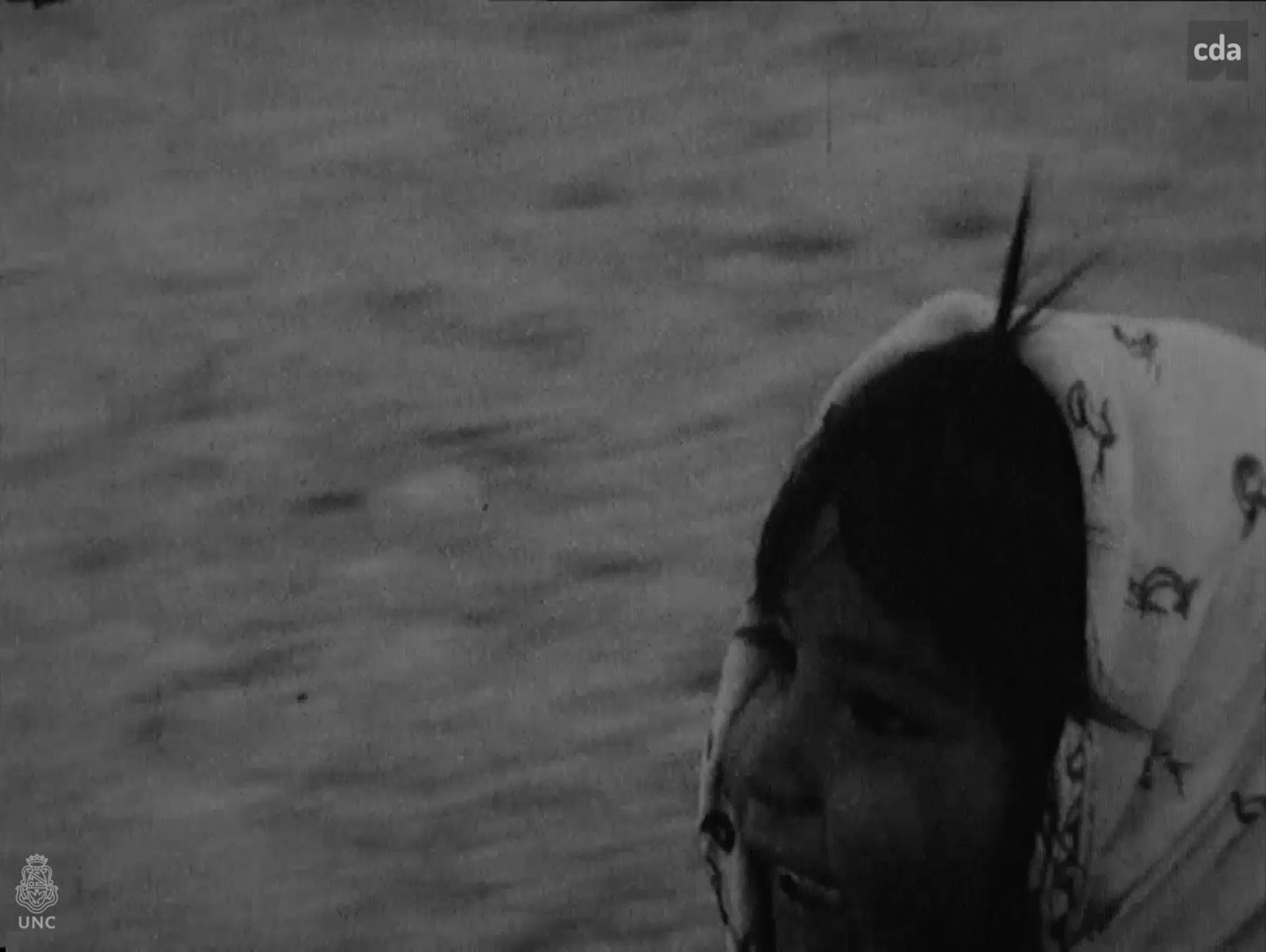
VIII
Algunas notas de relevancia sobre las observaciones en las dos secciones precedentes:
En primer lugar, el cine es una de las esferas semióticas (universo de los signos, semio- esfera en el vocabulario de Jurij Lotman) en las que se manifiestan, después de la segunda Guerra Mundial, las respuestas creativas en el Tercer Mundo frente a la emergente ideología Américo-céntrica del ¨desarrollo y la modernización¨ lanzada por el presidente Harry Truman en 1949. Por un lado, el cine, pero también las ciencias sociales, las humanidades y el arte, la creación intelectual no-académica, pusieron de relieve que el desarrollo y la modernización no era posible mientras las regiones del Tercer Mundo fueran estados dependientes. Al mismo tiempo, reconocer la dependencia y denunciarla no impedía la creatividad. Quizás, al contrario, la incentivaba. Por esa razón, la teoría de la dependencia surgió en América del Sur y no en Asia o África (nunca podría haber surgido en Estados Unidos o Europa occidental) después de más de un siglo de las independencias de la colonia hispánica (más reciente, la independencia brasilera de la corona portuguesa asentada en su territorio).
Some relevant notes and observations on the two preceding sections:
First, cinema is one of the semiotic spheres (universe of signs, semio-sphere in Yuri Lotman’s vocabulary) in which, after the Second World War, creative responses in the Third World manifested themselves in the face of the emerging American-centric ideology of “development and modernization” launched by President Harry Truman in 1949. On the one hand, cinema, but also the social sciences, the humanities, and art—non-academic intellectual creation—highlighted that “development and modernization” (in modern/colonial vocabulary) were not possible while Third World regions remained dependent states. Recognizing and denouncing dependency did not impede creativity as we saw above mentioning the decolonial struggles in Asia and Africa, and dependency theory, philosophy of liberation, pedagogy of the oppressed and the boom of Latin America novel. Perhaps, on the contrary, it encouraged it. For that reason, dependency theory emerged in South America, after more than a century of independence from the Hispanic colony (most recently, Brazilian independence from the Portuguese crown based in its territory). It could not have emerged in Asia and Africa, whose intellectuals and activists were taken by thinking and advancing material decolonization. It could hardly have emerged in the United States or Western Europe, where the actors and institutions thinking and enacting modernization and development were located.

Además de la teoría de la dependencia, del Tercer Cine y el cine del Hambre, surgieron en América del Sur, en esos años, otras dos perspectivas entre la académica y la esfera pública, también de gran impacto en Asia y África involucradas en los procesos descolonizadores que, en retrospectiva, eran reconstituciones gnoseológicas, la teología/filosofía de la liberación y la pedagogía del oprimido que tuvieron también un impacto notable en Asia y África. Lo común en este ámbito no eran las historias locales, diversas entre ellas, sino la experiencia común de las invasiones conceptuales, en lenguas, palabras e imágenes, de la conversión cristiana, la misión civilizadora, la ideología liberal del progreso y del desarrollo. Los estados que surgieron de la descolonización durante la Guerra Fría no solo eran distintos en sus historias locales, sino también de los estados de América del Sur formados cien años antes de la descolonización en África y Asia.
In addition to dependency theory, Third Cinema, and Hunger Cinema, two other perspectives emerged in South America during those years, straddling academia and the public sphere. These perspectives, which also had a significant impact on Asia and Africa involved in the decolonization struggles, were, in retrospect, epistemological reconstitutions: liberation theology/philosophy and the pedagogy of the oppressed. What was common in this context was not the diverse local histories, but rather the shared experience of conceptual invasions—in languages, words, and images—of Christian conversion, the civilizing mission, and the liberal ideology of progress and development. The states that emerged from decolonization during the Cold War were not only distinct in their local histories, but also from the South American states, which were formed a century before decolonization in Africa and Asia. At that time the word decolonization was not in use. The two key words were revolution (the American revolution in the US, and Haiti) and independence from Spain and Portugal.

En este contexto y atmósfera global, los diseñadores del Tercer Cine no sólo buscaron desprenderse de y desobedecer a los cánones narrativos del Primer Mundo. Mejor aún, inventaron prácticas propias, ancladas en asuntos sociales y políticos de sus territorios. El intercambio tuvo una dirección única: si bien Hollywood y el cine de autor europeo sirvieron como referencia estética y técnica, el Tercer Cine supo remodelar esas herramientas para construir narrativas que apelaran directamente a sus comunidades. El proceso de apropiación fue, entonces, semiótico en la materialidad de los signos y político en la proyección e intencionalidad del uso: tal el cineacto y activista.
In this global context and atmosphere, Third World filmmakers not only sought to break away from and disobey the narrative conventions of the First World. Even better, they invented their own practices, rooted in the social and political issues of their territories. The exchange was unidirectional: while Hollywood and European auteur cinema served as aesthetic and technical references, Third World Cinema reshaped these tools to construct narratives that directly resonated with their communities and audiences. The process of appropriation was, therefore, semiotic in the materiality of the signs and political in the projection and intentionality of their use: such was cinematic action and activism.
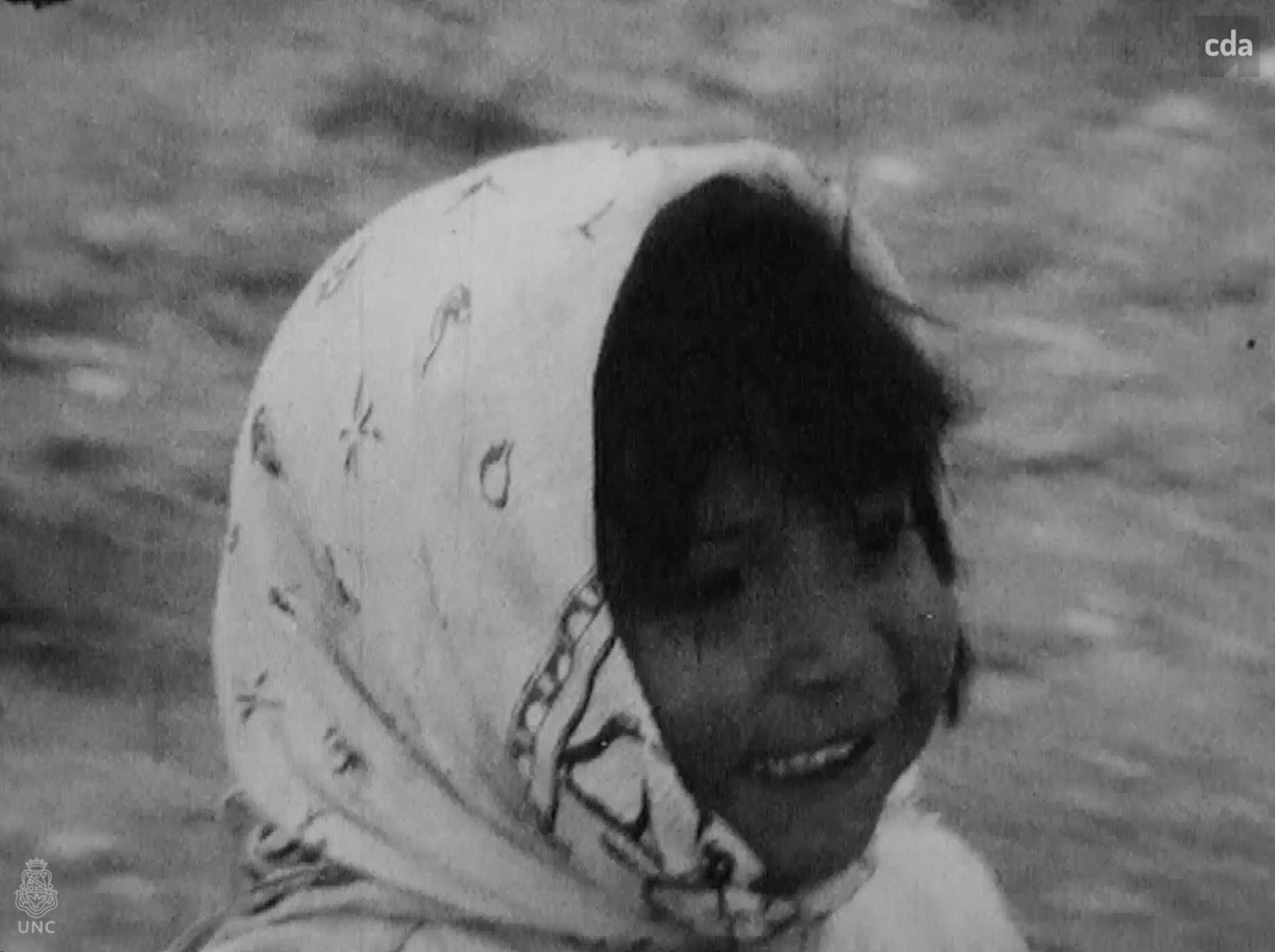
Se privilegiaron formas de producción colaborativas, donde el cine dejó de ser un arte individualista para convertirse en una práctica colectiva y militante, capaz de denunciar injusticias, visibilizar luchas y fomentar la organización social. Este enfoque se vio reforzado por la adopción de tecnologías accesibles y el énfasis en contar las historias desde la mirada de quienes las vivían, permitiendo así un cine que no sólo representara a las comunidades, sino que naciera de ellas. En la medida en que la analítica de la colonialidad ponga de relieve en estos filmes la colonialidad del saber y del ser, contribuirán a la descolonización de ambas. Lo cual no implica que los proyectos y los filmes deban ser explícitamente decoloniales. Pueden o no serlo. Es la perspectiva decolonial que nos permite percibir aquello que los realizadores cinematográficos pueden o no intencionalmente inscribirse en la decolonialidad.
Collaborative production methods were favored, where cinema ceased to be an individualistic art form and became a collective and militant practice, capable of denouncing injustices, making struggles visible, and fostering social organization. This approach was reinforced by the adoption of accessible technologies and the emphasis on telling stories from the perspective of those who lived them, thus enabling a cinema that not only tell stories about communities but also, and mainly, stories that emerged from the communities that have been deprived of access to the camera. To the extent that the analysis of coloniality highlights the coloniality of knowledge and being, the films made by member of communities that before were narrated contribute to the decolonization of knowledge and being. This does not imply that the projects and films must be explicitly decolonial. They may or may not be. It is the decolonial perspective I embrace and practice that allows us to perceive whether filmmakers intentionally inscribe themselves in the decolonial frame.
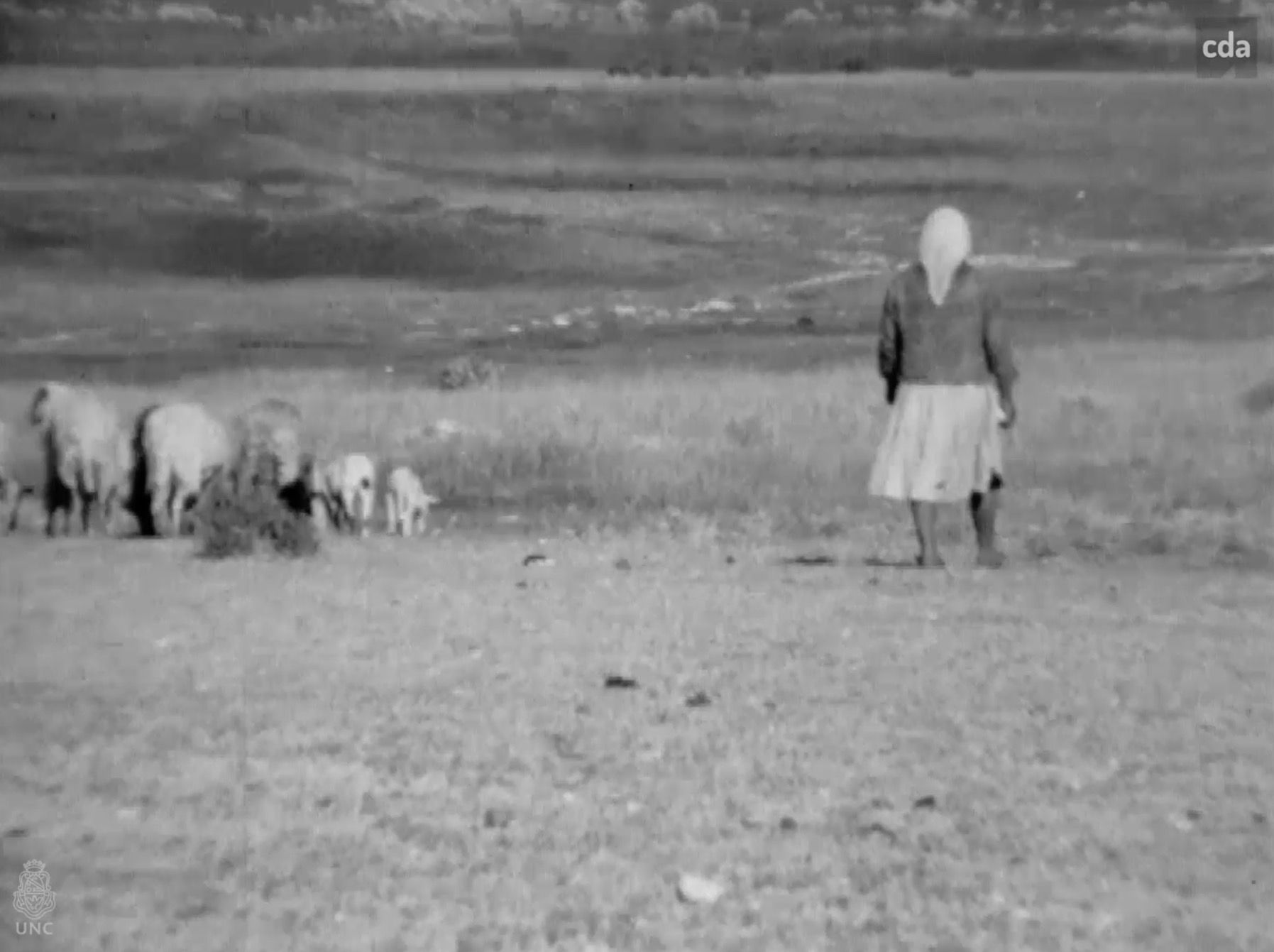
El Tercer Cine articuló respuestas activas a los sistemas de poder que regían la industria cinematográfica mundial. Más allá de imitar o rechazar los modelos del Primer y Segundo cine, propuso una vía alternativa: un cine de resistencia, en el que los relatos, las voces y los cuerpos históricamente marginados ocuparan el centro del escenario fílmico. Este cine, en lugar de aspirar a la neutralidad o la objetividad, asumió su papel como herramienta de transformación social, reivindicando la subjetividad y la experiencia colectiva como motores de cambio. En todos estos sentidos el Tercer Cine, cine del Hambre y cinecon, fueron prácticas de reconstitución del saber y del ser, es decir, de las subjetividades y relaciones intersubjetivas. Por eso hoy estamos honrando sus legados en la relación del cine y la decolonialidad. Solanas y Getino afirma en el Manifesto que
Third Cinema articulated active responses to the power systems that governed the global film industry. Beyond imitating or rejecting the models of First and Second Cinema, it proposed an alternative path: a cinema of resistance, in which historically marginalized narratives, voices, and bodies occupied center stage. This cinema, instead of aspiring to neutrality or objectivity, embraced its role as a tool for social transformation, reclaiming subjectivity and collective experience as drivers of change. In all these senses, Third Cinema, Hunger Cinema, and Cinema-With were practices of reconstituting knowledge and being—that is, subjectivities and intersubjective relationships. This is why today we are honoring its legacies and connecting cinema and decoloniality. Solanas and Getino states in their Manifesto that
El hombre del tercer cine ya sea desde un cine-guerrilla, o un cine-acto, con la infinidad de categorías que contienen (cine-carta, cine-poema, cine-ensayo, cine-panfleto, cine-informe, etc.), opone, ante todo, al cine industrial, un cine artesanal: al cine de individuos, un cine de masas; al cine de autor, un cine de grupos operativos; al cine de desinformación neocolonial, un cine de información; a un cine de evasión, un cine que rescate la verdad; a un cine pasivo, un cine de agresión; a un cine institucionalizado, un cine de guerrillas; a un cine es- pectáculo, un cine de acto, un cine acción; a un cine de destrucción, un cine simultáneamente de destrucción y de construcción; a un cine hecho para el hombre viejo, para ellos, un cine a la medida del hombre nuevo: la posibilidad que somos cada uno de nosotros. La descolonización del cineasta y del cine serán hechos simultáneos en la medida que uno y otro aporten a la des- colonización colectiva (itálicas y negritas agregadas, obra citada).
The man of third cinema, whether from a guerrilla cinema or a cinema-act, with the infinite categories they contain (cinema-letter, cinema-poem, cinema-essay, cinema-pamphlet, cinema-report, etc.), opposes, above all, industrial cinema with artisanal cinema; cinema of individuals with mass cinema; auteur cinema with cinema of operational groups; cinema of neocolonial disinformation with cinema of information; cinema of escapism with cinema that rescues the truth; passive cinema with cinema of aggression; institutionalized cinema with guerrilla cinema; spectacle cinema with cinema of act, action cinema; cinema of destruction with cinema simultaneously of destruction and construction; cinema made for the old man, for them, with cinema tailored to the new man: the possibility that each of us is. The decolonization of the filmmaker and of cinema will be simultaneous events to the extent that both contribute to collective decolonization (italics and bold added, cited work. (op. cit. italics mine)
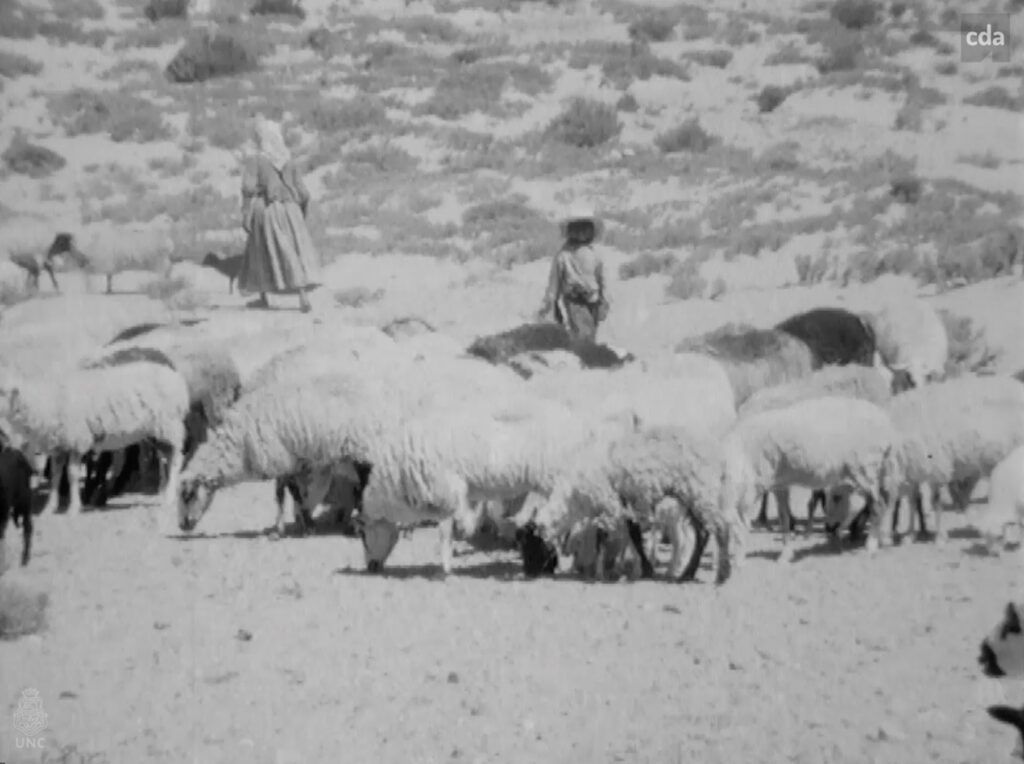
IX
Aunque suene a verdad de Perogrullo, la convergencia entre cine y decolonialidad durante la Guerra Fría no es algo que podamos simplemente copiar y pegar hoy en las coordenadas nacionales e internacionales de la tercera década del siglo XXI. Ya no vivimos bajo ese esquema de capitalismo versus comunismo; ahora lo que hay son capitalismos contra capitalismos en un orden geopolítico multipolar. Las corrientes como el Tercer Cine, el Cine del Hambre, o el Cine Revolucionario participativo en Sudamérica nacieron en contextos históricos y globales muy distintos a los del presente. Sí, su huella sigue ahí, pero lo que el desorden global y doméstico exige son respuestas de otro tipo sin olvidar, por cierto, los legados de nuestros antecesores. La dependencia y el subdesarrollo eran asuntos movilizadores. Hoy todavía lo son, pero otros fueron agregados al malestar.
Although it may sound like a truism, the convergence between cinema and decoloniality during the Cold War is not something we can simply copy and paste into the national and international coordinates of the third decade of the 21st century. We no longer live under that scheme of capitalism versus communism; now we have capitalisms against capitalisms in a multipolar geopolitical order. Movements like Third Cinema, Hunger Cinema, or participatory revolutionary cinema in South America were born in historical and global contexts very different from those of the present. Yes, their influence remains, but what global and domestic disorder demands are different kinds of responses, without forgetting, of course, the legacies of our predecessors. Dependency and underdevelopment were mobilizing issues. Today they still are, but others have been added to the discontent.
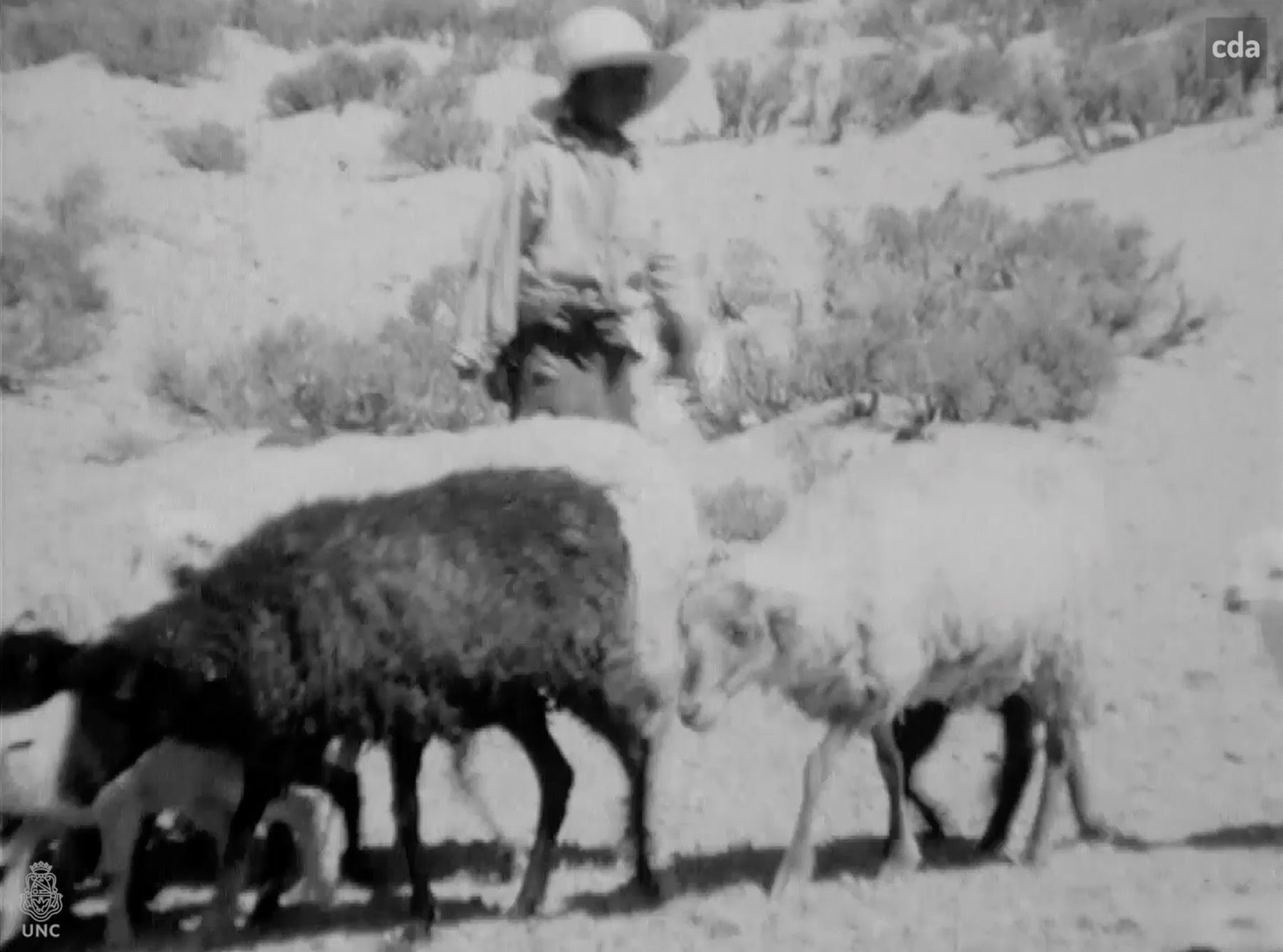
Europa, tras la Segunda Guerra Mundial, estaba reconstruyéndose y dejó un espacio vacío que Estados Unidos aprovechó para tomar el liderazgo político liberal y económico capi- talista, mientras la Unión Soviética lideraba el bloque estatal y socialista-comunista. Entre 1949 y 1978, China también entró en la jugada socialista/comunista, aunque en tensión constante con la URSS. Por eso, Mao Zedong propuso otra manera de entender los Tres Mundos. Para Mao, el Primer Mundo eran Estados Unidos y la Unión Soviética; el Segundo Mundo, los países industrializados de Europa y Japón; y el Tercer Mundo, todos esos estados subdesarrollados y no alineados. Es importante recordar que la famosa división en tres mundos fue algo que nació en y desde el Primer Mundo, pero la mirada de Mao es justo la que le da la vuelta, en sintonía con las respuestas originales de aquel Tercer Mundo. Repito la última frase de la cita al final de la sección anterior: “La descolonización del cineasta y del cine—proponían Solana y Getino— serán hechos simultáneos en la medida que uno y otro aporten a la descolonización colectiva”.
Europe, in the aftermath of World War II, was rebuilding itself, leaving a vacuum that the United States exploited to assume liberal political and capitalist economic leadership as well as the cultural industries: Hollywood and the TV set. The Soviet Union, on its part, led the state-controlled, socialist-communist bloc. Between 1949 and 1978, China also entered the socialist/communist arena, albeit in constant tension with the USSR. For this reason, Mao Zedong proposed a different way of understanding the Three Worlds. For Mao, the First World consisted of the United States and the Soviet Union; the Second World, the industrialized countries of Europe and Japan; and the Third World, all those underdeveloped and non-aligned states, China among them to be sure. It is important to remember that the famous division into three worlds originated in and from the First World, but Mao’s perspective disturbs it, in line with the original responses of that Third World were activating at that time. The Bandung Conference of 1955 remains as an anchor to the Third World decolonial spirit, I repeat the last sentence of the quote at the end of the previous section: “The decolonization of the filmmaker and of cinema—Solana and Getino proposed—will be simultaneous events to the extent that both contribute to collective decolonization.”
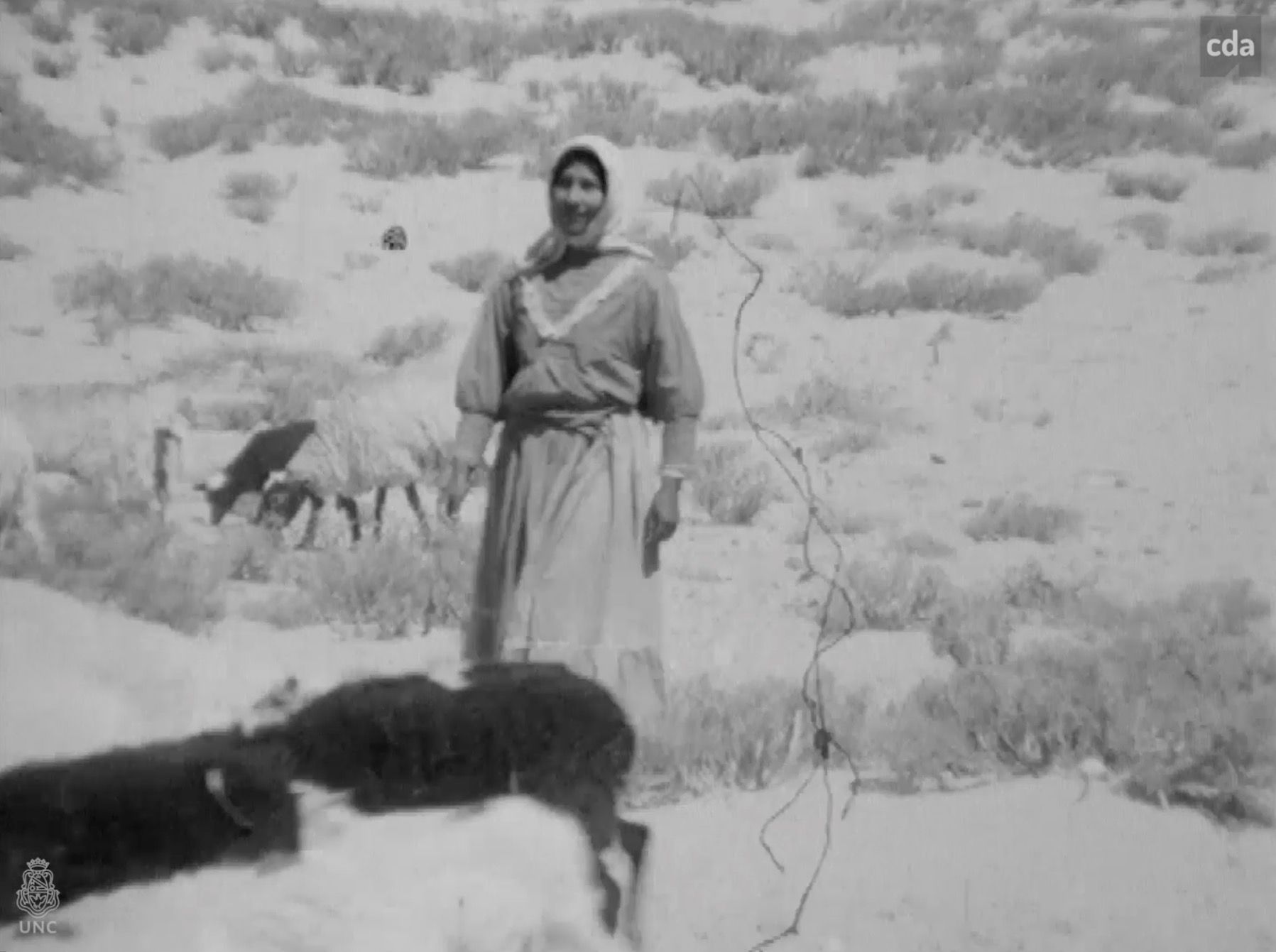
La gran transformación histórica que dio origen al escenario político y económico del presente fue brillantemente analizada por Karl Polanyi en su libro de 1944, cuyo título es pre cisamente “La gran transformación”.[26]La gran transformación (1944). Madrid: Casa Juan Pablos, 2013. Para Polanyi, las dos guerras mundiales fueron conse- cuencia directa de este proceso. Dos características centrales distinguen esta transformación, ambas ligadas al liberalismo: la liberalización de los mercados y la conversión del trabajo, la tierra y el dinero en mercancías. Sin embargo, tanto el trabajo como la tierra son condiciones esenciales para la producción y no simples bienes de intercambio, mientras que el dinero es una herramienta creada para facilitar transacciones. Paralelamente, en la misma época, surgían en Chicago los cimientos teóricos del neoliberalismo, que se plasmarían en la práctica durante los años setenta y, especialmente, en los ochenta con figuras como Ronald Reagan y Margaret Thatcher. Este segundo momento vino después de las décadas en las que el Cine del Tercer Mundo, junto a la teoría de la dependencia, la teología y filosofía de la liberación y la pedagogía del oprimido, ejercieron una influencia considerable, especialmente en Asia y África. El segundo capítulo de esta gran transformación, parafraseando a Polanyi, fue la caída de la Unión Soviética.
The great historical transformation that gave rise to the current political and economic landscape was brilliantly analyzed by Karl Polanyi in his 1944 book, aptly titled The Great Transformation. For Polanyi, the two world wars were a direct consequence of this process. Two central characteristics distinguish this transformation, both linked to liberalism: the liberalization of markets and the commodification of labour, land, and money. However, both labor and land are essential conditions for production and not merely goods for exchange, while money is a tool created to facilitate transactions. Simultaneously, during the same period, the theoretical foundations of neoliberalism were emerging in Chicago, which would be put into practice during the 1970s and, especially, the 1980s with figures like Ronald Reagan and Margaret Thatcher. This second phase followed decades in which Third World Cinema, along with dependency theory, theology and philosophy of liberation, and the pedagogy of the oppressed. This ruptures with Western modernity exerted considerable influence, particularly in Asia and Africa. The second chapter of this great transformation, to paraphrase Polanyi, was the fall of the Soviet Union.
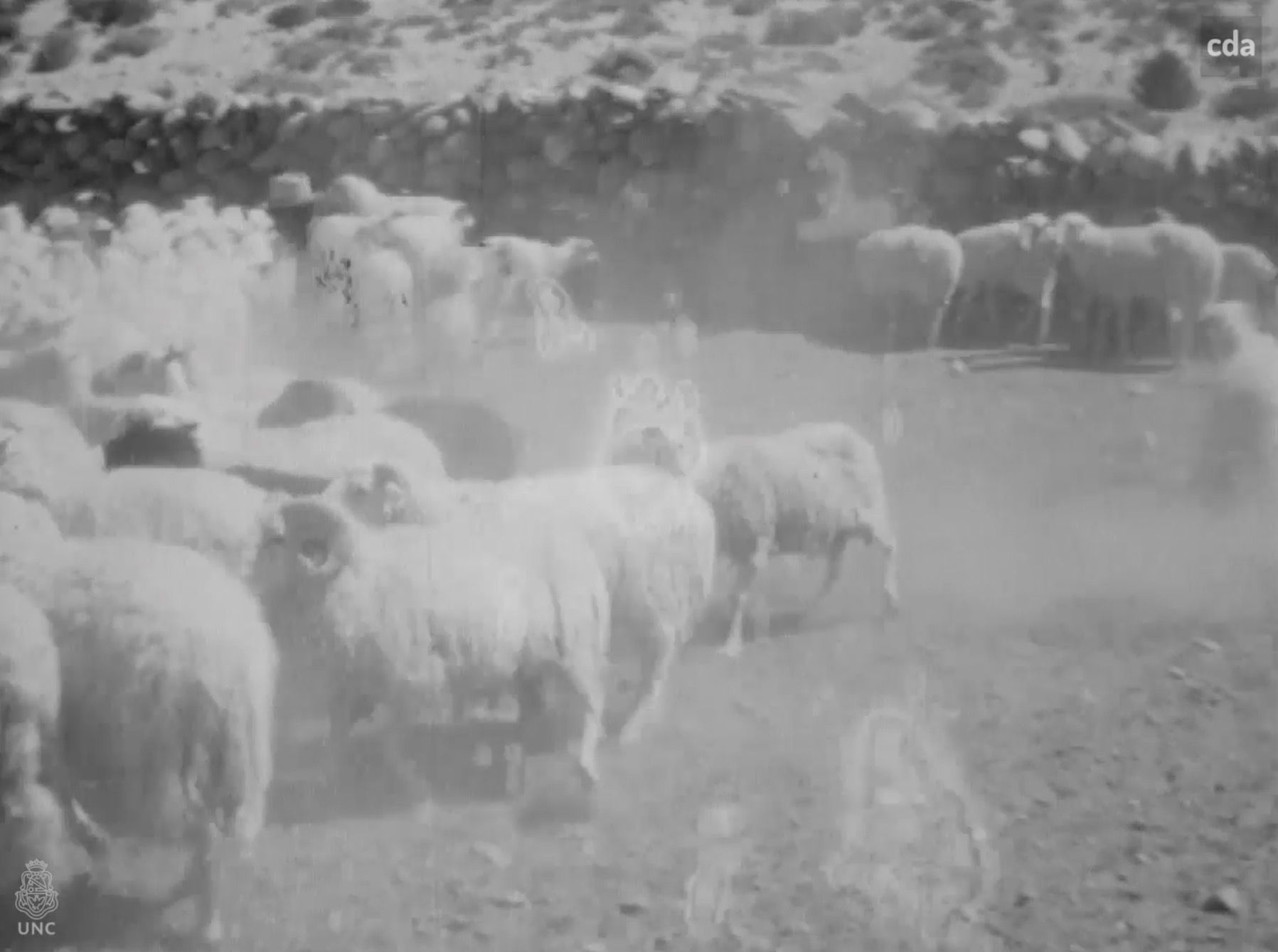
Actualmente, uno de los cambios más notables en el cine del Tercer Mundo en América del Sur es la presencia creciente de personas indígenas y afrodescendientes que asumen la cámara para contar sus historias, la de sus comunidades y vivencias. En el ámbito del pensamiento, la colonialidad del poder abarca y resignifica las luchas anteriores en el marco de la dependencia como eje del patrón colonial de poder manifiesto en la dupla dominación/ex- plotación-opresión. De esta manera, la decolonialidad fue reconfigurada, después del derrumbe de la Unión Soviética, exigida por el amplio campo donde la colonialidad del poder se cuestiona y enfrenta. Este enfoque permea todas las áreas del saber, tanto las teorías políticas y económicas surgidas en Occidente como las que hoy las confrontan en los procesos desoccidentalizantes en China, Rusia, Irán y en la propia Europa por parte de la llamada ¨nueva derecha¨ (Alain de Benoist) y posiciones paralelas, aunque tendiendo a la izquierda más que a la derecha. Además, la colonialidad del ser aborda el control de las subjetividades impactando la colonialidad del saber montada en la epistemología, la hermenéutica, la estética y la pedagogía.
Currently, one of the most notable changes in Third World cinema in South America was the growing presence of Indigenous and Afro-descendant people who take up the camera to tell their own stories, the stories of their communities, and their experiences. In the realm of thought, the coloniality of power encompasses and reinterprets previous struggles within the framework of dependency as the axis of the colonial matrix of power, manifested in the duality of domination/exploitation-oppression. In this way, decoloniality was reconfigured after the collapse of the Soviet Union, demanded by the broad field where the coloniality of power is questioned and confronted. This approach permeates all areas of knowledge, including the political and economic theories that emerged in the West as well as those that today confront them in the processes of de-Westernization in China, Russia, Iran and even Europe itself, on the part of the so-called “new right” (Alain de Benoist) and parallel positions, although tending more to the left than to the right. [27]Emmanuel Todd, La derrota de occidente (2022). Madrid: Akal, 2024 Furthermore, the coloniality of being addresses the control of subjectivities by impacting the coloniality of knowledge embedded in epistemology, hermeneutics, aesthetics, and pedagogy.
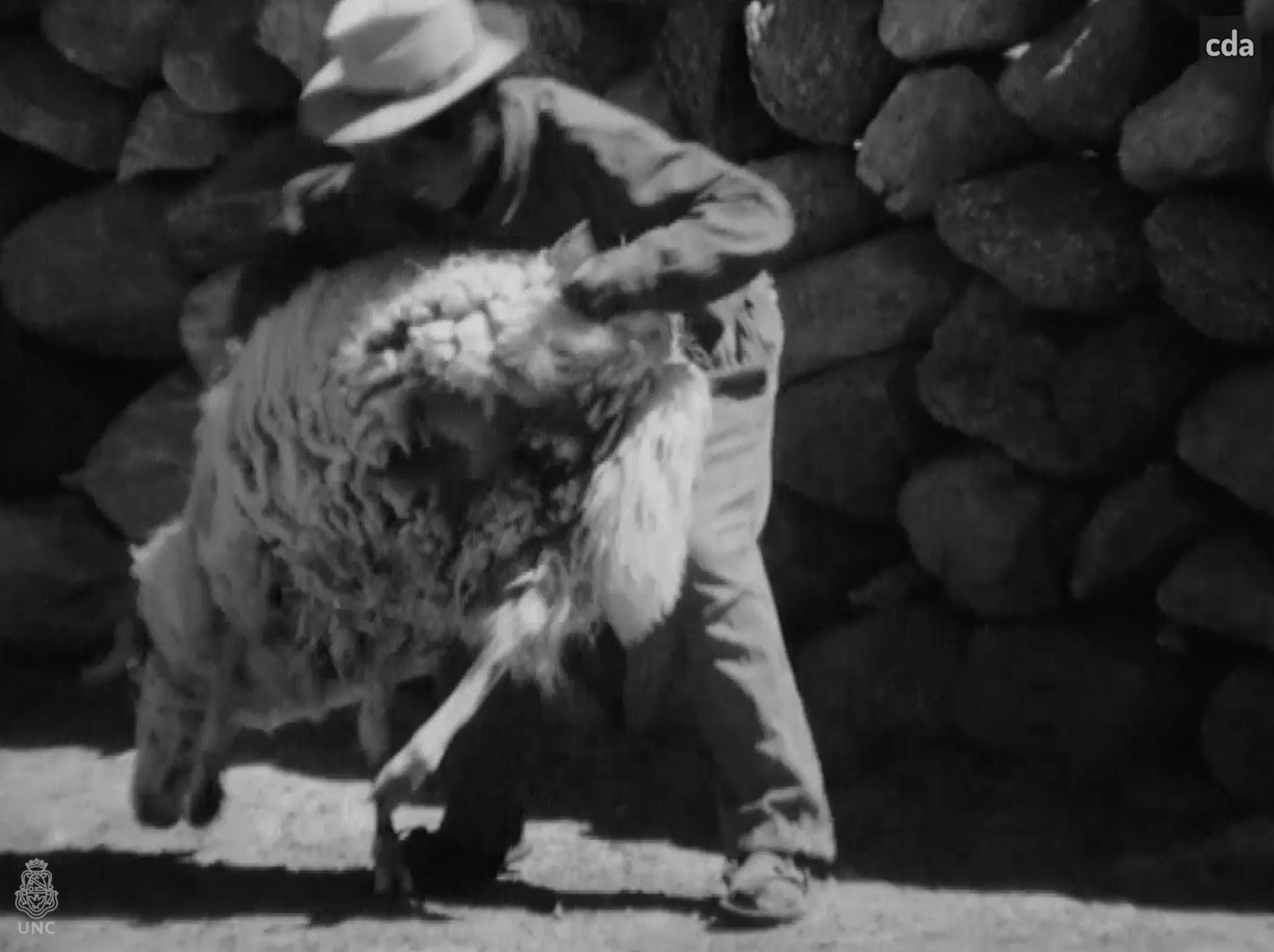
En este marco, la cinematografía —como parte del arte y la estética, es decir, de la “colonialidad del sentir”— opera en dos direcciones principales: por un lado, como herramienta de modelado y control de subjetividades; por otro, como búsqueda de liberación, tanto para quienes crean cine como para quienes lo reciben, abriendo así un camino para el cine decolonial y emancipador. Tres casos actuales para abundar en lo que estoy sugiriendo…
Within this framework, cinematography—as part of art and aesthetics, that is, of the “coloniality of feeling”—operates in two main directions: on the one hand, as a tool for shaping and controlling subjectivities; on the other, as a quest for liberation, both for those who create films and for those who consume them, thus paving the way for decolonial and emancipatory cinema. Three current examples will further illustrate what I am suggesting.
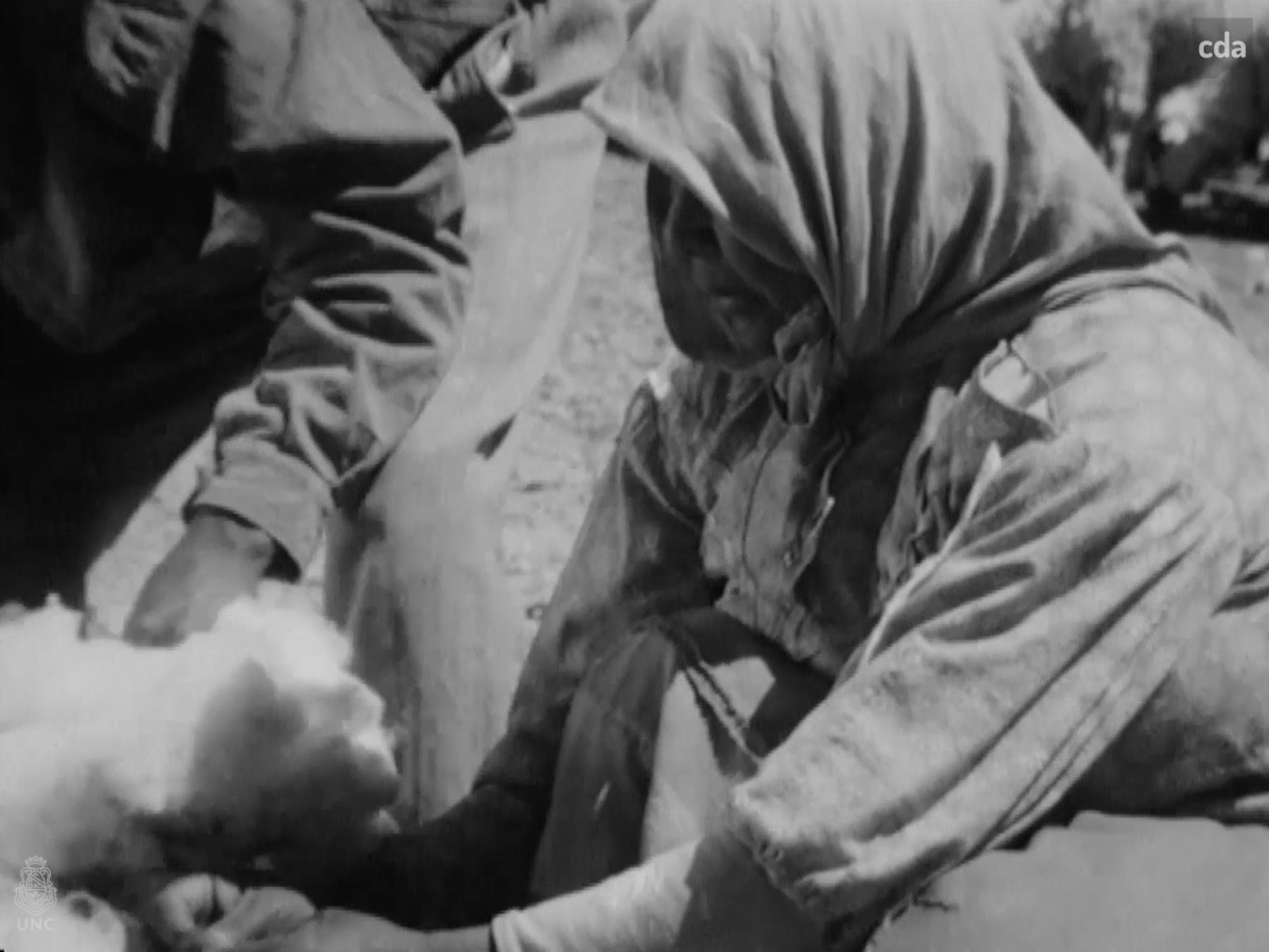
El acceso a tecnologías emergentes y la multiplicación de talleres audiovisuales en las propias comunidades han facilitado que personas indígenas tomen las riendas de su represent- ación y cuenten sus historias desde una visión propia, rompiendo con estereotipos y generando relatos auténticos. Un ejemplo destacado es Wiñaypacha (2017, Perú), atribuida a Óscar Catacora (aimara), la primera película hablada completamente en aimara, que narra la vida cotidi- ana de una pareja de ancianos en los Andes. En la misma línea, El Abrazo de la Serpiente (2015, Colombia), atribuida a Ciro Guerra, no indígena, continúa el tipo de legados de Jorge Sanjinés, no indígena, contó con la colaboración activa de comunidades amazónicas y actores indígenas como Antonio Bolívar. Los hijos del viento (2015, Ecuador), atribuida a Patricio Salazar y producida por la comunidad Kichwa de Sarayaku, la cosmovisión de los pueblos amazónicos en la interpretación de la opresión y la confrontación con ella. Otro elemento relevante es la creación de festivales que fomentan el diálogo y el intercambio, como el Festival Internacional de Cine Indígena de Wallmapu (Chile y Argentina), el Festival de Cine y Video Indígena de Morelia (Méx- ico) y el Festival Internacional de Cine Indígena de Bolivia, los cuales han contribuido a visibilizar el cine indígena a nivel internacional.
Access to emerging technologies and the proliferation of audiovisual workshops within communities themselves have empowered Indigenous people to take control of their own narratives and to tell their stories from their own perspective, breaking down stereotypes: what non indigenous think of indigenous people, is just that, what non indigenous think. It is not what indigenous people think or are. And doesn’t tell us what indigenous people think about non indigenous. A prime example is Wiñaypacha (2017, Peru), attributed to Óscar Catacora (Aymara), the first film spoken entirely in Aymara, which tells the story of the daily life of an elderly couple in the Andes. Similarly, Embrace of the Serpent (2015, Colombia), attributed to Ciro Guerra, who is not Indigenous, continues the legacy of Jorge Sanjinés, also not Indigenous, and featured the active collaboration of Amazonian communities and Indigenous actors such as Antonio Bolívar. The Children of the Wind (2015, Ecuador), attributed to Patricio Salazar and produced by the Kichwa community of Sarayaku, explores the worldview of Amazonian peoples in their interpretation of oppression and their confrontation with it. Another relevant element is the creation of festivals that foster dialogue and exchange, such as the Wallmapu International Indigenous Film Festival (Chile and Argentina), the Morelia Indigenous Film and Video Festival (Mexico), and the Bolivia International Indigenous Film Festival, which have contributed to raising the international profile of Indigenous cinema.
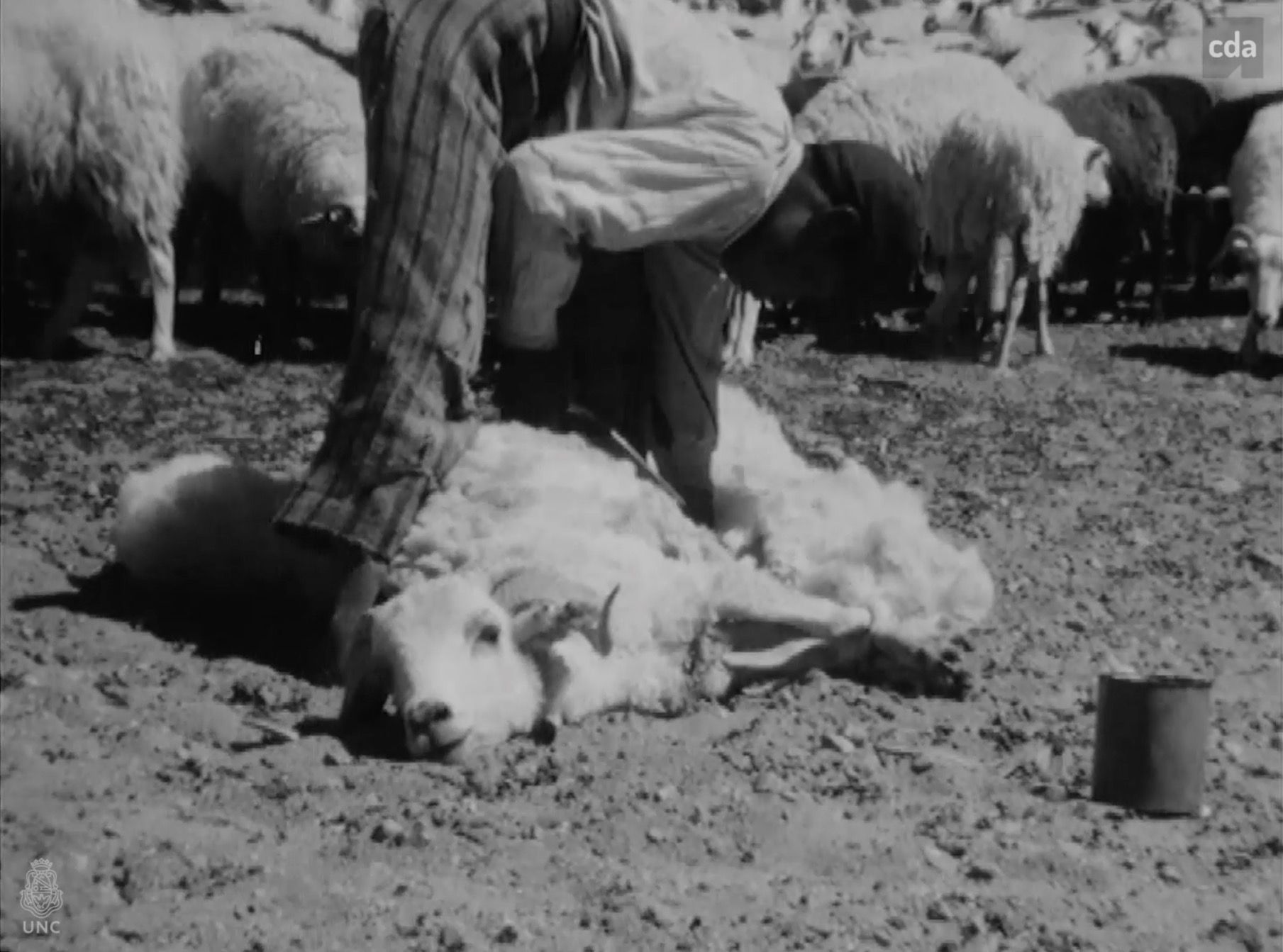
También el cine afro-sudamericano y caribeño amplió su visibilidad impulsando narrativas construyendo identidades étnicas (no individuales), la diáspora africana, abordando el racismo, las luchas sociales, la espiritualidad y la reconstrucción de la memoria histórica. Algunas de las producciones recientes buscan deconstruir imágenes estereotipadas y crear nuevos referentes visuales, recuperando historias silenciadas. Cofundó (2005, Brasil), dirigida por Paulo Betti y Clóvis Bueno, cuenta la historia de un ex-esclavo que se convierte en líder espiritual; la película fue realizada con fuerte participación de comunidades afrobrasileñas. Abejón Mono (2017, Colombia), dirigida por Rubén Mendoza y protagonizada por personas afrocolombianas del Pacífico, trata temas de desplazamiento y resistencia. O caso do homem errado (2017, Brasil), documental dirigido por Camila de Moraes, aborda la violencia policial contra la población negra. Festival Internacional de Cine Africano y Afrodescendiente (FICAA, Colombia): Un espacio dedicado a la exhibición de películas africanas y de la diáspora, que fomenta el intercambio de experiencias y la reflexión crítica sobre las realidades afrocolombianas y latinoamericanas, Encontro de Cinema Negro Zózimo Bulbul (Brasil): esta muestra es un referente en la promoción del cine realizado por y sobre personas afrobrasileñas, y se ha consolidado como un foro de debate y resistencia cultural.
Afro-South American and Caribbean cinema also expanded its visibility by promoting narratives that construct ethnic (not individual) identities, the African diaspora, and address racism, social struggles, spirituality, and the reconstruction of historical memory. Some recent productions seek to dismantle stereotypical images and create new visual references, recovering silenced histories. Cofundó (2005, Brazil), directed by Paulo Betti and Clóvis Bueno, tells the story of a former slave who becomes a spiritual leader; the film was made with strong participation from Afro-Brazilian communities. Abejón Mono (2017, Colombia), directed by Rubén Mendoza and starring Afro-Colombian people from the Pacific region, deals with themes of displacement and resistance. O caso do homem errado (2017, Brazil), a documentary directed by Camila de Moraes, addresses police violence against the Black population. International Festival of African and Afro-descendant Cinema (FICAA, Colombia): A space dedicated to the exhibition of African and diaspora films, which fosters the exchange of experiences and critical reflection on Afro-Colombian and Latin American realities. Encontro de Cinema Negro Zózimo Bulbul (Brazil): This exhibition is a benchmark in the promotion of cinema made by and about Afro-Brazilian people and has consolidated itself as a forum for debate and cultural resistance.
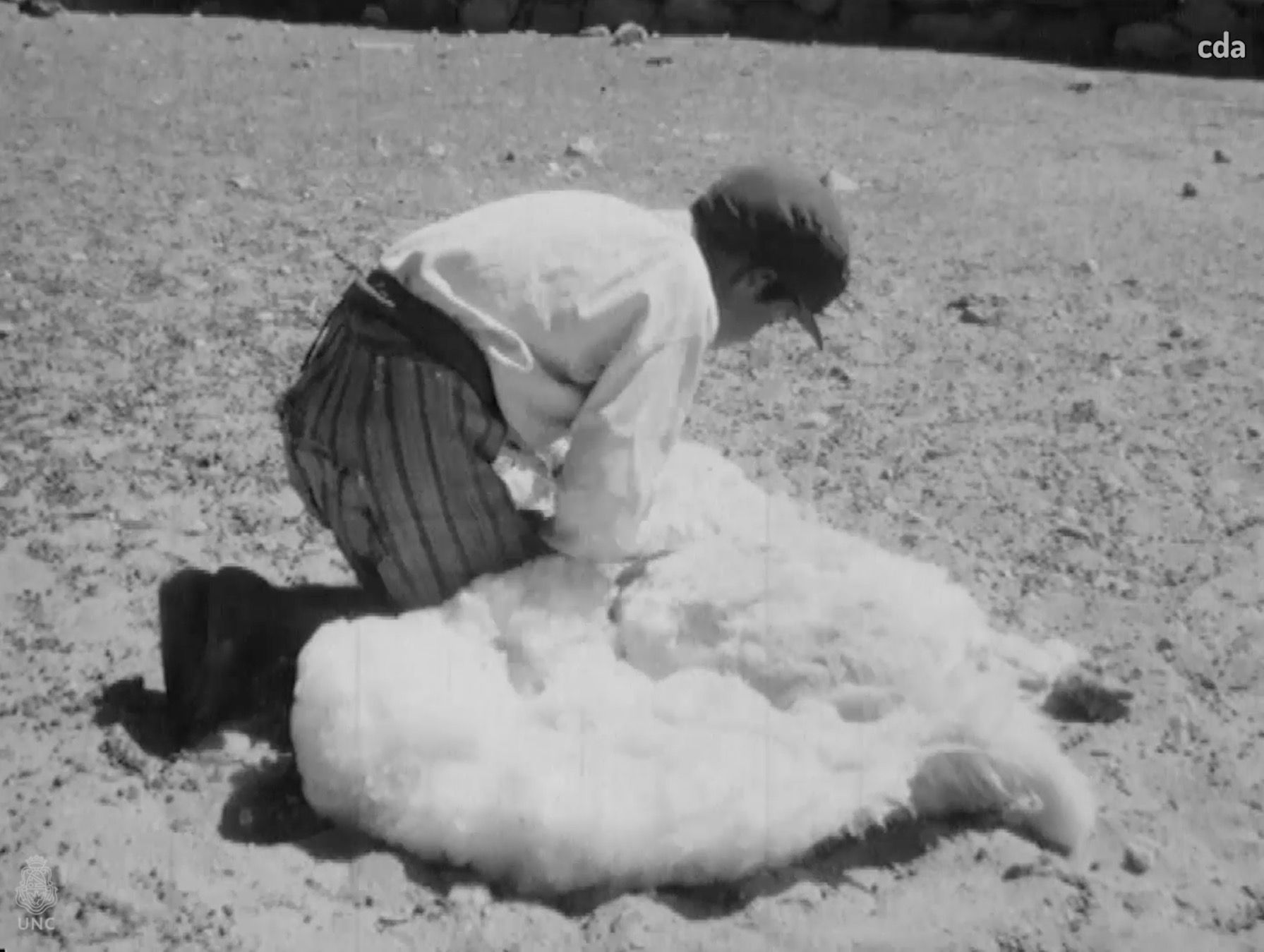
X
Hoy predomina en América del Sur y el Caribe (y me animo a decir en África), el cine de autor vehiculizado para explorar asuntos y conflictos sociales manifiestos en el racismo, el sexismo, el clasismo, diversas manifestaciones de dominación a injusticia, explorando los peligros y los miedos que el desorden local y nacional cause en la población. El cine de autor que explora tensiones sociales pone también énfasis en respuestas de las gentes mediante protestas, manifestaciones y sobre todo de organizaciones comunales para suplantar lo que el estado no les otorga.
Today, auteur-cinema that predominates in South America and the Caribbean (and I would venture to say in Africa), aims to explore social issues and conflicts manifested in racism, sexism, classism, and various forms of domination and injustice, examining the dangers and fears that local and national unrest instills in the population. This type of auteur-cinema, which explores social tensions, also emphasizes people’s responses through protests, demonstrations, and especially community organizations that seek to compensate for what the state fails to provide.
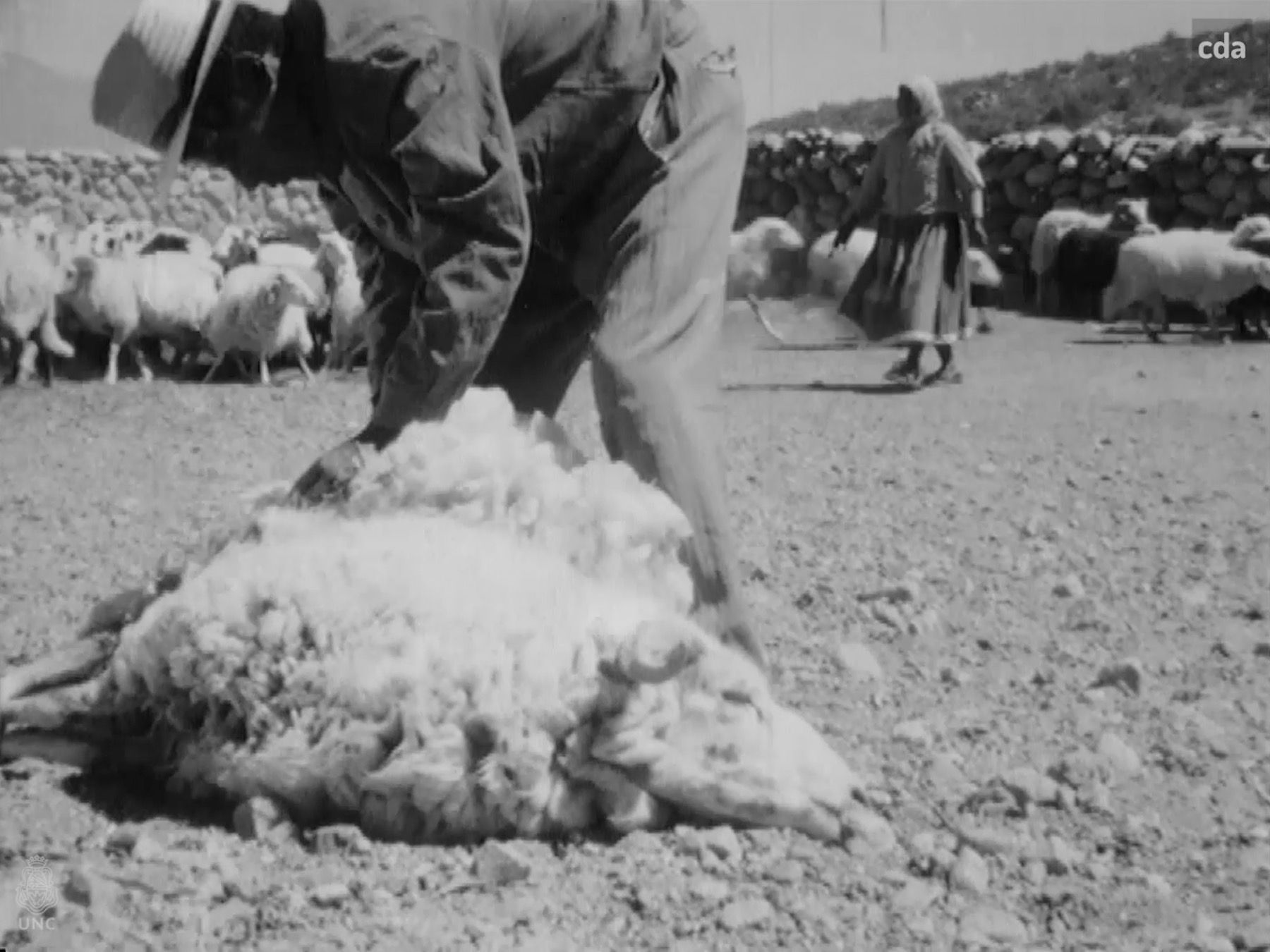
Sería muy largo enumerar y comentar la amplia producción cinematográfica de los últimos diez años que responden al cine de autor producido por personas no-indígenas y no-afros, es decir, consideradas en la población blanca o mestiza, y a los criterios que acabo de esbozar. Unos botones de muestra primero y un ejemplo comentado luego. En un mundo de constante bombardeo de la imagen, en televisión e internet, en los centros comerciales, del 95% de los filmes producidos y ofrecidos por plataformas como Netflix, Max, Apple TV, la multiplicación de la series televisivas y ahora cinematográficas, el cine de autor (para TV o para cine y TV) forma islas en las que los cineclubes, y las audiencias que estos formaron y continúan formando, respiran/respiramos relatos que exploran las posibilidades imagen y sonido y exploran las condiciones humanas, no siempre ni necesaria y directamente ligada a la política estatal, aunque inevitablemente ligada a la política cinematográfica.
It would be far too lengthy to list and discuss the extensive film production of the last ten years that falls under the umbrella of auteur cinema produced by non-Indigenous and non-Afro-descendant individuals—that is, those considered part of the white or mestiza population—and according to the criteria I have just outlined. A few examples will suffice, followed by a more detailed discussion. In a world constantly bombarded with images on television, the internet, and in shopping malls, with 95% of films produced and offered by platforms like Netflix, HBO, and Apple TV, and the proliferation of television and now film series, auteur cinema (whether for television or for both cinema and television) forms isolated pockets where cinema clubs, and the audiences they have cultivated and continue to cultivate, breathe in narratives that explore the possibilities of image and sound and delve into the human condition. This cinema is not always, necessarily, or directly linked to state politics, though it is inevitably connected to film politics,

Bacurau (Kleber Mendonça Filho y Juliano Dornelles, 2019), retoma la denuncia social y la mirada alegórica para hablar sobre la violencia, la desigualdad y el colonialismo contemporáneo, con una estética que mezcla el realismo crudo y el surrealismo, elementos presentes también en la obra de Rocha. Que horas ela volta? (Anna Muylaert, 2015), que explora la lucha de clases y la exclusión social en el Brasil urbano, mostrando la vida de una empleada doméstica y las tensiones entre el centro y la periferia social, que nos recuerda La Negresse de Sembène (1966). Y también nos recuerda La ciénaga de Lucrecia Martel ambas películas exploran las jerarquías sociales y el racismo estructural desde la cotidianidad, haciendo eco de la preocupación del Tercer Cine y el Cinema Nuovo por mostrar las discordancias e insensateces de sus respec- tivas sociedades. También La mujer sin cabeza (2008) de Martel en su ¨trilogía de Salta¨ en la cual aborda temas como la culpa, la negación y la desigualdad social, mediante una narración elíptica y una atmósfera que inquieta e invita a la reflexión. En fin, el cine de autor, contemporáneo, continúa el legado de la crítica y reflexión social explorando efectos narrativos estéticos que saquen a la audiencia de la anestesia del cine entretenimiento en los legados de Hollywood.
Bacurau (Kleber Mendonça Filho and Juliano Dornelles, 2019) revisits social commentary and allegorical imagery to address violence, inequality, and contemporary colonialism, employing an aesthetic that blends stark realism and surrealism—elements also present in Rocha’s work. Que horas ela volta? (Anna Muylaert, 2015), which explores class struggle and social exclusion in urban Brazil, portrays the life of a domestic worker and the tensions between the social center and periphery, reminiscent of Sembène’s La Negresse (1966). It also evokes Lucrecia Martel’s La Ciénaga. Both films explore social hierarchies and structural racism from an everyday perspective, echoing the Third Cinema and Cinema Nuovo’s concern with exposing the discordances and absurdities of their respective societies. Martel’s The Headless Woman (2008), part of her “Salta Trilogy,” also addresses themes such as guilt, denial, and social inequality through an elliptical narrative and a disquieting, thought-provoking atmosphere. In short, contemporary auteur cinema continues the legacy of social critique and reflection, exploring aesthetic narrative effects that jolt audiences out of the numbing grip of Hollywood’s entertainment-driven cinematic legacy.
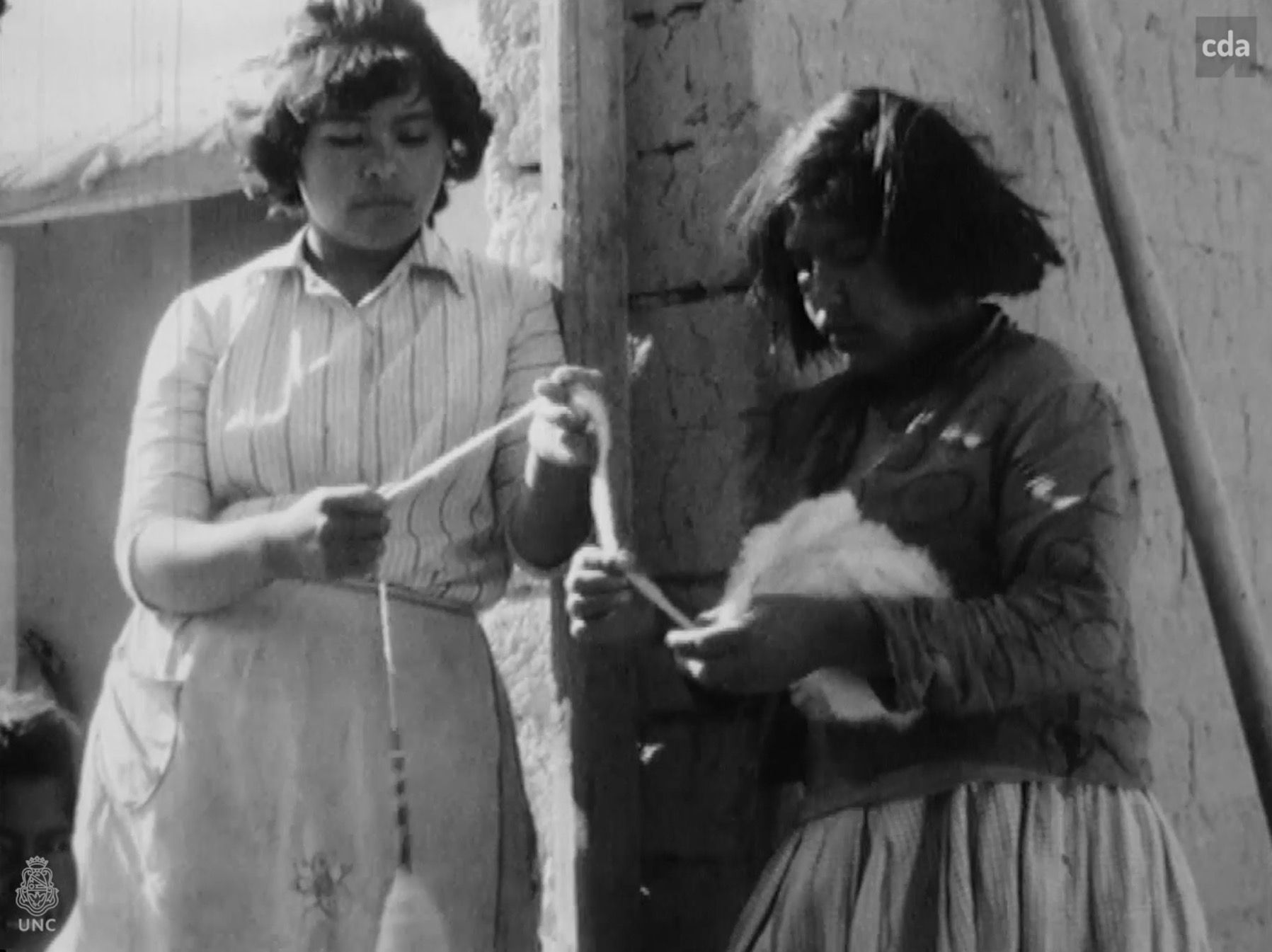
El ejemplo que comento, nada original, explorando los legados del Tercer Cine y Cinema Nuovo, en los contenidos y en la creatividad narrativa, a la vez que ejemplo claro de cine de autor, es El Eternauta. El cine de autor mantiene la primacía del yo autorial. En este caso, sin em- bargo, el yo autoral que controla la enunciación se complementa con el nosotros narrativo, que devino uno de los rasgos distintivos. Bruno Stagnaro, director de El Eternauta que ya mostró en sus películas anteriores, se inscribe en esa línea de cine social, abordando temáticas de relevancia colectiva en sus trabajos previos. Sin embargo, puesto que la narrativa de El Eternauta continúa los legados del cine-autor, el “nosotros” no puede aparecer en la enunciación, sino en el contenido: “no podemos salvarnos solos”, una frase emblemática que se activa en la trama.
The example we will discuss in the following paragraphs, exploring the legacies of Third Cinema and Cinema Novo in both content and narrative creativity, while also serving as a clear example of auteur cinema, is El Eternauta. Auteur cinema maintains the primacy of the authorial self. In this case, however, the authorial self that controls the enunciation is complemented by the narrative “we,” which became one of its distinctive features. Bruno Stagnaro, director of El Eternauta, who had already demonstrated this in his previous films, falls within this line of social cinema, addressing themes of collective relevance in his earlier works. However, since the narrative of El Eternauta continues the legacies of auteur cinema, the “we” cannot appear in the enunciation, but rather in the content: “we cannot save ourselves alone,” an emblematic phrase that is activated in the plot.
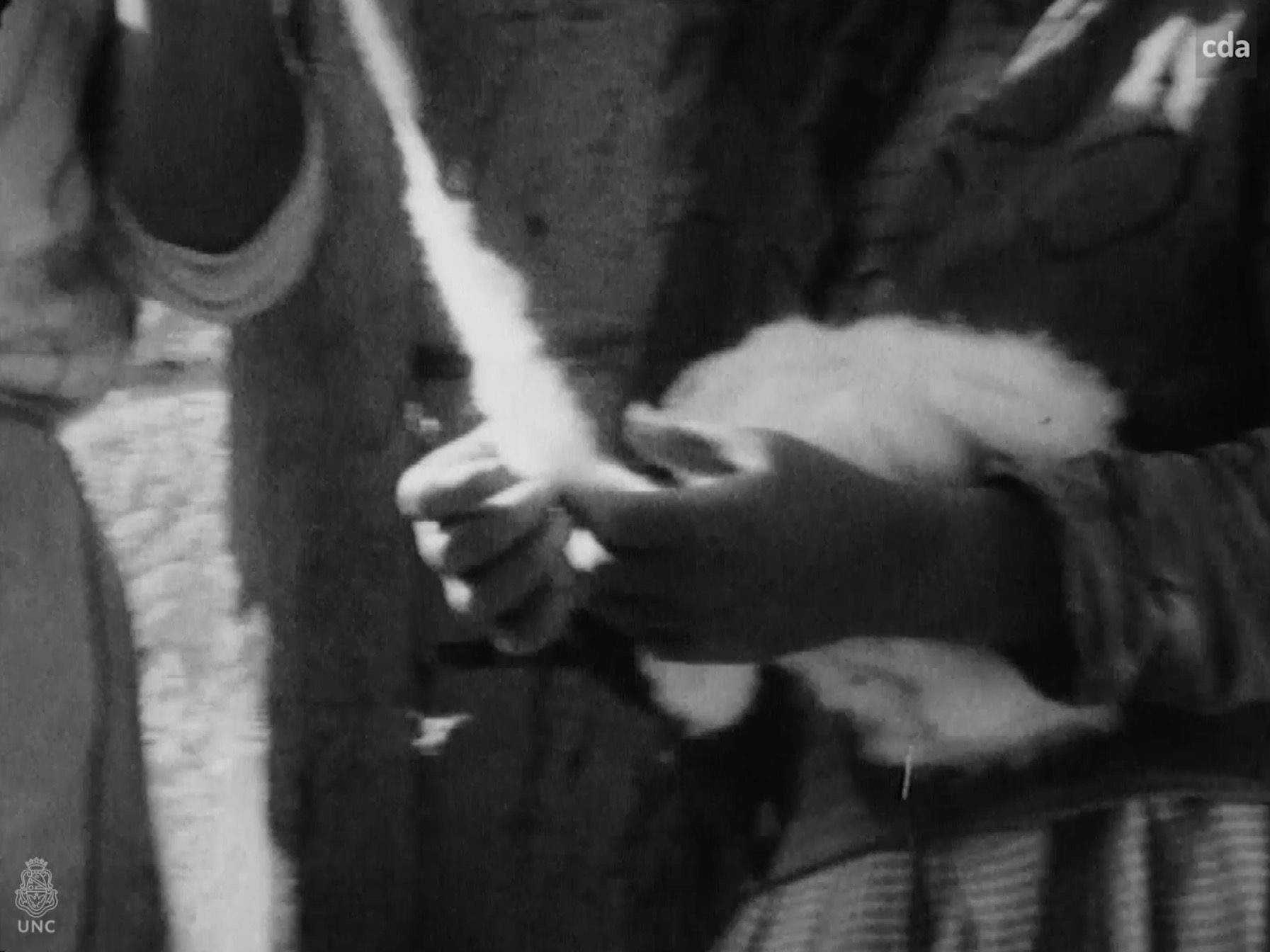
Otro punto de conexión con el cine-autor es la elección del protagonista (Juan Salvo). En la adaptación televisiva, la figura del guionista —en el original, Héctor Germán Oesterheld— relata el relato que le compartió Juan Salvo, la doble narración se desvanece, dejando la historia narrada en tercera persona y centrando la acción en Juan Salvo como personaje y líder más que como narrador. Esto marca una diferencia significativa respecto al cine-acto y al cine-revolucionario de Jorge Sanjinés. En el trabajo de Sanjinés, el guion es resultado de un proceso colectivo con las comunidades aimaras y los roles principales no los desempeñan actores profesionales, sino personas de la propia comunidad. Por ejemplo, en “La nación clandestina”, la película más reconocida de Sanjinés, el personaje de Santiago es interpretado por Reynaldo Yujra, un miembro de la comunidad aimara que participa activamente en la narración de su propia historia.
Another point of connection with auteur cinema is the choice of protagonist (Juan Salvo). In the television adaptation, the screenwriter—Héctor Germán Oesterheld in the original—narrates the story shared with him by Juan Salvo. The dual narration disappears, leaving the story told in the third person and focusing the action on Juan Salvo as a character and leader rather than as a narrator. This marks a significant difference from the action-based and revolutionary cinema of Jorge Sanjinés. In Sanjinés’s work, the screenplay is the result of a collective process with the Aymara communities, and the main roles are not played by professional actors, but by members of the community itself. For example, in La nación clandestina), Sanjinés’s most acclaimed film, the character of Santiago is played by Reynaldo Yujra, a member of the Aymara community who actively participates in narrating his own story.
La elección de Ricardo Darín introduce, no obstante, un rasgo del cine-estrella anterior a los 50s en Hollywood, que permanece sin embargo en el cine de autor. No en todo, sin embargo. Hecha estas salvedades, no intento minimizar el impacto de la serie El Eternauta. El impacto nacional e internacional a pocos días de su estreno, fue sorpresivo y notable. Este no es un elemento para descartar. Cuando un acontecimiento o un relato provocan tal impacto es porque ha hecho vibrar cuerdas que latentes y a flor de piel necesitaban ser motivadas para salir. Intuyo que el factor común que impactó a la audiencia en Argentina, en América Latina y en otras partes del planeta, es la sensación de peligro latente, difícil identificar. El peligro que plantó el COVID no dio tiempo para que se disipara.
The choice of Ricardo Darín, however, introduces a trait of pre-1950s Hollywood stardom, which nevertheless persists in auteur cinema. Not entirely, though. Having made these caveats, I do not intend to minimize the force of El Eternauta. Its national and international impact just days after its premiere was surprising and remarkable. Which is not something to be dismissed. When an event or a story provokes such an impact, it is because it has resonated with feelings that are just beneath the surface, waiting to be stirred. I suspect that the common factor that impacted audiences in Argentina, Latin America, and other parts of the world is a sense of latent danger, difficult to pinpoint. The danger posed by COVID did not allow time for it to dissipate. But most recently fear in the international and national disorders in all areas of experience.
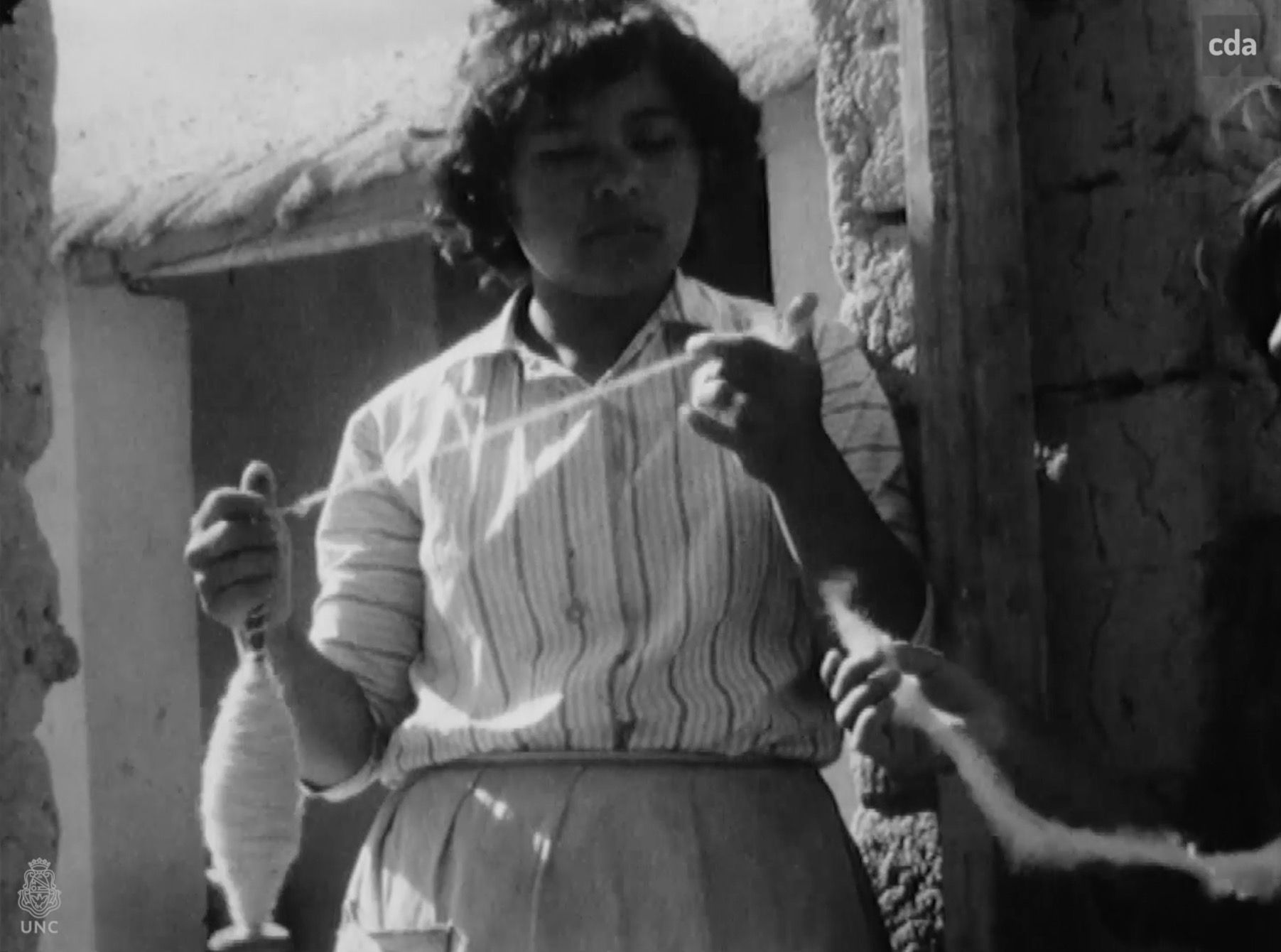
Cuando el planeta salía de ese túnel, comenzaba la guerra tridimensional en Ucrania, y poco después se iniciaba el genocidio en Gaza, en ambos casos con la latente posibilidad de una guerra nuclear. Además, la sombra de nuevas versiones del totalitarismo ya no sólo por el ascenso de las derechas radicales sino también por la radicalización derechista del neoliberalismo, y la ausencia de horizontes del socialismo, todas las vertientes montadas por la occidentalización del mundo están cerrando. La atmósfera en los 60s y 70s era todo lo contrario. Teníamos esperanza, creíamos en la democracia y en el socialismo, confiábamos en la revolución. Hoy, para gran número de la población del planeta, en América del Sur, en Europa y en Estados Unidos, las esperanzas son reemplazadas por el peligro, la desazón, el miedo a lo que pueda venir y a las dificultades para identificar el peligro. Todo esto se acentúa al leer los medios de comunicación occidentales u occidentalizados en países no-occidentales.
As the world emerged from that tunnel, the three-dimensional war began in Ukraine, and shortly afterward, the genocide in Gaza commenced, in both cases with the latent possibility of nuclear war. Furthermore, the shadow of new versions of totalitarianism looms, not only due to the rise of the radical right but also to the rightward radicalization of neoliberalism and the lack of a future for socialism. All the avenues established by the Westernization of the world are closing in. The atmosphere in the 1960s and 70s was quite the opposite. We had hope, we believed in democracy and socialism, we trusted the revolution. Today, for many people around the world, in South America, in Europe, and in the United States, hope has been replaced by danger, unease, fear of what might come, and the difficulty of identifying the danger. All of this is accentuated when reading Western or Westernized media in non-Western countries. The scenario seems to be the opposite in Asia, with the exception of West Asia.
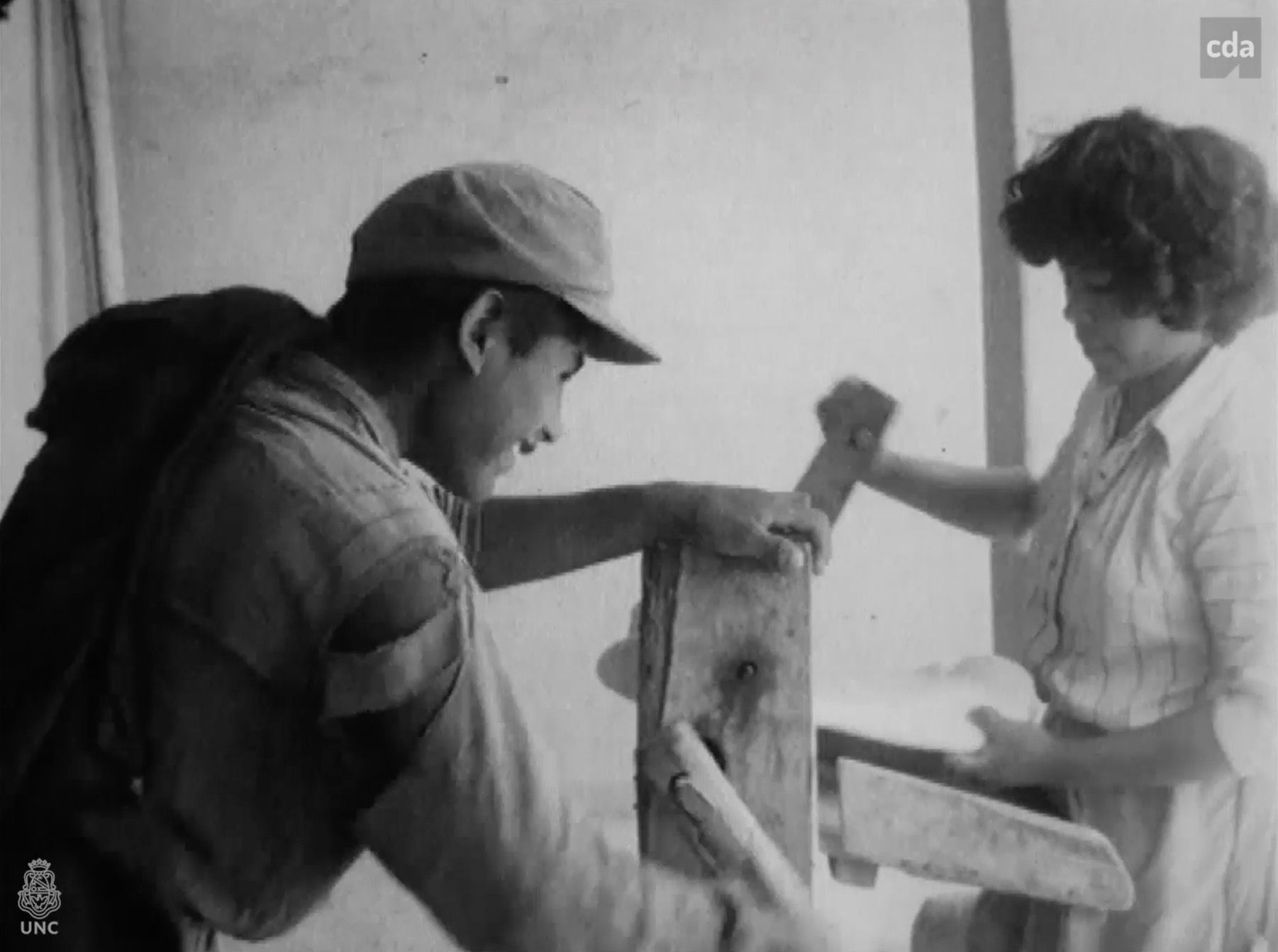
Sin embargo, no todo es así. No digo que las esperanzas abunden, pero sí las hay en dos terceras partes del planeta que están presenciando el auge de la desoccidentalización, de la cual los BRICS+ constituyen hoy la reorientación de los procesos hasta ahora liderados por occidente (Europa occidental primero, Estados Unidos desde 1950). Entre 1950 y 1970, cuando surge el Cine del Tercer Mundo, se cuestionaba el concepto de desarrollo mostrando la dependencia, la liberación filosófica y teológica, y una pedagogía que colabore con “los condenados de la tierra”, la preocupación en América del Sur y el Caribe era la dependencia y control de Estados Unidos, mientras que en la Europa del Este era Rusia y en Asia y África los colonialismos británicos, francés y holandés.
However, this is not the whole story. I’m not saying that hope is abundant, but it certainly exists in two-thirds of the planet, which are witnessing the rise of de-Westernization. The BRICS+ countries represent the reorientation of processes previously led by the West (Western Europe first, then the United States since 1950). Between 1950 and 1970, when Third World Cinema emerged, the concept of development was questioned, highlighting dependency, philosophical and theological liberation, and a pedagogy that collaborates with “the wretched of the earth.” In South America and the Caribbean, the concern was dependency on and control by the United States, while in Eastern Europe it was Russia, and in Asia and Africa, British, French, and Dutch colonialism.

Hoy el panorama es otro. Ya no hay pugna entre Primer y Segundo Mundo, entre capitalismo liberal y estado comunista, sino entre la des-occidentalización, la orientación general de los BRICS+, la política exterior de China, Rusia e Irán, y de manera más ambigua India, más la orientación general en África y en gran parte de Asia. En América del Sur hay una ampliación de las relaciones económicas con China, y de algunos estados con Rusia, pero también los hay con fuerte orientación hacia Estados Unidos y apego con la Unión Europea.
Today the landscape is different. The struggle is no longer between the First and Second Worlds, between liberal capitalism and the communist state, but rather between de-Westernization and re- Westernization. For former the general orientation of the BRICS+, the foreign policies of China, Russia, and Iran, and, more ambiguously, India, plus the general trend in Africa and much of Asia. In South America, there is an expansion of economic relations with China, and some states with Russia, but there are also those with a strong orientation toward the United States and a strong attachment to the European Union. For the latter, the foreign policy of the US and the EU, especially since Barack Obama, is oriented to “containing” de-Westernization (Ukraine, Taiwan), and “controlling” West Asia (Israel genocide working towards the “Gran Israel”, U.S. and Israel trying to remove Iran out of their way).
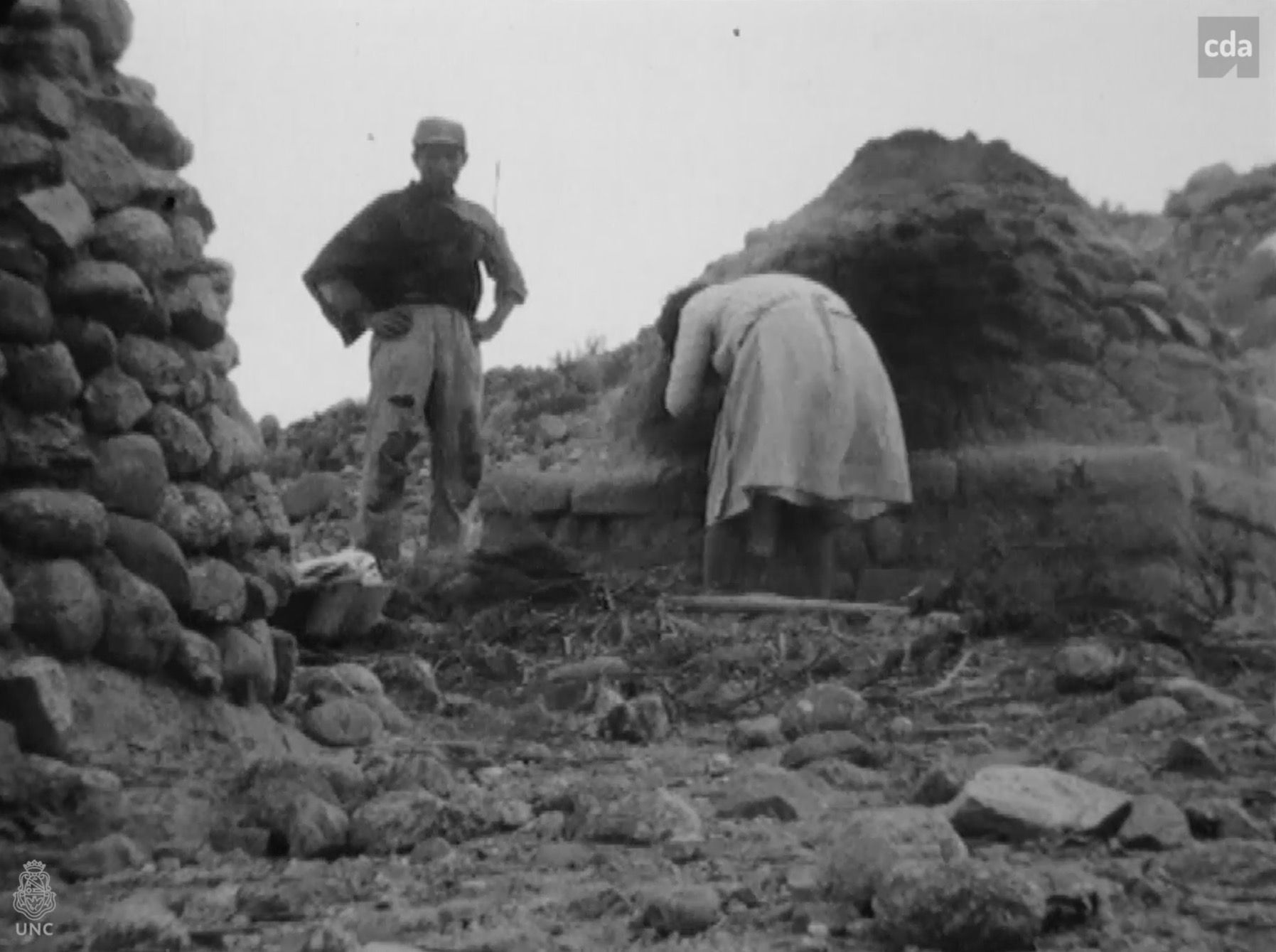
En este escenario global, ¿cuáles serían las posibilidades y las prácticas liberadoras, y liberadoras de qué? En el vocabulario decolonial introducido por Quijano la respuesta sería, liberarnos de la colonialidad del poder. La des-occidentalización, en cambio, brega no por la liberación del control colonial de poder sino por quién lo gestiona. Es ya evidente que el monstruo (el patrón colonial de poder) escapó del laboratorio, lo cual ha generado la mayor parte del desorden global del cual no podemos escapar, cualesquiera sean nuestros lugares en esa disputa, disputa que no niega, sino que mantiene el patrón colonial de poder: la re-occidentalización para mantener su contra, la des-occidentalización para zafarse de él.
In this global scenario, what would be the possibilities and cinema liberating practices—and liberating from what? In the decolonial vocabulary introduced by Anibal Quijano, the answer would be to liberate ourselves from the coloniality of power. De-Westernization, on the other hand, struggles not only for liberation from colonial control of power but mainly for who manages it. De-Westernization disputes the control of the colonial matrix of power, not clearly (yet) its existence. It is already evident that the monster (the colonial matrix of power) has escaped the laboratory, which has generated most of the global disorder from which we cannot escape, whatever our positions in this struggle—a struggle that does not deny, but rather maintains, the colonial matrix of power: re-Westernization to maintain its privileges, de-Westernization to break free from it and build their own.
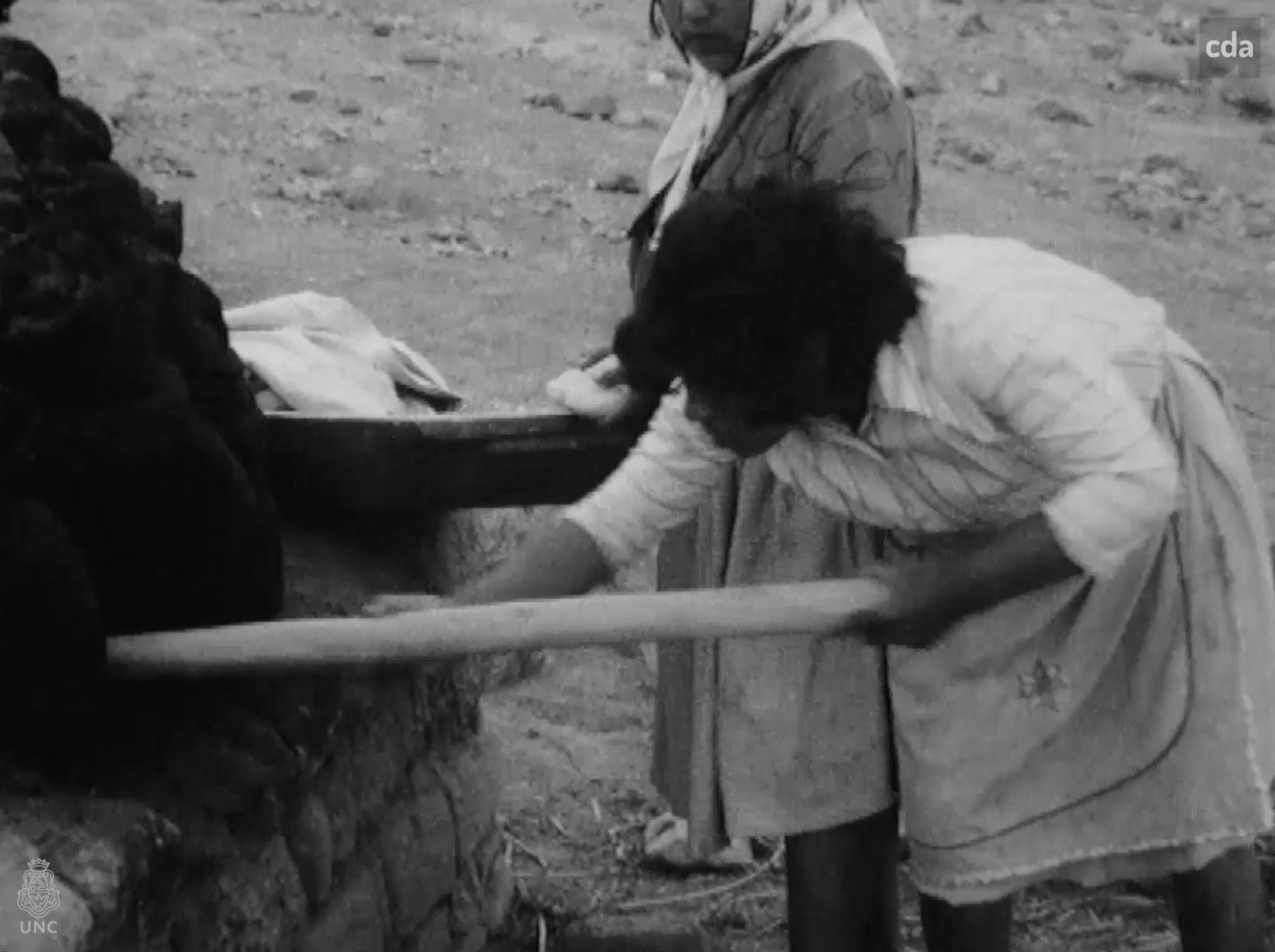
En el primer caso, los objetivos son mantener la unipolaridad, en el segundo desmontarla para construir la multipolaridad. Vivimos hoy en el ámbito de dos maneras distintas de liberación, a veces concurrentes pero en general conflictivas: la liberación des-occidentalizante de la dominación re-occidentalizante y las liberaciones decoloniales hoy que no tienen cabida en el estado sino en la esfera pública donde concurren todas las actividades creativas artísticas (en el sentido amplio de arte-habilidad para hacer) e intelectuales (en el sentido amplio de epistemología y hermenéutica, englobadas en la gnoseología). La liberación decolonial consistente en el desprendimiento de lo individual (yo) para reconstituir lo comunal (nosotras y nosotros) en la esfera pública, hoy no puede ser convergente con los diseños estatales, aunque—dependiendo de los gobiernos de turnopuedan no ser oponentes sin ser convergentes.
In the first case, the objectives are to maintain unipolarity; in the second, to dismantle it to build multipolarity. We live today within the context of two distinct, sometimes concurrent, but generally conflicting, forms of liberation: the de-Westernizing liberation from re-Westernizing domination and the decolonial liberations from the control of meaning and intersubjective relations. Decolonization after the end of the Soviet Union, has no place in the state but rather in the public sphere, where all creative activities converge—artistic (in the broad sense of art as the ability to create) and intellectual (in the broad sense of epistemology and hermeneutics, encompassed by gnoseology). Decolonial liberation, consisting of the detachment from the individual (I) to reconstitute the communal (we) in the public sphere, cannot today be convergent with state designs, although—depending on the governments in power—they may not be opposing forces without being convergent.
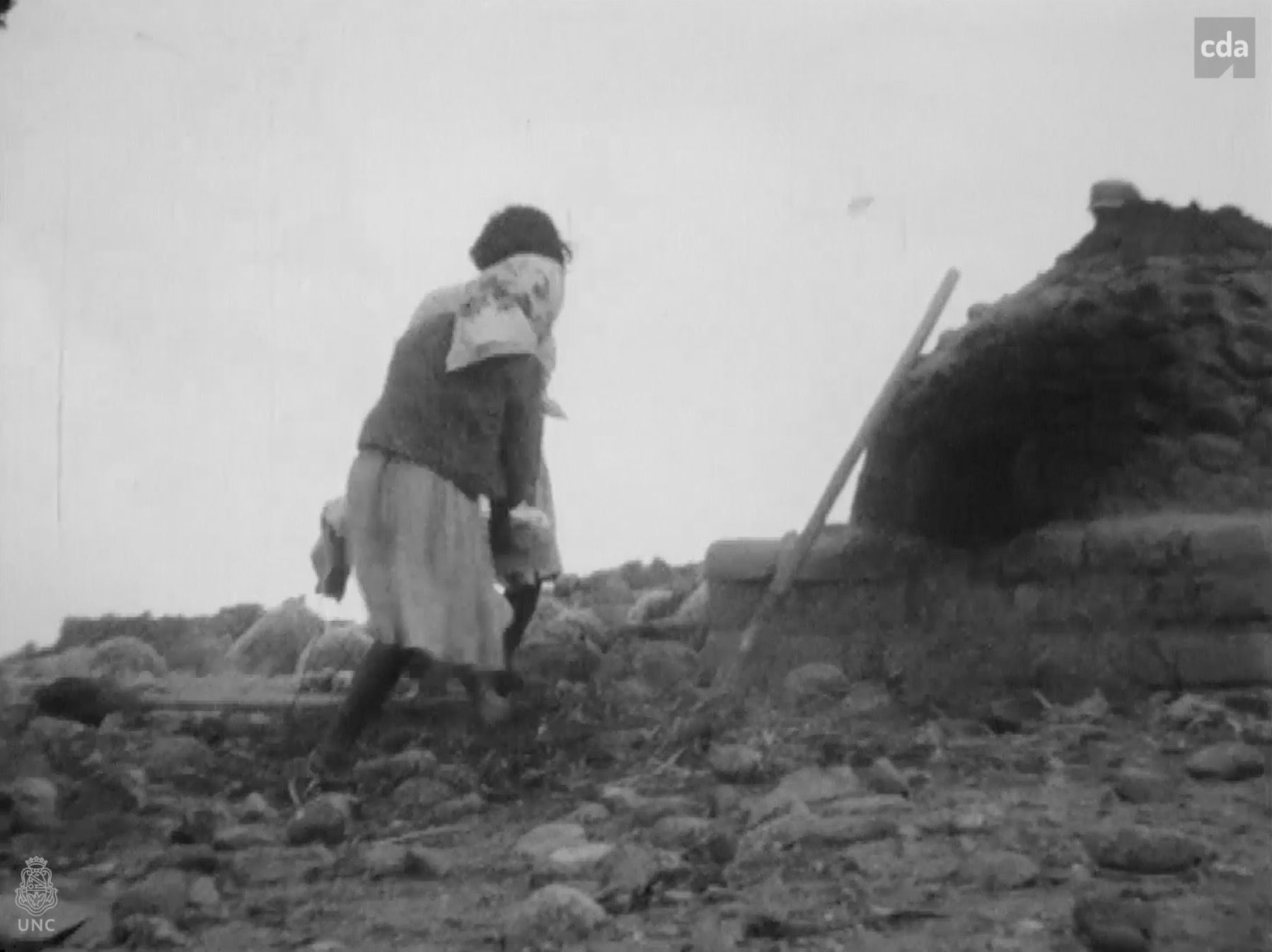
XI
Comencé con una historia personal vinculada a la ¨revolución¨ cinematográfica de los 60 para luego preguntar acerca de la relación cinematografía y decolonialidad, en consonancia con el asunto de este volumen. En una de las secciones introduje algunas observaciones relativas a mi manera de entender y practicar la decolonialidad. Marqué el giro en lo decolonial a partir del descubrimiento de la colonialidad y, por ende, de la decolonialidad. Se lo puede usar y se lo usa en otros contextos. Sin embargo, la colonialidad en el sentido de Quijano y sus seguidores, entre los que me cuento, es un concepto decolonial, así como el inconsciente es un concepto psicoanalítico y plusvalía un concepto marxista.
I began with a personal story linked to the cinematic “revolution” of the 1960s, and then explored the relationship between cinema and decoloniality, in keeping with the theme of this volume. In one section, I introduced some observations regarding my understanding and practice of decoloniality. I marked the shift in decolonial thought as stemming from the uncovering of coloniality and, consequently, from decoloniality itself. It can be used, and is used, in other contexts. However, coloniality, in the sense of Quijano and his followers, among whom I count myself, is a decolonial concept, just as the unconscious is a psychoanalytic concept and surplus value a Marxist one.
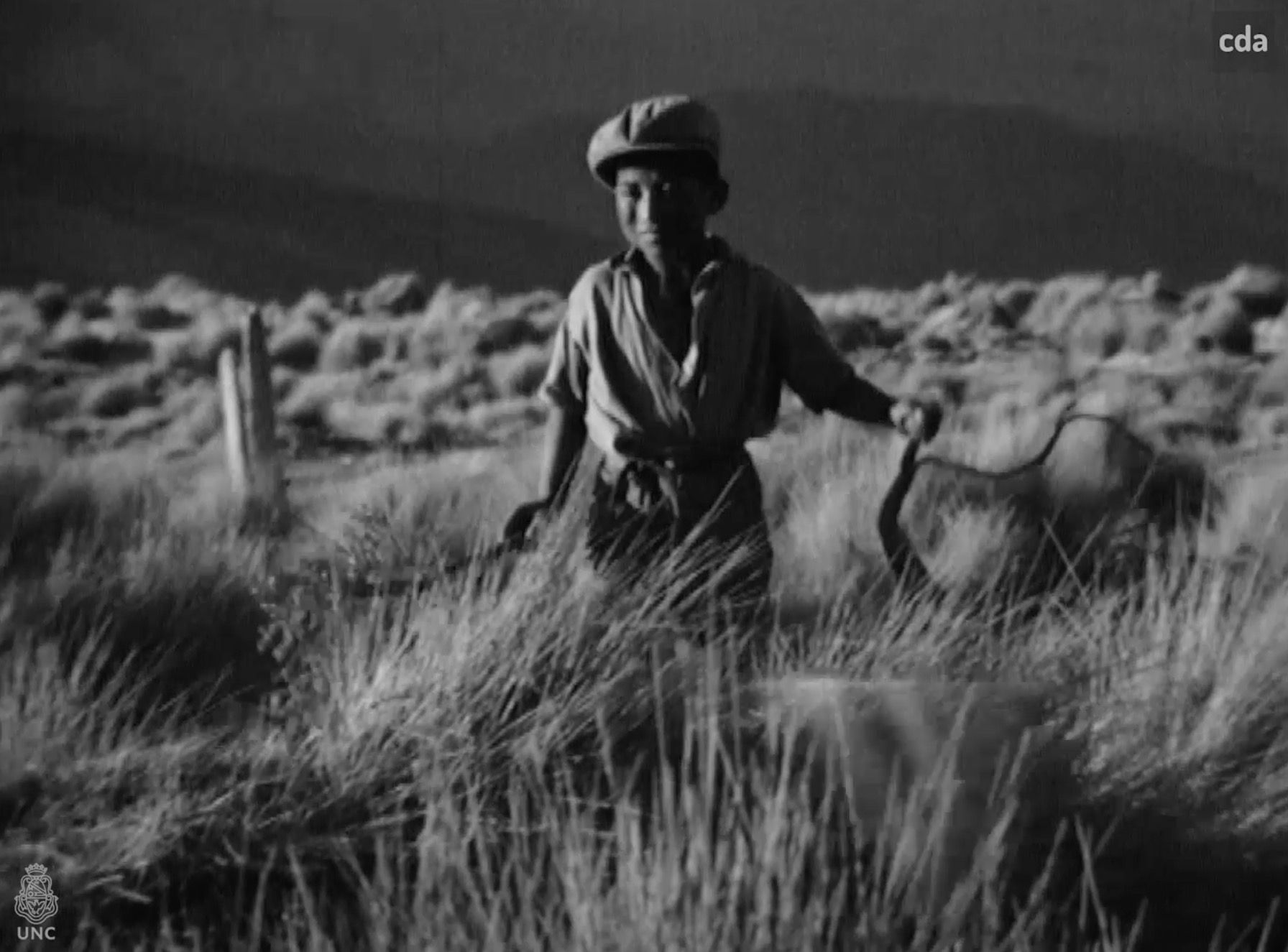
Dicho esto, agrego que la decolonialidad, en tanto horizonte de investigación y de praxis, no está limitada a exponer las injusticias manifiestas en los condenados de la tierra sino también, y yo diría fundamentalmente, exponer los ¨orígenes¨ de la injusticia preordenada por la voluntad colonial de poder y el patrón colonial de poder. En su relación con la cinematografía la tarea decolonial no es la de imponer la decolonialidad donde no está, sino de reconocerla donde está explícita (Solanas y Getino, la filmografía indígenas y de la diáspora africana), donde está implícita (Rocha, Sanjinés), y poner de relieve –donde no está ni implícita ni explicita—los elementos que en tal tipo de cine o en tal película, los signos de la colonialidad aparecen en las manifestaciones inconscientes (de realizadores, realizadoras y guionistas) de las premisas instauradas en el horizonte de la modernidad occidental.
Having said that, I would add that decoloniality, as a horizon of research and praxis, is not limited to exposing the injustices manifested in the downtrodden of the earth, but also, and I would say fundamentally, exposing the “origins” of injustice preordained by the colonial will to power and the colonial pattern of power. In its relation to cinematography, the decolonial task is not to impose decoloniality where it is absent, but to recognize it where it is explicit (Solanas and Getino, Indigenous and African diaspora films), where it is implicit (Rocha, Sanjinés), and to highlight—where it is neither implicit nor explicit—the elements in which, in a given type of cinema or film, the signs of coloniality appear in the unconscious manifestations (of filmmakers and screenwriters) of the premises established within the horizon of Western modernity.
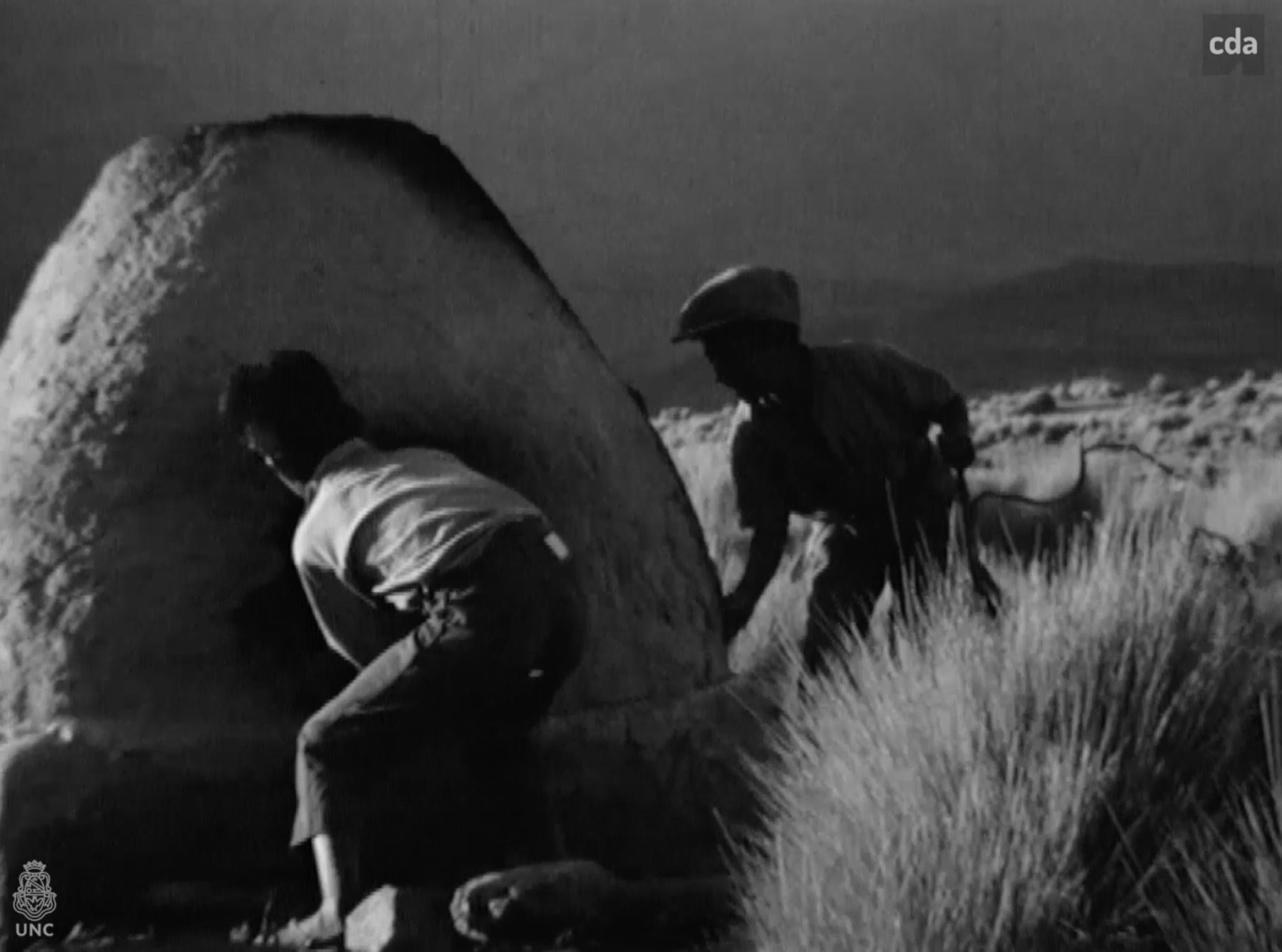
Puesto que en el sentido en que la practico, la descolonialidad no es una técnica para interpretar obras de arte o para demonizar opiniones contrarias, sino una perspectiva de creatividad gnoseológica en la analítica de la voluntad colonial y del patrón colonial de poder, procede a partir de la identificación de los signos que, en cualquier práctica semiótica, revelan en la superficie la estructura profunda (la voluntad y el patrón coloniales) de poder que los genera. Pedagógicamente diría, así como el o la psicoanalista lee, en los relatos del analizante, los signos del inconsciente, la analítica decolonial lee en toda semiosis, individual o social, los signos de la voluntad colonial. Y el patrón colonial de poder.
Since, in the sense in which I practice it, decoloniality is not a technique for interpreting works of art or for demonizing opposing opinions, but rather a perspective of gnoseological/epistemological creativity in the analysis of colonial will and the colonial matrix of power, it proceeds from the identification of the signs that, in any semiotic practice, reveal on the surface the deep structure (the colonial will and matrix) of power that generates them. Pedagogically speaking, just as the psychoanalyst reads the signs of the unconscious in the analysand’s narratives, decolonial analytics reads the signs of colonial will and the colonial matrix of power in all semiosis, individual or social. In the government, the mass media, the corporations, the universities, the museums, etc.
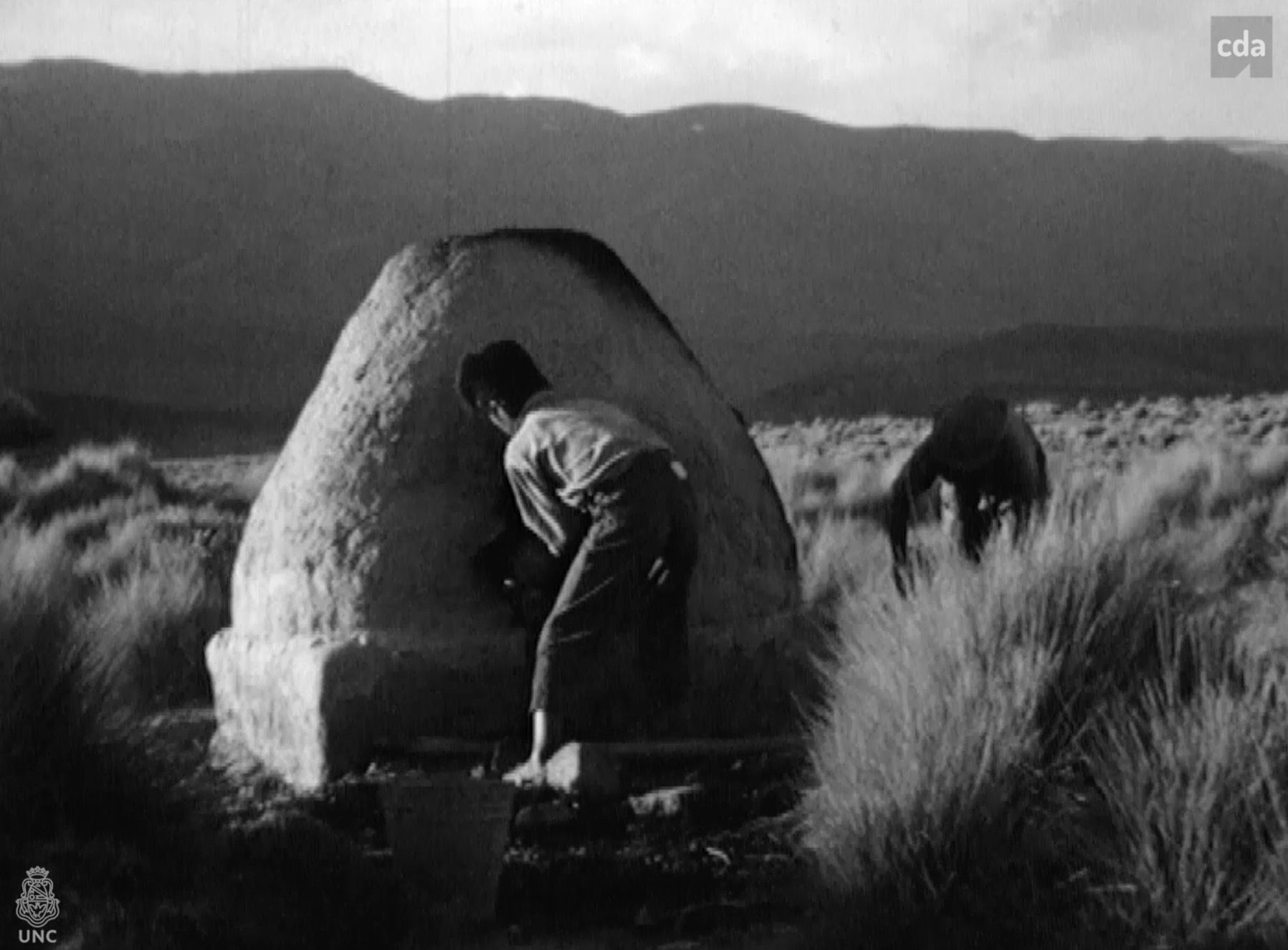
En este sentido, mi narrativa y argumentación propone una analítica decolonial de la cinografía de postguerra a la vez que, en el ejercicio mismo de esta narrativa y argumentación, van emergiendo las técnicas operativas de la decolonialidad en el amplio ámbito de las reconstituciones gnoseológicas. El Cine del Tercer Mundo aprovechó del cine de autor, que surgió en el Primer Mundo, contra el cine impersonal de entretenimiento, la oportunidad de explorar fenómenos del Tercer Mundo. No tendría sentido intentar hacer una película que explore los demonios de la burguesía de Milán, que hace Antonioni, en Buenos Aires o en Rio, así como sería ridículo que Antonioni intentara explorar los mitos y demonios de la burguesía de Buenos Aires o Rio de Janeiro.
In this sense, my narrative and argument propose a decolonial analysis of postwar cinema, while, in the very exercise of this narrative and argument, the operational techniques of decoloniality emerge within the broad field of gnoseological/epistemological reconstructions. Third World cinema took advantage of the auteur cinema that arose in the First World, in opposition to impersonal entertainment cinema, to explore Third World phenomena. It would be pointless to try to make a film exploring the demons of the Milanese bourgeoisie, as Antonioni does, in Buenos Aires or Rio, just as it would be ridiculous for Antonioni to try to explore the myths and demons of the bourgeoisie of Buenos Aires as Leopoldo Torres Nilson or Walter Sallies in Rio de Janeiro and San Paulo.
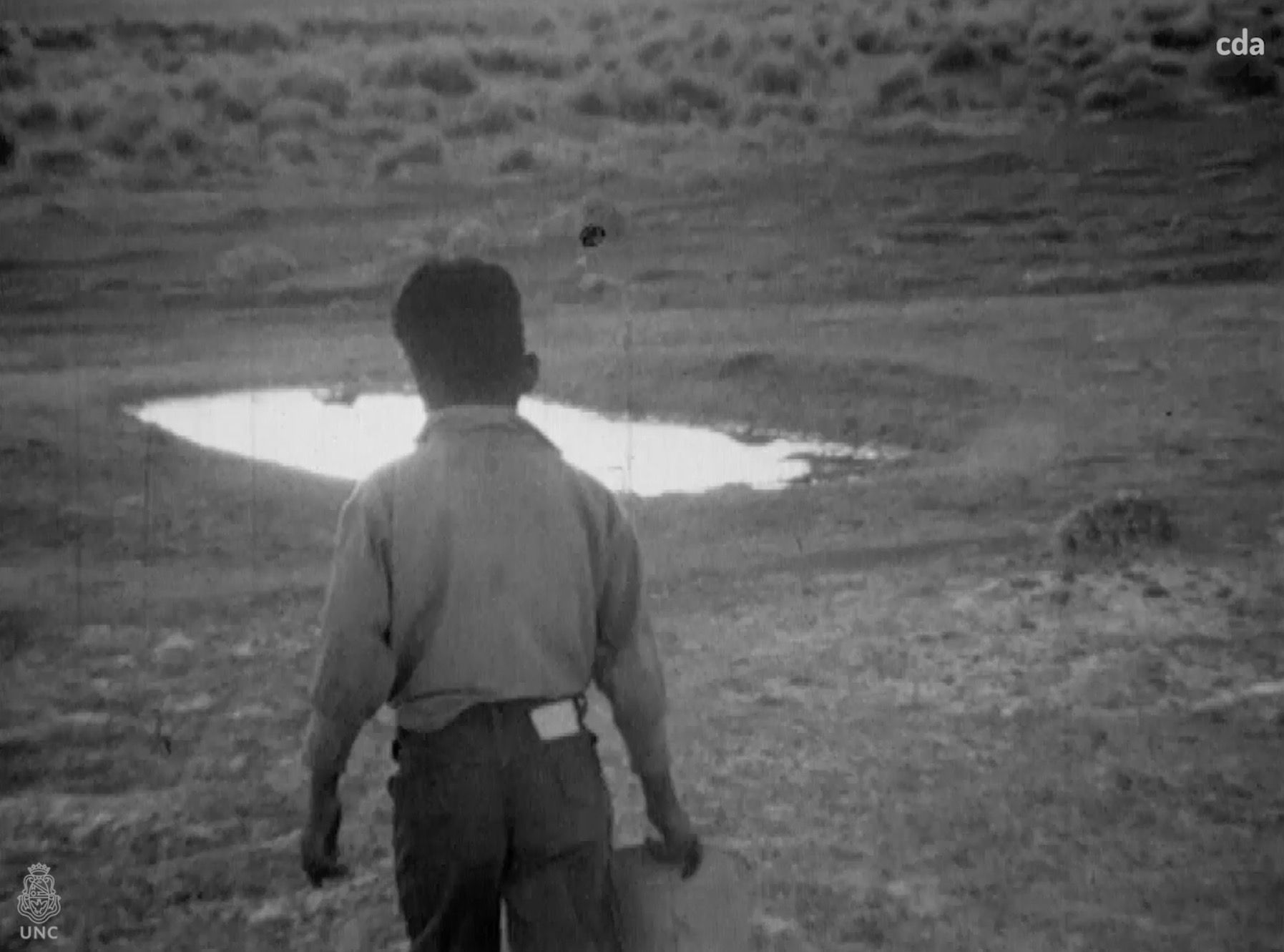
De modo que la analítica decolonial pone de relieve, en primer lugar y en este ámbito, la geopolítica y la geoestética. Cuando Sanjinés habla de estética y de belleza en los Andes Bolivianos, está sintiendo y diciendo algo muy distinto a lo que decía Kant en Königsberg teorizando la crítica del juicio. Por esta razón mi argumento narrativo está construido sobre pilares geopolíti- cos y geoeconómicos que crean las condiciones operativas de la ética y de la estética.
Thus, decolonial analysis highlights, first and foremost in this context, geopolitics and geoaesthetics. When Sanjinés speaks of aesthetics and beauty in the Bolivian Andes, he is feeling and saying something very different from what Kant said in Königsberg when theorizing the critique of judgment. For this reason, my narrative argument is built on geopolitical and geoeconomic pillars that create the operational conditions for ethics and aesthetics.
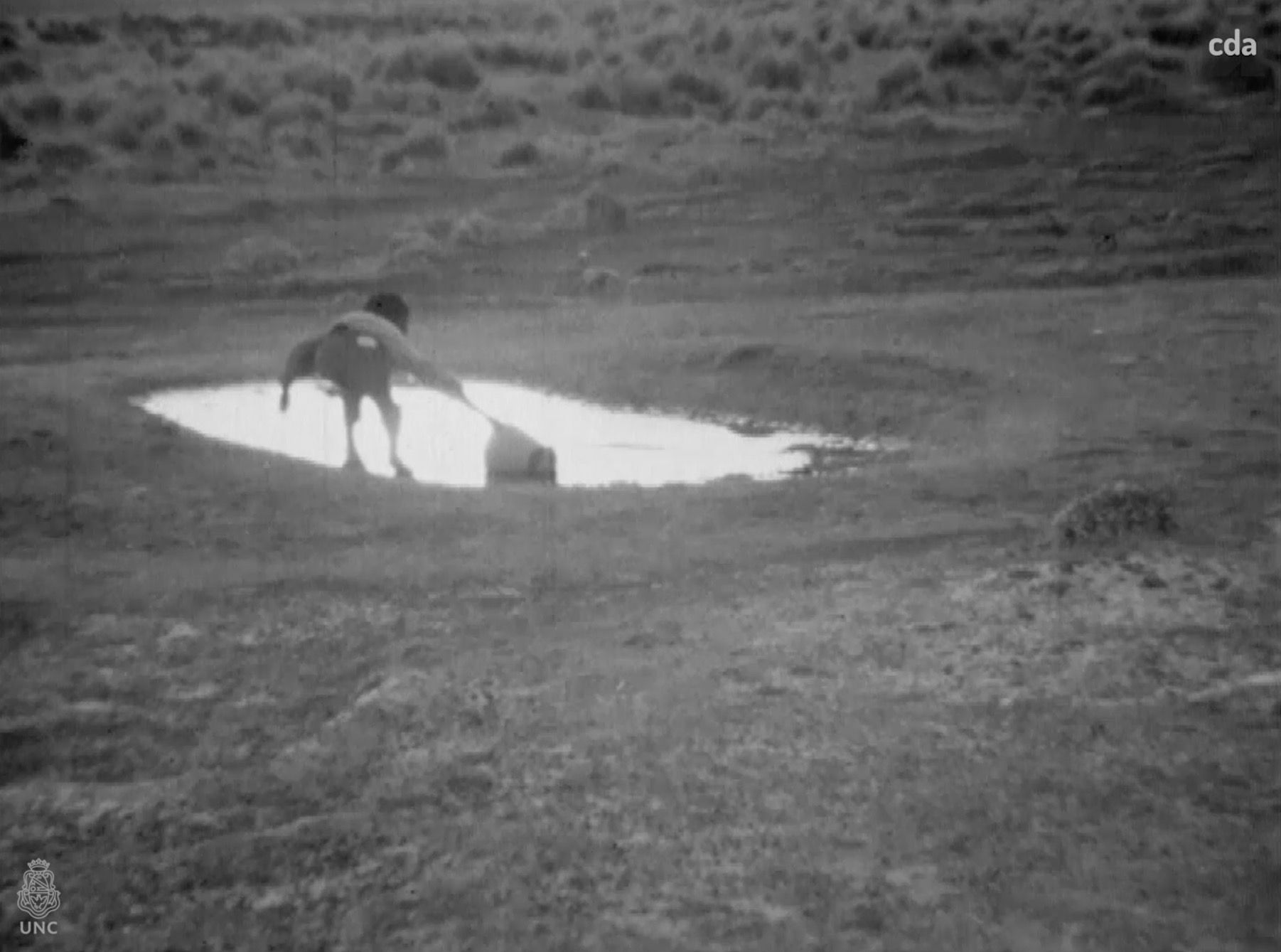
XII
Cierro con tres ejemplos que no puedo dejar de lado puesto que estuvieron presentes mientras escribía este ensayo. Son tres casos geopolíticos de cine de autor que exploran la condición humana inserta en las respectivas historias locales: ¨Erase una vez en Anatolia¨ (Tur- quía, 2011), el ¨Caballo de Turín¨(Hungría, 2011) y ¨El destierro¨ (Rusia, 2007). La perspectiva decolonial nos permite percibir en ellas las consecuencias de la decolonialidad allí donde no están explícitamente expuestos: no hay éroe individual, el paisaje no es un marco en el que ocurren cosas sino un actor de las cosas que ocurren, sentimos en el presente de las historias que cuentan, la presencia del pasado, local e internacional, que provoca la desazón, la tragedia, la sobrevivencia compartida de las condiciones humanas modeladas por la confluencia de los valores constituidos por y en la modernidad occidental proyectando la colinealidad en historias locales Hungría (legados del imperio austro-húngaro), Turquía (legados del Sultanato Otomano) y Rusia (legados del imperio ruso y la Unión Soviética). Aún la noche no todos los gatos son pardos. El diálogo en estos filmes, como en los filmes de Ingmar Bergman, restringen la palabra a lo mínimo necesario, contrario a la invasión de la palabra que inunda el cine contemporáneo, incluidas las series de Netflix.
I will conclude with three examples that I cannot ignore, as they were present while I was writing this essay. They are three geopolitical cases of auteur cinema that explore the human condition embedded in their respective local histories: Once Upon a Time in Anatolia (Turkey, 2011), The Turin Horse (Hungary, 2011), and The Exile (Russia, 2007). The decolonial perspective allows us to perceive in these films the appearance of decoloniality where they are not explicitly stated: there is no individual hero, the landscape is not a backdrop against which events unfold but an active participant in those events, and we sense, in the present of the stories they tell, the presence of the past, both local and international, which evokes unease, tragedy, and the shared survival of human conditions shaped by the confluence of values constituted by and within Western modernity that has projected collinearity onto local histories in Hungary (legacies of the Austro-Hungarian Empire), Turkey (legacies of the Ottoman Sultanate), and Russia (legacies of the Russian Empire and the Soviet Union). Even at night, not all cats are gray. The dialogue in these films, as in the films of Ingmar Bergman, restricts words to the bare minimum, contrary to the pervasive use of language that floods contemporary cinema, including Netflix series.
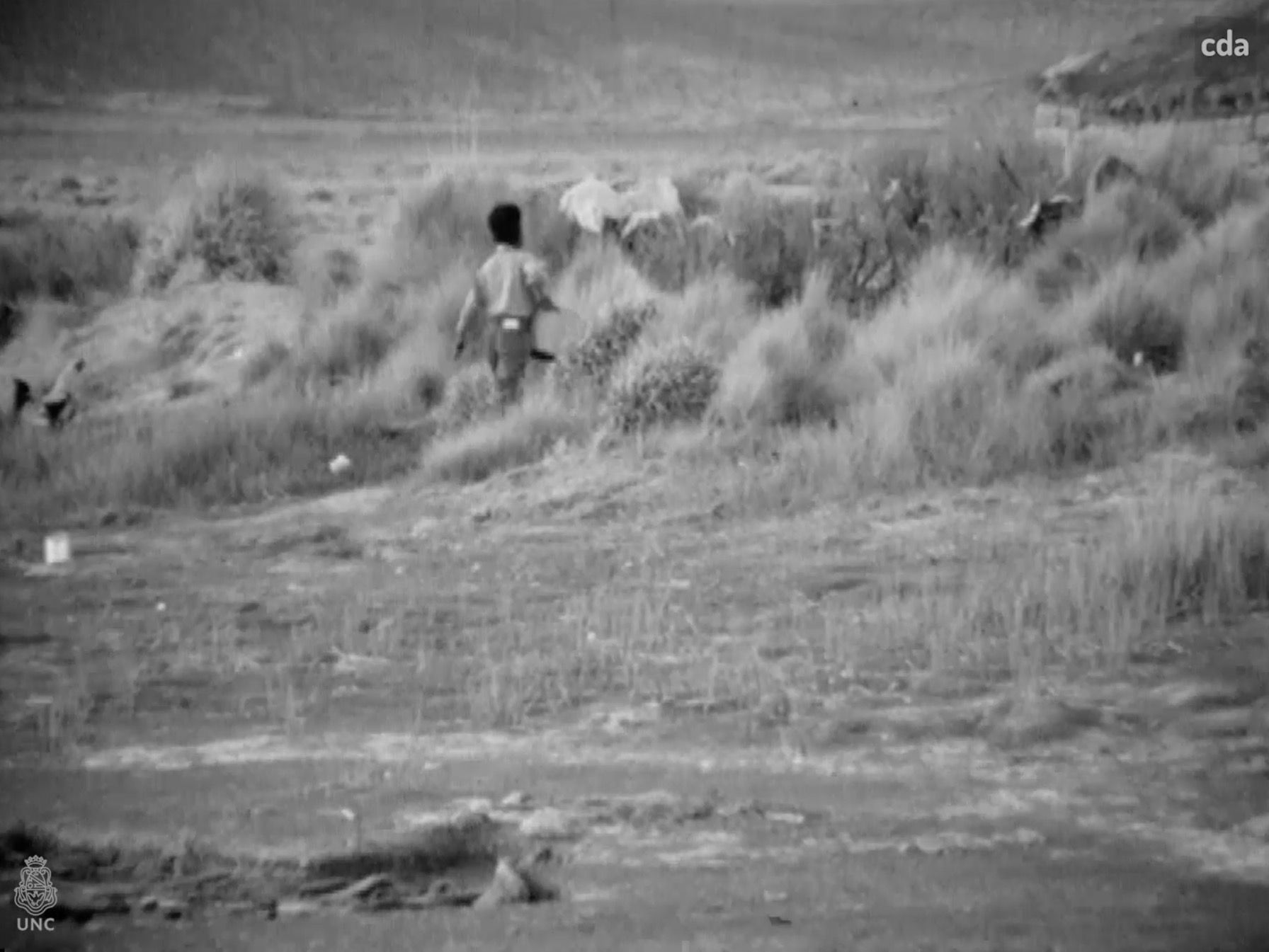
No hay un héroe salvador en los relatos, ni actrices y actores pertenecen al estrellato, vemos las películas porque reconocemos los directores. Los diálogos son mínimos, nada más los necesario (como en El Samurai (1967) de Jean-Pierre Melville), contrarios a la verborrea que todavía caracteriza la mayoría de la cinematografía de estudios y de industria. En los tres relatos el paisaje, más que un mero escenario donde ocurren cosas es integrante de las cosas que ocurren, es un protagonista silencioso, potenciando los conflictos existenciales de quienes los habitan. Incide en la interioridad de las personas, dialoga con ellas, como en la escena final de El destierro. Son cine de autor que despojan lo individual y enfatizan la necesidad de la convivencia y el cuidado mutuo. No son fotonovelas donde el cuidado es más bien propaganda que exploración de la condición humana.
There is no saviour hero in these stories, nor are the actors members of stardom, we watch the films because we recognize the directors. The dialogue is minimal, just what is necessary (as in Jean-Pierre Melville’s Le Samouraï (1967)), in contrast to the verbosity that still characterizes most studio and industry-driven cinema. In all three stories, the landscape, more than a mere backdrop where things happen, is an integral part of the events themselves, a silent protagonist that amplifies the existential conflicts of its inhabitants. It touches upon people’s inner lives, engaging in dialogue with them, as in the final scene of Exile. These are auteur films that strip away the individual and emphasize the need for coexistence and mutual care. They are not photo-romance where care is more propaganda than an exploration of the human condition.
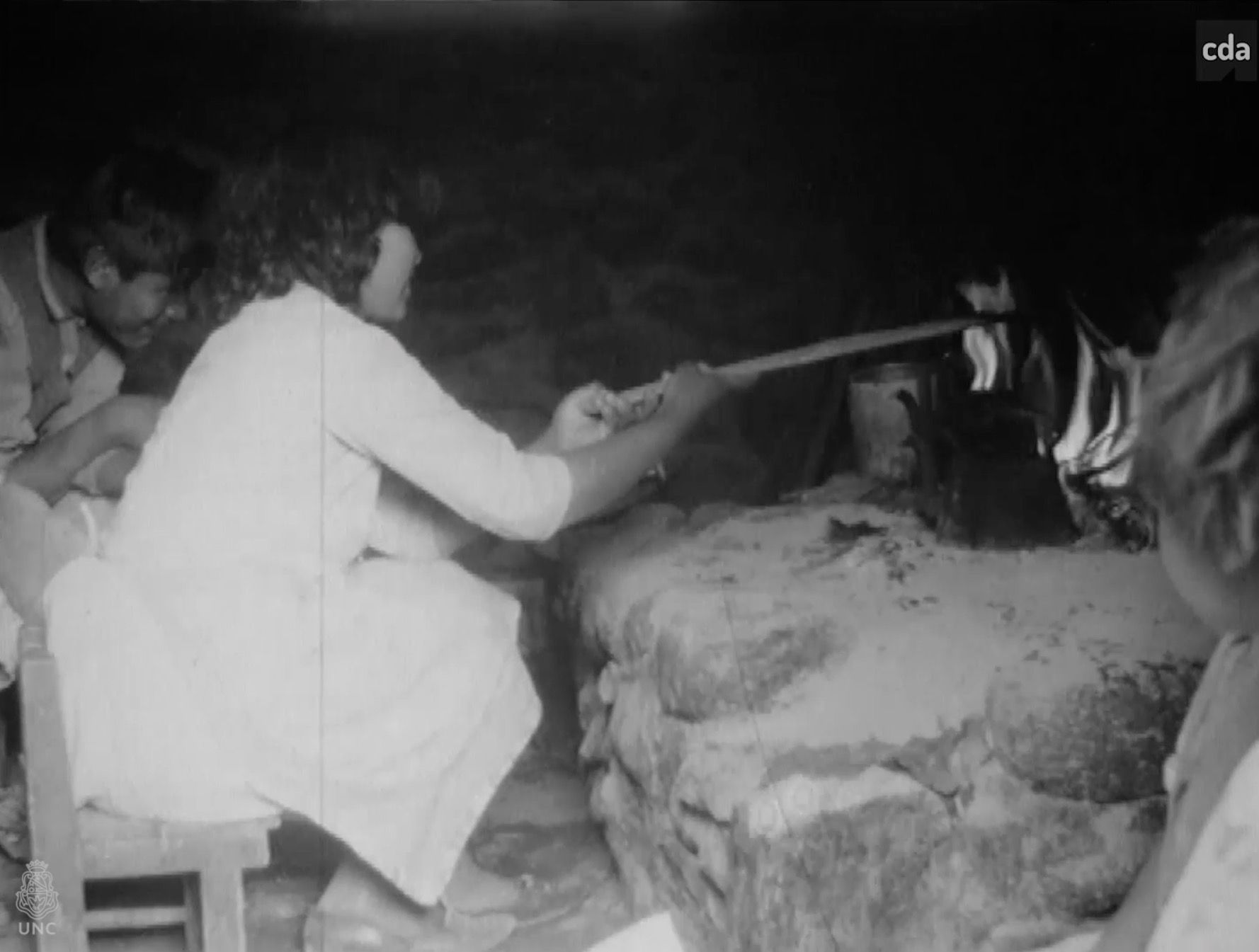
En el orden del diferencial de poder que enmarcan las jerarquías geohistóricas (políticas y sensoriales) y las relaciones internacionales, de las cuales la cinematografía no está exenta, ni las reflexiones decoloniales sobre ellas deben estarlo, la película húngara proviene de un estado ¨marginal¨ a la Europa. Los legados del imperio austrohúngaro no son los mismos que los legados de los imperios ingleses y franceses. Las otras dos películas nos transportan el presente y pasados de Turquía y Rusia, contextos periféricos respecto al “centro” occidental sobre el que Hannah Arendt exploró la condición humana.
Within the framework of the power differential that shapes geohistorical hierarchies (political and sensory) and international relations—from which cinema is not exempt, nor should decolonial reflections on them be—the Hungarian film originates from a “marginal” state within Europe. The legacies of the Austro-Hungarian Empire are not the same as those of the British and French empires. The other two films transport us to the present and past of Turkey and Russia, peripheral contexts in relation to the Western “centre” upon which Hannah Arendt explored the human condition.
Esta descentralización contribuye a des-universalizar la condición humana y descentrarla en la pluriversalidad de la condición humana arraigada en memorias locales de los cuerpos y de la escritura. Esta descentralización contribuye a desuniversalizar la condición humana, singularmente marcada por la historia y las tensiones sociales y políticas de esos espacios. Ponen en duda la centralidad del individuo y esbozan un cine de autor que se distancia de las narrativas heroicas, proponiendo en su lugar una visión existencial, coral y marcadas por el desencanto o la resignación. En El caballo de Turin, el caballo mismo es un personaje tan importante como su dueño.
This decentralization contributes to de-universalize the human condition; to decentre and dispersing it into the pluriversality of the human condition rooted in local memories of bodies and writing. These movies question the centrality of the individual and outline an auteur cinema that distances itself from heroic narratives, proposing instead an existential, collective vision marked by disillusionment or resignation. In The Turin Horse, the horse itself is as important a character as its owner.

En fin, los tres filmes abren la pregunta sobre el sentido de la existencia y la capacidad de las personas para encontrar significado en un mundo que parece indiferente, hostil o incomprensible. Lo cual, en la perspectiva descolonial, nos tocan la sensorialidad y nos invitan a indagar la colonialidad del saber y del ser, fueren los realizadores conscientes o no de la colonialidad del poder que les habita a ellos, de la cual las películas no pueden escapar.
In short, all three films raise questions about the meaning of existence and people’s capacity to orient themselves in a world that seems indifferent, hostile, or incomprehensible. From a decolonial perspective, this touches our senses and invites us to explore the intersecting effect of this coloniality of knowledge and beings, regardless of whether the filmmakers were consciously aware of the coloniality of power that inhabits them, from which the films cannot escape.

| 1. | ↑ | Revista Sombras, 1964, academia. |
| 2. | ↑ | Más de la mitad, artes |
| 3. | ↑ | themoviedb rehime.com |
| 4. | ↑ | Más de la mitad, artes |
| 5. | ↑ | publicaciones |
| 6. | ↑ | publicaciones |
| 7. | ↑ | Unsettling the Coloniality of Being/Power/Freedom, New Centennial Review, 2003, savac |
| 8. | ↑ | Hacia un Tercer Cine, 1969, umh3593 |
| 9. | ↑ | Ngugi wa Thiong’o, Descolonizar la mente. La polítivca lingüística de la literatura africana. Primera publicación en inglés, 1986, agoradeeducacion. |
| 10. | ↑ | Ngugi wa Thiong’o, Descolonizar la mente. La polítivca lingüística de la literatura africana. Primera publicación en inglés, 1986, agoradeeducacion. |
| 11. | ↑ | Nelson Maldonado-Torres, La topología del ser y la geopolítica del conocimiento. La modernidad, imperio y colonialidad. Revista de Ciencias Sociales. 80, 2008, enriquedussel |
| 12. | ↑ | Aníbal Quijano, Colonialidad y Modernidad/Racionalidad (1992), SIEP, 2020. |
| 13. | ↑ | Historia Locales/Diseños Globales. Colonialidad, conocimientos subalternos y pensamiento fronterizo. Madrid: Akal, 2003 |
| 14. | ↑ | Walter D Mignolo and Rolando Vázquez, “Decolonial aestheSis: Colonial Wounds/Decolonial Healings”. Social Texts Online. July 15, 2033, socialtextjournal. |
| 15. | ↑ | Historia Locales/Diseños Globales. Colonialidad, conocimientos subalternos y pensamiento fronterizo. Madrid: Akal, 2003 |
| 16. | ↑ | Walter D Mignolo and Rolando Vázquez, Decolonial aestheSis: Colonial Wounds/Decolonial Healings. Social Texts Online. July 15, 2033, https://socialtextjournal.org/periscope_article/decolonial-aes- thesis-colonial-woundsdecolonial-healings/ |
| 17. | ↑ | Walter D Mignolo and Rolando Vázquez, Decolonial aesthetics: Colonial Wounds/Decolonial Healings. Social Texts Online. July 15, 2033, https://socialtextjournal.org/periscope_article/decolonial-aes- thesis-colonial-woundsdecolonial-healings/ |
| 18. | ↑ | Glauber Rocha, Estética del Hambre, 1965, crearensalamanca.; Jorge Sanjinés, Problemas de la forma y del contenido en el cine revolucionario (1978). Ver el interesante artículo de Moira Fradinger, ¨Leer los manifiestos del Tercer Cine latinoamericano en la urgencia de nuestro presente¨, Comparative Cinema, IV, 9, 2016, 46-54 ocec.eu |
| 19. | ↑ | Glauber Rocha, Estética del Hambre, 1965, crearensalamanca.; Jorge Sanjinés, Problemas de la forma y del contenido en el cine revolucionario (1978). Ver el interesante artículo de Moira Fradinger, Leer los manifiestos del Tercer Cine latinoamericano en la urgencia de nuestro presente, Comparative Cinema, IV, 9, 2016, 46-54. ocec.eu |
| 20. | ↑ | Edgar Morin, Las estrellas de cine, Bueno Aires: Eudeba, 1964. |
| 21. | ↑ | Edgar Morin, Las estrellas de cine, Bueno Aires: Eudeba, 1964. |
| 22. | ↑ | CEFREC, proyectoidis |
| 23. | ↑ | CEFREC, proyectoidis. |
| 24. | ↑ | On this trajectory see Walter D. Mignolo, “Ars, Aesthesis, (De) Coloniality.” Investigaciones Artisticas. Bogota: Universidad Distrital, Vol 11/19 2025, revistas |
| 25. | ↑ | See Walter D. Mignolo, “(Re) Modelling the Letter. Literacy and literature at the intersection of semiotics and literary studies. In On Semiotic Modeling. Myrdene Anderson and Floy Merrell, eds. Holland: De Gruyter, 1991, 357-394 |
| 26. | ↑ | La gran transformación (1944). Madrid: Casa Juan Pablos, 2013. |
| 27. | ↑ | Emmanuel Todd, La derrota de occidente (2022). Madrid: Akal, 2024 |