VONANI BILA
Probing ‘Place’ as a Catalyst for Poetry
Creative writing is not always about getting published or receiving a grade, but is a practice to sharpen our awareness and appreciation of ourselves, familiar and unfamiliar landscapes and inscapes, and an opportunity to reflect key societal moments. Creative writing, and poetry in particular, allows us to connect with the written and spoken word, express complex ideas and reflect our experiences and imaginings with sincerity. It is about self and collective affirmation of the poetic craftsmanship without dwelling on collectivist and dogmatic thinking.
This essay explores community-orientated poetry approaches that reflect true and distinct images of society and the intimate physical textures of people’s lives – our lives. It taps into meditations on place, familial relations and domestic life, and how this sociological alertness contributes to the demystification of poetry as an exclusive, elite artistic form for literary purists and followers of rigid procedures of composition. It highlights how community-oriented poetry workshops accommodate the literate and illiterate, and how poetry – be it lyrical, dramatic or narrative, oral or written – can offer a vigorous critique of society without sloganeering.
Poetry as I Understand It
In my community in Elim–Shirley–village, both written and oral forms of poetry are highly regarded. However, the unpopularity of written poetry persists in terms of certain generalisations. They include associating written poetry with school – as a compressed and complex language, relying on obsolete words. Such poetry is considered difficult to relate to in terms of the common and everyday experience of the readers. I grew up with the notion that written poetry is demanding because of its many forms and technical requirements. It was only when I learnt that, in Greek, a poem is creation – meaning that well-composed poetry renews human existence – that I was comforted in the recognition that written poetry (like all forms of poetry) is not meant to be an elitist pastime or an intellectual exercise, but an engagement with all facets of the human experience.
When the educated fellows in my village want to brag, they throw a line from John Donne’s “Death, Be not Proud”, T. S. Eliot’s “The Waste Land”, John Milton’s “Paradise Lost,” any love sonnet by William Shakespeare or a psalm from the Bible. These great poems are quoted during funerals, weddings and graduation parties by men and women adorned with robes of academic excellence, and asterisks behind their names. Such speakers, orating from poems, don’t see themselves as creators of new work; rather, they repeat the famous lines from the work of celebrated poets, often Anglo-Saxon. They hardly ever quote indigenous poets, no matter how skilful such poetry is. Some try to write, but the motive is usually the enticement of the money that publication may generate if the work ends up in the school system.
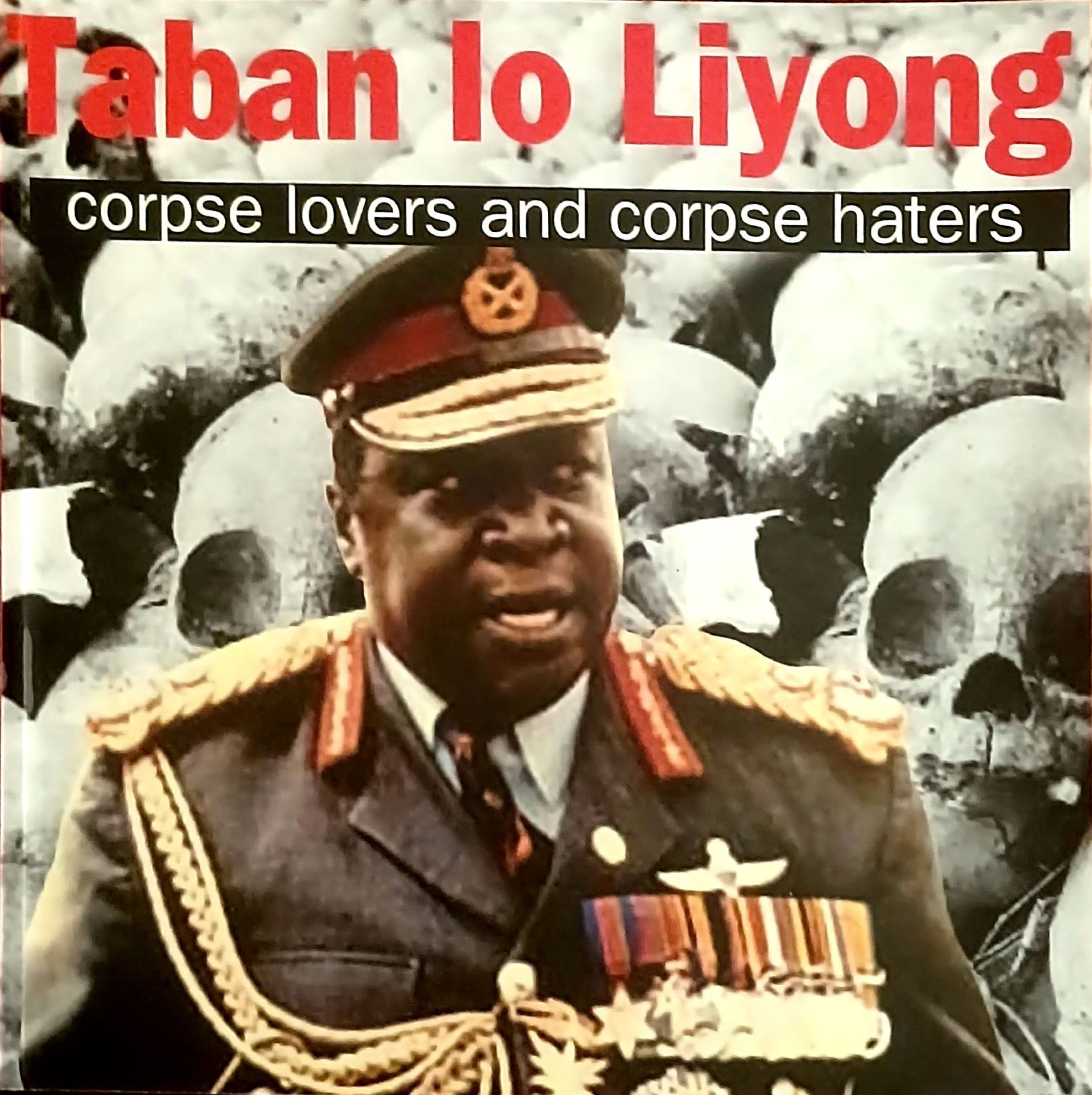
Speaking at the Timbila Poetry workshop held on 1 and 2 December 2001, poet Taban Lo Liyong argued that no poet should write for money:
If you want to make money from poetry forget it, you will not make money from poetry anywhere. Maybe you can be rich if you write novels and maybe plays, but in South Africa not many people read. (314)
The currently more popular form of poetry (though historically ancient) is oral and performative, and is generally more accommodative than written poetry. I consider it to be less intimidating. Its language is rich. The oral poem records important events, moments and emotions without stringent academic formalism. It not only involves the poet in composition and presentation, but also engages the community or audience in the presentation. Duncan Brown observes:
Oral literature and performance have been important features of South African society since the development of the earliest human communities on the subcontinent, from the songs and stories of the Bushmen and the Khoi to the praise poems (Zulu/ Xhosa: izibongo; Sotho: lithoko) of African chiefdoms. In addition to prominent ‘public’ forms of panegyric to the leader, other forms of oral poetry have flourished – and continue to flourish – in African societies: songs to the clan; family songs (especially at weddings and funerals); love lyrics; children’s verse; work songs; lullabies; personal praises; religious songs; songs to animals; and songs of divination. (2-3)
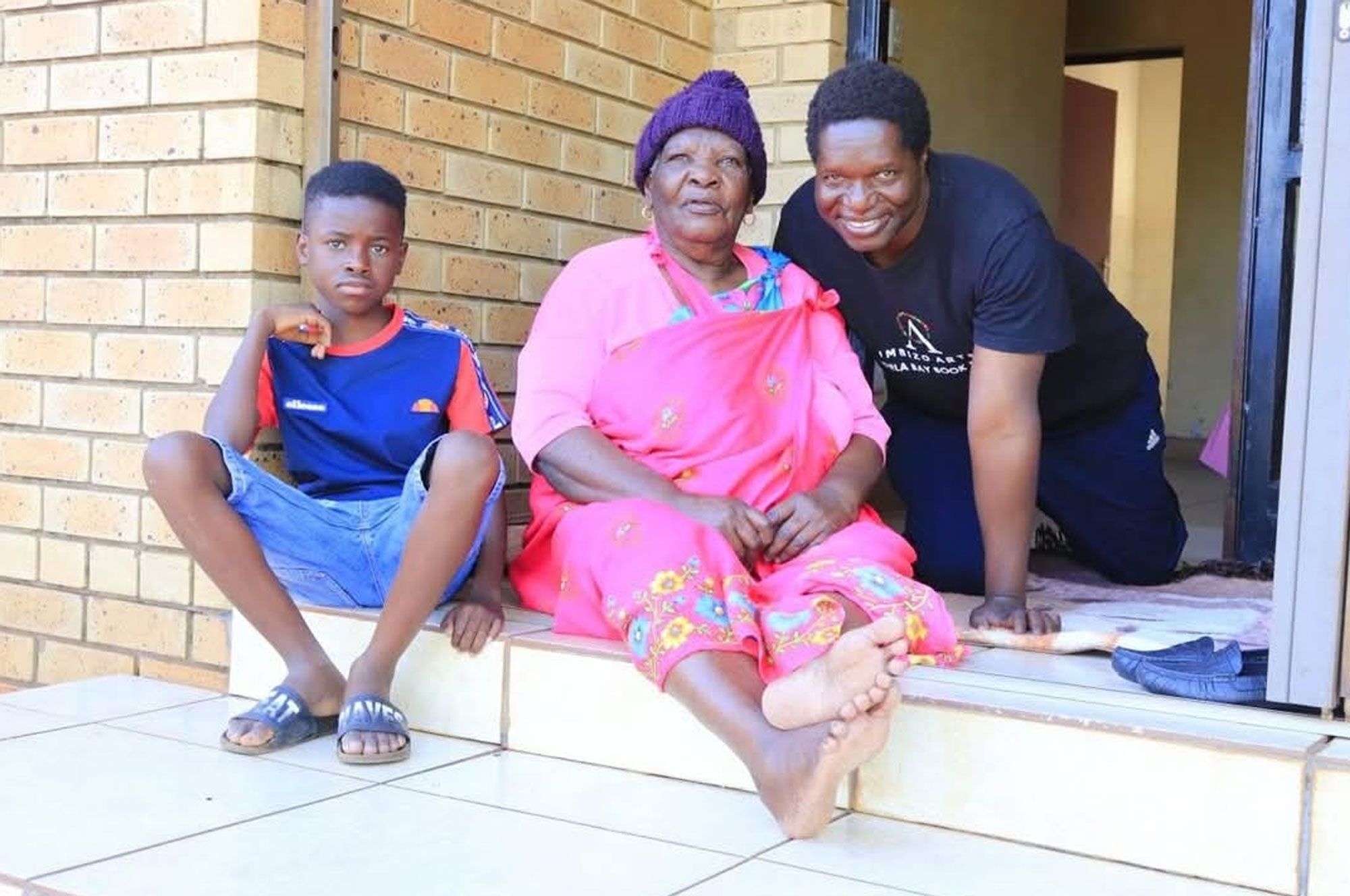
I grew up listening to inventive poetry, myths and chants, and performing cultural rituals by my clan. I found it to be interdisciplinary, providing glimpses into other facets of life such as history, sociology, anthropology, culture and religion. This understanding made it easy for me to connect with the poetry of Black Consciousness of the 70s, which was unsympathetic to Apartheid. Equally, I fell in love with the radical poetry of key Xitsonga poets James Magaisa, Max Marhanele and Benson Masebenza. I understood that the key public function of poetry – written or oral – is, as literary scholar Casey Hayman (commenting on radical American poet Amiri Baraka) writes, ‘its ability to speak, actively and directly, to the Black masses at large, to induce thought and action’ (85). According to the Poetry Foundation, Baraka (like the projectivist poets) believed that a poem’s form should follow the shape determined by the poet’s own breath and intensity of feeling.
Kimberly Benston observes in Performing Blackness: Enactments of African-American Modernism:
Baraka has always written within a sense of imminent crisis: his work derives much of its driving power from the assumption that the apocalypse is always about to be, that its arrival requires nothing other than the conjunction of changes, inevitable trajectories and his audience’s decision finally to shed foolish delusions about the world and their own motivations. (194)
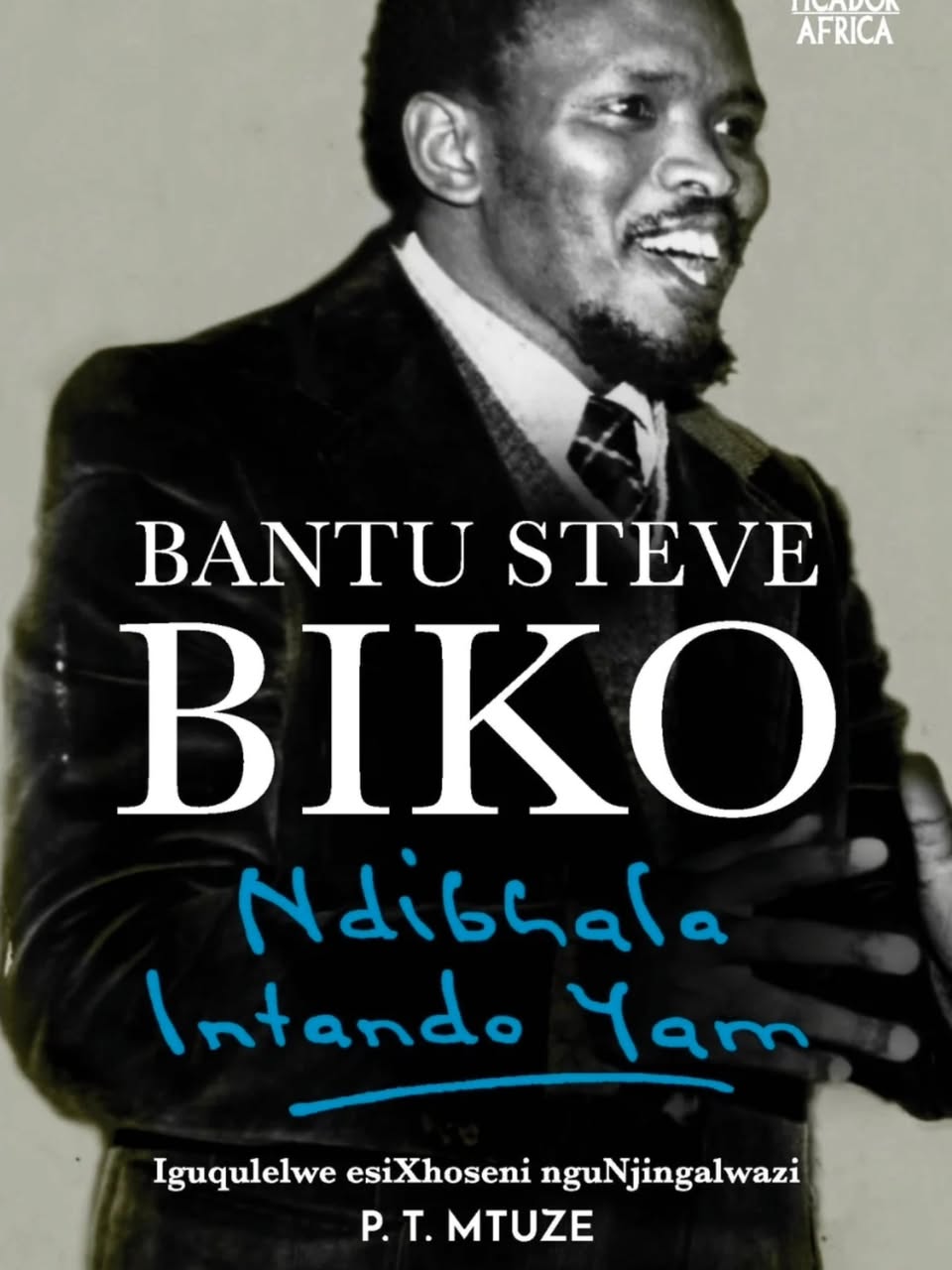
I am attracted to poetry that is rooted in the Black radical tradition, which is aimed at transforming society – the same way Steve Biko inspired the Black Consciousness poetry of the 70s and 80s in South Africa, and critiqued the barbaric system of Apartheid and racism without fear.
According to Dominique Thomas, scholarship-to-practice curator at the National Center for Institutional Diversity, the Black radical tradition (popularised by Cedric James Robinson) is ‘a collection of cultural, intellectual, action-oriented labour aimed at disrupting social, political, economic, and cultural norms originating in anti-colonial and antislavery efforts’. Mohammed Elnaiem observes that ‘Cedric Robinson proposed that the Black radical tradition was necessitated into existence by “racial capitalism” ’.
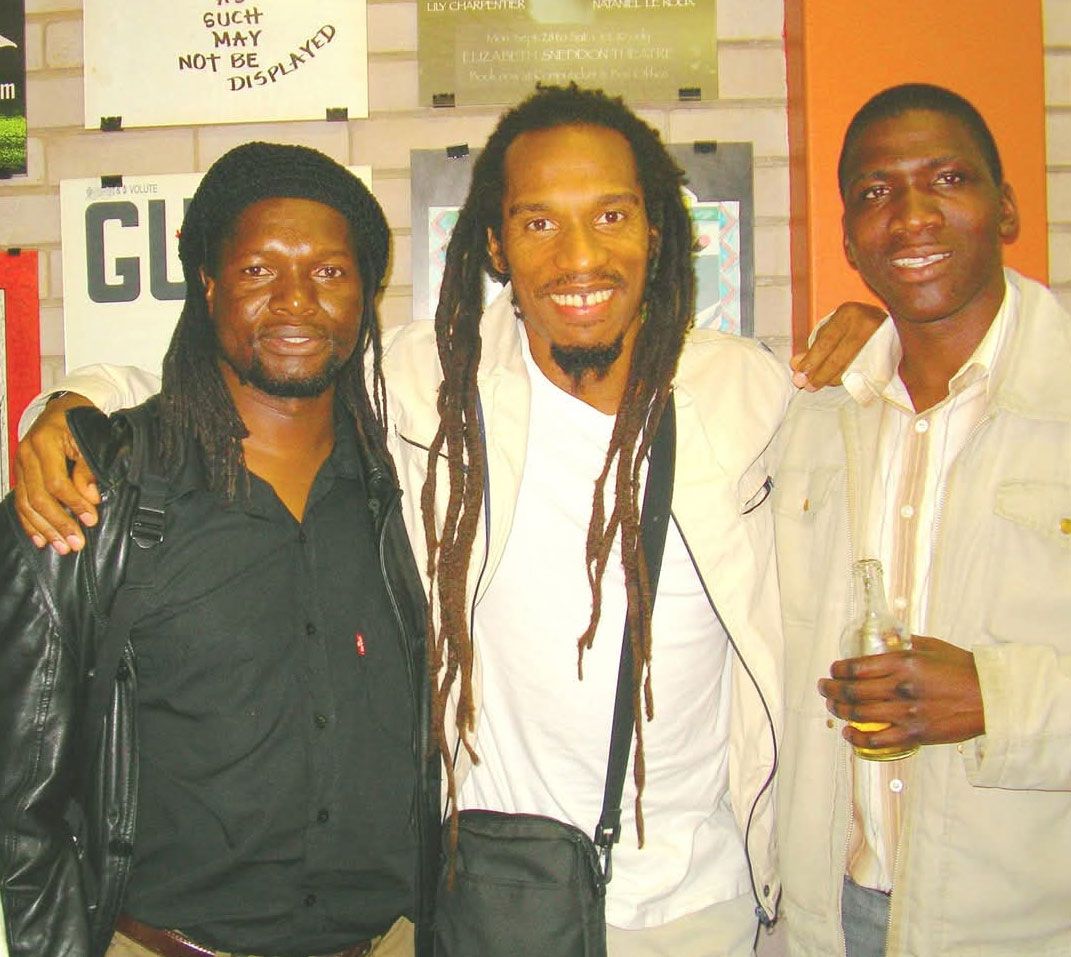
Unsurprisingly, I like poetry that is brave and fearless like a lion; poetry that strikes like lightning; poetry that challenges the sterility of accepted values, practices and norms; poetry that recreates. I prefer a poetry that calls a spade a spade, but woven and stitched in a crafty and nippy fashion. I like poetry that is rooted in people’s lived experiences. A poetry that dramatises life anew. A poetry that breaks language open, demanding full acceptance of the vernacular – the patois, the local Ringas[1]Ringas, better known as Tsotsitaal or Isicamtho, is a South African vernacular urban dialect/creole derived from a variety of mixed languages. It is a kasi taal (township language) used ‘through’ another language – a type of basilect. While retaining its own defining features, it has no structure of its own, relying instead on the structures of the languages it uses. South African poets who have experimented with Ringas include Mboneni Ike Wangu Muila, Don Mattera, Sipho Sepamla and Kgafela oa Magogodi. Some catchy words and phrases include heita (hello), ncaah/grend/‘double-dolly’/phashasha (fine/ good), ‘tah’ (thank you), danone (dating a young girl), danyani (prison), ‘tiger’ (R10 note), choko (R20 note), ‘clipper’ (R100 note), izinyoka (thugs/ thieves), ngam’la (white man/rich man) and ‘Kosovo’ (a dangerous place). ‘Pulling a Kelly Khumalo’ implies claiming to be a virgin when you are not, while ‘Khanyi Mbau’ refers to a gold digger. – as noticeable in the work of Oku Onuora, Linton Kwesi Johnson, Mikey Smith, Kamau Brathwaite, Benjamin Zephaniah, Ike Muila and Jean ‘Binta’ Breeze.
What I am advocating for is not new: German theatre practitioner, playwright and existentialist Bertolt Brecht, Brazilian theatre guru and political activist Augusto Boal, and Brazilian educator and leading advocate of critical pedagogy Paulo Freire have all called for people-centred art and education. As poet and playwright Angifi Dladla puts it: ‘Students are not potatoes in a bag, but individuals with unique personalities, unique life experiences, and therefore unique needs that cry for individual attention, real growth and development’ (11).
And, as Breyten Breytenbach writes, ‘poetry is the breath of awareness and the breathing thereof […], for underlying the flow and the fall of verses are “natural units” of consciousness sculpted by rhythm, by recall, by movement reaching for the edges of meaning and of darkness’ (15). For Breytenbach, ‘the poem is a membrane, rippling, thrumming, reminding us that we are breathing organisms continually translating ourselves into spaces of the known and thus drawing circumferences around locations of the unknown’ (15).
Making Everyday Poetry
I have always believed that poets should be encouraged to use place as a source of concrete images, and to write poems rooted in a concrete context. In my 30-year journey of writing and teaching creative writing, and especially poetry – in often-neglected communities, rural and township schools, old-age homes, drop- in-centres, pre-schools and prisons – I have developed a set of instructional questions that poets must ask themselves in order to paint a picture of where they live and who they are.
The emphasis of this approach is to encourage new poets to approach writing from the physical textures and details of their lives: what I’ve termed ‘making everyday poetry’.
The value of this methodology is an increased sense of place, recognition of their environment and heightened ability to witness stories around them, and eventually remake their world anew. Some of these questions relating to place are canvassed here.
Name the Place You Are Writing About
The ability to know the locale or situation of your subject matter enables a poet to be clear-sighted and to craft poems rooted in place and time – conscious of cultural, social and historical factors, mythic speculations and spiritual impulses. The context situates the poem, dressing it with the garments of the tradition of the place. The poem becomes an embodiment of rituals and evidences, practices and oddities, that define time and space. A poem grounded in place converts those depths of feeling and self-consciousness into an evocative organism. The place is a portraiture of memories – including childhood memories, songs, laughter, tears and loss. These memories return to the aged poet and guide them to see clearly, and to establish finer nuances such as speech patterns, dialects and cultural register. Memory helps a poet to look with detail and at length at the characters and objects that constitute place in relation to the envisaged story or poem, including the natural world of birds, stars, the moon, forests, rivers, mountains and spirits. Memory asks questions about representation and the description of objects and existences. It rescues poetry from mediocrity with the articulation of the particular. It makes writing concrete, coherent and a testament to everyday reality and existence as can be noticed in the concrete and resistance poems and woodcuts of the enigmatic South African poet Wopko Jensma.
In my attempt to understand and distil place, I’ve written several poems that are rooted in the actual place – the locale – and I have used the vernacular. My defiant narrative-cum-lyrical long poem “Dahl Street, Pietersburg” (Handsome Jita 58-66) is one example that satirically puts into perspective the lives of people treated as social discards located in a particular physical place. The characters are drunkards, vagrants, truck drivers, taxi drivers and sex workers. The prostitutes of Dahl Street dress in red lipstick, strut in broad daylight, often tipsy, trying to solicit the habitual truck drivers who sleep in their parked trucks along the road instead of wasting ‘sleep-out allowance’ at a motel. There are fat taxi drivers with thick neck pleats always munching something. The tough guys are gourmands. They eat magwinya and become round like the same gwinya.[2]Gwinya (plural: magwinya) is a South African fried dough ball, fluffy inside and crispy on the outside. In Afrikaans, it’s called vetkoek. In the township, it’s also known as puff-puff. It can be eaten by itself or with anything from sweet jam, atchar, polony to mince. It is a South African speciality that crosses the cultural divide. People who eat a lot of magwinya, especially taxi drivers, are fat and bulky. They slurp cheap yoghurt and guzzle down mageu for stamina. They gobble boiled eggs, nibble fried corn, bananas, munching chips and crispy apple and pap, and gnaw vleis like stray dogs. They drink all types of herbal concoctions for virility.
Here, you become a joke if you are a vegetarian, unless it’s a prescription from the doctor.
Dahl Street reeks of urine and grime, its inhabitants in thrall to liquor and sex. It is chaos and blaring kwaito. Yet what is common between sex workers and the reckless taxi men is the unspoken pain in their faces and a feeling of impotence. Equally, it’s how they’ve both managed to straddle beauty and violence in a highly polarised society.
Dahl street
Pietersburg
Reveling fatty boom-boom
drunkard In tight jeans
Sniff snuff
Bloodshot eyes
Dread-stoned woman
Eats cigarette
Ke a o rata buti
Vandag ke tsamaya le wena[3]Keaoratabuti/Vandagketsamayalewenameans ‘Dude, I love you / Today I take you home’.
(Bila 59)
“Dahl Street, Pietersburg” describes the failures of post- Apartheid South Africa through the gritty images of denizens and outcasts. The persona is aware of the binaries – of us and them, rich and poor, modern and traditional, powerful and subservient. Inhospitable living conditions are characterised by sub-standard housing, mass unemployment, poor education and limited access to proper health facilities, to which the majority of these social discards are subjected. The poem’s language is neither pure, nor sacred, but accessible, streetwise and sincere in relation to what people are experiencing in their everyday struggles. It’s a language that carries with it the sound patterns, local cultural registers and pauses of the place, the staccato language of the ordinary person that must be preserved so that it doesn’t die: ‘She drinks yonke nyakanyaka’ (Bila, Handsome Jita 60)[4]‘She drinks yonke nyakanyaka’ means ‘She drinks everything that’s cheap and bad’.
The poem engages with the fragility of the human condition. There is no reason to censor the images of deepening societal decay. I write poems that combine emotional and political insights without sounding like a political hack or using poetry as a disguise for scholarly and rigid ideological argument. This approach is partly inspired by Boal’s Theatre of the Oppressed, to which I was introduced to by Mike Abrams in the early 90s. Abrams was a cultural worker and political activist from Cape Town who ran a rural literacy programme at Akanani Rural Development Association, a political NGO in Shirley. He used drama to spark dialogue in the community so as to identify and solve their problems.
Pat Bauer describes Boal as the ‘Brazilian dramatist who created the Theatre of the Oppressed, a form of interactive theatre intended to transform lives, where spectators become inspired performers, seeking and creating solutions to social problems’.
Of equal significance, Mike Abrams introduced me to the work of Freire, another Brazilian theorist and political activist. In our Thursday cultural meetings, Mike also introduced me to Brecht’s writing. Brecht believed everyone should enjoy art and theatre, which should not be the preserve of the elite. “Dahl Street, Pietersburg” amplifies the philosophical groundings of Boal, Freire and Brecht.
When Timbila Poetry Project, a non-governmental organisation that I founded in 1999, hosted poetry readings at Waterland pub in Polokwane between 2001 and 2014, the audience included poets and non-poets, the literate and illiterate, students, workers and teachers. Patrons also included sex workers engaging in a transactional practice known as mavuso. Mavuso derives from ‘vuka’ meaning ‘wake-up’; it is money paid to a woman after spending the night with a man.
During the poetry performances, there was a sense of connection between the content being presented and the listening audience. Sex workers, who ostensibly came to the pub to drink, had an opportunity to encounter poetry that was not removed from their everyday social and political realities. To borrow Edward Hirsch’s phrase, it was as if the poems had ‘inhabited the reader’s consciousness, the reader’s body’ (xi). Our shared experiences at the poetry performances led the Timbila office to campaign against the abuse of women and children, through poetry, drama and music. As Mark Waller observes in his foreword to Handsome Jita, ‘the reason Bila’s poetry resonates with a non-literary audience is because it speaks to their lives, their anger and frustration and desire for what should be – for the transformation of the outside landscape so that the inner one might flourish.’ (vii)
Karen Press’s poem “It Seems that if You Write” warns about writing about ‘a place outside your heart’:
Your words get stuck in the furrows and
ridges like shreds of meat
Your mouth starts to sink like a hyena’s
lair. The place you were going to with your
words has ended here.
It will be found in the teeth of
fossils dug out three thousand
years
and used to name the ones who ate you. (69)
Press’s poem draws from the imagist and surrealist traditions, which emphasise brevity, precision and dramatised experience. Mick Imlah argues that imagism occasioned the introduction to the elite audience it sought for itself of several prominent features of modernist poetics – organic form, elimination of personality, rejection of public themes (689).
In the context of my discussion, Press’s poem illustrates what happens when you write with your feet hanging in the air, not firmly planted on the ground, in a place you can touch, smell and feel.
There is nothing wrong with recreating the imaginings of the mind and heart, even when these are abstractions and influences from unknown places, but the danger is that the poem will lack coherence, internal logic and clarity of thought. It will only imagine the smell of the place, instead of whetting the reader’s tastebuds with something real. Poems that are not rooted in place will be detached from the reality of the everyday. Press’s poem warns about the dangers of not authentically including this sense of place when composing poetry.
What Is Interesting About This Place? What Do You Find Boring About It?
What you find interesting or boring about a place may serve as a trigger for a poem and its form and rhythms. I am fascinated by the liveliness of conversations in taxis, buses, trains, kitchen parties, weddings, funerals and all gatherings. They are like raw ‘found poems’ or ‘raw music’ before the stories and feelings appear in newspapers and magazines. I am fascinated by the folkloric tales, proverbs and idioms expressed effortlessly and casually by the elderly men and women in social gatherings; how they render their totems in such rich language, likening themselves to specific animals and reptiles. I am moved by certain particular objects that signify something in my life and the life of the community: a church hall, school, the umbrella tree under which the community gathers for their important meetings; the binding cultural rituals that must not be questioned even when some, like male circumcision or the burial of a chief, hide cruelty; the gurgling or silent river where I used to swim and catch trout, and where Gideon Xidzinga drowned, and his decolourised stiff body was found floating after a week with eyes gorged out by aquatic creatures. I focus on the particular story within a wider context. I describe the particular. I breathe life into it.
A piece of excellent writing is an expanded view of the world that dwells in the subconscious mind of the poet. Black American poets like Yusef Komunyakaa and Amiri Baraka compose lyrical poems that chronicle the conflicts that besiege communities in America. They confront racism and historical suffering through their poetry, which is inspired by jazz and blues. They amplify the radical black poetic impulse.
In Nigeria, the poet Tanure Ojaide meditates on place. James Booth describes Ojaide’s poetic influences as love accounts, history, the beliefs and rituals of his Urhobo people and tribal antagonisms (454). What I find interesting about most villages in Limpopo are the mythical stories. In Shirley for instance, people relay tales of throbbing drum beats under water at the Dombani Dam, where the sangoma’s red and white skirts and vests hang on shrubs and trees. I grew up knowing that there was a ndzhundzhu – a snake- like goddess of the river that trains sangomas. Cattle herders and hunters claim to have seen the trainees dancing, clapping and floating in water before dawn. I’m just as fascinated by forests, rivers, mountains and their sacred tales – beyond the physical textures, there is the spiritual curiosity and familial relationships and experiences of place that must be expressed in poetry.
The particularity of this poetry doesn’t prevent the poet from writing poems that explore art-making as a process, which incorporates abstractions and surreal images. A writer should establish their roots of influence because that will distinguish their poetry from the rest.
The place, whether physical or imagined, is the identity, badge and shadow of the poet.
If a poet is fascinated by folklore, oral poetry elements such as parallelisms, idiophones, riddles, proverbs, humour and lullabies will find expression in their poetry without necessarily limiting the scope and influence of their poetry.
If a poet’s primary influence is jazz, like Keorapetse Kgositsile, features of jazz poetry such as improvisation, rhythm, musical infusion and radical political messaging are likely to occupy the style and form of the poetry. Read Kgositsile’s emblematic poem “If I Could Sing”:
I want to remain
Wild
Like a young song
Unleashed Aspiring
To the serenity
Of a Japanese morning
Hour
(100)
I was introduced to the Turkish poet, Nâzim Hikmet, by Robert Berold during the Timbila workshop outside Tzaneen in 2004. Berold urged participants to use Hikmet’s poem “Autobiography” as an inspirational template. Hikmet’s poetry is regarded as poetry of witness since he meditates on exile, incarceration, death and escape in the face of forms of political extremities. I write my own precarities: misery and relentless poverty unleashed by capitalist governments on the poor; and racism and violence in all its many forms. It took me more than ten years to imitate Hikmet’s poem, but once I did, I couldn’t stop my writing hand from moving. I tried to maintain my communal, narrative and colloquial style, remaining faithful to confessional and experimental verse. Hikmet’s poem is 59 lines, while mine is 1 238 and is included in the collection Bilakhulu:
I grew up in a mud hut
Drank water from the wells
Slept on the itchy majekejeke mat on a cowdung-smeared floor
At 10, I was still wetting myself in thenight
The millipede powder couldn’t stop the habit either. (52)
Since being introduced to Hikmet’s poem, I have used it often in writing workshops in Limpopo and across the country to stimulate an exploration of the self. During My Story Your Story, a community writing project in three schools in Limpopo, learners responded well to this exercise. Khanyisa Nkuna wrote the following: ‘At 16 the world almost collapsed upon me / It flogged and dragged me away’ (84).
While mentoring learners at Capricorn High School in Polokwane in 2004, I once again used Hikmet’s “Autobiography” as a writing prompt. The learners matched Hikmet, pound for pound. Roshuma Phungo, a Grade 11 learner at the time, wrote: ‘At 8 I was homeless / The extra child no one wants’ (117). Manku Masemola, another Grade 11 learner, wrote a portrait poem, “Nokubonga”:
… she’s only nine
head of a household
she’s just a child
the siblings she must fend for
mama died
last year of
AIDS
papa’s a drunk half
alive
malome[5]‘Malome’ is Sepedi (Sesotho sa Leboa) for uncle.
pierced through her thighs
countless times
(113)
What is the Smell of the Place? Do You Breathe Polluted Air or Fresh, Healthy Air?
My cousin works as a coal miner in Emalahleni, Mpumalanga, the epicentre of coal mining. He describes the Emalahleni skyline as blanketed with a spiralling dark smog of coal. He says he doesn’t like his job, but he doesn’t have any other option. He coughs persistently, producing a thick brown phlegm. Sometimes he struggles to breathe, yells at no one in particular: ‘All this shit is because I’m uneducated. I’m exposed to coal dust, yet I earn a pittance’. He says most of his co-workers with fragile lungs, as far afield as the Eastern Cape, have died of pulmonary diseases such as silicosis. Listening to my cousin’s story, I am scared to visit Emalahleni. The water is polluted and the land is sterile owing to acidification of the soil. What I want to know is: who is responsible for fomenting this mess? The answer resides in the history of the place. And the place demands to be written, written into the place that is poetry.
One day, my friend Gomo gives me a lift from Louis Trichardt to Polokwane. He is driving a black hearse. I’m reluctant to get in until he shouts my name, and I join him in the front seat. When I look back, there’s a rectangular wooden coffin with long rails along the sides. Gomo says he enjoys working with the dead: ‘They are so peaceful. But hey, the rotting dead smell like dead elephants or rotten fish. It is musky and harsh.’
In January 2016, I spent over twenty days at Elim Hospital, nursing gun-shot wounds and broken bones. My stay resulted in the poem “New Surgery Ward, Elim Hospital”:
Smells of fucked-up maleness trapped in a funnel of tears, the stench of bodies pressed against each other,
sticky smells of patients smelling out of place –
of the forgotten citizens who can’t smell themselves anymore. (33)
An honest poem should reflect these smells – whether repulsive, putrid, stale, bitter, rancid, sour, airy, floral or sweet. Imagination should go beyond the plastic and beyond lip service; instead, it should conjure the precise intersections between the aural and olfactory; the physical and metaphysical; the conscious and unconscious. Smell provides a prompt to reframe memories of loss and desire; hope and despair. It is concrete and informed by the socio-political and cultural factors of lived experience. It makes the poem believable.
What is the Music of the Place? Is It Good or Bad Music?
The music of the place means different things to different people. For workers, daybreak is heralded by cockerels chanting their doodle-doo. Alternatively, silence over the depth of feeling of loss, despair and indignity can be so loud. Music of the place can mean release from the ‘tyranny of conscious thought’ and enjoyment in the songs of nature and the night. In my village, we dance when we are happy, when we are working, but also when we are grieving. Breytenbach says, ‘when you hold a poem to your ear you hear the deep-sound, the movements we are part of, conveying not so much a literal meaning as an existential sense. It constitutes the spinal cord of remembering’ (16).
Each and every place has its own kind of music, and poetry is central to sustaining the song, as it injects a new life into forgotten memories. Then there is the sad music we walk with: poverty, inequality, want, hopelessness, dehumanisation, powerlessness, traumatic childhood, denialism of sickness, mental breakdown, rampant violence, and power outages.
I recently used Eduardo Galeano’s poetic prose piece “Jazz” as a writing prompt at a creative writing workshop in Mbombela. I asked participants to read the poem in silence. In the midst of the silence, I asked one participant to read the passage out loud. She read it as if she’d rehearsed it, with confidence, respecting the pauses, the ebbing and leaping movement of the writing. The older participants were reminded of their days as jazz fanatics and admired the fragmented sections and leaping movements in the piece. After our discussion, I read Galeano’s piece again, admiring his ability to interrogate and meditate on the place:
1916: New Orleans: Jazz:
From the slaves comes the freest of all music, jazz, which flies without asking permission. Its grandparents are the blacks who sang at their work on their owners’ plantations in the southern United States, and its parents are the musicians of Black New Orleans brothels. The warehouse bands play all night without stopping, on balconies that keep them safe above the brawling in the street. From their improvisations is born the new music. (43)
When I was shot on 29 December 2015 in my yard, in the village that I had inhabited for 43 years, I realised that the music of my village was not sweet. I had always harboured an impression that the village was peaceful and violence-free – different from other townships where gates are locked as soon as the sun sets. I was wrong. The Ubuntu tree that had sheltered us during the boiling heat and torrential rains, had been mottled by ants and harsh weather. Its roots were dry.
The important thing to note is that the physical and emotional textures – sound, rhythm and colour – are primary factors in the making of a poem, but the poet’s connection with the music of the place must be deeply embedded in the writing in order to avoid sentimentalism.
Have You Been to Town, Let’s Say Polokwane or Joburg? What Were You Doing?
Travel is the best university. After visiting different places, I return a different poet. In Indonesia, I met a deified high Balinese Hindu priest (Gusti Putu Bawa Samar Gantang, master of Pencak silat), who introduced me to the Indonesian martial arts style, and who is king of mantra-chanting (or Modre in the Balinese language) poetry from Bali.
Samar Gantang visited me at Shirley village a few years before I was shot. On hearing of my near-death calamity, he summoned his healing powers to try to remove the bullet lodged in my left thigh, and if that failed, at least to domesticate and neutralise its venom. The fully bearded seer and healer is revered for his ability to remove strange objects and organisms that malign people and their force (Rangda the witch) plant in our bodies – be it snakes, geckos, lizards, rings, scissors, stringed beads, birds, centipedes, necklaces, little horns, bullets, pieces of cloth, needles and nails. When I last saw him in Tabanan during the international poetry festival, I was so elated. It was like meeting a living deity. We stayed at the Gajah Mina Beach Resort in the mountains and palm tree forest near the Balian beach in Selemadeg village. Every morning, I walked alone to the beach, and planted my feet in the black sand that carried fragments of basalt – the dark fine-grained volcanic rock. I watched fishermen snorkelling and surf fanatics diving and catching easy waves. I didn’t dare swim because of the dangerous currents, and the thought of meeting underwater reptiles or even Baruna, the god of the sea. Some tourists were kayaking while a few boats sailed. It was magic to be there. I could accept death from a volcanic eruption but not the gruesome deaths of South Africans. There was peace here instead of the barking guns that have become our music back home.
One night, we poets were seated at a long table, drinking unsweetened lemon grass tea decanted from a huge pot; gamelan music played softly in the background. We talked about the history of the archipelago, the burning mountains and volcanoes, hot springs, death and Balinese burial traditions. Samar Gantang emphasised that the Balinese Hindus worshipped several gods. It appeared everything had a god: the moon, the sun, the stars, death, everything had a god. Nature was revered. The Balinese were optimistic not only through their colourful attire and dance, but through their caring and warmth. During my stay there, I didn’t hear a single gunshot.
In Bali, Indonesia, I witnessed the dead being cremated en masse, in public. Scores of people came out to witness the event. I learnt about the god of the wind and the god of fire. Watching things on TV or PlayStation, and listening to radio and digital platforms is good but not enough. Travel has taught me that borders are man-made and a futile exercise to exert imagined power. It has taught me that there is something special beyond the surface.
The Tsonga people say, ‘loko u nga fambi u ta teka makwenu’ – meaning, if you don’t travel, you’ll marry your own sister.
Good poets travel. They are curious. They mingle with people from different backgrounds, cultures, races and personalities. They place themselves in the shoes of their subjects. They internalise the feelings of their characters. The experiences and memories of the roads travelled, seas navigated, geographies mapped, the people and objects encountered, and the sounds, sights and smells, enable the poet to visualise and write a wider and more meaningful and descriptive poem.
How I Write
I usually write what matters for me, and then go back and do line editing. I write what I feel, without a particular readership in mind, and trust that this creates music and structure for the poem. The Zen American Natalie Goldberg writes memoir using memory to weave her stories. She argues: ‘We remember in flashes. You see a glint off a fork. Boom, you suddenly remember the hot dog you ate at Coney Island twenty years ago. It works in slices’ (188).
Many of the poems I write have a strong narrative component, sprouting in accordance with my own rhythms, and out of necessity. Berold, a poet himself and a creative writing coach, says that when sitting down to write a poem, one should write with all the senses and with emotion, without explaining anything – leave the meaning to the reader.
I’m fascinated when my poems discover new vocabulary that is relevant to the ethos of the poem – making it a unique and independent construct capable of explaining itself without calling its author to the rescue. My poems are inspired by life, dreams, art, observations, struggle, stories that burst from people’s lips and laughter and sadness in taxis, buses, trains, aeroplanes and boats; stories that keep me glued to the radio; newspaper stories that must be cut and placed safely in a file; interesting and unusual stories that my mother tells me; interpretation of photographs and art images; and some poems that come from the whistling grass and the howling wind, the rustling trees or even from silence. I can’t ignore any of the things that comprise life. Life and all the objects must be carefully shaped and injected with breath. I read my poems aloud to synergise feeling and beat. I’m content when the poem works both on the page and the stage. I read my poems to other people, and I’m thrilled when younger poets memorise my poems and perform them in auditoriums and public spaces.
Like writer, critic, educationist and humanist theorist Es’kia Mphahlele, who considered himself a beginner whenever he stared at a blank page, I see myself as a beginner whenever I sit down to write. I treat the page as a field of vast possibilities. I break language open. I mix languages. I am playful, provocative, funny, subversive and sometimes free-wheeling.
Whatever I generate, I leave it to ferment like good wine, and I return to it after a few days or months to taste it anew, or to chisel it out, especially if it still has a spirit that talks to me. Then I explore what to cut or add in a poem, identify important lines and ways of sustaining my style, ways of shifting stanzas and sometimes lines without destroying the energy and cohesion of the poem.
I write lyrically descriptive poems that I carry with me in my heart; poems that are part of my skin and veins; poems that are part of my bones, muscles and bloodstream. I have little to hide in my poetry. I deliberately burn down the bush, patch by patch, and hope every word I plant will have a life of its own, cover the field with green shoots to form a coherent whole in the poem. I use plain language and I prefer poetry that is direct, but I hope it has intensity and richness, and carries several layers of meaning like the layers of a fresh onion. I think in associations, in images and in stories that take both the individual and society into perspective. My writing is a communal social construct that speaks to the condition of the marginalised – the denizen and excluded; a work that records stories and memories of the ordinary folk using everyday language so that even the illiterate can access the treasures of poetic magic without consulting a thesaurus or dictionary.
Berold argues that, when rewriting, the key is to become your own reader, so that the poem can speak to you – and it is easiest to do this after a lapse of time, when the emotions of the original impulse have dissipated and there is just the energy of the poem itself to show you what to do. He says:
Cut anything vague, anything clichéd, any language that is not yours, any lines that do not belong to this particular poem no matter how attractive they seem, anything that is an explanation of something that the tones and images have communicated already. In editing a poem, give priority to the tones and music of the language.
In his letter to a beginner, Mphahlele observes:
Writing is that kind of creative art, just as you would imagine a wood carver making a figurine or making a bust of a human being. Chipping this side, chipping that way, chipping this side, chipping that side, chipping this side, filing here, filing there, shaping and reshaping and picking here with things, picking there with things, while it’s still pliable, while the materials are still easy to use. It is that kind of creativity and creative experience. (329)
Conclusion
This essay seeks to impress on poets the importance of viewing their contexts with curiosity, to discover the arresting images and stories emanating from place and to harvest the melodies of place. The physical and emotional textures of a place, its sound, rhythm and colour, are primary factors in the making of a poem that is rich in sense-based images. A poet’s connection with the music of the place must be deeply embedded in the writing in order to avoid sentimentalism. Such a poem reflects smells – whether repulsive, putrid, stale, bitter, rancid, sour, airy, floral or sweet. The imagery goes beyond the plastic and
beyond lip service. It conjures the precise intersections between aural and olfactory; physical and metaphysical; conscious and unconscious. The experiences of travel, the people one meets, and the sounds, sights and smells, enable the poet to write a wider and more meaningful and descriptive poem, peeling off words and images that resonate with the place and its environs. Once this heightened sense of place is appreciated, poems generated with this awareness record not only the personal, but also a collective tale of the affected community.
Bauer, Pat. “Augusto Boal: Brazilian Theatrical Director.” Britannica, 5 August 2019, britannica info#history. Accessed 7 November 2023.
Benston, Kimberly. Performing Blackness: Enactments of African American Modernism. Routledge, 2000.
Berold, Robert. Personal interview with Vonani Bila. 13 July 2012. Bila, Vonani. Handsome Jita. University of Kwazulu-Natal Press, 2007.
—. Bilakhulu! Longer Poems. Deep South, 2015.
—. “New Surgery Ward, Elim Hospital.” Voices Unbound, edited by Heidi van Rooyen, African Sun Press, 2023, pp. 33-34.
Boal, Augusto. Theatre of the Oppressed. Pluto Press, 1988.
Booth, James. “Ojaide, Moses Tanure.” The Oxford Companion to Modern Poetry, 2nd ed., edited by Ian Hamilton and Jeremy Noel-Tod, Oxford University Press, 2013.
Breytenbach, Breyten. Intimate Stranger. Archipelago Books, 2009.
Brown, Duncan. Voicing the Text: South African Oral Poetry and Performance. Oxford University Press, 1999.
Dladla, Angifi. “Growing Writers, Readers and Listeners.” The Fertile Ground of Misfortune: Teaching Practices in Creative Writing, edited by Robert Berold and Stacy Hardy, Institute for the Study of English in Africa (ISEA), 2017, pp. 10-19.
Elnaiem, Mohammed. “Cedric Robinson and the Black Radical Tradition.” JStor Daily, 11 November 2021, daily.jstor. Accessed 4 November 2023.
Galeano, Eduardo. Century of the Wind. London, Minerva, 1990.
Goldberg, Natalie. Writing Down the Bones: Freeing the Writer Within. 2nd ed., Shambhala Publications, 2005.
Hayman, Casey. “People’s Poetics: Amiri Baraka, Hip-hop, and the Dialectical Struggle for a Popular Revolutionary Poetics.” Massachusetts Review, vol. 50, no.1/2, 2009, pp.82-97.
Hikmet, Nazim. Poems of Nazim Hikmet. Translated by Randy Blasing and Mutlu Konuk Blasing. Persea, 2002.
Hirsch, Edward. How to Read a Poem: And Fall in Love with Poetry. Harcourt Incorporated, 1999.
Imlah, Mick. “Imagism.” The Oxford Companion to Modern Poetry, edited by Ian Hamilton and Jeremy Noel-Tod, Oxford University Press, 2014, pp. 688-689. Kgositsile, Keorapetse. If I Could Sing: Selected Poems. Kwela Books/Snail Press, 2002.
Lo Liyong, Taban. “Building Literary Communities.” Timbila 2002: A Journal of Onion Skin Poetry, edited by Vonani Bila, Timbila Poetry Project, 2002, pp. 309-325.
Masemola, Manku. “Nokubonga.” Timbila 2005: A Journal of Onion Skin Poetry, edited by Vonani Bila, Timbila Poetry Project, 2005, p.113.
Mphahlele, Es’kia. “A Letter to a Beginner.” Timbila 2002: A Journal of Onion Skin Poetry, edited by Vonani Bila, Timbila Poetry Project, 2002, pp. 326-333.
Nkuna, Khanyisa. “Autobiography.” My Story Your Story, edited by Vonani Bila, Timbila Poetry Project, 2018, pp. 84-85.
Phungo, Roshuma. “Autobiography.” Timbila 2005: A Journal of Onion Skin Poetry, edited by Vonani Bila, Timbila Poetry Project, 2005, pp. 117-118.
Poetry Foundation. “Amiri Baraka.” Poetry Foundation, www.poetryfoundation. org/poets/amiri-baraka.
Press, Karen. The Canary’s Songbook. Carcanet Press Ltd, 2005.
Thomas, Dominique. “The Black Radical Tradition of Resistance: A Series on Black Social Movements.” Medium.com, February 2019, medium.
Waller, Mark. ‘Foreword.’ Handsome Jita: Selected Poems by Vonani Bila. University of KwaZulu-Natal Press, 2007.
| 1. | ↑ | Ringas, better known as Tsotsitaal or Isicamtho, is a South African vernacular urban dialect/creole derived from a variety of mixed languages. It is a kasi taal (township language) used ‘through’ another language – a type of basilect. While retaining its own defining features, it has no structure of its own, relying instead on the structures of the languages it uses. South African poets who have experimented with Ringas include Mboneni Ike Wangu Muila, Don Mattera, Sipho Sepamla and Kgafela oa Magogodi. Some catchy words and phrases include heita (hello), ncaah/grend/‘double-dolly’/phashasha (fine/ good), ‘tah’ (thank you), danone (dating a young girl), danyani (prison), ‘tiger’ (R10 note), choko (R20 note), ‘clipper’ (R100 note), izinyoka (thugs/ thieves), ngam’la (white man/rich man) and ‘Kosovo’ (a dangerous place). ‘Pulling a Kelly Khumalo’ implies claiming to be a virgin when you are not, while ‘Khanyi Mbau’ refers to a gold digger. |
| 2. | ↑ | Gwinya (plural: magwinya) is a South African fried dough ball, fluffy inside and crispy on the outside. In Afrikaans, it’s called vetkoek. In the township, it’s also known as puff-puff. It can be eaten by itself or with anything from sweet jam, atchar, polony to mince. It is a South African speciality that crosses the cultural divide. People who eat a lot of magwinya, especially taxi drivers, are fat and bulky. |
| 3. | ↑ | Keaoratabuti/Vandagketsamayalewenameans ‘Dude, I love you / Today I take you home’. |
| 4. | ↑ | ‘She drinks yonke nyakanyaka’ means ‘She drinks everything that’s cheap and bad’. |
| 5. | ↑ | ‘Malome’ is Sepedi (Sesotho sa Leboa) for uncle. |