VONANI BILA
Poetry of social obliteration and intimacy
1.
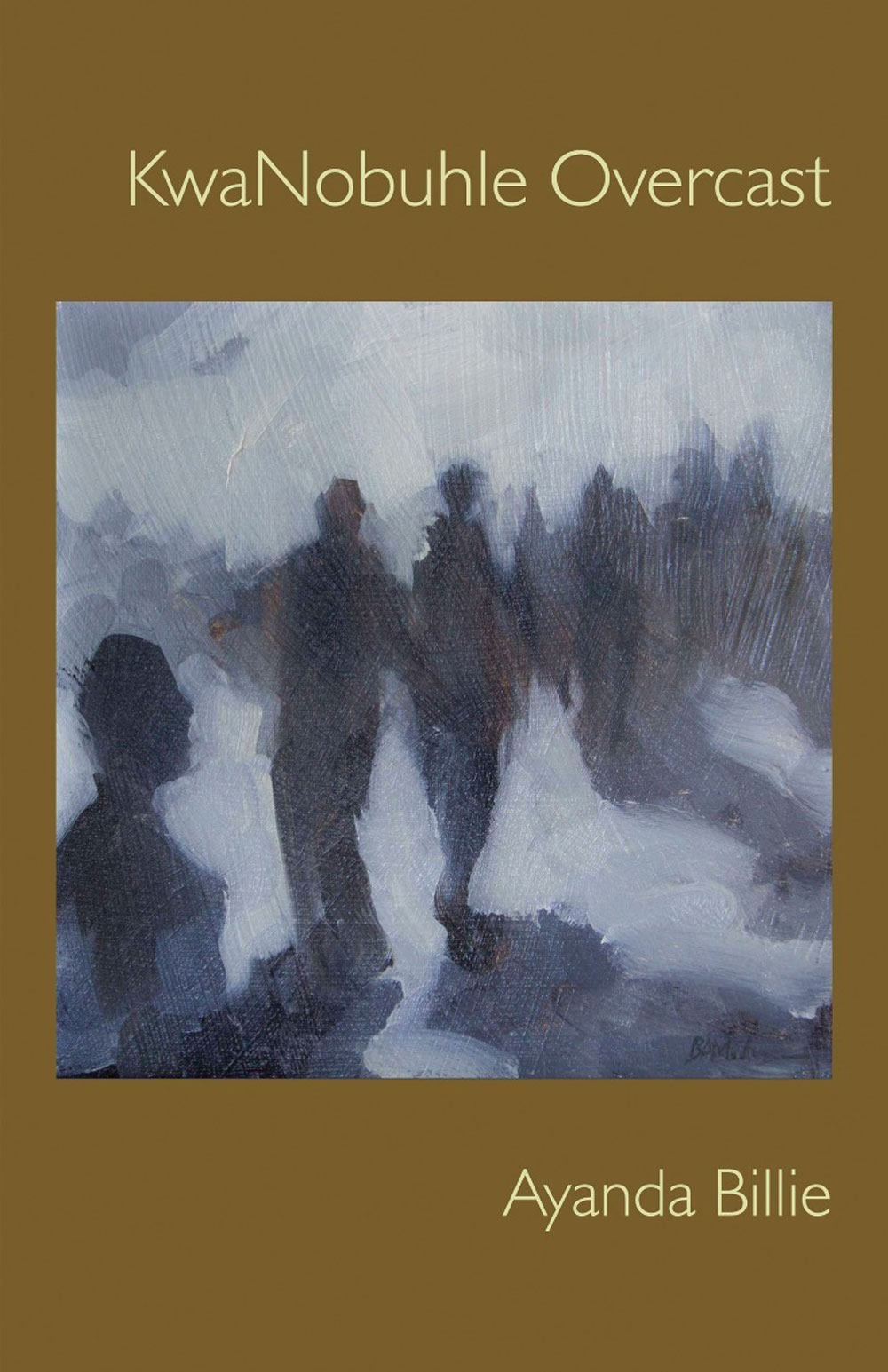
KwaNobuhle Overcast is Ayanda Billie’s third poetry collection, after Avenues of My Soul and Umhlaba Umanzi. The book is divided into two main constellations: the visible dark and depressed spaces—the cracks and murky pits of poor black people’s sorry existence—and, living side by side with this agonising pain, poems of music and the tenderness of love.
The poems directly address social and economic injustice within a devastating Black Consciousness frame. It’s a dirty life of misery, of dead dogs and donkeys and life-weathered men who jump from Van Stadens Bridge in iBhayi or hang themselves from the ceiling because of love gone berserk. But Billie transforms this township landscape of violence and rage into energetic poetry and verbal song, in the mode of resistance poets like Mafika Gwala and Ingoapele Madingoane. His work exemplifies what Argentine poet Alejandra Pizarnik calls the job of poetry: ‘to heal the fundamental wound’, to ‘rescue the abomination of human misery by embodying it’. The poems are short and uncluttered; magnetic and delicate; prodigious, robust, organic; unpretentious, revealing; and vividly visual.
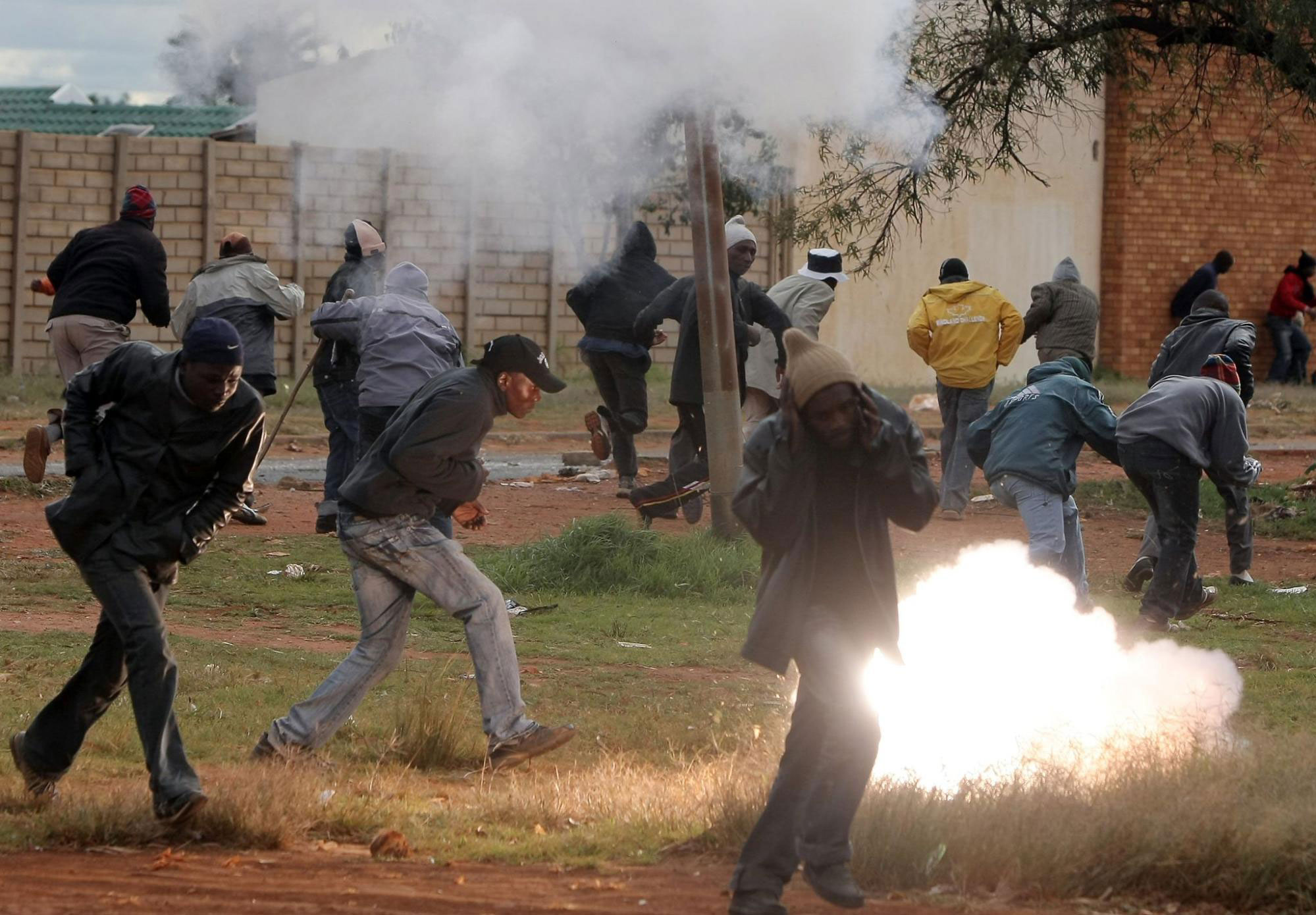
In Billie’s universe, the township bears a silence that is heartbreaking, with wounds still bleeding from the swellings of apartheid’s monstrous disasters, while in the same breath showing clearly how the democratic dispensation has failed abysmally to right the wrongs of the past. In KwaNobuhle, as in most neglected townships and villages on the periphery of development in South Africa, residents stare at empty JoJo tanks while babies die in hospitals. Like so many other townships, KwaNobuhle experiences severe service cutoffs to its poor and indigent citizenry, while the state cushions the interests of global institutions of greed. Billie’s poems vividly show us—the readers and observers—that there’s nothing beautiful about a disintegrating township sinking so low.
In ‘Buyile’, an elegiac poem steeped in a keen appreciation of history, Billie chronicles the ghastly death of a young black man in the nineteen-eighties. The man was inspired by the teachings and writings of Robert Mangaliso Sobukwe, founding leader of the Pan Africanist Congress of Azania (PAC), whom Bishop Desmond Mpilo Tutu described as a man ‘of transparent goodness … utterly free of bitterness’. Buyile, mu-Afrika of the Pan Africanist Congress of Azania, is burnt to death by ama-comrade—an ANC mob that abhorred the erudite. His Africanist compatriots give him a dignified burial, but ama-comrade scavengers vandalise his final resting place by exhuming and burning him as a dead man again in his coffin.
ama-comrade necklaced him
in broad daylight
while children were watching

after seven days
ama-afrika buried him
when the sun stood still

when they filled the grave
with the last scoop of the soil
anger evaporated
the police were there at a distance
watching with a smile […]

later ama-comrade came again
to dig him out from his grave
in the presence of the police
they burnt him in his coffin
screaming ‘mayibuye i-afrika!’
This kind of violence is characteristic of a mob that dances in the whirlpool of madness. The lyrical, lamenting tone almost makes the poem bearable, but the subject is too violent for even a melancholy comfort. The texture of this poem, like many others in the collection, is physical and concrete, and the direct style achieves an immediacy of impact.

2.
The extent of the destruction, dehumanisation, deep-seated divisions and self-hate—including self-annihilation—in under-developed black townships like the Eastern Cape’s KwaNobuhle shouldn’t be viewed as a shocking and isolated phenomenon. KwaNobuhle, with about 300,000 residents, is a product of forced removals. The township was built in 1967, after people were moved from Langa, Xaba and New Gubbs as a result of the notorious Group Areas Act.
Although KwaNobuhle means ‘a place of beauty’ in isiXhosa, some shack dwellings nearby the township still make use of the disgusting ‘bucket system’, whereby a bucket is used to collect the faeces and urine of a household or group of households, and then carted away by municipal truck.
It was one of the most degrading features of an apartheid system that condemned poor black people to a life of indignity, and twenty-five years into South Africa’s freedom there are people who still suffer this degradation. In the poem ‘Apartheid’, we realise that this barbaric system taught us to hate one another with passion, to always see the negative in ourselves.
Do not talk about apartheid
Forget about it
The smell of teargas, kicking of doors
Naked black bodies in mortuaries
Sink the past with bloodstain
In a dishwashing basin
We must not lose ourselves over nothing
Let us hug the beast
And carry the hopes of wounded hearts
Baptize our children
In the name of a cruel religion
No matter how many South Africans have exercised their right to vote in this quarter of a century of democracy, in Billie’s lexicography the sulphurous atmosphere of the past persists. It’s a place and space of an endless malaise of brutality. In a tiny but solemn five-line anecdotal poem, ‘When they hijacked me’, Billie the poet is the victim, narrator and actor, rendered helpless by senseless violence:
When they hijacked me

i gave them the keys
i did not protest
because I was asking God why in front of my child
The poet Rainer Maria Rilke once remarked: ‘The purpose of life is to be defeated by greater and greater things.’ But Billie shouldn’t be defeated by hallucinating idiots high on nyaope and tik or tjoef. No one should.
In KwaNobuhle, life and death are often one. The township bathes in blood. The poem ‘I am not the only one’ transports me to countless Saturday funerals in villages and townships:
On my way to the spaza shop
They are assembled
Like bats in a cave

A group of boys without moustaches
With okapis on their back pockets
Ready to stir the peace
Sorry Buda ndicela R2

They can make you dance
Without music playing
You will leave this earth
Without saying goodbye
To your children.
3.
In the early nineties, the notable Soweto performance poet Ike Mboneni Wangu Muila was attacked by thugs in central Jozi and suffered permanent brain injury. Since then his mobility has been limited, he struggles to walk briskly, and I doubt he can run.
In 2015, I was shot five times in my home by thugs, before my little children. I live with a bullet lodged in my left thigh. I walk, though like a crab, and I cannot run, even though I was a regular jogger with a dream to run the Comrades Marathon one day.
In July 2019, the poet Moses Mtileni was shot and killed by armed thugs who broke into his home in Tembisa. He was thirty-six.
In March this year, scrap metal tsotsis broke into the poet Mxolisi Nyezwa’s spaza container in Motherwell and cleaned it out. Nyezwa has stubbornly lived most of his life in the township of New Brighton. Perhaps he is now contemplating packing his bags and moving elsewhere, perhaps to a gated suburb of barbed wire and high walls. There, although he may not hear his favourite maskandi music next door, he wouldn’t have to watch people being felled like trees in broad daylight.
4.
The litany of these stories of cruelty is mind-boggling. Can the country be repaired, given the flood of social and political mindlessness? Billie is not optimistic about the future of South Africa. The poem ‘Birth mark’ illustrates why township life is like a curse.
This township is unforgiving
It breaks up homes
Drives boys to smoke tik
Nyaope and all colourful substances
To dance on the ceiling naked
Laugh at their mothers crying

Boys become hyenas
Find their dreams in dustbins
Klap their fathers
Their skins taste of salt behind prison cells
Show no trace of their birth
In 2016, I was a guest of the Mandela Bay Book Fair, an initiative Billie and fellow poets Mxolisi Nyezwa, Monde Ngonyama and Mangaliso Buzani from New Brighton have organised for years now. Billie provided me with lodgings in his house in KwaNobuhle, and he took me on a tour. He told me that scores of people work at Volkswagen—one of the biggest car factories on the African continent—‘but the blue-collar workers are underpaid’. In the township, I saw residents with spades, hammers, planks and wheelbarrows trying to erect shacks. Billie told me that some residents were waiting for RDP houses, while others were complaining that the available RDP houses were vacant or rented out, with the owners living in Joburg or Cape Town. I heard stories of residents who were demanding refuse bins, but there was no coherent waste management plan in the township. I saw stray dogs, probably carrying rabies, feeding on piled-up and stinking rubbish heaps. Billie told me of how water was scarce and expensive because of the crippling drought, and that the Kouga Dam’s water was dwindling. ‘People must boil water to avoid health hazards,’ he said. The people around me were free, but starving despite the freedom they had. This phoney liberation is well captured in ‘The empty house’:
In the grey alleys
A pack of dogs moves in ranks
From street to street
Following a hot bitch around dark corners
In the collapsing RDP houses
Decay looks out through broken windows;
A tired grandmother sits on a three-legged couch
          breathing heavily in the wind.
Morning in the empty house, a longing for the laughter
          of children.
The free-floating associative poem ‘Beginning of a song’ is reminiscent of the concrete and well-articulated narrative that is emerging elsewhere in South Africa, from poets like Angifi Dladla, Mangaliso Buzani, Mxolisi ‘Dolla’ Sapeta and Musawenkosi Khanyile, who make poetry from observing the actual conditions in which most people live—conditions that are too painful or embarrassing for many writers to describe.
The old man with big glasses
Pushing a wheelbarrow
Collecting food for his piglets
Found a child in a black plastic bag
Curled, dead
He called the people
The sun went slowly blind

Women began to sing in tears
From the depths of the sea
Sending off a child to her ancestors
Calling and calling them
And it is not just South Africans who are suffering because of the ANC-led government’s failure to meet people’s basic needs. Illegal and undocumented migrants have flooded into villages, townships and cities. Many live in destitute conditions. Others may yearn to return home, but fear political instability and persecution.
In many parts of South Africa, when refugees become prosperous, local people often respond with hatred; perhaps because of a latent anger really caused by the failures of a corrupt government to deliver on its election promises.
Despite Africans’ common experience of oppression, colonialism, slavery and racism, migrants are demonised, accused of committing violent crimes and snatching away ‘our jobs’ and ‘our women’. In the past, black South Africans were called all sorts of horrible names, like kaffir, non-white, Plural, nigger or Bantu. Now, in independent South Africa, the so-called African foreign nationals are called makwerekwere, grigambas or makomver [derived from kom van ver in Afrikaans]. They are far from safe in a country rife with xenophobia and discrimination, as ‘On a hospital bed’, with its richness of linguistic hybridism, illustrates:
mkhuluwa
we held up
the somali shopkeeper

with okapis
in daylight
with children inside

i looked him dead
in the eyes

we want money
wena

with a pleading voice he said
why my friend?

i gave him one hole
in the chest

who’s your friend
kwerekwere

5.
In such a dark space, we must find light where we can. Billie finds his in music and love. Like many people from the Eastern Cape, he is a jazz fan—the province boasts an extraordinary jazz heritage—and his love for the genre fired him up to pay homage to the legendary Winston ‘Mankunku’ Ngozi through poetry. At the launch of KwaNobuhle Overcast, during the Mandela Bay Book Fair last year, I heard Billie read this vigorous poem with finesse, in a syncopated and rhythmic fashion as if he was interpreting a musical score, thrilling his audience, including high school learners unfamiliar with jazz or an icon such as Mankunku Ngozi:
Yakhal’ inkomo
for what we lost
Mankunku called all the stars

He blew dust from the moon
so that light would be there above us
so that light would be there to smile at us
The beauty of the verbal storm that flourishes in Billie’s jazz style is also evident in a poem like ‘Horn Screaming’, with itshypnotic cadence. The poet pays tribute to the free-spirited flautist and saxophonist Zimasile Ngqawana, affectionately known as Zim, who died after suffering a stroke during a rehearsal in Joburg in 2011, aged fifty-one. Zim was born in New Brighton in iBhayi, not far from Tinarha where Billie was born in 1975. In ‘Horn Screaming’we savour, listen intently and dance to the eerie jazz invocations of Ngqawana, and find ourselves at one with Africa, in communion with happy ancestors. Here we discover the vital joy of life.
In his obituary for Ngqawana, poet and critic Sandile Ngidi affirmed, ‘He kept the soul of his music rooted in indigenous sounds, yet also incorporated progressive phrasing and cadences to attain universal relevance.’ I saw Billie perform ‘Horn Screaming’ at the inaugural Vhembe International Poetry Festival at the Timbila Writers’ Village in Shirley, Limpopo, in 2015. He snapped his fingers to illustrate the unwritten staff notation of the poem. The audience, mainly consisting of poets, was mesmerised, joining in the chorus and cheering, as if summoning v[h]adzimu themselves. Like poetry by Federico García Lorca, Lesego Rampolokeng, Keorapetse Kgositsile, Benjamin Zephaniah and Amiri Baraka—who were all driven by music—‘Horn screaming’embodies the musicality and insistent rhythms of jazz:
vadzimu
vadzimu
where noise is silenced
screams trapped
with a note
from a bleeding heart
crowded with faces […]

zimology
in cold silence
your spirit crowds me
your san songs
are the light coming through
to a sad-eyed blackman
today, i begin to live
a brief solace.
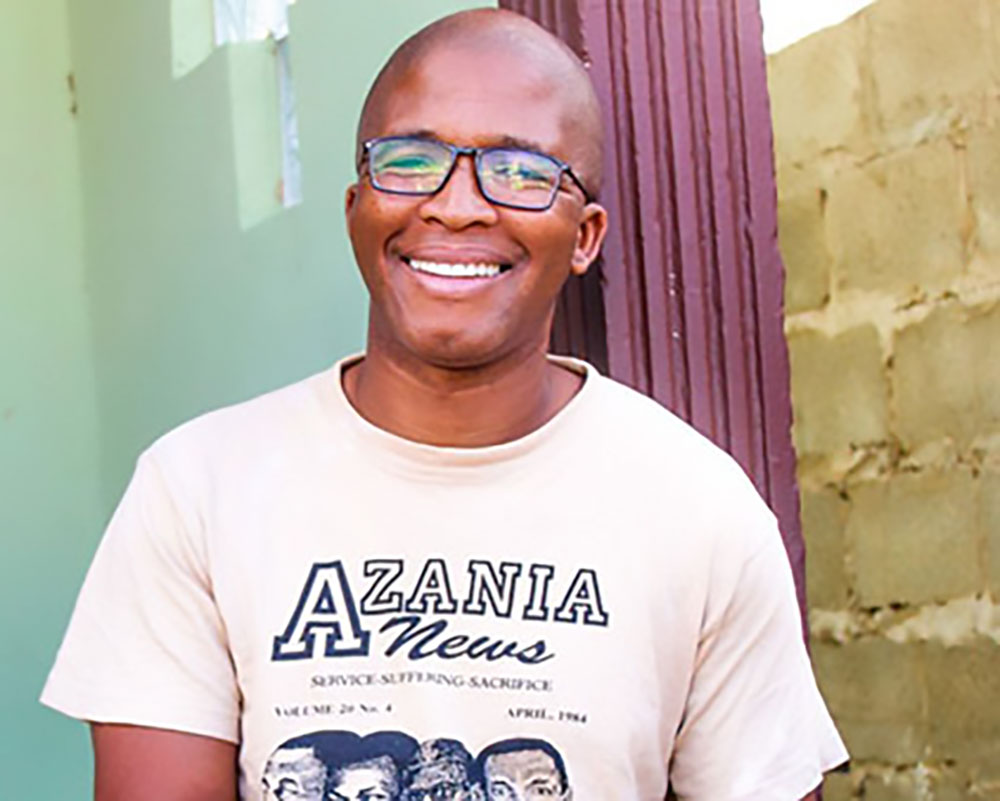
More solace is found in his family, especially in his beloved wife Dieketso, his companion of more than fifteen years. If his poetry is to be believed, his is a blissful and sensuous marriage. In ‘Finding love’, he weaves through potent lines—referring to his wife, who hails from KwaZakhele—in confessional mode:
i found love in a storm
in my country
in kwazakhele
in streets that smell of violence
where terror rules.

i lifted my arms
to catch a shooting star
my eyes are satisfied.
In another minimalist love poem, ‘In the morning’, Billie writes movingly of love’s quotidian pleasures:
silently i know
i could not stand emptiness
without you
i could not survive a day
without the hiss from the kettle
as you make coffee for me
6.
Billie also captures everyday life by incorporating a mixture of languages in his work, especially isiXhosa words and phrases. These allusions and idiomatic expressions seem to suggest a transcendental truth, making his poetry intense yet accessible, honest, searching. In the blunt and explosive ‘No time for amagwijo’, the speaker’s voice is furious, fed up with the government’s hollow promises:
president
i have no time for a song
for dolo phezulu
for viva chief yam
wathint’ abafazi wathint’ imbokodo.
This lyrical and rhythmical crescendo is addressed to the comical figure of former president Jacob Gedleyihlekisa Zuma, whose name has become synonymous with corruption. The speaker charges into prophetic utterance, Ingoapele Madingoane-style, suggesting that the government’s failure to take care of the poor will prove costly. In the engaging form of folk praise and with Struggle cadences, the speaker summons the power of those who are serious to take this country forward, towards some notion of a unified consciousness:
i have no time for toyi-toyi
i have come to give you a message
from the streets blocked with burning tyres
from the empty jojo tanks in the villages
from the children whose schools are locked for months […]

i have not come here to count the stars
and make sketches in the sand
babies are dying at dora nginza hospital. […]

i doubt there is anyone who wants an uprising,
if you are able to sleep at night, i’m not.
After reading this collection, I’m inspired to join this pro-African march to economic progress and genuine freedom. The freedom to speak and act freely, to reincarnate our dying languages, including the evocative languages of healers and poets. The freedom to till the land and grow a sustainable economy, the freedom to build an egalitarian and critical literate society.
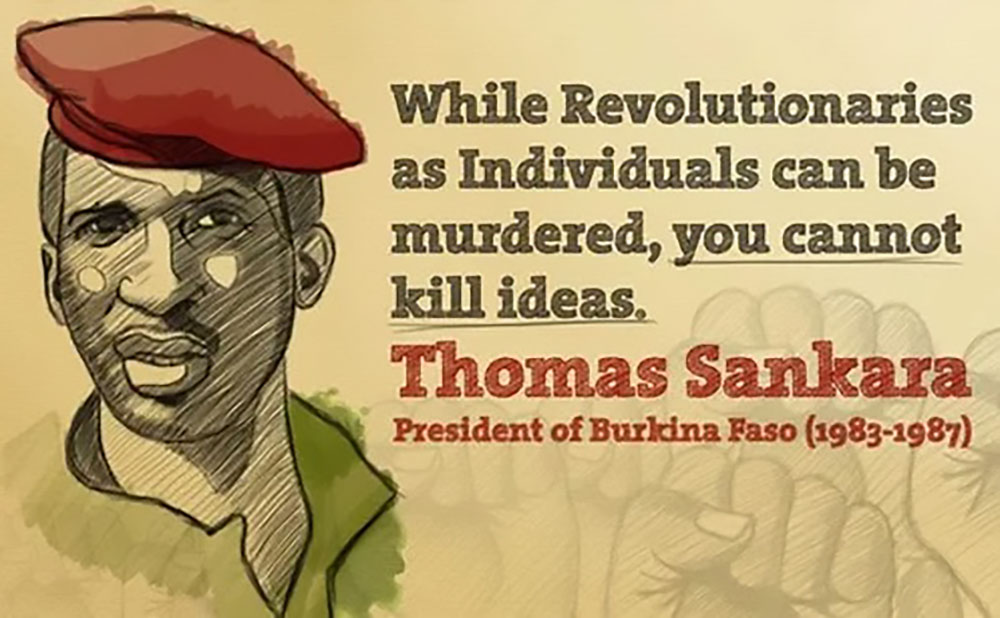
I yearn to see the grey cloud hanging over KwaNobuhle like a veil of glaucoma removed permanently. As Thomas Sankara, dedicated pan-Africanist, anti-imperialist and leader of Burkina Faso, would address his people, ‘Homeland or death, we will win!’
This review was first published by the Johannesburg Review of Books here: johannesburgreviewofbooks