TINYIKO MALULEKE
An Ode to Xilamulelamhangu: English-Xitsonga Dictionary
On Thursday 7th December 1993, inside the legendary Stockholm Concert Hall, (the venue of Nobel Laureate Awards since the mid-1920s) the celebrated author of “novels characterized by visionary force and poetic import”[1]Official Press Release on the awarding of the Nobel Prize in Literature to Toni Morrison, 7 October 1993. nobelprize, Chloe Anthony Wofford Morrison (née Chloe Anthony Wofford, better known as Toni Morrison), delivered her Nobel Lecture, in acceptance of the Nobel Prize in Literature. The subject of her scintillating lecture was language. To introduce the subject, Morrison retells the well-known story of an old blind woman, renowned and revered for her wisdom, who is one day visited by a group of youngsters, whose main aim is to prove that she was not as wise as she was thought to be.
They stand before her, and one of them says, “old woman, I hold in my hand a bird. Tell me whether it is living or dead.” She does not answer, and the question is repeated. “Is the bird I am holding living or dead?” Still, she doesn’t answer. She is blind and cannot see her visitors, let alone what is in their hands. She does not know their colour, gender or homeland. She only knows their motive. The old woman’s silence is so long, the young people have trouble holding their laughter. Finally, she speaks, and her voice is soft but stern. “I don’t know”, she says. “I don’t know whether the bird you are holding is dead or alive, but what I do know is that it is in your hands. It is in your hands[2]1 Toni Morrison, Nobel Lecture, 7 December 1993. nobelprize Accessed 6 January 2025..”
The youngsters were dumbfounded. Their sense of glee evaporated rapidly. Morrison proceeded to deduce and to unravel a mesmerising array of possible meanings of both the old woman’s blunt rebuttal and what the vulnerable bird in the hands of capricious youths might symbolise. Principally, Morrison elects “to read the bird as language and the (old) woman as a practiced writer[3]2 Morrison, Nobel Lecture, 7 December 1993..” She suggests that the old woman is worried “about how the language she dreams in, given to her at birth, is handled, [and] put into service…”[4]3 Morrison, Nobel Lecture, 7 December 1993.. Morrison surmises that, as a writer, the old woman in the story, considered language as ‘a system’ and ‘a living thing’ as well as an ‘agency’ over which one has control.
Nor does Morrison underestimate the power, validity and importance of the question of whether, why and how language can be living or dead – as posed by the youngsters to the old woman. Morrison concedes that language is “susceptible to death, [and] erasure”[5]4 Morrison, Nobel Lecture, 7 December 1993..” She further suggests that “a dead language is not only one no longer spoken or written, it is unyielding language, content to admire its own paralysis”[6]5 Morrison, Nobel Lecture, 7 December 1993.. Such ‘dead’ language – often posited as the only language ‘allowed’ or ‘accepted’ – has the effect of, amongst others, stunting intellects, retarding consciences and extinguishing aesthetic sensibilities.
And yet, the reality is that according to the United Nations Education, Scientific and Cultural Organisation, (UNESCO), between six and seven thousand languages literally cease to exist, every week – owing to chronic neglect of languages and their speakers, poor resourcing of and lack of planning[7]UNESCO. Endangered languages: The full List. guardian for languages, amongst others. In this sense, languages that are literally dead, slowly dying and figuratively dead, must all be brought into the purview of our conversation.
Referencing the biblical story of the tower of Babel in terms of which humanity attempted to use monolingualism to forge an artificial form of unity that would enable them to build a city with a tower that would reach the heavens, Morrison suggests that the heavens which the ‘people of Babel’ were seeking to reach, can in fact be accessed here and now, if only we take “the time to understand other languages, other views, [and] other narratives”[8]Morrison, Nobel Lecture, 7 December 1993..
Instead of succumbing or aspiring to the elimination of multilingualism, we should be doing everything we can to promote multilingualism and multiculturalism.
Like true reconciliation, true multilingualism is only possible between equals – that is, languages that are equals in stature, equals before the law, equals in terms of the dignity with which their speakers are treated and equals in terms of government and corporate funding. Monolingual and dual-language dictionaries are critical building blocks of linguistic equality and multilingualism.
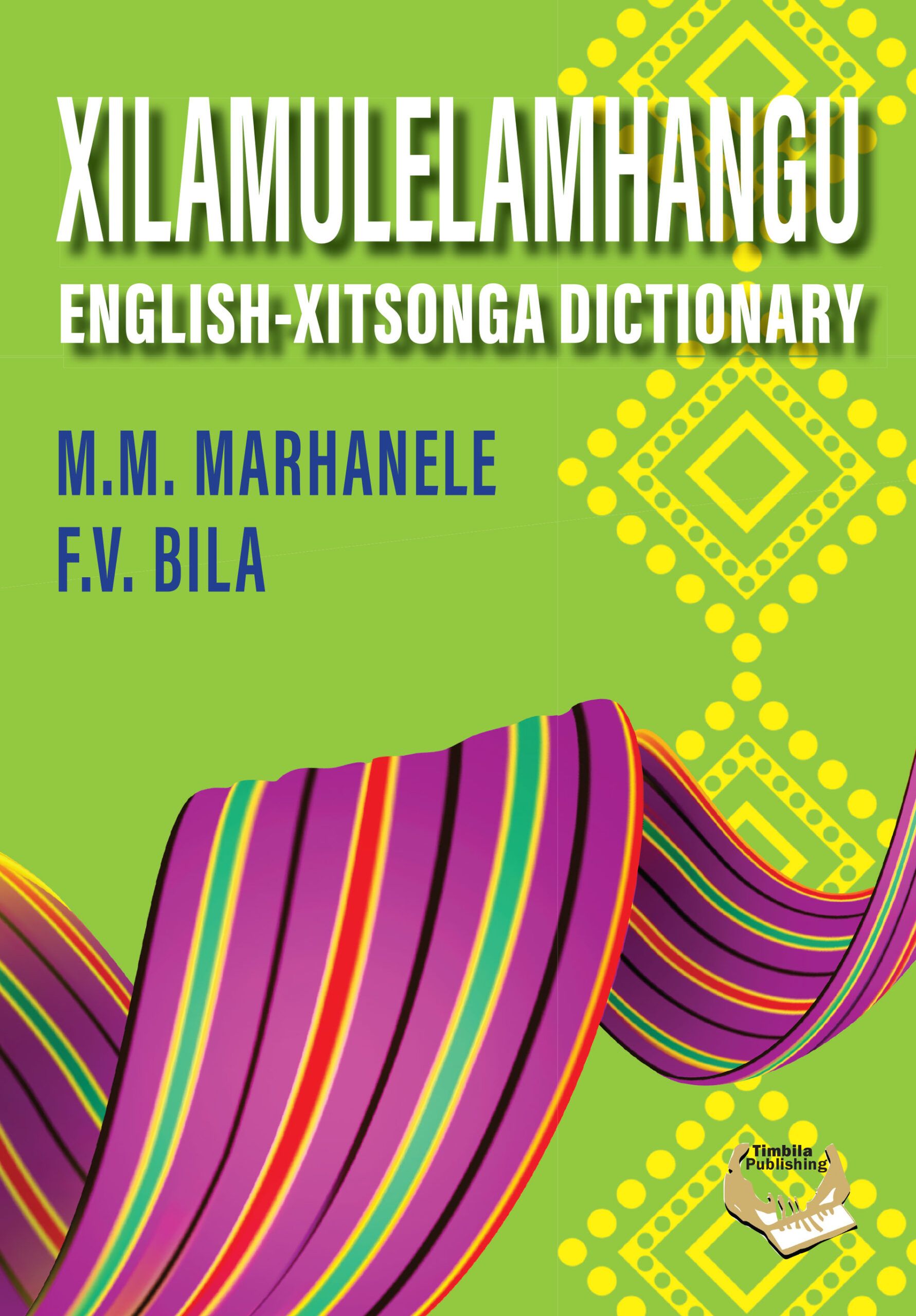
The publication of Xilamulelamhangu English-Xitsonga Dictionary is, at many levels, an exemplary and profound response to the multifaceted and multi-layered call made by Morrison in her unforgettable 1993 Nobel Prize lecture. Without the oral and literary existence of thousands of different, vibrant languages that are as ‘alive’ as the bird with which the youngsters tried to trick the old lady, there can be no multilingualism anywhere in the world, including here in South Africa.
Whereas Morrison’s remarks cut across all languages, language types and language forms, the call for the preservation, promotion and equal treatment of African languages in relation to the languages of the West, has been made by various scholars for a long time. Already in the early 40s, J. Nhlapho sounded the alarm bells when, he posed the rhetorical question: ‘Will African languages survive’, in a foresighted article[9]Nhlapo J (1944) BantuBabel.WilltheBantulanguageslive?Cape Town: The African Bookman. Later, other scholars such as AC Jordan[10]AC. Jordan (1957) “The Language Question TheEducationalJournal. No. XXXIX. September 1957.0), Ngũgĩ wa Thiyong’o((Ngũgĩ wa Thiong’o. 1981. Decolonizing the Mind. The Politics of Language in African Literature. Nairobi: Heinemann, Neville Alexander[11]Neville Alexander 1989. LanguagePolicyandNationalUnityinSouthAfrica/AzaniaJohannesburg: Buchu Books, Kwesi Prah[12]Prah, Kwesi (Ed.). (1998). Between distinction and extinction: The harmonisation and standardisation of Africanlanguages. Johannesburg: Witswaterstrand University Press., and Ali Mazrui[13]Ali A. & Alamin M. Mazrui. The power of Babel : language & governance in the African experience. Chichago: University of Chichago Press, 1998. entered the fray.
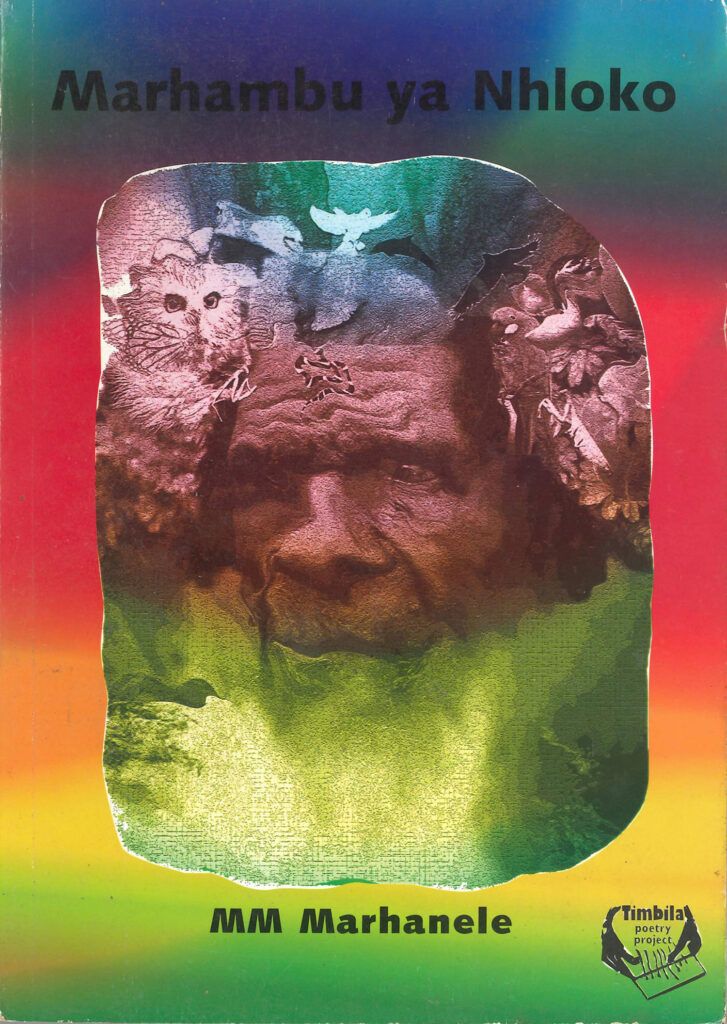
In fact, there are many African scholars who simply choose to practice what they preach – with Ngũgĩ wa Thiyong’o being one of the most famous examples. Ngũgĩ wa Thiyong’o writes all his books in his native language of Gikuyu, leaving it to his publishers to provide for English translations. Others, like MM Marhanele[14]a) M.M. Marhanele, Vumunhu bya Phatiwa (poetry), Pretoria: J. L Van Schaik, 1977, (b) M.M. Marhanele, Swifaniso swa Vutomi (poetry), Pretoria: J. L Van Schaik,1978, (c) M.M. Marhanele, Byokota Madlayisani (drama), Braamfontein: Sasavona Publishers, 2018., (d) M.M. Marhanele & V. Bila, Tihlùngù ta Rixaka (monolingual dictionary) Elim: Timbila Poetry Project, 2016., (e) M.M Marhanele (ed), Mbhombhela. Swihungwahungwana swa Xitsonga (Short Stories), Elim: Timbila Publishing, 2011., have published in Xitsonga for a long time, instead of writing essays of protest about the dominance of English.
There are more immediate reasons for us to sing an ode to Xilamulelamhangu English-Xitsonga Dictionary and its authors. Not since René Cuénod’s 1967 publication of the Tsonga-English Dictionary have I seen anything that comes close to the class, rigour and the excellence of Xilamulelamhangu. What assisted Cuénod greatly in his compilation of the historic Tsonga-English Dictionary of 1967 was the pre-existence of an incomplete Xitsonga-English dictionary manuscript compiled by Henri Berthoud. It was the unfinished Berthoud manuscript consisting of “a collection of thousands of Tsonga words, many of them without any translation or explanation”[15] René Cuénod, “Foreword”, in, René Cuénod,Tsonga-English Dictionary, Johannesburg: Sasavona Publishers, 1967. which formed the basis of Cuénod’s 1967 dictionary.
By all accounts, Xilamulelamhangu English-Xitsonga Dictionary is a vast improvement on the small but significant beginnings made by René Cuénod. Though both are bilingual dictionaries, Xilamulelamhangu leads with English and not Xitsonga, unlike Cuénod’s. This may be the first such dictionary of the Xitsonga language. In this way, Xilamulelamhangu adds incalculable value to the extremely small number of books on Xitsonga lexicography – monolingual or bilingual[16]The small number – not necessarily a comprehensive list – of Xitsonga mono and bilingual dictionaries include: (a)René Cuénod,Tsonga-English Dictionary, 1967. (b)M.M. Marhanele & V. Bila, Tihlùngù ta Rixaka, 2016. HA Machete, PZN Magamana & HT Mashele, Mhalamhala: Dikixinari ya Xitsonga, Johannesburg:Heritage Publishers, 2024..
But perhaps the greatest lexicographical value of Xilamulelamhangu is the wide range of ideas it covers, its profundity, its comprehensiveness as well as its contextuality.
In terms of the number of words and pages, there is no comparison between Cuénod’s Tsonga-English Dictionary and Xilamulelamhangu. The former contained 286 pages while the latter is four times that size. In fact, Cuénod’s dictionary does not even approach the size and range of Marhanele and Bila’s last monolingual lexicographical offering of 2016 – namely, the 920 -page-long Tihlùngù Ta Rixaka.
These notable differences are of course understandable. There is a gap of fifty-eight years between the current project and that of Cuénod. The two projects are separated by two generations during which the language, its speakers and its writers, have undergone tremendous changes. However, nothing can take away from the undeniable significance, the scholarly rigour and the historical timeliness of Xilamulelamhangu at this precise moment in the history of South Africa.
Among other things, this ground-breaking work will go a long way into rousing speakers and writers of African languages from the ‘innocence’ of claiming that some English words, ideas, notions and concepts are so complex that they ‘do not exist in African languages’ – implying that African languages permanently lag behind English, now and for ever.
Yet there are, for example, many areas of language, conceptualisation and articulation where Xitsonga can teach English a thing or two.
The only way we can rid ourselves of the extremely destructive and widely internalised notion that African languages are ‘junior partners’ to English, is through the production of such formidable lexicographical works as Xilamulelamhangu. In a way, this well-researched, thoroughgoing and comprehensive bilingual dictionary is the culmination of the +200 years of intense, vigorous and noisy interaction between Xitsonga and English. In the process, the two languages have learned, borrowed and ‘stolen’ from one another.
The excellent research behind Xilamulelamhangu forces us to bid farewell to the ‘innocence’ of essentialism, that is, the essentialising of some English or Xitsonga experiences to the extent of claiming that they are not transferrable, not translatable and not mutually intelligible.
As if the Vatsonga and the English of South Africa have lived and continue to live in isolated, balkanized and hermetically sealed islands! Xilamulelamhangu adds tremendous value to both (South African) English and Xitsonga.
It is clear to me that one of the surest ways to keep the ‘bird’ in our hands alive, is through the inspiration and the production of works of such high quality as Xilamulelamhangu, in and for many more African languages.
To conclude my ode of gratitude in praise of the great scholarship, and the beautiful collaboration between Marhanele and Bila, that has given birth to Xilamulelamhangu, I return to Toni Morrison.
Typically, there is a sting in the tail end of Morrison’s lyrical 1993 Nobel Lecture.
At the end of her awe-inspiring articulation of the many ways in which language may die and how language may be used to ‘maim’ and to ‘kill’; after voicing the horrors of the language “of surveillance disguised as research”[17]6 Morrison, Nobel Lecture, 7 December 1993; after positing the numbing “language glamorized to thrill the dissatisfied”[18]7 Morrison, Nobel Lecture, 7 December 1993; after lamenting the bane and the pain of language that “drinks blood, laps vulnerabilities, tucks its fascist boots under crinolines of respectability and patriotism as it moves relentlessly toward the bottom line and the bottomed-out mind”[19]8 Morrison, Nobel Lecture, 7 December 1993 – after all these poignant observations and rousing incantations, Morrison suddenly changes tack, just before she concludes her lecture.
Suddenly, she considers a totally new angle regarding the youngsters who invaded the home of the old, blind and wise woman.
What if the youngsters were bluffing, she asks. What if they in fact had no bird in their hands? What if their ‘trick’ was their way of speaking of that which they did not have but wished they had? What if the youngsters were in fact crying out for help and guidance from someone older and wiser than them?
From that perspective, it feels heartless and uncaring when all the old sage could say to the kids was: “I don’t know whether the bird you are holding is dead or alive, but what I do know is that it is in your hands”.
When the youths demanded to be told whether the bird in their hands was dead or living, what they were really expressing was the terror and the horror of going through life, without mentorship, without a ‘living language’ in their hands, without language with which to articulate and navigate their experiences, feelings, hopes and fears; without language with which to interpret what it means to be and how it is to be human at this time in history.
Let us for a moment, imagine Xitsonga as the ‘bird’ that was in the hands of the youngsters. Let us imagine that the youngsters are fearful that the ‘bird’ that is Xitsonga may not be fully alive to all the possibilities and the challenges of their lives on earth at this time.
Maybe the youngsters fear that language in general and many African languages in particular, may be dying in their hands, if not dead already. They suspect all this because they too are less and less able to articulate or to fully experience life in and through Xitsonga, Sesotho, Tshivenda or isiZulu.
Should these worrisome possibilities be plausible, valid and real, I would like to suggest that a book such as Xilamulelamhangu English-Xitsonga Dictionary, is precisely the kind of intervention we need, in order to rekindle the Morrisonian “mid-wifery properties”[20]9 Morrison, Nobel Lecture, 7 December 1993 of language.
Phu choyoyoo! Xa mina i bangu. Pretoria, 6 January 2025.
| 1. | ↑ | Official Press Release on the awarding of the Nobel Prize in Literature to Toni Morrison, 7 October 1993. nobelprize |
| 2. | ↑ | 1 Toni Morrison, Nobel Lecture, 7 December 1993. nobelprize Accessed 6 January 2025. |
| 3. | ↑ | 2 Morrison, Nobel Lecture, 7 December 1993. |
| 4. | ↑ | 3 Morrison, Nobel Lecture, 7 December 1993. |
| 5. | ↑ | 4 Morrison, Nobel Lecture, 7 December 1993. |
| 6. | ↑ | 5 Morrison, Nobel Lecture, 7 December 1993. |
| 7. | ↑ | UNESCO. Endangered languages: The full List. guardian |
| 8. | ↑ | Morrison, Nobel Lecture, 7 December 1993. |
| 9. | ↑ | Nhlapo J (1944) BantuBabel.WilltheBantulanguageslive?Cape Town: The African Bookman |
| 10. | ↑ | AC. Jordan (1957) “The Language Question TheEducationalJournal. No. XXXIX. September 1957.0), Ngũgĩ wa Thiyong’o((Ngũgĩ wa Thiong’o. 1981. Decolonizing the Mind. The Politics of Language in African Literature. Nairobi: Heinemann |
| 11. | ↑ | Neville Alexander 1989. LanguagePolicyandNationalUnityinSouthAfrica/AzaniaJohannesburg: Buchu Books |
| 12. | ↑ | Prah, Kwesi (Ed.). (1998). Between distinction and extinction: The harmonisation and standardisation of Africanlanguages. Johannesburg: Witswaterstrand University Press. |
| 13. | ↑ | Ali A. & Alamin M. Mazrui. The power of Babel : language & governance in the African experience. Chichago: University of Chichago Press, 1998. |
| 14. | ↑ | a) M.M. Marhanele, Vumunhu bya Phatiwa (poetry), Pretoria: J. L Van Schaik, 1977, (b) M.M. Marhanele, Swifaniso swa Vutomi (poetry), Pretoria: J. L Van Schaik,1978, (c) M.M. Marhanele, Byokota Madlayisani (drama), Braamfontein: Sasavona Publishers, 2018., (d) M.M. Marhanele & V. Bila, Tihlùngù ta Rixaka (monolingual dictionary) Elim: Timbila Poetry Project, 2016., (e) M.M Marhanele (ed), Mbhombhela. Swihungwahungwana swa Xitsonga (Short Stories), Elim: Timbila Publishing, 2011. |
| 15. | ↑ | René Cuénod, “Foreword”, in, René Cuénod,Tsonga-English Dictionary, Johannesburg: Sasavona Publishers, 1967. |
| 16. | ↑ | The small number – not necessarily a comprehensive list – of Xitsonga mono and bilingual dictionaries include: (a)René Cuénod,Tsonga-English Dictionary, 1967. (b)M.M. Marhanele & V. Bila, Tihlùngù ta Rixaka, 2016. HA Machete, PZN Magamana & HT Mashele, Mhalamhala: Dikixinari ya Xitsonga, Johannesburg:Heritage Publishers, 2024. |
| 17. | ↑ | 6 Morrison, Nobel Lecture, 7 December 1993 |
| 18. | ↑ | 7 Morrison, Nobel Lecture, 7 December 1993 |
| 19. | ↑ | 8 Morrison, Nobel Lecture, 7 December 1993 |
| 20. | ↑ | 9 Morrison, Nobel Lecture, 7 December 1993 |