THULILE GAMEDZE
No end, no fairytale: On the farce of a revolutionary ‘hey day’ in contemporary South African art
Death of a Salesman, a story as white as they come, has an interesting parallel black history in theatre. On multiple occasions (first in 1963 at Clark College in Atlanta, Georgia), productions cast black actors to play the Loman family of Willy and Linda, and their sons Biff and Happy. With the story itself taking place in pre-civil rights era America in the late 1940s, the simple gesture of racialising the narrative makes it immediately clear that the so-called ‘American dream’, which ultimately fails Willy the travelling salesman, was never a possibility for black American subjects in the first place.
While throwing a series of disparate, though at times generative jabs at the world of South African contemporary art, Adilson De Oliveira’s critique of FNB Art Joburg finds metaphor in Loman’s inescapable tragedy. But falling back on a very selective set of South African art historical references, the article ironically ends up contextualising its own argument as a cry back to an era of white opportunism and extreme racism in contemporary art, which is ultimately responsible for birthing what we experience as the fair today.
Although commendable for its willingness to stir a pot that has been stewing unsupervised for a little too long, it must be said that the text’s central argument, attached as it is, to nostalgic recollections of Kendell Geers as the seeming protagonist of a ‘once-revolutionary’ South African art world, itself seems to have bought into the vintage myth of the South African democratic dream, only now (with De Oliveira’s pronouncement) apparently bust as a result of black take over.
But a black Loman — a Feni, let’s say — has existed in this history all along, the exploited career and familial lineage of dis-inheritance a stark reminder that successful black participation in this white myth neither guarantees the life (nor the afterlife) insurance that Loman died for.
A worthwhile, if untethered prompt…
I want to preface this response by noting that De Oliveira’s pitch has some important aspects, most significantly its astute observation of the ways that capital circulating within the art world is often attached to broader regimes of violence, and most notably, to zionism. With nearly two years of systemic annihilation of the Gazan population by Israel, and over 75 years of occupation, the historically comfortable coupling of zionism with art and its institutions merits considerable and ongoing exploration.
Particularly now, as popular politics turn in favour of Palestine, we need to remain cognisant of how art institutional PR strategies pivot in order to both manage and conceal their mandates to remain open to all business. In South Africa, as De Oliveira points out, the fact that multiple commercial and non-commercial spaces continue happy relationships with the A4 Foundation in Cape Town, and that no arts institution (to my knowledge) has stepped forward with an explicit message against genocide and in support of Palestinian liberation, is alarming and disappointing in itself.
Problematically though, De Oliveira’s article moves too quickly, stopping at artworks and galleries only long enough to briefly hurl insults, before becoming distracted by other artworks and galleries to similarly shit all over. Make no mistake in thinking that I am making a value judgment about the act of yelling (or excreting, haha) — emotionality is inevitable for those of us foolishly attempting sincerity in this space of thinly-veneered scopic horror. It’s just that any blow-up worth its salt is always followed by an argument that manages to locate and identify the synthesis of the trouble.
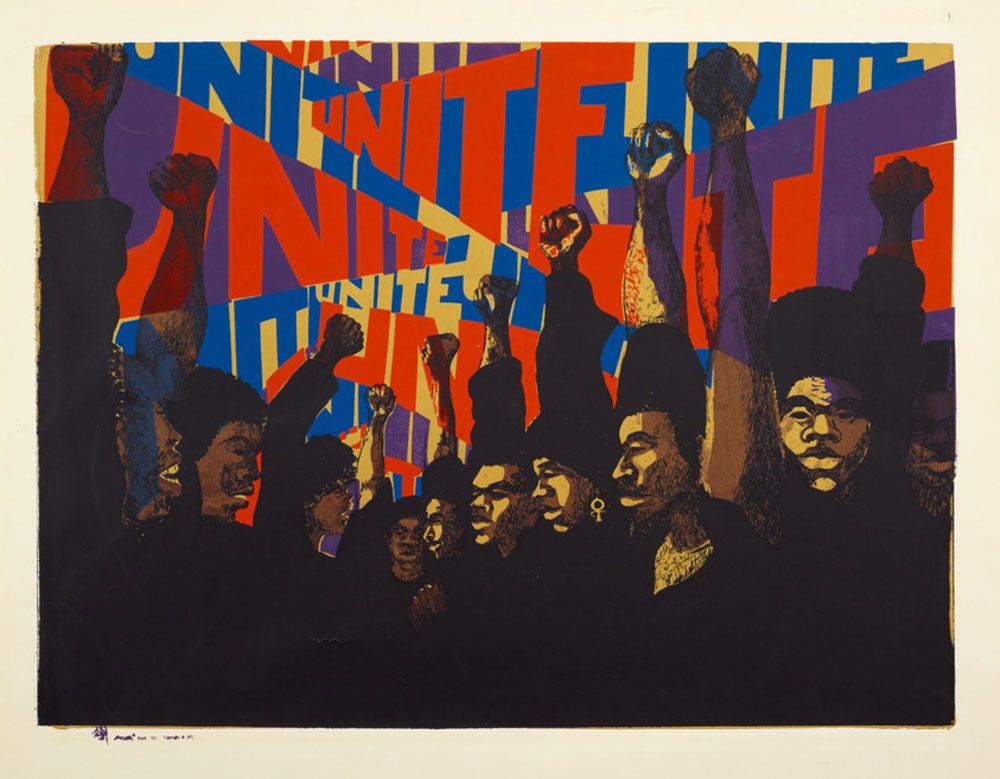
I would, in this regard — as someone with a very rudimentary knowledge of Black American art in general, and the mentioned Harlem Renaissance, Black Arts Movement and AfriCOBRA in particular — be earnestly interested in how De Oliveira sees the resurfacing of its representational strategies in contemporary African art at this particular fair. I’m interested because this transplanting of historical black American aesthetics into our context must mean something, and the author’s take-up of these particular movements, rather than any black arts movements in South Africa, must mean something too. What is being inferred? I also want to understand things like why we should take for granted Mofokeng’s hatred of saccharine pinks, and what the ‘gallerina-ness’ of gallery workers is imparting onto the art scene that is particularly bothersome to the author. I wanted this article to come together as cohesively engaged in a politics of its own — a deep care for and investment in the black art histories it referenced vaguely but failed to properly describe, beyond rudimentary mention of them for the purposes of ‘gotcha’ moments.
What happens, I feel, is that De Oliveira’s fixation on the Loman character, poetically ends up articulating the article’s true investment, which implants a white protagonist as somehow the symbolic victim or sacrifice of the cursed dystopic South African art fair.
The text’s seeming allusion to a South African art historical “heyday” of the 90s and the 00s, and rather neutral reference to our “canon” constitutes a critique premised not on engaged readings of the history of South Africa’s art world, market and writings, but on the author’s taste for (insistently not-liberal) white bad boy revolutionary aesthetics. While I am not here to critique the author’s adoration of Kendell Geers (and can, in a vacuum, certainly admire some of Geers’ ideas and gestures myself), I do want to remind us of just a few historical factors, as well as some critical interventions and texts which show us that a “fairytale” in the South African art world has not ended, and indeed, that no fairytale was ever begun.
White Opportunism & Black Erasure in the 90’s and 00’s
The South African project of decolonial capture and demobilisation within the arts and elsewhere would do well to be recognised, for one, as the result of global neoliberal forces, which had outsized impact on the nation as we walked into a post-apartheid already doomed by the particularly brutal economic conditions the ANC readily agreed to. But before the negotiations for transition into the new dispensation had begun, numerous forces had been preparing the grounds for a serious narrative project, whose impetus was not land and resource nationalisation and redistribution, but rather, an erasure of practices (whether political or artistic) that actually threatened the status quo, and the highlighting of practices that looked like they did.
It is therefore not by chance that it was young white artists fresh out of institutional training who emerged at the ‘cutting edge’ of contemporary South African art in the 1990s. But the Geers types and the Williamson types (the latter with significantly more experience), and maybe both with their hearts in the right place, presented no real threat to a precariously free South Africa desperately hoping to prove its good behaviour to the global marketplace.
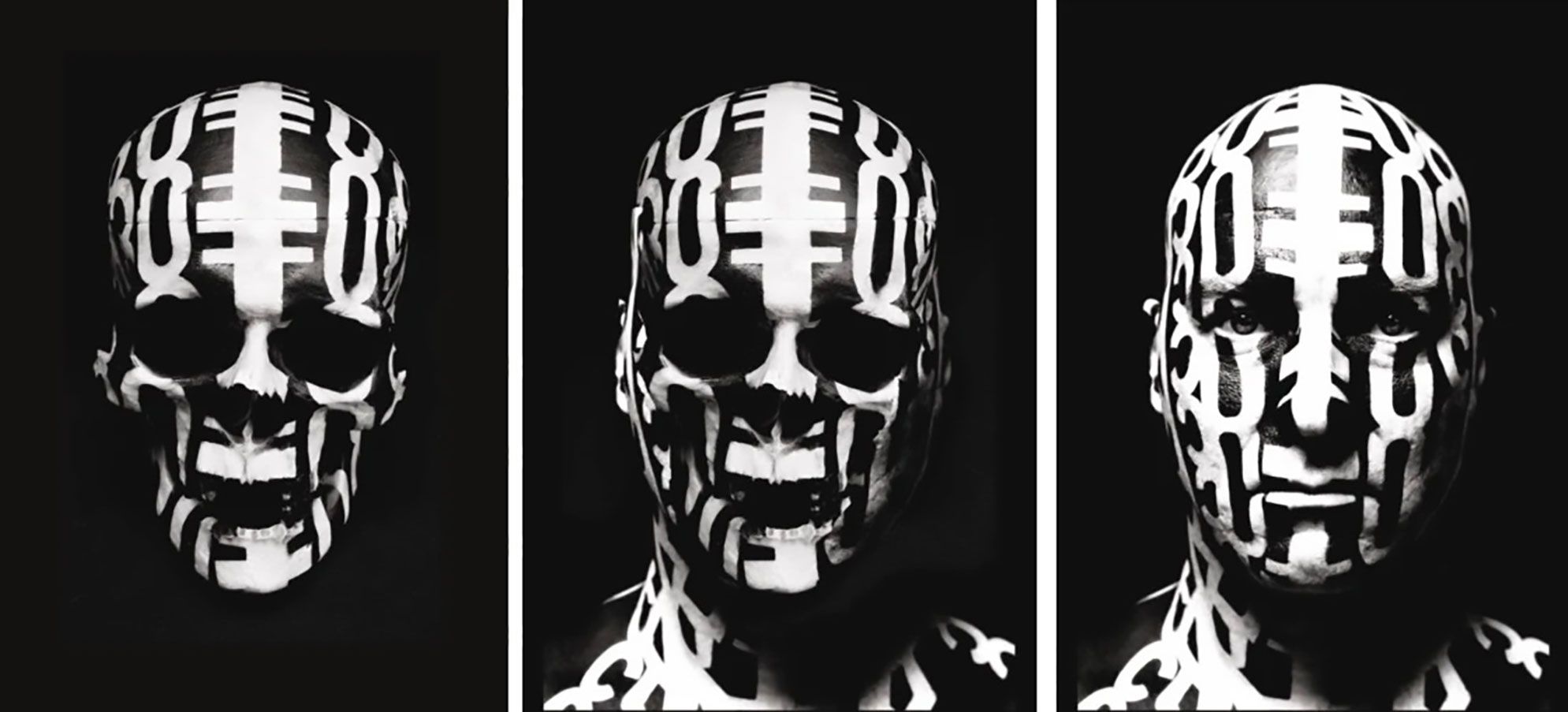
White art proliferated unchallenged, with these figures somehow more than happy to step up as the appropriate representation of the emergent scene. Geers was able to ‘provoke’ through charged objects and gestures — petrol bombs, barbed wire — hailing international recognition for his critical and ‘Africanised’ uptake of western conceptual practice, while at the same time, offering white exhibition attendees a guilt-free free-wine feel-good good time, if peppered by the shock of his audacious gestures. The work was interesting, edgy, and new, and while South Africa’s receipt of it rendered Geers’ reputation as “controversial”, ultimately the global industry made way for his lasting career.
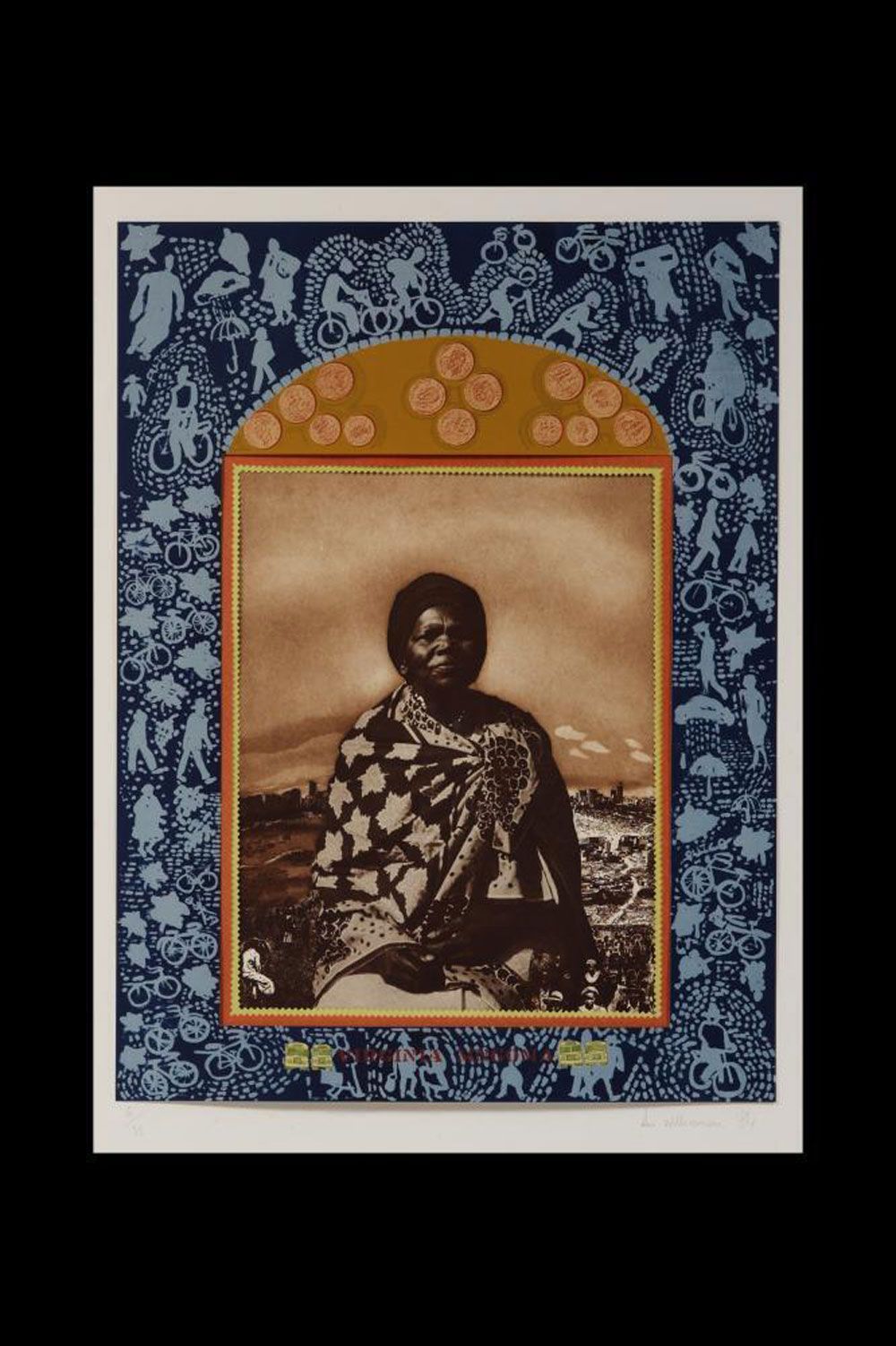
At the same time as this critical conceptualism, Williamson’s dompas samplings and reproduced images of apartheid archives seemed to indicate that these white people were up to the task of historical revisionism. And so historically revise they did. What is perhaps more important than their artwork at this time is that both Geers and Williamson had additional tremendous and lasting impact on South African art history through discourse and collecting, with Williamson all but canonisng Resistance Art in South Africa, with her famous 1989 book, and Kendell Geers, an artist no less, being trusted with the role of curator of the all-important Gencor (now South32) Collection.
The former text famously erased Black Consciousness from its collection of resistance art and in a 2014 interview with Lefifi Tladi, Percy Mabandu wrote on the subject in the arts more broadly. Tladi argued that the BC erasure can be traced back to the ‘scattering’ of the BCM after Biko’s murder in 1977, as well as the increasing negative influence of party-politics on radical arts practitioners’ work, as the end of apartheid drew nearer. Arguing that it was the “reconciliation narrative” of South African art, rather than the “decolonisation stream” that made it into the mainstream, Mabandu’s conversation with Tladi paints a short but alarming history of systematic BC erasure within the arts, assisted, however innocently, by canonical interventions by characters like Williamson.
Geers on the other hand, was the well-meaning curator of what is now the South32 collection. As he describes to Gabi Ngcobo (in the Youtube video above), the bravado and cheekiness that made his appointment to the role possible, I feel… kind of gross. Although neither curator nor art historian, a young Geers was able, through a sense of humour and confident demonstration of his knowledge of art, to convince the necessary white authority of his capability to do the job. Although I cannot yet turn this into a well-defined critique, the moment sticks with me — surely it was the maintenance of white patriarchy that Geers’ positionality promised, which ultimately allowed his progressive (if questionably qualified) vision to be granted the go-ahead?
I want to be clear that these kinds of decisions, however individual, were significant, granting licence to white practitioners to play huge roles in producing History (with a capital ‘H’). Geers’ purchases in the role were certainly impressive and shifted the collection’s mandate from what he referred to before as “interior decorating” and “naive” black art, to more politically-invested themes from a more racially representative set of practitioners. However, I would argue that the canonisation of collections like South32 — as a result of not spurring ongoing and progressive collecting traditions in the nation — have made way for new staticities in black subjectivity in art.
Sadly, when rare chances for powerful curating and collecting roles do surface, as with the Zeitz tragedy, white alliances and friendships often continue to grant power to white practitioners. White male leadership of newer, powerful institutions like the Norval Foundation and the Johannesburg Contemporary Art Foundation continue this trajectory of narrative power, where, in the case of Mark Coetzee and the Zeitz MOCAA, the harm went well beyond the realm of the representational.
Ultimately, in my opinion, Geers’ decision to depart the context of his early critique is what ultimately underlies his own reluctance to truly buy into the revolutionary “look-and-feel” he willingly peddled, echoing the broader problem at hand. Perhaps Tracey Rose (and Steven Cohen), who emerge from that lineage too, articulate more incisively what practices that ‘do something’ do do — their ruptures, and the lines they draw in the sand.
In my mind, not Geers, but Tracey Rose, stands as a true emblem of the radical and risky work that the hyper-liberal South African art world’s mechanisms could only reject.
I echo with De Oliveira, that this is a history worth centering, manifest in systemic institutional exclusions of Rose, perhaps until the (apparently criminally compensated) MOCAA retrospective.
White Writing
The era of white artists’ takeover of the scene was accompanied by white art criticism that effectively pushed many black artists to the margins. In 2018, Sharlene Khan and Fouad Asfour put down an incredible article detailing the many strategies of ‘Whitespeak’ in the disregard and criticism of black practices. Titled Whitespeak: How Race Works in South African Art Criticism Texts to Maintain the Arts as the Property of Whiteness, the text pulls from numerous examples — including a thin review by one Kendell Geers on a David Koloane exhibition — to argue that via myriad racist strategies, white writing has effectively carried anti-black racism into the ‘new’ South Africa, sustaining the relevance and centering of white bodies in the visual arts world. Pulling examples from reviews from the early 90s until around 2010 (including by writers Geers, Amy Miller, Sean O’ Toole, Gerard Schoeman, Lloyd Pollack, Mary Corrigall and more), the text draws out four strategies of ‘Whitespeak’, namely, the frequent framing black art within a ‘language of lack’, black art as ‘mimesis’ (of white art), black arts professionals as ‘unqualified’, and the dismissal of black art that engages racialised and gendered identity.
This sad state of criticism in the earlier parts of the contemporary South African art scene have left behind unimaginative categorisations of black art practices, with artists either herded into or culled from history, depending on whether they fit the (white-made) molds. Township art, struggle art, resistance art, identity politics, black figuration: if you’re not in, you’re out!
And herein, with a thin imagination of what black artists have been up to over the past century or more, we are in danger of refiguring tropes like black ‘naivete’ of the colonial era, notably in Nigeria and former-Rhodesia, promoted by dreaded figures like Ulli and Georgina Beier, and Frank McEwan. The unfortunate ghosts of these historical white art tyrants are especially prominent in contemporary black figuration, with numerous practitioners making use of distortion, and a kind of black ‘hyper-availability’ to the gaze.
But De Oliveira’s descriptions of certain black figuration at the fair come off as cruel, unproductively framed as the result of the author’s taste for well-rendered pinky fingers, rather than located in a trajectory of black representational history as a projection of colonial desire (or as misappropriations of the Harlem Renaissance?). The moment is particularly frustrating because critiques of contemporary black figuration in Africa continue to be relevant, but, voided of context, the point falls flat and cannot be revived when coupled with all the other random jabs. The one directed at Georgina Gratrix, for instance, used a violent joke about rape and sodomy to make a point about the author’s absolute disdain for flowers, and apparent activism regarding unsustainable approaches to oil painting.
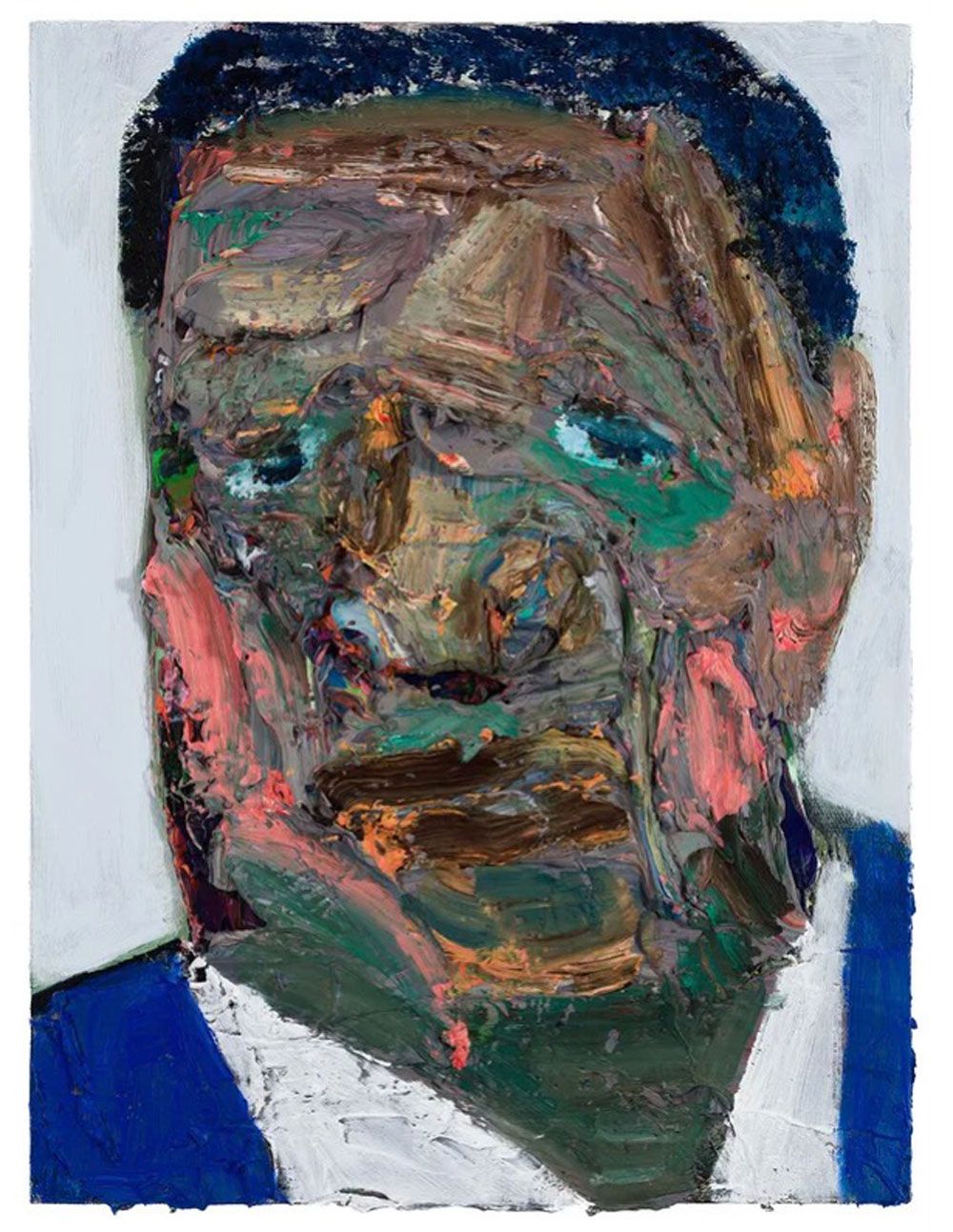
I, myself, have no serious attachment to Gratrix, but I insist on this point to highlight the energetic commitment of the article, which appears to frequently confuse nastiness with rigour, effectively losing a host of important critiques on the problems of apolitical, self-fetishising contemporary black figuration, to ugly if un-noteworthy remarks.
The assortment of roasts, and the author’s unwillingness to self-reflect enough to distinguish between observations meriting situated critique, and aesthetics that he simply dislikes (for whatever reason), mean that the text as whole reads with the same incoherence that he notes art fairs do: an unwieldy series of works of varying contexts and differing politics, brought together for the purpose of ‘views’, ultimately in service of bigger projects of lasting relevance and value. We all know though that the fair is the fair is the fair — but as writers, we are not called to echo this disorder, and will certainly reap no profit from its mimicry.
Black Writing
This is all to say that the “self-parodying” circuit, articulated beautifully as “institutions speaking the language of resistance while selling in the syntax of extraction” is nothing if not wholly emblematic of a now-historic South African marketing sleight of hand, whose protagonists may be mostly black, but whose messaging has remained consistent. Thembinkosi Goniwe said as much in a short 2018 article titled “the sour pleasure of the south african art industry”, which discussed the ways that ‘transformation’ in the art world is but a cosmetic veneer over an industry whose white ownership structures largely remain rotten, and unchanged. Goniwe’s worry was regarding “the common practice of white enterprises that rent natives for purposes of tokenism and window dressing, legitimacy and political correctness whilst alienating black professionals from the actual means of economic production and creation of wealth.”
In 2019,Athi Mongezeleli Joja’s critique of Dr Same Mdluli’s exhibition A Black Aesthetic: A View of South African Artists at the Standard Bank art gallery brought to light the ways that colonial collections — in this case, de Jager’s — without sufficient intervention, continue to be underwritten by the racist texts within whose logic they were formulated. Further exchange between Dr Same Mdluliand Joja ensued.
In this line of thinking, Gabi Ngcobo’s collaboratively curated exhibition All in a Day’s Eye: The Politics of Innocence in the Javett Art Collection, in 2019 (critiqued for its inclusion of a work by murderer, rapist and artist Zwelethu Mthethwa), attempted to address these hidden texts, through myriad research and contextual exposures of the collection and the conditions through which it was birthed. An important undertaking in its response to the problem of colonial collections, the project was astute in its methodology, which, in collaboration with donna Kukama, Simnikiwe Buhlungu and Tšhegofatso Mabaso, defined various colonial subject enquiries and archival strategies in the collection, in an effort to visibilise its structure, rather than emphasising the particularities of its content. And while the Mthethwa inclusion amongst the more contemporary works shown was protested for good reason, the artwork’s sinister presence served as a stark reminder of the continuity of the patriarchal, colonially-birthed violence underwriting narratives of South African art, and not least the many commercial galleries, museums, foundations, and project spaces who continue to support and employ artists and curators who are well known to have committed horrific violence against women. Scholar Dr Neelika Jayawardane’s intervention in the Lesser Violence Reader published by the GALA Archive, entitled Institutional irresponsibility: How coverups at art institutions perpetuate gender-based violence, points to this issue, echoing the strategy of redaction that is at the centre of the formation of South African art discourse, to “emphasise the ways in which silencing impacts the work of addressing gender-based violence”.
At this point, may I politely point out that modernist sculptor Nelson Makhuba, collected by Kendell Geers in the South32 collection, murdered his wife and children before taking his own life on 15 February 1987.
The narrative is rhythmic, horrific, and repeated.
Forward?
While De Oliveira’s article captures an outpouring of sometimes vicious prompts, it needs to be asked what we expect from art fairs, and indeed, from commercial arts spaces within the fraught context of South Africa. While the text recognises the impossibility for an art fair to produce knowledge or worthwhile critique, it seems, at the same time, burdened by its hope to one day (again) find rigorous practices here that successfully manage the contradictions of their entanglements with the market. No such practices can exist in the mainstream space.
So although things may look like they have changed in the era of doom-scrolling — beholden, as we are, to the forces of online influence — the stuff of institutional capture, ahistorical art practices (… and also, kind of nasty white criticism), are not symptoms traceable to a new conspiracy of Kendell Geers’ erasure. No, hahaha, they are not. They are traditions and lineages of the new South Africa, hailed by an opportunistic white elite, whose mandate is now all but secured by a commercial scene with little-to-no wiggle room for serious dissidents.
However, this is not to claim that radical practitioners, practices, critics and movements do not exist in (not of) these institutions, as well as on their outsides. Nothing could be less true. Black cultural work and Queer cultural work exist both because of and despite these conditions, acting beyond the myth of a nationhood not built for them, and existing already in time beyond the myriad