THOMAS HYLLAND ERIKSEN & RIAAN OPPELT
Post-apartheid diversification through Afrikaaps: language, power and superdiversity in the Western Cape
Introduction
In his influential writings about superdiversity, Vertovec has mainly concentrated on the effects of recent migration to Western Europe and North America, although both he and members of his research groups have done extensive research elsewhere (Vertovec 2023). Superdiversity is a product of an accelerated modernity where mobility and diversification have led to the proliferation of identities and new ways of expressing them. Pithily summing up one important facet of superdiversity, Vertovec once pointed out that in the postwar decades, people came from a few places and went to a few places – in the present century, they come from many places and go to many places. However, as he and others have repeatedly stressed, superdiversity does not merely refer to “more ethnicity”, but a diversification of diversity encompassing gender, class and other ways of identifying as individuals and as groups. In other words, speaking of “the Pakistani community” in a European city becomes misleading, since it is difficult to predict anything about the lifeworld of a person just because they or their parents were born in Pakistan. As many have shown, social and cultural diversity is not new (Grillo 1998). Attempts to homogenise and standardise languages and social identities predate modern nationbuilding in Europe, with similar processes taking place elsewhere. In a comment to Gellner’s seminal work on the cultural homogenisation of the nation-state, Ulf Hannerz (1996) has suggested that in the present age, diversity is making its return. Whereas Gellner compared, metaphorically, the pre-modern situation to a painting by Oscar Kokoschka – colourful, sometimes mosaic-like – the nation-state was more akin to a work by Amedeo Modigliani, known for his calm monochrome surfaces. Hannerz, accordingly, spoke about “Kokoschka’s return”. However, the superdiversity now witnessed in dynamic urban hubs and elsewhere does not merely entail a return to a pre-state or pre-colonial situation but represents something new, as emphasised by David Parkin (quoted in Vertovec 2023, 67). Superdiverse cities are framed by the constraints and opportunities of the state and a dominant market economy. In South Africa, a tension between empirical reality and language ideology marks many, repetitive and historical instances of insider/outsider and belonging/unbelonging, in keeping with prolonged periods of definitions of self against other as shown by apartheid, whose legacy lingers structurally and symbolically. Ways of reading and interpreting what Jan Blommaert and other sociolinguists describe as “linguistic landscapes” of spaces inhabited by many different people are crucial in contemporary South Africa’s many diversities. In this article, some of the past and present tensions and possible suggestions for further analysis of specific examples of linguistic citizenship within South Africa are proffered for discussion.
Our contribution will show how social and linguistic diversity in early colonial South Africa was homogenised in a historical period characterised by an obsession with racial boundaries and purity, before morphing into a new kind of diversity at the level of collective identification and cultural forms. Some of this diversity is now (after 1994) being reconsidered by critical historians and revitalised by socio-political movements. In our analysis, power discrepancies are also important, and for diversity – including superdiversity – to thrive, there must be relative equality between the groups or categories. Considering the impact the concept of superdiversity has had on sociolinguistics (Vertovec 2023, 64), particularly as regarding studies of complexity (diversity) and mobility (superdiversity, in reference to migration patterns of the twenty-first century), the example of the Cape in South Africa provides several points of interest we explore in this article. These points include the early shaping of the language of Afrikaaps under colonial power relations and its present moment of cultural empowerment, reclamation and newer examples of mobility.
A sociolinguistic inequality has existed in South Africa between speakers of similar but divergent languages, namely Afrikaans and Afrikaaps.[1]Kaaps is the generally accepted, historical name of the language and is still used, with the trilingual dictionary preferring it. In the 21st century the name varies between Kaaps and Afrikaaps, but both refer to the same linguistic, literary and cultural content. We argue that under the name Afrikaaps, there has been increased visibility and rapid movement of the language. See Alim et al. (2021). The latter is not standardised and is largely spoken by many in the Western Cape region of South Africa, predominantly the Cape Flats areas outside Cape Town. The former is standardised and official, a national language of teaching, learning, governance and commerce with an established and powerful cultural industry. Afrikaaps, as this article will discuss, was until recently regarded as “lesser than but not equal to” Afrikaans (Holtzman 2019, 227) but such perceptions are changing as there is more reflection on the language and the diversity of its speakers (Hamans 2021).
Increasingly, Afrikaaps has entered a movement in the twenty-first century that is motivated by reconsiderations of group identity and categories of personhood for its speakers that had long been defined by colonial and apartheid-era practices. More books, films, television series, graphic art, music and educational content are being produced in Afrikaaps (Holtzman 2019, 226–228) and in 2021 the first trilingual dictionary inclusive of Afrikaaps (English, Afrikaans, Afrikaaps) was launched, its contributors empha- sising that the dictionary “will be a resource for its speakers and valuable to educators, students and researchers [and] that will validate [Afrikaaps] as a language in its own right and the identities of the people who speak it” (Haupt 2021).
In a study of linguistic diversity in the Amazon, Patience Epps (2020) has shown that extensive contact between different groups is no threat to their integrity and can indeed boost diversity, provided there is no hegemonic group able to coerce others into submission. In the South African case, as we will show, the vernacular Afrikaaps was subsumed under the dominant Afrikaans, and is only recently being promoted as a distinct language spoken largely by working-class people of colour in the Cape Town region. A parallel movement seeks to demonstrate that the simplistic category “Coloured” lumps together people who have little in common – from Khoekhoe to Cape Malay – except, perhaps, that they speak Afrikaaps. In one decolonial analysis, as many as 127 different ethnic origins are enumerated (Mellet 2020) for the people grouped together as “Coloured”, their imposed shared identity in racist South Africa stemmed merely from their physical appearance as neither white nor black (Erasmus 2001). By examining the historical origins of Afrikaaps and its silencing as a so-called proper language by colo- nial and apartheid regimes, subsequently showing how it is currently being reevaluated as a language in its own right, we examine the relevance of the concept of superdiversity in this setting, which in some ways remains shaped by the legacy of apartheid.
Afrikaaps and Afrikaans
Afrikaaps is casually spoken by many of Cape Town’s residents today still classified as Coloured, a contentious category of race and personhood still in official use in South Africa.[2] From here on, the term is italicised and suffixed by a slash in recognition of both the contestation around its usage and to suggest future possibilities and alternatives of use. We do not agree with the lumping nature of the term, rooted in colonial essentialism, and acknowledge the various debates, propositions and discussions surrounding its usage. Both essentialist and instrumentalist discussions “treat coloured identity as something exceptional, failing to recognise it for what it is—a historically specific social construct, like any other social identity”. See Adhikari (2009). In the twentieth century, Afrikaaps was often considered a dialect spoken by the working classes[3]The poetry and other writings of Adam Small as of the mid-twentieth century had notable influence on the positive framing of Afrikaaps (what Small and others call Kaaps) as the language of the working classes of the Cape. See Willemse (2016). among people categorised as Coloured/ in the Western Cape region of South Africa. It is a creole language[4]“Creole language” here refers to processes of linguistic practices taking new forms as speakers develop a new linguistic entity; in the case of the Cape, indigenous South Africans formed a new linguistic entity from Dutch that would, in turn, be further shaped by other, initial non-speakers (enslaved people brought to South Africa). See Krämer, Mijts, and Bartens (2022). that de facto dates to precolonial encounters at the Cape between indigenous Khoekhoe people and Europeans from the Netherlands as well as Portugal, subsequently influenced by other linguistic sources owing to the growing social complexity of the region. Generally, Afrikaaps has been considered an inferior version of Afrikaans, reflecting racial and class hierarchies that are currently being challenged by cultural heritage groups, artists and performers and academics.[5]Prominent cultural initiatives include the Camissa Museum in Cape Town, the media pro- ductions of Afrikaaps Is Alive and the 2010 documentary film, Afrikaaps, generally considered to be a catalyst for the recent movement for the language. In education and academia, there are now calls for Afrikaaps to be recognised at schools in the Western Cape region of South Africa. See le Cordeur (2024) and le Cordeur (2016).
We begin by outlining the origins of the language, correcting widespread misunderstandings, and identifying the key actors in its history and what these display in terms of the various power dynamics at play. “Power”, here, infers the colonial, post-colonial, apartheid and post-apartheid agents and changing forms of state rule speakers of Afrikaaps have experienced. Creolisation at the Cape under colonial rule was complex and violent, including processes of dislocation and adaptation, processes that “happen in proximity to and within different relations of power under conditions of slavery” (Gqola 2010, 31). The cultures developed at the Cape because of slavery are undoubtedly creolised (Shell 1997, 40–65) and indigenous South African communities like the Khoekhoe (not enslaved but certainly persecuted), under duress but also changing with time even with circumstances forced upon them “embraced creolisation and adaptation” (Mellet 2020, 193). Creolisation “directs our attention toward cultural phenomena that result from displacement and the ensuing social encounter and mutual influence between/among two or several groups, creating an ongoing dynamic interchange of symbols and practices” (Eriksen 2016, 173) that is both stable and fluid.
The irrefutable processes of cultural creolisation in South Africa have regularly been hampered by impositions of homogeneity. These translate into post-apartheid definitions of heritage and identity, once more pointing to the categorised and lumped grouping of diverse people under simplistic indexes which have sought to eradicate and conceal existing superdiversity. We refer to speakers of Afrikaaps rather than Coloureds/ to prioritise our focus on linguistic communities underserved by racial categorisation, and simultaneously to avoid perpetuating the usage of a racial category originally instated under colonialism.
Afrikaaps has been read in sociolinguistics as a “supervernacular” of superdiversity (Hendricks 2016, 4) owing to its evolution through the Dutch and English colonial periods (and earlier). It developed by necessity as a creole language between slaves from diverse origins, indigenous South Africans and European others at the Cape across two centuries. Slaves brought to the Cape as of the 1650s had different geographical and cultural backgrounds ranging from the Dutch-ruled East Indies to North, West and East Africa.
Unlike Kreol Seselwa (Seychelles Creole) in the Seychelles, which is an official language, Afrikaaps does not have official status in South Africa; and unlike Kreol Morisyen (Mauritian Creole) it is never used on formal occasions, such as media interviews with politicians. Afrikaaps is not a language with a defined boundary and serves the openness and mixing that defines creolisation (see e.g. Cohen and Sheringham 2016).
Instead, Afrikaaps has been policed by a moral and civic boundary in South Africa, a boundary predicated on exclusion, shame, and civic un-belonging. Ironically, this is a boundary set by the cultural authority of another creole language, Afrikaans, whose defenders refuse to recognise Afrikaaps as a separate language. What is more ironic is that both languages were partly born, or developed, out of the necessity to navigate the vicious divides of Dutch colonialism, specifically between whites and non-whites. The moral and civic boundary of the twentieth century prioritised “pureness” and enforced distance between Afrikaans speakers of different colours. Between the time of the Unification of South Africa (1910) and the implementation of apartheid (1948), in the “process of linguistic ethno-nationalism, the symbolic boundary of standard Afrikaans was developed against hegemonic English, but also as a racial and class boundary inside the larger category of Afrikaans-speakers” (van der Waal 2012, 4). South Africans described as Coloured/ were deemed to speak “a sub-standard form of Afrikaans” (Alim et al. 2021, 198) and suffered a “sense of linguistic inferiority” (Orman 2014, 62) in keeping with the shame imposed by Afrikaner ethnoreligious nationalism on such people for not being pure of race (Alim et al. 2021, 198).
Like Afrikaans, Afrikaaps has its own trajectories of generational change (Kotzé 2016, 38) as it developed through two colonial eras in South Africa even before the further tumult of the twentieth century and the (violent) politicisation of Afrikaans. Afrikaaps cannot be detached from Afrikaans in this way; its advocates claim an equal and not a secondary history, so that rather than being described today as a creole of a creole (Afrikaans), it is more accurately described as part of a twin relationship, an example of noteworthy diverse flow of signs. During Dutch rule at the Cape, the creolisation of the Dutch language, first by the indigenous Khoekhoe and then by enslaved people, many of them speakers of Malay, was born of necessity for non-speakers from various backgrounds. This “necessary” language could be said to be the earliest form of Afrikaans, predominantly spoken by black people (van Rensburg 2018). Under English colonial rule in the nineteenth century, an exodus of white, Dutch-speaking farmers away from colonial governance at the Cape to settle independent republics in South Africa’s interior saw the continued changing of the early Afrikaans into a so-called standardised language affixed to a white, nationalist identity (van der Waal 2012).
With the early twentieth-century Afrikaner nationalist credo that “the language is the people” (Giliomee 2003b, 11), Afrikaans was designated the language of the white Afrikaners, the obvious minority group of South Africa. For the black South African majority during apartheid, who were of either the Nguni or Sotho language groups, resistance to the racist government and its enforcement of Afrikaans language practice, with its bureaucratic force and its weaponisation by most of the country’s police could mean certain death – manifest in the state killing of schoolchildren protesting Afrikaans-only education in the Soweto uprising of 1976. After the fall of apartheid, however, Afrikaans did not lose its lofty position in the upper echelons of the country’s (then) 11 official languages. In fact, owing to the large number of black South Africans who spoke the language (primarily, one would think, to survive apartheid), as well as substantial backing by the private sector to strengthen its cultural industry (Steyn 2017), Afrikaans was doing quite well. Thirty years after South Africa’s first democratic elections, Afrikaans remains the third most spoken language in the country (Fraser 2023) with a powerful multimedia apparatus mainly serving the interests of white Afrikaner enclavism (Steyn 2017).
From standardisation to new diversities
The historical and cultural similarities and differences between Afrikaaps and Afrikaans contribute to an active and ongoing discussion in contemporary South African culture and knowledge production (Dooms and Chutel 2023, 89, 92, 94 and 97), a discussion that remains a priority to understanding diversity as well as political attempts to replace many small differences with a few major ones, in accordance with the standard European script for nation-building (Gellner 1983).
The history of slavery and colonialism at the Cape shows a long and violent process of classification of non-white people. In the absence of written histories or clear artefacts of the enslaved as well as genocided indigenous people, the named classifications that resulted in the category of Coloured/ and the aggregating thereunder of diverse indigenous and creolised societies for convenience of indexing simultaneously obstructed acknowledgement of the Afrikaaps language. Even before colonial rule, intrepid language mixing was a skill of the Khoekhoe.
With the arrivals of slaves from outside South Africa to the Cape, the creolised Dutch that we identify as Afrikaaps was formed as a direct result of forced multeity. Mellet and Shell (Shell 1997, 40–65) provide detailed overviews of the “diversity of origins of all the enslaved persons up to 1808” (Mellet 2020, 229). The diverse, ethnic origins of the enslaved and the “piecemeal nature of the Cape slave trade” stunted the growth of “any communality to transcend the individualisation” (South African History Online 2017) and impeded large-scale resistance to the colonial government, but communication, to a significant extent, was achieved within these communities.
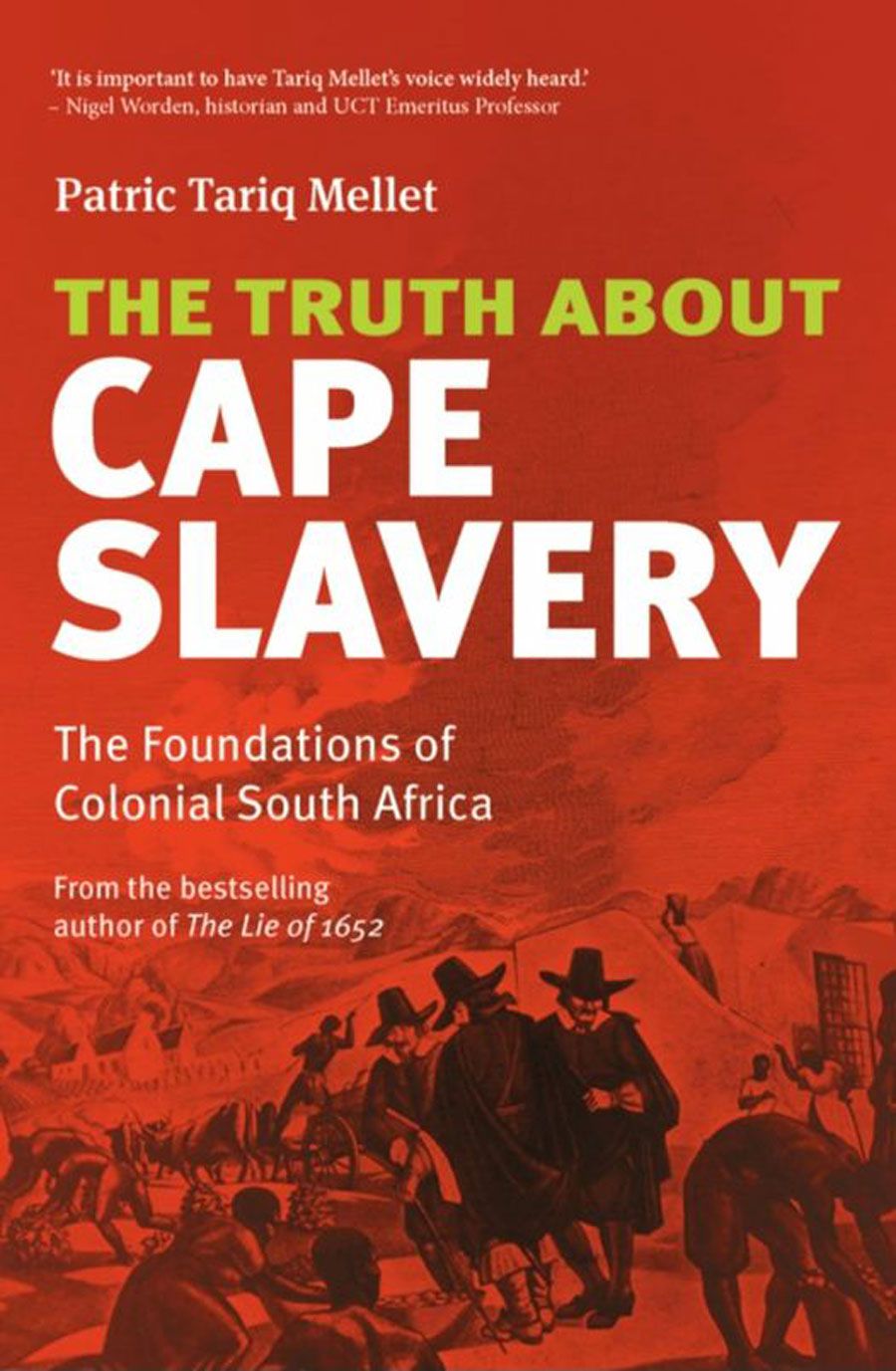
The history of diversity at the Cape, however, challenged by many historians as too overwhelmingly dominant in reading the history of South Africa (Ross 2007, 612), is not, firstly, defined by European intervention, and this is a strong point emphasised in decolonial scholarship (Gqola 2010 and Mellet 2020). By the time of European arrival at the Cape, there had already been culminations of century-long patterns of continental migration in establishing diversity in other parts of South Africa. Preceding the Khoekhoe, the San people[6]“San” is an exonym, a name conferred by the Khoekhoe people and not by those we refer to as the San themselves. The name has pervaded through thousands of years owing, firstly, to the acceptance of it by those referred to as San and, undoubtedly, through colonial-era knowledge production and beyond. See Cloete (2023, 11). were “the first to engage with other cultures that drifted into South Africa” (Mellet 2020, 53 and Barnard 1992, 114–130).
The Khoe people were “the first of the new identities that would emerge alongside the Tshua San between 1000 and 200 BCE” (Mellet 2020, 55; Huffman 2007 and Hall 1990), and they would journey to the Cape over a slow migratory drift of a thousand years from around the Limpopo basin that is shared by four countries, namely Botswana, South Africa, Zimbabwe, and Mozambique.
The Atlantic and Indian seaboards of South Africa, where we now identify the Western Cape (Atlantic) and Eastern Cape, show many examples of migratory drift, ethnic, social and linguistic diversity over the centuries predating European arrivals. Without distracting our focus too much, one example would be the engagements between the Khoekhoe in the southwest Cape and the Xhosa, the Bantu group in the southeast Cape. They had joint interests in cattle herding with divergent methods; they had similar structures of “incorporated communities allowing for a high degree of diverse practices” (Mellet 2020, 66) and they had skirmishes but also interacted amicably, and there was even intermarriage. The clicks of the Khoekhoe lingered in the language of the Xhosa (Trotter 2019, 28) as a clear linguistic influence.
The origins of Afrikaaps
Much of the modern history of South Africa finds Afrikaaps as an early contact development, with a pre-colonial genesis dating to roughly 1595 with the initial encounters between the indigenous Khoekhoe[7]Khoekhoe here refers to the Southern Peninsula Khoekhoe group at the time of the first colonial encounter (1652), comprised of the Cochoqua, Gorachouqa, Goringhaiqua and Goringhaicona sub-groups. See Cloete (2023, 50). people at the Cape, and the first Dutch travelers to arrive there, half a century before the arrival of Dutch colonisers. In how the Khoe-khoe creolised Dutch during pre-colonial encounters (1595–1952), van Rensburg identifies the “first” Afrikaans, Khoe Afrikaans (van Rensburg 2018, 17–20). This Afrikaans was initially formed under no pressure of domination and grew organically, a young but striking lexis formally noted as early as 1626 (Nienaber 1963, 21). The communication practices of this period were for “the purpose of interpretation in the early naiveté of the relationship between the Dutch traders and the Khoe” (Dooms and Chutel 2023, 92). The trade relationship eventually grew increasingly unbalanced to the Khoekhoe and soon, “language tipped in favour of European power” (2023, 93).
During the first century of colonial rule under the Vereenigde Oostindische Compagnie (VOC) the Cape was the destination of varying European civilian groups speaking different languages (Davids 2011, 52) – there were arrivals from Germany, Scandinavia, France, Estonia and Iceland (Kloeke 1950, 257 in van Rensburg 2018, 45). The non-Dutch groups mostly struggled with learners’ Dutch and labored to make themselves understood “in the translinguistic milieu and the multicultural lifestyle” (Schoeman 2014, 160) of the Cape.
What van Rensburg calls a “refreshment station Afrikaans” (2018, 45) developed, in addition to the existing Khoe Afrikaans, during the mid-1600s, in the early years of Dutch colonisation. The co-mingling of Khoe Afrikaans and settler Afrikaans in the later 1600s precipitated contact-induced language expansion or altering in the 1700s (Thomason and Kaufman 1991, 35).
Shortly after the initial Dutch colonial settlement in 1652, with the Khoekhoe not obliged to work for them, the VOC put a temporary end to sourcing immigrant workers from Europe and decided upon slave labour from other Dutch colonies to solidify their position at the Cape (Giliomee 2003a, 12). From 1658, enslaved people from Angola, Mozambique, Ceylon, Delagoa Bay, Zanzibar, Madagascar, Bengal and Indonesia were brought to the Cape and forced to learn Dutch. Slaves of Indian origin were from Surat, Bombay, Goa, Calicut, Cochin, Tuticorin, Negapatman, Tranquebar, Pondicherry, Pulicat, as well as from Colombo in Sri Lanka, and from West Bengal and Bangladesh (Mellet 2020, 236). The African slaves numbered over 30 000, approximately 61% of the enslaved brought to the Cape (2020, 235), while slaves from the Indonesian archipelago numbered over 14 000 and slaves from India over 16 000 (Kotzé 2016, 39), far outnumbering the European settlers. Because European immigrants stopped arriving on the Cape in great numbers between 1658 and the 1670s (partly owing to a series of conflicts the Netherlands had with the English, and later the French, that impacted the flow of white Dutch labour to the Cape), there was less informal, accessible Dutch to be heard and learned, so the slaves were mainly exposed to the very formal Dutch spoken by VOC administrators. As a result, Khoe Afrikaans facilitated by Khoekhoe interpreters significantly stood in for the Dutch the enslaved people were trying to learn (van Rensburg 2018, 29) and this combined with the languages of their mother countries.
The large number of slaves from Indonesia resulted in Malay becoming the most influ- ential Eastern language at the Cape under Dutch colonialism and it was absorbed by African slaves. Malay facilitated the growth of Islam, which was a unifying factor among the enslaved and, eventually (by the nineteenth century), the first written Afrikaans/Afrikaaps appeared in religious teachings of Arabic script. The mix of languages at the Cape by the early 1700s between the enslaved and the Khoekhoe – whose own numbers were being irreversibly reduced through acts of genocide permitted by the VOC (Hitchcock and Babchuk 2011, 143–171), several wars against the VOC and the smallpox epidemic of 1713 – was a subversion of Dutch, an intimate resistance that, nonetheless, infiltrated the language of the whites. Factors that brought the so-called slave language to influence the settler Dutch included mixed marriages and enslaved nursemaids raising Dutch children to the point that the children absorbed their language (Dooms and Chutel 2023, 95).
English colonialism in the nineteenth century
The waning VOC was defeated and displaced by British forces at the Cape in 1795. In 1803, there was a brief resurgence of Dutch (Batavian) rule until the second, more lasting English occupation began in 1806, with shiploads of settlers from England arriving as of 1820. In 1806, at the Cape, there were roughly 20 000 white, Dutch-speaking colonists, 25 754 slaves and in the range of 1700 “Free Blacks” (Nattrass 2017, 47). A Dutch colonial officer held over in 1806 reported that he and others like him learned “Bastard Dutch” (Afrikaaps) from their slave nursemaids, and that he was able to switch to “correct Dutch” when needed (Ross 1999, 58), indicating the influence the slaves had on the language practice of the colonists. Slaves bonded by Islam had, by the early 1800s, converted their spoken Afrikaaps into Arabic script using an adapted Arabic writing system from 1815 to patent religious documents (Davids 2011; and van Rensburg 2018, 39). Thus, while English would soon come to dominate as the official language of the Cape Colony, Afrikaaps had found its first written form[8]Linguist Frank Hendricks suggests that an alternative history of Afrikaans could have been possible had there been a continuance into standardisation of the first written Afrikaans in Arabic script throughout the 19th century. See Hendricks (2016).; it was the language of locally born creole slaves and was, again, also spoken by part of the white population. Slaves were emancipated in the 1830s, which impacted the spread of Afrikaaps when the manumitted had lesser restrictions on their movements in and around Cape Town.
While the abolition of slavery was in keeping with English liberalism at the time, racist distancing between whites and blacks at the Cape continued under English rule. Respectability within a British purview was important to the white Dutch settlers, and both English and Dutch were unified by their need to maintain a civic distance from the racia- lised “other”. One way in which this was enforced was through the stigmatisation of the creolised language of the other, as there was a growing need among White settlers to separate themselves from the enslaved and the servants – the Black and Brown people – who had quite literally built not only the Cape, but also the language that was now being used to create a sense of independence. (Dooms and Chutel 2023, 95)
Power, identity and categories of people (1850—1950)
From the mid-nineteenth century respectability defined and conferred by power would increasingly begin to shape the lives of people of colour at the Cape, and sociocultural diversity was reduced. This was previously evident in, firstly, the eighteenth century in which large numbers of the Khoekhoe and San communities were murdered under Dutch colonial law that sanctioned civilian-driven violence (Hitchcock and Babchuk 2011). This form of settler militia forced other patterns of outward flows of indigenous and, eventually, formerly enslaved people to different parts of the country (Van Sittert and Rousset 2019, 118). White farmers migrating out of the Cape in the Great Trek of the 1830s had Khoekhoe and former slaves who had become servants joining them. The creolised language traveled with and was further absorbed by these white farming families. The establishment of independent white (“Boer”) republics, in the Orange Free State and the Transvaal, stemming from the Great Trek, would see the elevation of the “deviant”, “Negro” variety of Dutch to what would become known as Afrikaans. Within decades, Afrikaans would be the language of the self-defined, first white Africans, the Afrikaners, descended from the Dutch farmers. The contributions of non-Dutch people to the language were erased from official history with this set of events that consecrated the ethnoreligious nationalism of white Afrikanerdom, in which Afrikaans and Afrikanerdom were for whites only. The migration from the Cape came to be seen as the genesis of the modern Afrikaner identity (Giliomee 2003a) and the First Afrikaans Language Movement of 1875 promulgated Afrikaans as the future language of white South Africans (van der Waal 449). The original version of Afrikaans, namely Afrikaaps, was by then dismissed as the lowly vernacular of the non-white “Other”.
Cape Khoe people and former enslaved people had been categorised as “Mixed/Other” in an 1833 census; “Mixed/Other/” was a broad label for an “amalgamation of former Africans and Asians” as of 1828 (Mellet 2020, 282). By the first professional census in 1865, other categories added included “Hottentots” (called “Hottentot-Basters” before 1833), with the category “Malay” added in 1875 (283). The groups Mixed/Other, “Hottentots” and “Kaffirs”, all derogatory, were collectively referred to as “Coloured Peoples of the British Colony of the Cape of Good Hope” in reports to British parliament at the time (283). By 1891, Coloured/ was informally used to describe the Mixed/Other category of Africans at the Cape (283). Both “Coloured” and “Mixed/Other” were lazy, collective terms that negated the “culturally and phenotypically diverse” labour class at the Cape (Dooms and Chutel 2023, 23), a forced political divide between the labour class and the indigenous tribes. Coloured/ was a “group of Black people created by colonialism itself” (23), yet there was conscription to this category by those operating under a political banner of Colouredness, driven to assimilate to the dominant society (Adhikari 2005, 8) and to be recognized as equals by whites. The (educated) elite identifying politically as Coloured/ largely aspired to join the English-speaking, middle-class culture at the Cape but many also desired memberships to the nascent Afrikanerdom of the end of the nineteenth century (8).
Isolated from the cultural practices of the emerging Afrikaner nation and held at a distance by the English middle-class society they wished to assimilate to, Cape colonials of colour were mostly perceived as bearers of undesirable connotations. Both English and Afrikaners were obsessed with racial purity, especially the latter (Dooms and Chutel 2023, 25), and Cape colonials of colour were deemed to be the products of miscegenation, impure and untrustworthy. They were dismissed as derivatives, marginalised for their lack of economic and social clout and considered to be cultureless (Adhikari 2005, 14).
The “kitchen Dutch” (Afrikaaps) such peoples were charged with speaking became one of the few tenets of culture attributed to them, albeit negatively. Cape Dutch and English middle classes of the late nineteenth century continued to regard the vernacular of the lower classes of colour as socially inferior, a stigma that would persist for another century and beyond. “Kitchen Dutch” would also be called Gamtaal (Language of Ham) and Capey (Adhikari 2005, 15), and was disparaged not only by Cape English and Afrikaners, but also by the accultured elite among Cape colonials of colour.
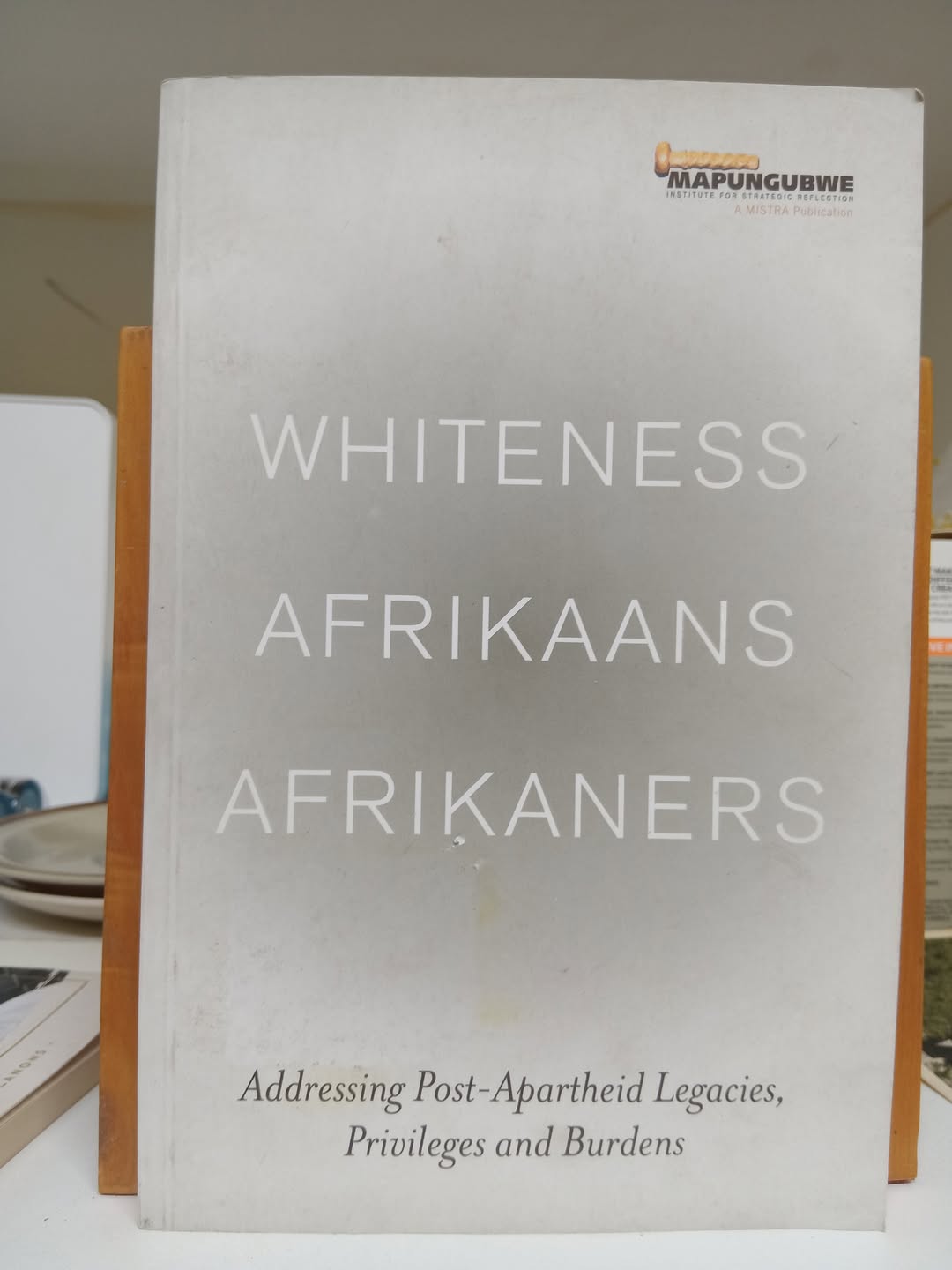
The Afrikaner nation-building project espoused segregation from the 1920s on, and the officially recognized variety of Afrikaans was described as Algemeen Beskaafde (generally civilized). Afrikaans was generally equated in “critical symbiosis” with its speakers (Orman 2014, 62), as the language was both a marker of identity as well as an assumed, national marker of belonging, a perceived gift of divine intervention (Willemse 2007, 49). Such beliefs were steeped in an adopted Calvinist conviction of being “chosen people” to God (Merrington 2003, 35–36) and claiming the right to land in South Africa (Devarenne 2009, 634). Racial bias motivated “language purism in Afrikaans” of which standard Afrikaans/Algemeen Beskaafde Afrikaans was the outcome (van Heerden 2016, 15).
Algemeen beskaafde Afrikaans, then, did not count among its speakers the population described as Coloured/ and negated the many “African” black South Africans to whom Afrikaans was a second, third or fourth language (Orman 2014, 60).
The diversity at the Cape, albeit pressured and shaped by the racist violence of colonialism, was thus condensed to a few bounded, standardised categories making the population legible and governable by the colonial government and later by South African governments, culminating with apartheid. Yet it would not be correct to designate it as superdiversity. That term, as Vertovec and others have emphasised, ought to be reserved for a particular kind of contemporary diversification resulting from accelerated demographic change, migration and new social complexities, which Vertovec describes as “the search for better ways to describe and analyze new social patterns, forms and identities arising from migration-driven diversification” (Vertovec 2019). This much can be seen in the contemporary Cape, but it is pertinent to be aware of the complex history that precedes the current moment, and how vestiges of this history remain influential.
Towards a superdiverse present
The kind of superdiversity emerging and evolving in the Cape after the removal of the formal strictures of apartheid neither refers to “more ethnicity” nor “ethnicity without groups” (Brubaker 2016), but personal and collective identities transcending ethnic identity as paramount. In the case of the Coloured/ category, it never was an ethnic group, but a random designation imposed by political regimes intent on making the population legible and meaningful in population statistics, enabling state control and segregation. Attempts to erase this apartheid category have only been partly successful so far. Regardless of their ancestral origins, people in the Cape may identify along a variety of criteria, from class and sexual orientation to political views and professions. What the vast majority of them have in common is the Afrikaaps language.
Current bids to turn Afrikaaps into a “high” form with its own literature, films and intellectual discourse, as well as achieving formal recognition as a South African language, must be understood in the context of South African history, especially the apartheid years, but also current discrepancies of class and political power. First, like creoles elsewhere, Afrikaaps-speakers are not an ethnic group, and in South Africa, people described as Coloureds/ are precariously positioned between relatively bounded ethnic groups, as well as not fitting into the racial binary that has shaped the country for centuries (Johnson 2017). The superdiversity witnessed in the Cape is, accordingly, neither chosen nor a tendency predominant elsewhere in the country. Secondly, the Afrikaaps political–cultural movement challenges the myth of Afrikaans being a “white” language, not without resistance from the established Afrikaner elites. Thirdly, if successful, the Afrikaaps movement will establish Afrikaaps-speakers as a demographic category on a par with Zulu-speakers, Sotho-speakers, and so on. Afrikaaps is a common denominator enabling communication and a sense of community among otherwise very diverse people. In London, described in Vertovec’s first, seminal article about superdiversity (2007), the English language similarly serves as a lingua franca and, in most cases, a mother-tongue.
Afrikaaps presents a case study that could, conceivably, be placed within the frame- works provided by Jan Blommaert for understanding linguistic landscapes (Blommaert 2013) in urban spaces, a feature of superdiversity. In Blommaert’s findings, multiplicity (outmoded descriptions of multiculturalism and multilingualism) is replaced by complexity, “an approach in which we assume social processes to be multiple, multifilar and yet simultaneous – synchronic and located in a circumscribed spatial arena” (Blommaert 2014, 432). As populations change and relationships between populations and language changes, what Blommaert and other sociolinguists describe as a linguistic landscape presents itself for careful observation of its dynamics (Blommaert 2013, 7). In the South African example, mobility into the predominantly Afrikaaps areas of the Cape Flats must, soon enough, be recognized for contributing to what Vertovec, Blommaert and others, echoing Gumperz (1968) call “speech communities” and must be counted into studies of Afrikaaps, as in some ways this calls back to the origins of the language and offers ways of reading superdiversity.
In the Cape Flats areas outside Cape Town, recent population figures approach 5 million and Afrikaaps begins to develop across different groups (Onwukwe and Gibson 2023). The Western Cape remains a place that sees regular influxes of labourers from various other parts of South Africa as well as many foreign nationals (Zimbabweans, Mozambicans, Malawians, Somalis, Nigerians, and Congolese) totalling approximately 400,000 of the province’s 7 million people (Migration Profile Report for South Africa 2023). Cape Town is South Africa’s premiere tourist destination (Visser, Erasmus, and Miller 2017) and international visitors and economic migrants from other African countries characterise social interactions in this legislative capital of South Africa.
Whereas tourists may be ephemeral, foreign nationals from other African countries contribute to fluid multilingual practices in which “language is implicated in social activities and identity construction that take place against a backdrop of differing power relations” (Onwukwe and Gibson 2023, 794). Cape Town, today, shows high levels of linguistic and cultural diversity owing to its mixed national, international and transnational population. Among many communities, particularly Igbo-speaking Nigerians and Shona- speaking Zimbabweans living in black townships and Cape Flats neighbourhoods, English, Afrikaans and isiXhosa, the three predominant languages of the Western Cape, are increasingly being absorbed and used in social activities and both formal and informal economic relations (Deumert, Mpazayabo, and Thompson 2021, 248–262; Onwukwe and Gibson 2023, 797–799). The location of the Cape Flats for many Nigerian, Somalian and Zimbabwean immigrants means that the Afrikaans spoken on the ground would be Afrikaaps, with the added implication that Afrikaaps speakers may similarly be hearing more isiXhosa, Igbo, Chichewa and Shona (to name only a few) than before, even if this does not yet mean integration or the collapse of insider/outsider borders between people on the Cape Flats.
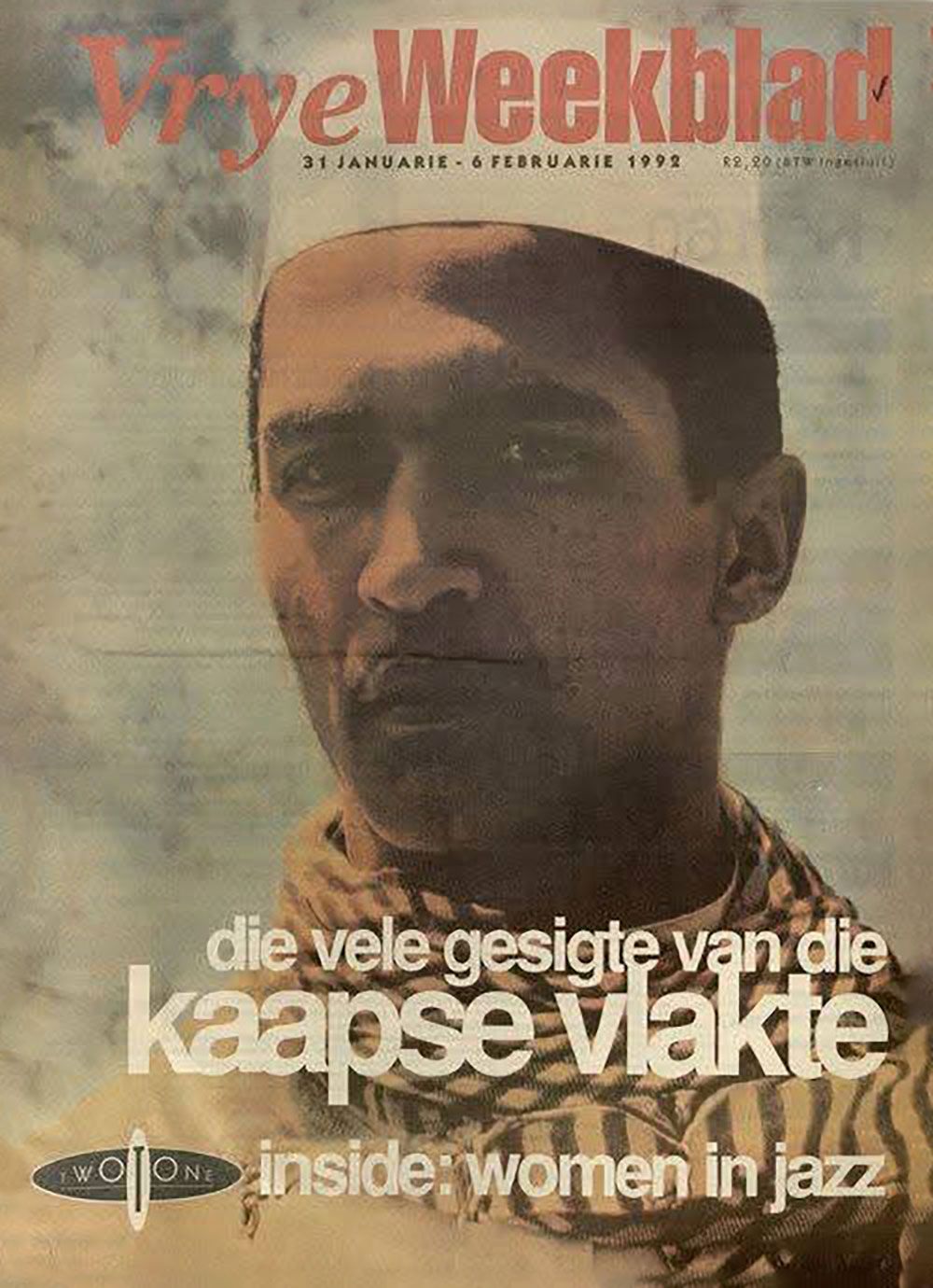
Finally, the struggle for recognition of Afrikaaps challenges established ideas about the country being made up of bounded groups. As creole, the language is openended and continuously evolving, and its speakers live in a social environment which encourages mixing and openness rather than purity and boundaries. The “liquid” creole identities of the Cape could thus be seen as a logical extension of superdiversity, where belonging to a group, a community or a network is negotiable and potentially shifting, accurately confirming Bauman’s (1996, 18) precise observation of the time when this accelerated diversification began to take off: “If the modern ‘problem of identity’ is how to construct an identity and keep it solid and stable, the postmodern ‘problem of identity’ is primarily how to avoid fixation and keep the options open”.
Keeping options open allows for a consideration of empowerment. Given the histories of various people categorised as Coloured/, and how some of these histories include Afrikaaps and its speakers who are often caught between governing structures of different eras and epochs prioritising essentialist notions of blackness[9]There lingers a complex and often fraught political relationship between South Africans categorised as Coloured/ and Black/African South Africans; much of it is rooted in the colonial history we have discussed. Cape elites of colour in the late 19th and early-to-mid-20th century pursued assimilationist ambitions with whiteness. Those described as Coloured/ had better socioeconomic and civic privileges than black South Africans and there was notable territorialism in the Cape, even if it does not help to generalise and overlook the multifaceted mutual histories of the oppressed. During apartheid there were more visible solidarities between those categorised as Coloured/ and those categorised as Black, particularly under the Black Consciousness Movement (BCM), but the ruling National Party (NP) was determined to obstruct this by courting the supposed Coloured/ support. This came to some fruition during the 1994 national elections when the outgoing NP, peddling an overwhelmingly anti-black/anti-ANC (African National Congress) fearmongering campaign, received substantial support in parts of the Cape from the very purportedly Coloured/ communities they had oppressed. The charged relationship, post-1994, between those identified as/identifying as Coloured/ in the Cape and sectors of the ruling ANC turned on debates about history, belonging, Africanness, racial favouritism and relative labour and socioeconomic privilege in the past and the present. The ANC losing its governance of the Western Cape by 2009 to the multiracially-composed but white-run Democratic Alliance (DA) was influenced in no small part by the presumed Coloured/ vote, based on a perceived, alienating and essentialising of Africanness by the ANC that disserved the subaltern history at the Cape. See Johnson (2017) and North (2020). and whiteness, the current moment of activity for the language is one that partly addresses empowerment as much as it does recognition.
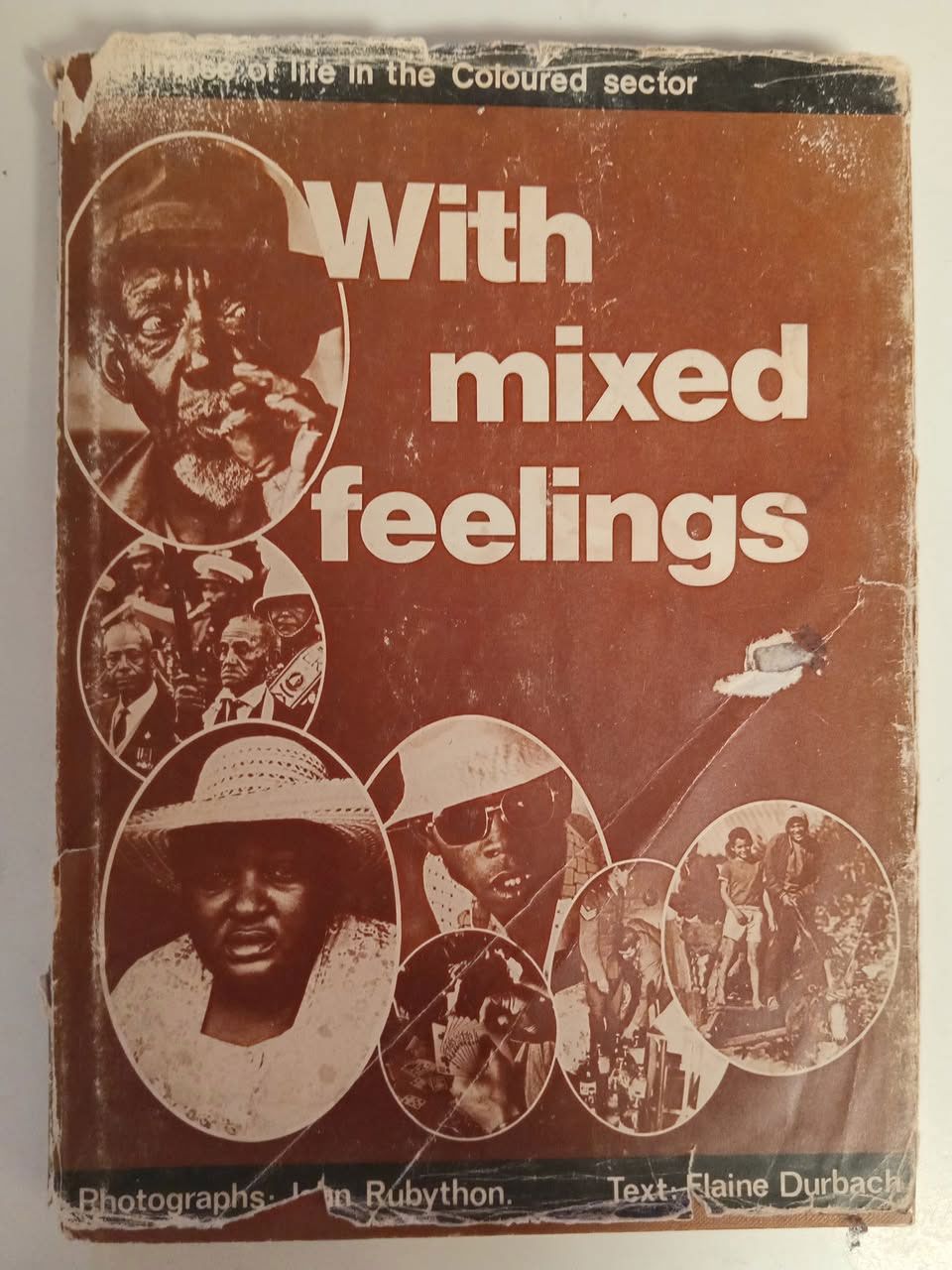
The term Coloured/, as we have discussed, was a lazy, colonial category of separatism, meant to signify a buffer race between white and black (Hendricks 2001, 42). This categorisation influenced the lingering historical stigma of mixedness and impurity. In the immediate post-apartheid South Africa, for Afrikaaps speakers, the “taint” of mixedness was then abetted by essentialist charges of not being “African” (or black) enough emanating from national government structures after 1994 (Erasmus 2001, 20), whereas before, under white segregationist rule, those categorised as Coloureds/ who were aspiring to assimilation were not white enough (Adhikari 2005). In this, there are suggestions of disempowerment, of people and a language that have both been shaped and overlooked, alluded to by the title of the significant intervention, Coloured by History, Shaped by Place (Erasmus 2001).
The prevalence of the unofficial Afrikaaps language movement has brought the matter of empowerment to the fore, much as similar matters were prioritised a century earlier in the wake of the Second Afrikaans Language Movement of 1911. Alongside increased literary and cultural output, recognition of works of excellence and the calls to introduce Afrikaaps to Western Cape school curriculums, the economic empow- erment of Afrikaaps must remain a priority for the continued efforts to formalise the language.
The culture industry around Afrikaaps in the last two decades points some way to how economic empowerment has initially been conceived and phased. Interlinking with public discourses around Coloured/ identity (while not necessarily claiming this identity, which is also a point of many of these discourses that interrogate the term), the urgency around Afrikaaps recognises that negatively constructed interactions between economic subordination, racialising practices and construction of linguistic value (Collins 2017, 40) must be deconstructed, and so too the blanketing, coloniallyrooted versions of history that conflate Colouredness/ with the shared language of speakers often so identified. To that extent, greater awareness of copyright laws, identifying various entities using Afrikaaps in differing cultural practices, identifying and progressing sites of influence from the print media, digital spheres, heritage, tourism and media broadcasting, syndication and streaming (Van der Rheede 2016, 125) have all been sites of progressive growth for Afrikaaps. The empowerment of Afrikaaps is articulated through a sense of linguistic citizenship and ownership and sharing through many of the sites mentioned above and these begin to support, as was the case a century earlier for Afrikaans, the case for standardisation. Perhaps, more reachable than standardisation, for now, is the continued acknowledgement of Afrikaaps, in its past and present, as a language exuding some of the identifiers synonymous with the concept of superdiversity.
Adhikari, M. 2005. Not White Enough, Not Black Enough. Cape Town: Double Storey Books. Adhikari, M. 2009. Burdened by Race: Coloured Identities in Southern Africa. Cape Town: University of Cape Town Press.
Alim, H. S., A. Haupt, E. Jansen, and Q. Williams. 2021. “Kom Khoi San, kry trug jou land”: Disrupting White Settler Colonial Logics of Language, Race, and Land with Afrikaaps.” Journal of Linguistic Anthropology 31 (2): 194–217. doi.
Barnard, A. 1992. Hunters and Herders: A Comparative Ethnography of the Khoisan Peoples. Cape Town: University of Cape Town Press.
Bauman, Zygmunt. 1996. “From Pilgrim to Tourist; or a Short History of Identity.” In Questions of Cultural Identity, edited by S. Hall, and P. Du Gay, 18–36. London: Sage.
Blommaert, J. 2013. Ethnography, Superdiversity and Linguistic Landscapes. Bristol: Multilingual Matters.
Blommaert, J. 2014. “Infrastructures of Superdiversity: Conviviality and Language in an Antwerp Neighborhood.” European Journal of Cultural Studies 17 (4): 431–451. https://doi.org/10.1177/136754941351042.
Brubaker, R. 2016. Ethnicity Without Groups. Boston, MA: Harvard University Press.
Cloete, J. 2023. The Attempted Erasure of the Khoekhoe and San. Stellenbosch: African Sun Media. Cohen, A., and O. Sheringham. 2016. Encountering Difference. London: Wiley.
Collins, J. 2017. “Dilemmas of Race, Register and Inequality in South Africa.” Language in Society 46 (1): 39–56. doi.
Davids, A. 2011. The Afrikaans of the Cape Muslims. Pretoria: Pretoria Book House.
Deumert, A., S. Mpazayabo, and M. Thompson. 2021. “Cape Town as a Multilingual City: Policies, Experiences and Ideologies.” In In The Routledge Handbook of Translation and the City, edited by T. K. Lee, 248–262. New York: Routledge.
Devarenne, N. 2009. “Nationalism and the Farm Novel in South Africa, 1883-2004.” Journal of Southern African Studies 35 (3): 627–642.
Dooms, T., and L. E. Chutel. 2023. Coloured: How Classification Became Culture. Cape Town: Jonathan Ball.
Epps, P. 2020. “Amazonian Linguistic Diversity and its Sociocultural Correlates.” In Language Dispersal, Diversification, and Contact, edited by M. Crevels, and P. Muysken, 275–290. Oxford: Oxford University Press.
Erasmus. 2001. Coloured by History, Shaped by Place. Cape Town: Kwela Books.
Eriksen, T. H. 2016. “Creolization in Anthropological Theory and in Mauritius.” In Creolization: History, Ethnography, Theory, edited by C. Stewart, 153–177. New York: Routledge.
Fraser, L. 2023. These are the Most Spoken Languages in South Africa. Accessed October 11, 2023. http://www.businesstech.co.za/news/lifestyle/these-are-the-most-spoken-languages-insouthafrica20231009.
Gellner, E. 1983. Nations and Nationalism. Oxford: Blackwell.
Giliomee, H. 2003a. The Afrikaners: Biography of a People. Cape Town: Tafelberg.
Giliomee, H. 2003b. “The Rise and Possible Demise of Afrikaans as a Public Language.” PRAESA Occasional Papers 14. University of Cape Town: PRAESA.
Gqola, P. 2010. What Is Slavery to Me? Johannesburg: Wits University Press.
Grillo, R. 1998. Pluralism and the Politics of Difference: State, Culture, and Ethnicity in Comparative Perspective. Oxford: Oxford University Press.
Gumperz, J. J. 1968. “The Speech Community.” In International Encyclopedia of the Social Sciences, edited by D. L. Sills, 381–386. New York: Macmillan.
Hall, M. 1990. Farmers, Kings and Traders: The Peoples of Southern Africa, 200—1860. Chicago: University of Chicago Press.
Hamans, C. 2021. “Kaaps, a Language in its Own Right.” Accessed September 27, 2024. ciplnet
Hannerz, U. 1996. Transnational Connections. London: Routledge.
Haupt, A. 2021. “The Importance of the First-ever Afrikaaps Dictionary.” Accessed August 11, 2024. www.news.uct.ac.za/article.
Hendricks, C. 2001. “Ominous’ Liaisons: Tracing the Interface Between ‘Race’ and Sex at the Cape.” In Coloured by History, Shaped by Place, edited by Z. Erasmus, 29–44. Cape Town: Kwela Books.
Hendricks, F. 2016. “Die Aard en Konteks van Kaaps: ‘n Hedendaagse, Verledetydse en Toekomsperspektief.” In Kaaps in Fokus, edited by F. Hendricks, and C. Dyers, 29–35. Stellenbosch: SUN Media.
Hitchcock, R., and W. Babchuk. 2011. “Genocide of Khoekhoe and San Peoples of Southern Africa.” In Genocide of Indigenous Peoples, edited by R. Hitchcock, and S. Totten, 143–171. New York: Routledge.
Holtzman, G. 2019. “Coming-out of the Coloured Closet: An Afrikaaps Renaissance in the Arts.” Stilet 31 (1&2): 226–230.
Huffman, T. N. 2007. Handbook to the Iron Age: The Archaeology of Pre-Colonial Farming Societies in Southern Africa. Pietermaritzburg: University of KwaZulu-Natal Press.
Johnson, V. D. 2017. “Coloured South Africans: A Middleman Minority of Another Kind.” Social Identities 23 (1): 4–28. doi.
Kloeke, G. G. 1950. Herkomst en groei van het Afrikaans. Leiden: Universitaire Pers.
Kotzé, E. 2016. “Die Historiese Dinamika van Kaaps—Toe en Nou.” In Kaaps in Fokus, edited by F. Hendricks, and C. Dyers, 37–48. Stellenbosch: SUN Media.
Krämer, P., E. Mijts, and A. Bartens. 2022. “Language Making of Creoles in Multilingual Postcolonial Societies.” International Journal of the Sociology of Language 274:51–82. doi.
le Cordeur, M. 2016. “Time for the Language of the Cape Flats to Become Part of Formal Schooling.” Multilingual Margins 3 (2): 86–103.
le Cordeur, M. 2024. “Tyd om plek te maak vir Kaaps in skole.” Accessed August 25, 2024. netwerk24.
Mellet, P. 2020. The Lie of 1652: A Decolonised History of Land. Cape Town: Tafelberg.
Merrington, P. 2003. “C. Louis Leipoldt’s “Valley Trilogy” and Contested South African Nationalisms in the Early Twentieth Century.” Current Writing 15 (3): 32–48. doi.
Nattrass, G. 2017. A Short History of South Africa. Cape Town: Jonathan Ball. Nienaber, G. S. 1963. Hottentots. Pretoria: Van Schaik.
North, S. 2020. “Remembering Slavery in Urban Cape Town: Emancipation or Continuity?” International Review of Social History 65:197–223. doi. Onwukwe, C., and H. Gibson. 2023. “Migrant Identities in Multilingual Contexts: Nigerian Migrants’ Language Use in Public Spaces in Cape Town.” Journal of Multilingual and Multicultural Development 44 (9): 794–806. doi.
Orman, J. 2014. “Language Policy and Identity Conflict in Relation to Afrikaans in the Postapartheid Era.” In Language Policy and the Promotion of Peace: African and European Case Studies, edited by Alexander, and A. Von Scheliha, 59–76. Pretoria: UNISA Press.
Ross, R. 1999. Status and Respectability in the Cape Colony 1750-1870. Cambridge: Cambridge University Press.
Ross, R. 2007. “Sumptuary Laws in Europe, the Netherlands and the Dutch Colonies.” In Contingent Lives: Social Identity and Material Culture in the VOC World, edited by N. Worden, 382–390. Cape Town: University of Cape Town.
Schoeman, K. 2014. Hoogty. Die opbloei van ‘n koloniale kultuur aan die Kaap, 1751—1779. Pretoria: Pretoria Book House.
Shell, R. 1997. Children of Bondage: A Social History of the Slave Society at the Cape of Good Hope, 1652-1838. Johannesburg: Wits University Press.
South African History Online. 2017. “How Unique was Slavery at the Cape?” Accessed December 16, 2024. sahistory.
Steyn, A. 2017. “Afrikaans, Inc.: The Afrikaans Culture Industry After Apartheid.” Social Dynamics 42 (3): 481–503. doi.
Thomason, S. G., and T. Kaufman. 1991. Language Contact, Creolisation and Genetic Linguistics.
Berkeley: University of California Press.
Trotter, H. 2019. Cape Town: A Place Between. Cape Town: Catalyst Press.
Van der Rheede, C. 2016. “Economic Empowerment Through Kaaps.” Multilingual Margins 3 (2): 117– 126.
van der Waal, C. S. 2012. “Creolisation and Purity: Afrikaans Language Politics in Post-Apartheid Times.” African Studies 71 (3): 446–463.
van Heerden, G. 2016. Afrikaaps: A Celebratory Protest Against the Racialised Hegemony of ‘Pure’ Afrikaans. Stellenbosch: Stellenbosch University.
van Rensburg, C. 2018. Finding Afrikaans. Pretoria: Lapa.
Van Sittert, L., and T. Rousset. 2019. “An Unbroken Line of Crimes and Blood’: Settler Militia and the Extermination and Enslavement of San in the Graaff-Reinet District of the Cape Colony, c. 1776- 1825.” In Civilian-Driven Violence and the Genocide of Indigenous Peoples in Settler Societies, edited by M. Adhikari, 118–149. New York: Routledge.
Vertovec, S. 2007. “Super-diversity and its Implications.” Ethnic and Racial Studies 30 (6): 1024–1054. doi.
Vertovec, S. 2019. “Talking Around Super-Diversity.” Ethnic and Racial Studies 42 (1): 125–139. doi.
Vertovec, S. 2023. Superdiversity. London: Routledge.
Visser, G., I. Erasmus, and M. Miller. 2017. “Air BnB: The Emergence of a New Accommodation Type in Cape Town, South Africa.” Tourism Review International 21:151–168. doi.
Willemse, H. 2007. Aan Die Ander Kant. Pretoria: Protea.
Willemse, H. 2016. “Soppangheid for Kaaps: Power, Creolisation and Kaaps Afrikaans.” Multilingual Margins 3 (2): 73–85.
| 1. | ↑ | Kaaps is the generally accepted, historical name of the language and is still used, with the trilingual dictionary preferring it. In the 21st century the name varies between Kaaps and Afrikaaps, but both refer to the same linguistic, literary and cultural content. We argue that under the name Afrikaaps, there has been increased visibility and rapid movement of the language. See Alim et al. (2021). |
| 2. | ↑ | From here on, the term is italicised and suffixed by a slash in recognition of both the contestation around its usage and to suggest future possibilities and alternatives of use. We do not agree with the lumping nature of the term, rooted in colonial essentialism, and acknowledge the various debates, propositions and discussions surrounding its usage. Both essentialist and instrumentalist discussions “treat coloured identity as something exceptional, failing to recognise it for what it is—a historically specific social construct, like any other social identity”. See Adhikari (2009). |
| 3. | ↑ | The poetry and other writings of Adam Small as of the mid-twentieth century had notable influence on the positive framing of Afrikaaps (what Small and others call Kaaps) as the language of the working classes of the Cape. See Willemse (2016). |
| 4. | ↑ | “Creole language” here refers to processes of linguistic practices taking new forms as speakers develop a new linguistic entity; in the case of the Cape, indigenous South Africans formed a new linguistic entity from Dutch that would, in turn, be further shaped by other, initial non-speakers (enslaved people brought to South Africa). See Krämer, Mijts, and Bartens (2022). |
| 5. | ↑ | Prominent cultural initiatives include the Camissa Museum in Cape Town, the media pro- ductions of Afrikaaps Is Alive and the 2010 documentary film, Afrikaaps, generally considered to be a catalyst for the recent movement for the language. In education and academia, there are now calls for Afrikaaps to be recognised at schools in the Western Cape region of South Africa. See le Cordeur (2024) and le Cordeur (2016). |
| 6. | ↑ | “San” is an exonym, a name conferred by the Khoekhoe people and not by those we refer to as the San themselves. The name has pervaded through thousands of years owing, firstly, to the acceptance of it by those referred to as San and, undoubtedly, through colonial-era knowledge production and beyond. See Cloete (2023, 11). |
| 7. | ↑ | Khoekhoe here refers to the Southern Peninsula Khoekhoe group at the time of the first colonial encounter (1652), comprised of the Cochoqua, Gorachouqa, Goringhaiqua and Goringhaicona sub-groups. See Cloete (2023, 50). |
| 8. | ↑ | Linguist Frank Hendricks suggests that an alternative history of Afrikaans could have been possible had there been a continuance into standardisation of the first written Afrikaans in Arabic script throughout the 19th century. See Hendricks (2016). |
| 9. | ↑ | There lingers a complex and often fraught political relationship between South Africans categorised as Coloured/ and Black/African South Africans; much of it is rooted in the colonial history we have discussed. Cape elites of colour in the late 19th and early-to-mid-20th century pursued assimilationist ambitions with whiteness. Those described as Coloured/ had better socioeconomic and civic privileges than black South Africans and there was notable territorialism in the Cape, even if it does not help to generalise and overlook the multifaceted mutual histories of the oppressed. During apartheid there were more visible solidarities between those categorised as Coloured/ and those categorised as Black, particularly under the Black Consciousness Movement (BCM), but the ruling National Party (NP) was determined to obstruct this by courting the supposed Coloured/ support. This came to some fruition during the 1994 national elections when the outgoing NP, peddling an overwhelmingly anti-black/anti-ANC (African National Congress) fearmongering campaign, received substantial support in parts of the Cape from the very purportedly Coloured/ communities they had oppressed. The charged relationship, post-1994, between those identified as/identifying as Coloured/ in the Cape and sectors of the ruling ANC turned on debates about history, belonging, Africanness, racial favouritism and relative labour and socioeconomic privilege in the past and the present. The ANC losing its governance of the Western Cape by 2009 to the multiracially-composed but white-run Democratic Alliance (DA) was influenced in no small part by the presumed Coloured/ vote, based on a perceived, alienating and essentialising of Africanness by the ANC that disserved the subaltern history at the Cape. See Johnson (2017) and North (2020). |