• Issue #01
  • Issue #02
  • Issue #03
  • Issue #04
  • Issue #05
  • Issue #06
  • Issue #07
  • Issue #08
  • Issue #09
  • Issue #10
  • Issue #11
  • Issue #12
12
Contents
editorial
LOUIS CHUDE-SOKEI WITH IR INDIGENOUS RESISTANCE
Sharp as a Blade: Decolonizing Decolonization
RATO MID FREQUENCY
Social Death Beyond Blackness
HUGO CANHAM
Exchanging black excellence for failure
SABELO J NDLOVU-GATSHENI
The Dynamics of Epistemological Decolonisation in the 21st Century: Towards Epistemic Freedom
MALAIKA WA AZANIA
The Timbila LIbrary - 120 books to read by age 28
Theme Timbila Library
NOSIPHO KOTA
Seven Poems
MING DI
“Through Multiculturalism We Become Better Humans”: A Conversation with Vonani Bila
VONANI BILA
Ancestral Wealth
TINYIKO MALULEKE
An Ode to Xilamulelamhangu: English-Xitsonga Dictionary
MZI MAHOLA
Three Poems
MXOLISI NYEZWA
Seven Notes To A Black friend, The Dance of the Ancestors and Two Other Songs That Happened
SANDILE NGIDI
Three Poems
LUCAS LEDWABA
'I have nothing left' – flood victims count the costs
MASERAME JUNE MADINGWANE
Two Poems
RAPHAEL D’ABDON
Resistance Poetry in Post-apartheid South Africa: An Analysis of the Poetic Works and Cultural Activism of Vonani Bila
MPUMI CILIBE
American Toilet Graffiti: JFK Airport 1995
MPHUTLANE WA BOFELO
Language is Land
MAKHOSAZANA XABA
Poems from These Hands
VONANI BILA
The Pig and four other poems
MAROPODI HLABIRWA MAPALAKANYE
Troublemaker’s Prison Letter
KGAFELA OA MAGOGODI
Four Outspoken Poems
DAVID WA MAAHLAMELA
Three Poems
VUYISILE MSILA
People’s English in the Poetry of Mzi Mahola and Vonani Bila
THEMBA KA MATHE
Three Poems
MZWANDILE MATIWANA
Three Poems
ROBERT BEROLD
Four Poems
AYANDA BILLIE
Four Poems
MM MARHANELE
Three Poems
VONANI BILA
The Magician
VUYISILE MSILA
Four Poems
KELWYN SOLE
Craft Wars and ’74 – did it happen? (unpublished paper)
galleri
TSHEPO SIZWE PHOKOJOE
The Gods Must Be Crazy
THAIO ABRAHAM LEKHANYA
Mary Sibande: Reimagining the Figure of the Domestic Worker
KHEHLA CHEPAPE MAKGATO
TŠHIPA E TAGA MOHLABENG WA GAYO
DATHINI MZAYIYA
Early Works
LEFIFI TLADI
Two Letters to Kemang Wa Lehulere
TENDAI RINOS MWANAKA
Mwanaka Media: all sorts of haunts, hallucinations and motivations
ROFHIWA MADAU
Colour Bars
THULILE GAMEDZE
No end, no fairytale: On the farce of a revolutionary ‘hey day’ in contemporary South African art
KEITH ADAMS
Vakalisa Arts Associates, 1982–1992: Reflections
SAM MATHE
On Comic Books
OBINNA OBIOMA
Anyi N’Aga (We Are Going )
borborygmus
NDUDUZO MAKHATHINI
uNomkhubulwane and songs
RICHARD PITHOUSE
The radical preservation of Matsuli Music
BONGANI TAU
Ukuqophisa umlandu: Using fashion to re-locate Black Psyche in a Township
ALON SKUY
Marikana 2012/2022
CARSTEN RASCH
Searching for the Branyo
VONANI BILA
Dahl Street, Pietersburg
frictions
IGNATIA MADALANE
Not on the List
SITHEMBELE ISAAC XHEGWANA
IMAGINED: (excerpt)
ALEXANDRA KALLOS
A Kite That Bears My Name
SHANICE NDLOVU
When I Think Of My Death
VONANI BILA
The day I killed the mamba
ALLAN KOLSKI HORWITZ
Three New Poems
MPHUTLANE WA BOFELO
Biko, Jazz and Liberation Psychology
M. AYODELE HEATH
Three Poems
ZAMOKUHLE MADINANA
Three Poems
MASELLO MOTANA
Four BLK Poems
FORTUNATE JWARA
Three Delusions
NIEVILLE DUBE
Three Joburg Stories
VERNIE FEBRUARY
Of snakes and mice — iinyoka neempuku
KNEO MOKGOPA
Woundedness
claque
VONANI BILA
Poetry of social obliteration and intimacy
MZOXOLO VIMBA
The weight of the sack: Hessian, history and new meaning in Tshepo Sizwe Phokojoe’s “The Gods Must be Crazy” exhibition.
LORRAINE SITHOLE
Heading
NEO RAMOUPI
title
DIMAKATSO SEDITE
title
MENZI MASEKO
Acknowledging Spiritual Power Beyond Belief - A Review of Restoring Africa’s Spiritual Identity by African Hidden Voices (AHV)
ekaya
VONANI BILA
The Timbila Poetry Project
LWAZI LUSHABA
A Video Call with Kopano Ratele on Politics and the Black Psyche, 22 July 2024
MARTIN JANSEN
Where is the Better Lyf You Promised Us?
THOMAS HYLLAND ERIKSEN & RIAAN OPPELT
Post-apartheid diversification through Afrikaaps: language, power and superdiversity in the Western Cape
THADDEUS METZ
Academic Publishing is a Criminal Operation
MARGARET E. WALKER
Towards a Decolonized Music History Curriculum
VONANI BILA
Probing ‘Place’ as a Catalyst for Poetry
off the record
MIRIAM MAKEBA
Sonke Mdluli
ACHILLE MBEMBE
Decolonizing Knowledge and the Question of the Archive
ZAKES MDA
Biko's Children (12 September 2001)
VONANI BILA
Ku Hluvukile eka ‘Zete’: Recovering history and heritage through the influence of Xitsonga disco maestro, Obed Ngobeni
MATSULI MUSIC
The Back Covers
THEODORE LOUW
Reminiscing
GAVIN STEINGO
To be filled
LEHLOHONOLO PHAFOLI
The Evolution of Sotho Accordion Music in Lesotho: 1980-2005
DOUGIE OAKES
On Arthur Nortje, The Poet Who Wouldn’t Look Away
PULE LECHESA
Sophonia Machabe Mofokeng: Distinguished Essayist and Dramatist in the pantheon of Sesotho Literature
NOKUTHULA MAZIBUKO
Spring Offensive
WALTER MIGNOLO
Presentación El cine en el quehacer (descolonial) del *hombre*
feedback
MUSA SITHOLE
In Defence of Afropessimism: Aryan Kaganof’s Miseducation(reading) of Frank B. Wilderson III – ANTIBLACKNESS AND THE QUESTION OF PALESTINE
OSCAR HEMER
16 October 2025
NIDA YOUNIS
22 September 2025
PALESA MOKWENA
9 October 2024
MATTHEW PATEMAN
11 August 2024
RAFIEKA WILLIAMS
12 August 2023
ARYAN KAGANOF
26 October 2021 – A letter to Masixole Mlandu
FACEBOOK FEEDBACK
Facebook
herri_gram FEEDBACK
Instagram
PhD
ALICE PATRICIA MEYER
Timbila Poetry: Vonani Bila’s Poetic Project
the selektah
VONANI BILA
Vonani's Choice
ARYAN KAGANOF
herri films
hotlynx
hotlynx
.
the back page
MENZI APEDEMAK MASEKO
The Meaning of ‘Bantu’
ROLANDO VÁZQUEZ
Translation as Erasure: Thoughts on Modernity’s Epistemic Violence
VONANI BILA
Moses, we shall sing your Redemption Song
Test section
Testing font sizes & Verse block
.
This is a post to test cache clearing5
.
This is a test post on the new Herri VPS server
.
© 2025
Archive About Contact
    • Issue #01
    • Issue #02
    • Issue #03
    • Issue #04
    • Issue #05
    • Issue #06
    • Issue #07
    • Issue #08
    • Issue #09
    • Issue #10
    • Issue #11
    • Issue #12
    #12
  • galleri

THAIO ABRAHAM LEKHANYA

Mary Sibande: Reimagining the Figure of the Domestic Worker

We have been captivated by her work, though many may not immediately recognize her name. Mary Sibande is an exceptional South African contemporary artist whose practice reimagines the figure of the domestic worker. Through striking sculptural installations and evocative photography, she constructs immersive worlds inhabited by her alter ego, Sophie—a character who embodies the lived experiences of generations of women in her family. Sophie is not merely a fictional creation; she is a living archive of memory, shaped by the journeys of Sibande’s mother and grandmother, both of whom worked as domestic workers during the apartheid era.
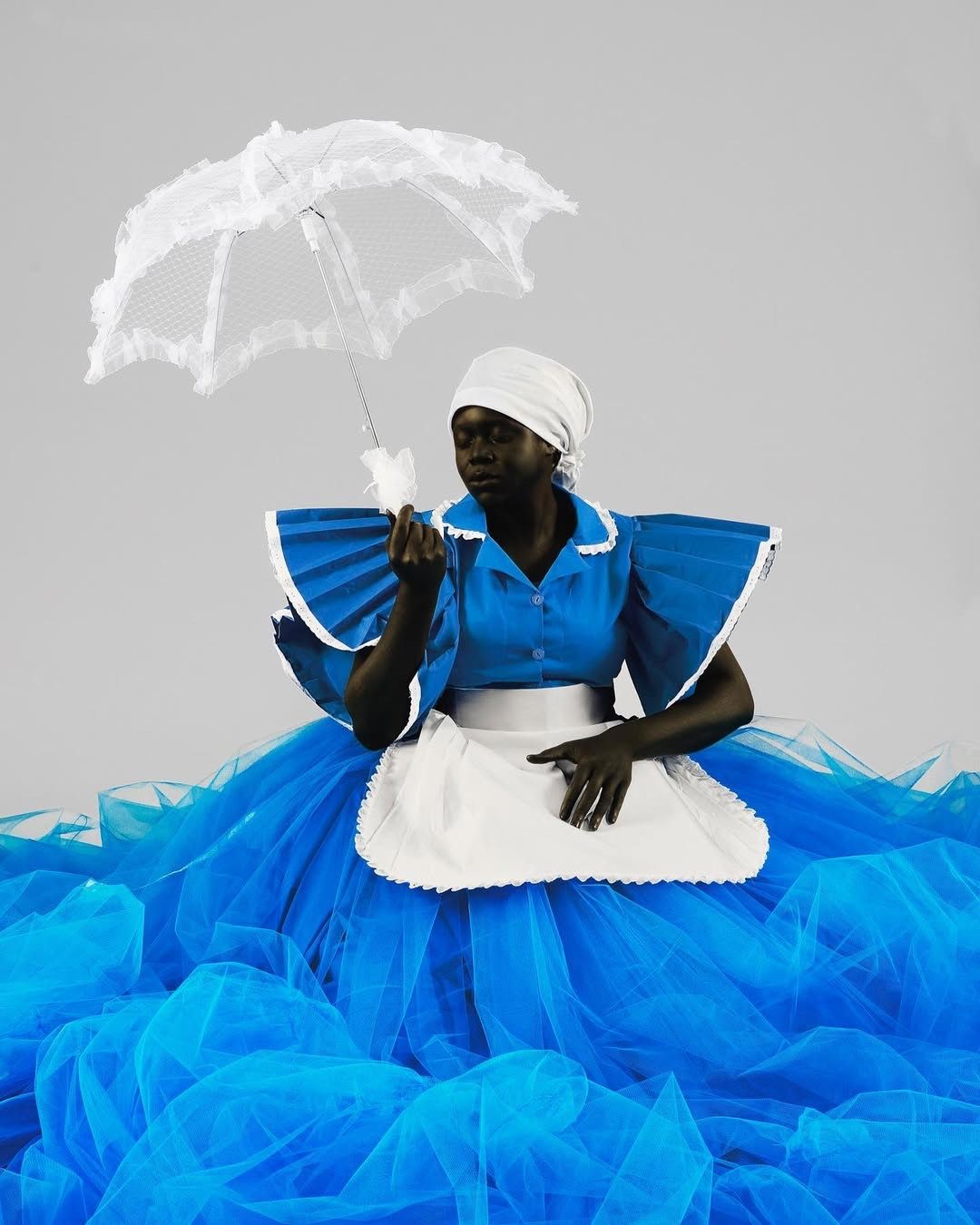
For Sibande, Sophie becomes a vessel through which personal history intertwines with national history. In her presence, the everyday uniform of servitude is transformed into something regal, theatrical, and defiant. This transformation allows Sibande to reclaim a narrative that, for so long, was written by others. Sophie embodies the silenced voices of South African women whose lives were defined by service but rarely celebrated for their resilience, creativity, and quiet acts of survival.
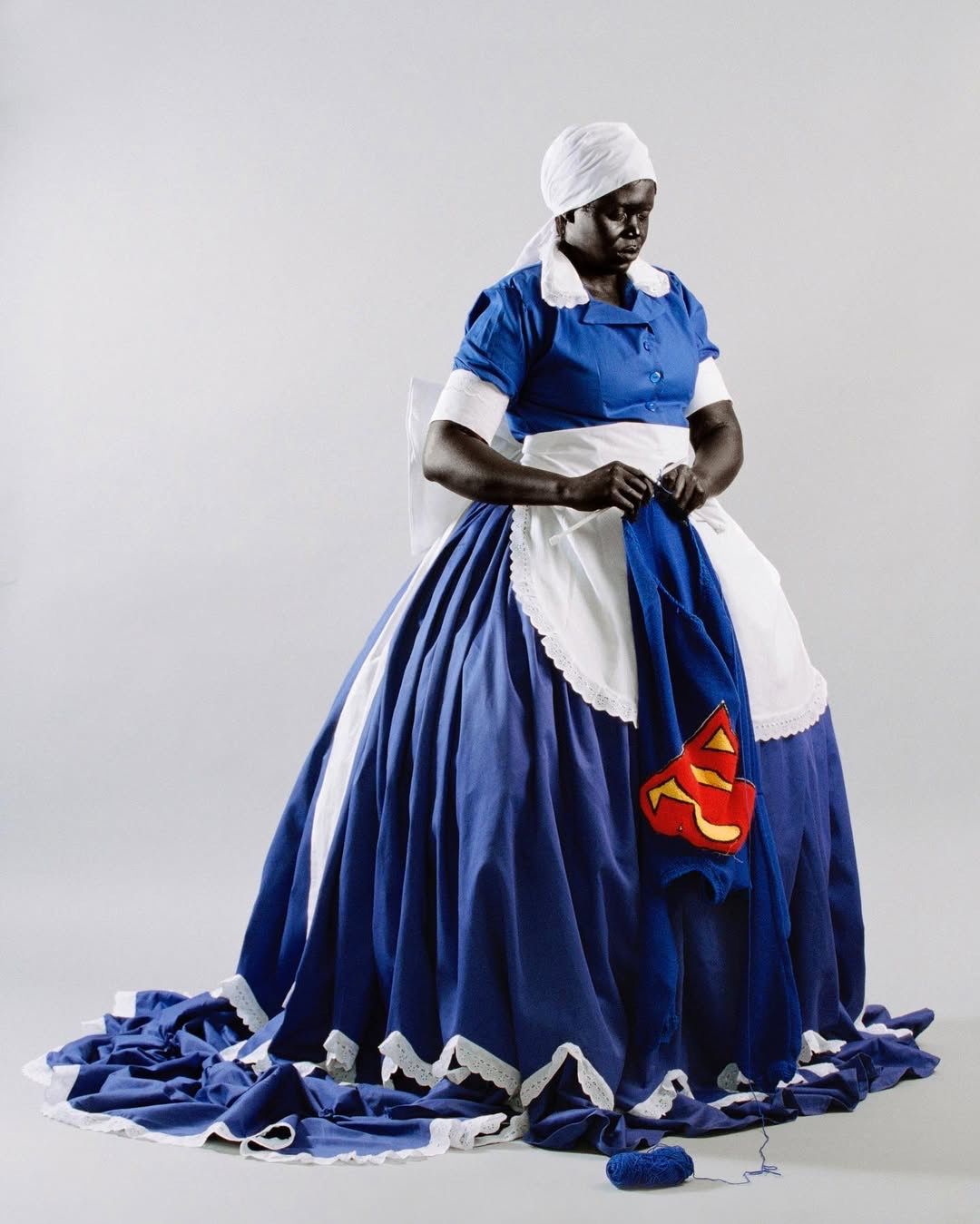
Sibande draws heavily from the world of fashion design, stitching narrative into fabric and symbolism into every seam. Her sculptures are clothed in elaborate, Victorian-inspired garments, tailored with care and precision. These garments are not mere costumes; they are statements. The voluminous skirts, high collars, and rich detailing evoke both colonial history and imagined grandeur, creating a striking contrast with the stereotypical blue domestic worker’s uniform that Sophie’s clothing references.

By reimagining these uniforms into opulent gowns, Sibande highlights the tensions between servitude and sovereignty, invisibility and presence. In this way, dress becomes a language—a visual text that challenges how South African women have been seen, represented, and remembered. Among her most celebrated works is “Long Live the Dead Queen,” a series that envelops Sophie in a royal presence, questioning who has the right to power, legacy, and visibility in history.
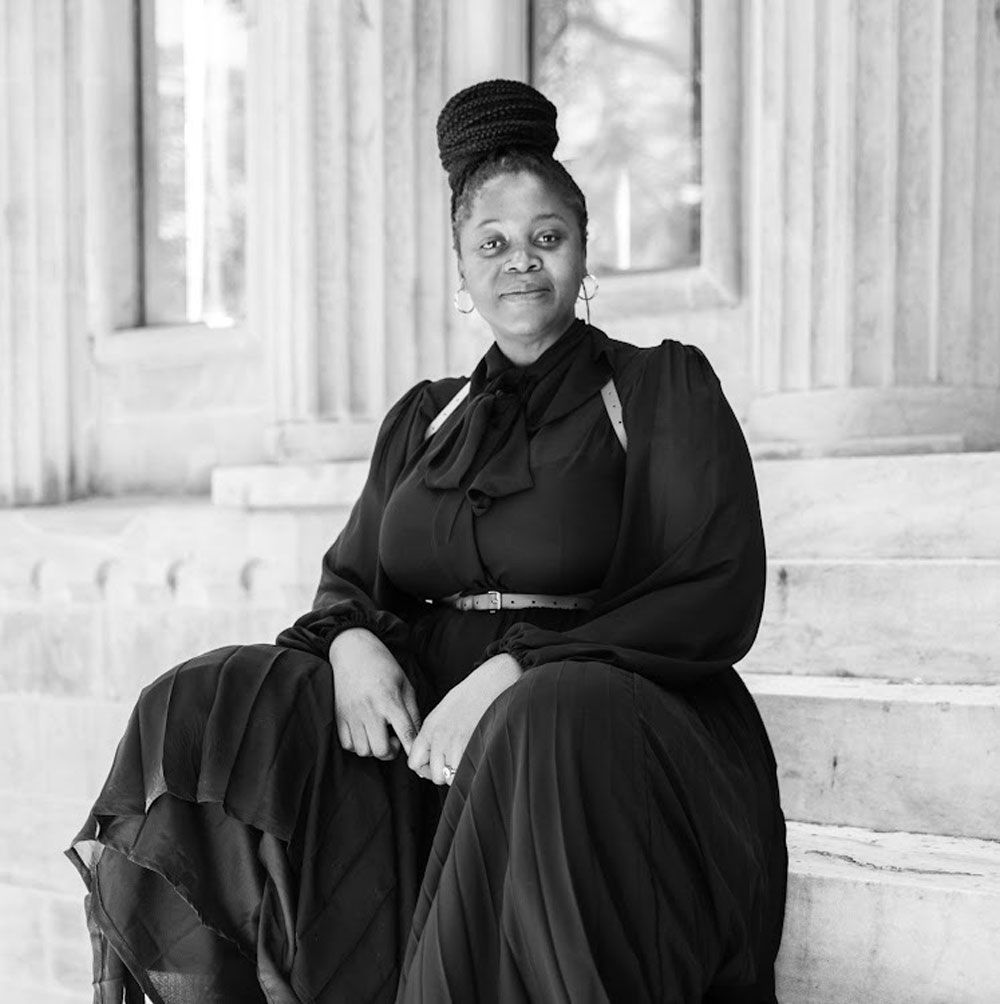
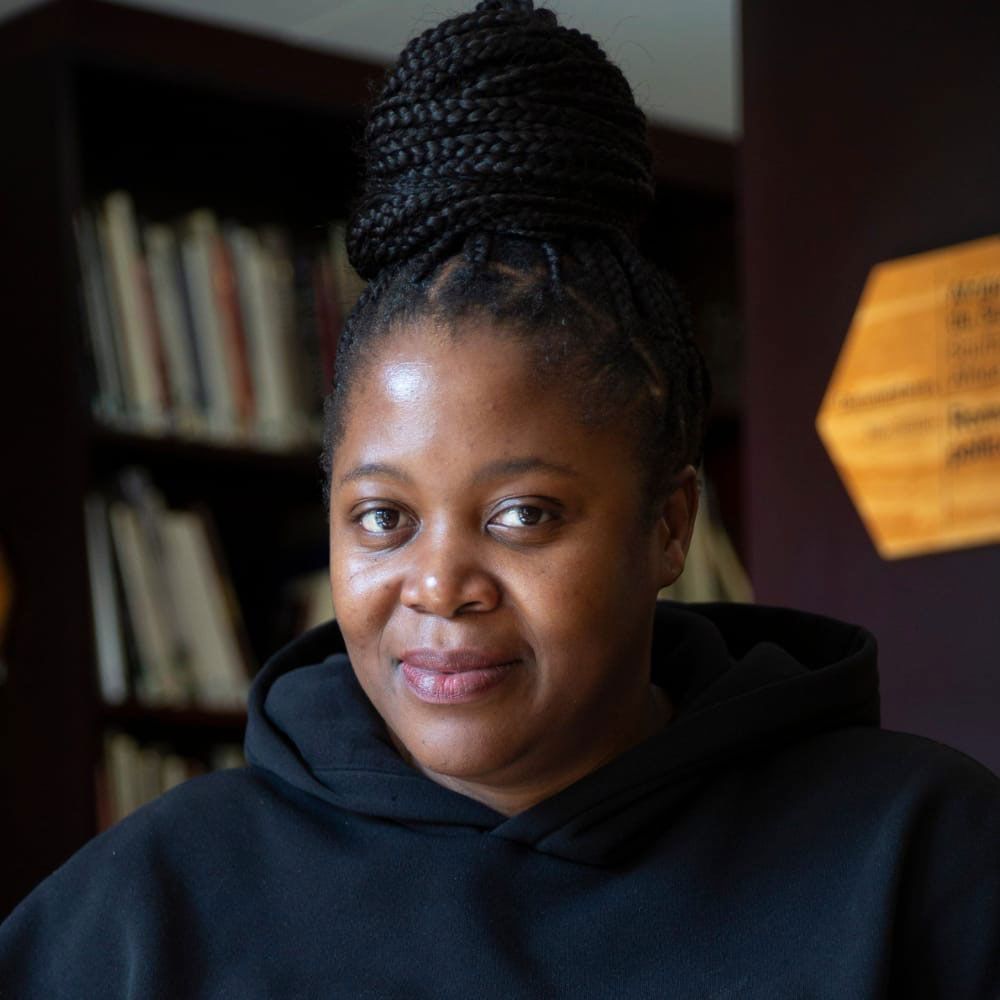
Born in Barberton, South Africa, Mary Sibande emerged as a bold voice in a space long dominated by male perspectives. Her work, while deeply personal, resonates on broader cultural and political levels. It is celebrated for its powerful storytelling and its ability to interrogate identity and memory within South Africa’s post-apartheid landscape. By centering the figure of Sophie, Sibande reclaims a lineage of women whose stories were often relegated to the margins.

Her practice has not only contributed to conversations around gender, race, and labour but has also expanded the possibilities of contemporary African art on the global stage. Exhibited both locally and internationally, Sibande’s work is recognized for its ability to blend the intimacy of personal memory with the weight of collective history.
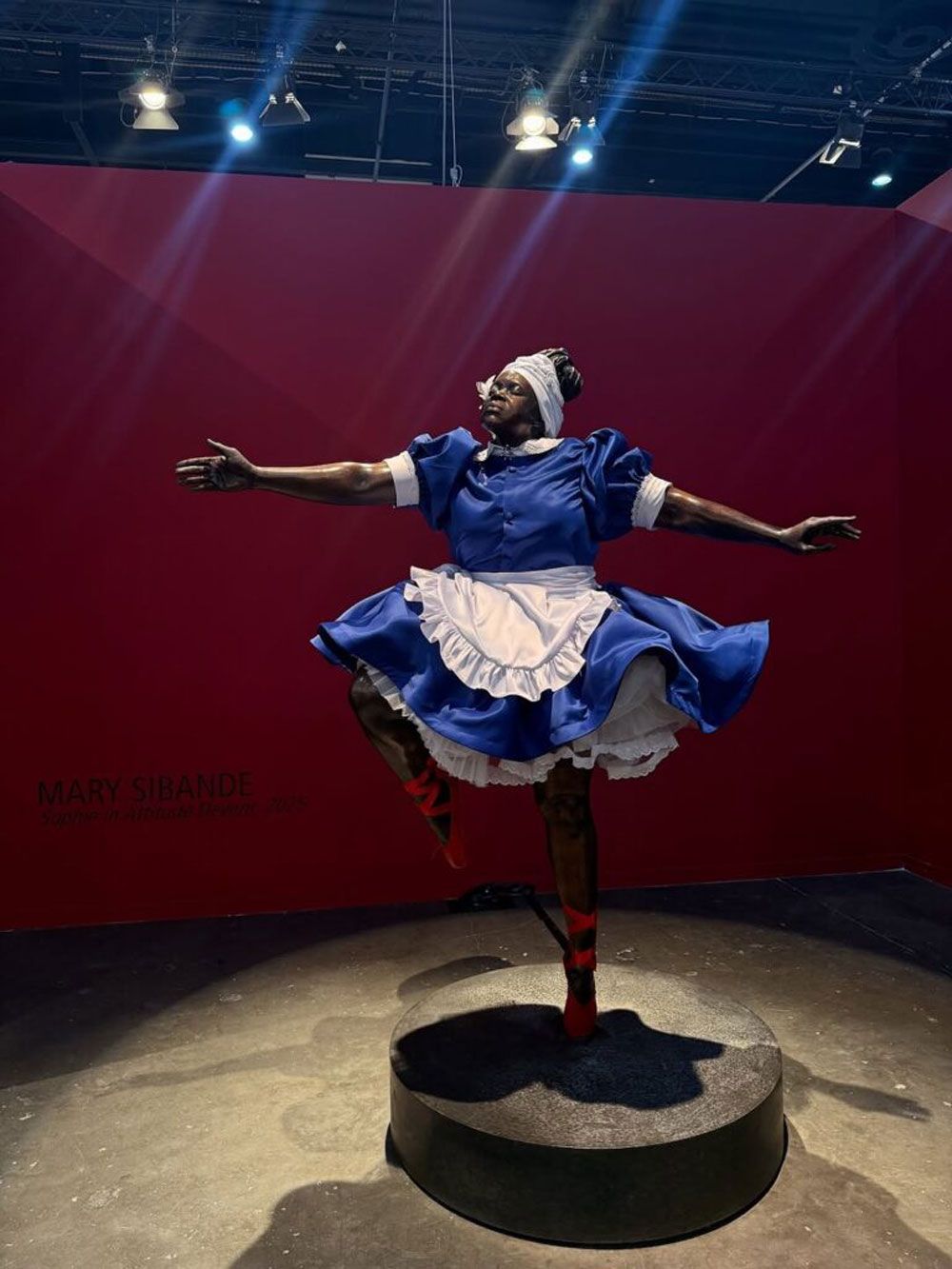
At the heart of Sibande’s practice lies an engagement with counter-historical narratives. She employs sculpture and photography as tools to disrupt official versions of history, opening spaces where alternative stories can be told. Through Sophie, Sibande reconstructs the identities of women whose labor underpinned households, yet whose humanity was often erased from the national narrative.

Her work does more than challenge—it reimagines. It asks viewers to confront the uncomfortable legacies of apartheid and Western imperialism, while at the same time envisioning new futures where these women are no longer hidden but central. Sophie’s gowns, dramatic in their scale and commanding in their presence, invite audiences into a space where the servant becomes the queen, the invisible becomes visible, and the silenced find voice.
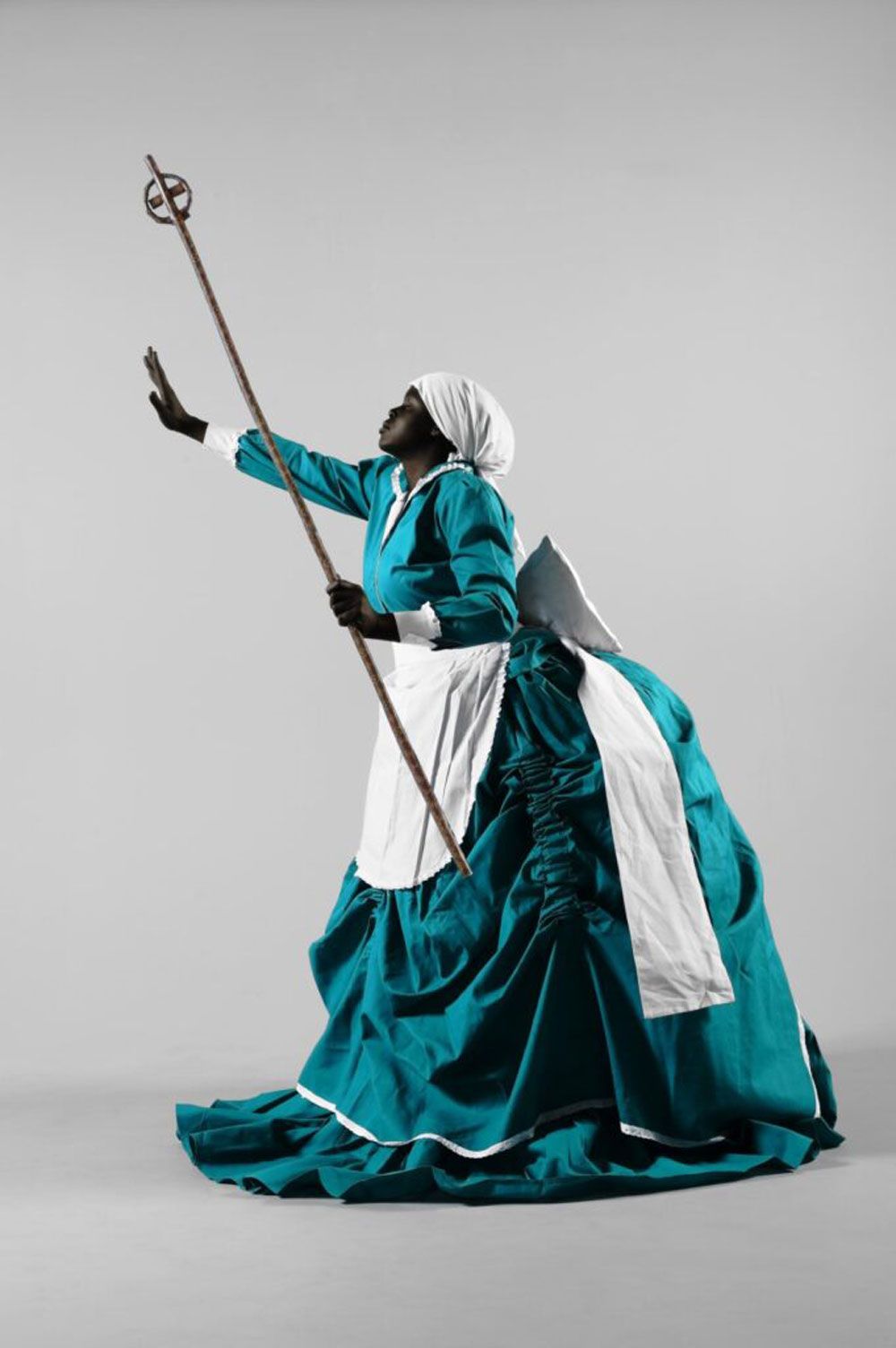
Mary Sibande’s art remains an act of reclamation and resistance, but it is also deeply hopeful. By transforming her family’s history into a visual language of power and beauty, she opens doors for new interpretations of identity, womanhood, and history in South Africa. Her work is not confined to galleries—it reverberates into broader cultural conversations, urging us to think about who gets remembered, who gets celebrated, and how narratives are constructed.
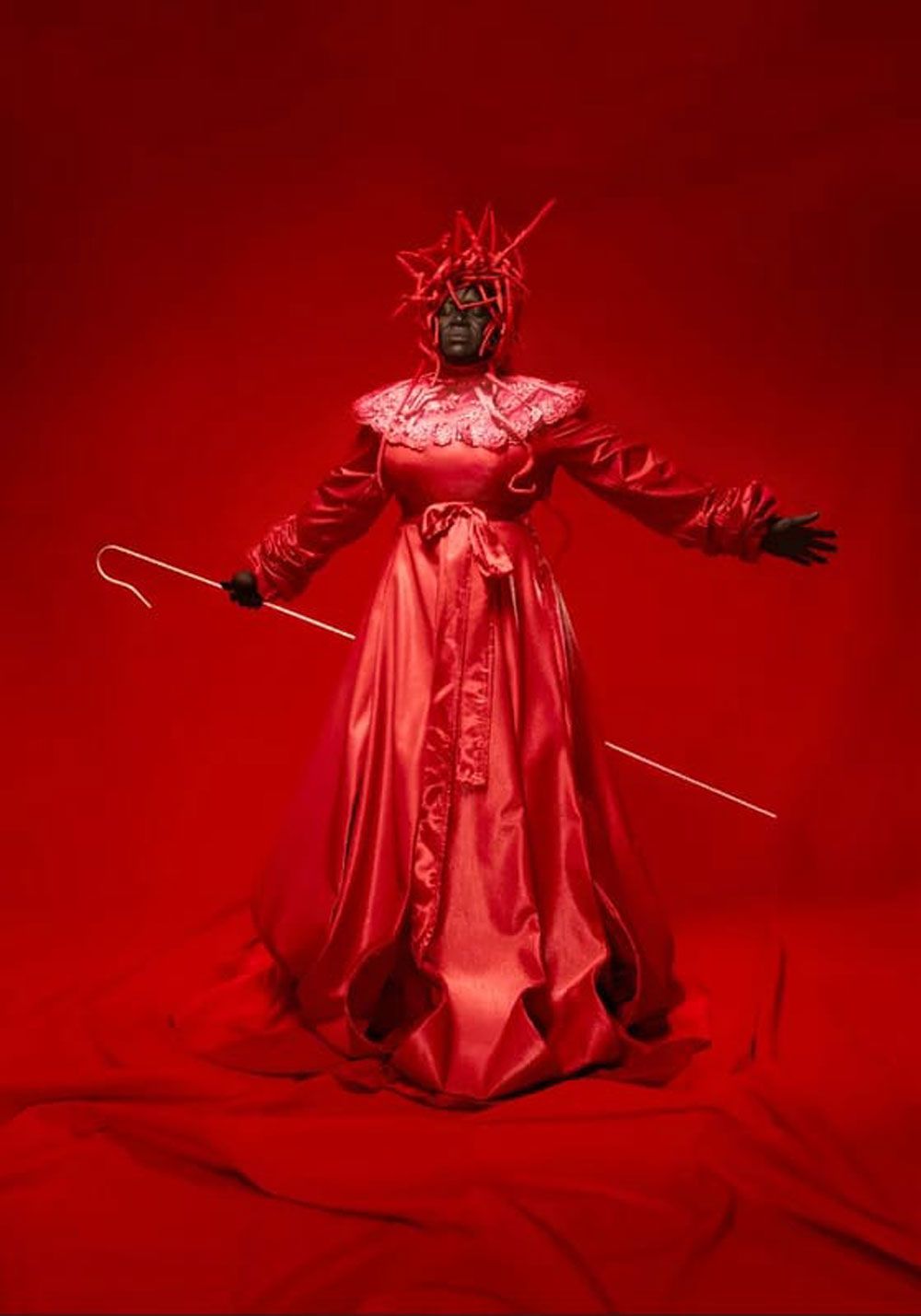
Sibande’s Sophie continues to stand tall, clothed in garments that tell stories of pain, survival, and triumph. She is at once a reflection of the past and a vision for the future, a reminder that history is never fixed but constantly reshaped by those brave enough to imagine it anew.
This article was first published here.
Re-published in herri with kind permission of the author.

Share
Print PDF
TSHEPO SIZWE PHOKOJOE
KHEHLA CHEPAPE MAKGATO
© 2025
Archive About Contact