SABELO J NDLOVU-GATSHENI
The Dynamics of Epistemological Decolonisation in the 21st Century: Towards Epistemic Freedom
Abstract
The problem of the 21st century in the knowledge domain is best rendered as the ‘epistemic line’. It cascades directly from William E B Dubois’s ‘colour line’ which haunted the 20th century and provoked epic struggles for political decolonisation. The connection between the ‘colour line’ and the ‘epistemic line’ is in the racist denial of the humanity of those who became targets of enslavement and colonisation. The denial of humanity automatically disqualified one from epistemic virtue. This conceptual study, therefore explores in an overview format, how Africa in particular and the rest of the Global South in general became victims of genocides, epistemicides, linguicides, and culturecides. It delves deeper into the perennial problems of ontological exiling of the colonised from their languages, cultures, names, and even from themselves while at the same time highlighting how the colonised refused to succumb to the ‘silences’ and fought for epistemic freedom. The article introduces such useful analytical concepts as ‘epistemic freedom’ as opposed to ‘academic freedom’; ‘provincialisation’; ‘deprovincialisation’; ‘epistemological decolonisation’; ‘intellectual extroversion’; and ‘epistemic dependence’. It ends with an outline of five-ways-forward in the African struggles for epistemic freedom predicated on (i) return to the base/locus of enunciation; (ii) shifting the geo-and bio-of knowledge/moving the centre; (iii) decolonising the normative foundation of critical theory; (iv) rethinking thinking itself; and finally (v) learning to unlearn in order to relearn.
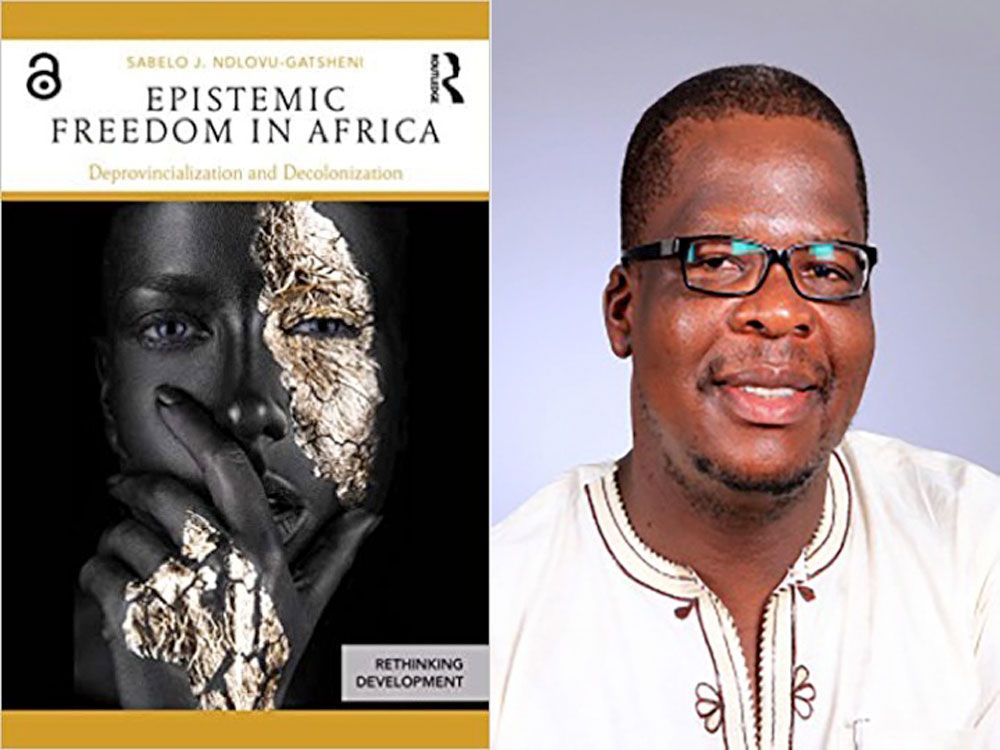
This is a revised and condensed version of a book length study entitled Epistemic Freedom in Africa: Deprovincialization and Decolonization. London and New York: Routledge, July 2018.
Introduction
If the ‘colour line’ was indeed the major problem of the 20th century as articulated by William E B Du Bois (1903), then that of the 21st century is the ‘epistemic line’. The ‘epistemic line’ cascades from the ‘colour line’ because denial of humanity automatically disqualified one from epistemic virtue. Epistemic line is sustained by what Boaventura de Sousa Santos (2007) termed ‘abyssal thinking’ — an imperial reason that reduced some human beings to a sub-human category with no know- ledge. This means that the epistemic line is simultaneously the ontological line.
Thus the triple processes of provincialising Europe, deprovincialising Africa, and epistemological decolonisation, which frame this article constitute a drive for a restorative epistemic agenda and process that simultaneously addresses ontological and epistemological issues haunting Africa. The definitive entry of descendants of the enslaved, displaced, colonised, and racialised peoples into the existing academies across the world; proclaiming loudly that they are human beings, their lives matter, and that they were born into valid and legitimate knowledge systems; enabled the resurgence of long-standing struggles for epistemic freedom. Thus epistemic freedom speaks to cognitive justice. Epistemic freedom is fundamentally about the right to think, theorise, interpret the world, develop own methodologies and write from where one is located and unencumbered by Eurocentrism. Samir Amin (2009) depicted this as one of the great ideological deformations of our time. Epistemic justice is about liberation of reason itself from coloniality.
Africa is one of those epistemic sites that experienced not only colonial genocides but also “theft of history” (see Goody 2006), epistemicides (killing of indigenous people’s knowledges) and linguicides (killing of indigenous people’s languages) (see Ngugi wa Thiong’o 2009a; Ngugi wa Thiong’o 2009b). Therefore, African people’s epistemic struggles are both old and new. They are old in the sense that they emerged at the very time of colonial encounters. They are new in the sense that they are re-emerging within a context of a deep present global systemic and epistemic crisis. What is projected here is epistemological decolonisation as a double task of ‘provincialising Europe’ and ‘deprovincialising Africa.’ The processes of ‘provincialising’ and ‘deprovincialising’ are inextricably linked as they speak to how what appears on a global scale as European thought could be claimed as human heritage rather than a thought from one geographical centre. ‘Provincialising’ is a process of “moving the centre” to borrow a concept from Ngugi wa Thiong’o (1993).
‘Provincialising Europe’ is meant to confront the problem of over- representation of European thought in knowledge, social theory and education which resulted in what the European historian John M Headly (2008) celebrated as “the Europeanization of the World”. To ‘provincialise Europe’ is fundamentally to ‘de-Europeanise’ the world. De-Europeanisation of the world entails what Kuan-Hsing Chen (2010: vii) depicted as ‘deimperialisation’ defined as movement that demanded (ex)-imperial powers to genuinely reflect on “their imperial histories and the harmful impacts those have had on the world”. This is a fundamental decolonial demand of which political decolonisation of the 20th century failed to deliver. The process of ‘de-Europeanising’ is here rendered as ‘deprovincialising Africa’ — an intellectual and academic process of centring Africa as a legitimate historical unit of analysis and epistemic site from which to interpret the world while at the same time globalising knowledge from Africa. Such a move constitutes epistemic freedom as that essential pre-requisite for political, cultural, economic and other freedoms.
Epistemic freedom is different from academic freedom. Academic freedom speaks to institutional autonomy of universities and rights to express diverse ideas including those critical of authorities and political leaders. Epistemic freedom is much broader and deeper. It speaks to cognitive justice; it draws our attention to the content of what it is that we are free to express and on whose terms. Cognitive justice as defined by Boaventura de Sousa Santos (2014) is premised on recognition of diverse ways of knowing by which human beings across the globe make sense of their existence. Epistemic freedom is about democratising ‘knowledge’ from its current rendition in the singular into its plural known as ‘knowledges’. It is also ranged against overrepresentation of Eurocentric thought in knowledge, social theory, and education. Epistemic freedom is foundational in the broader decolonisation struggle because it enables the emergence of critical decolonial consciousness.
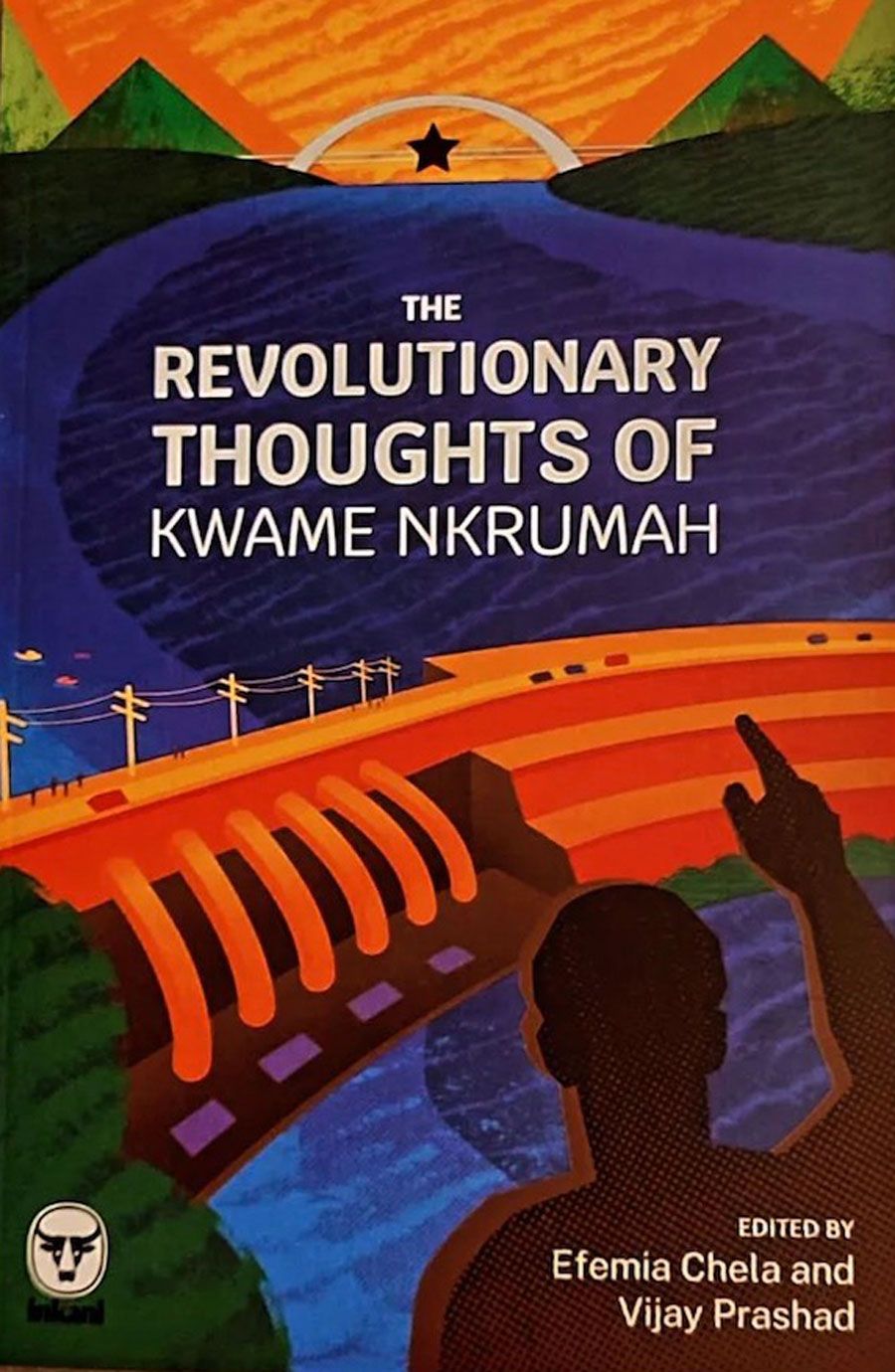
In Africa, it was Kwame Nkrumah who emphasised the foundational importance of political decolonisation to the extent of formulating the widely quoted slogan: “Seek ye political kingdom and all else will be added onto you”. However, the current struggles for epistemic freedom have provoked a need for rethinking the decolonial trajectories. While it is true that political, economic, cultural and epistemological aspects of decolonisation were and are always inextricably intertwined, we have to be cognisant of the fact that the ‘sequencing’ arose from a practical strategic logic of struggles against colonialism, which privileged attainment of political sovereignty first. In the co-constitution of political, economic, cultural and epistemological decolonisation; epistemic freedom should form the base because it deals with the fundamental issues of critical consciousness building, which are essential prerequisites for both political and economic freedom. This point was highlighted by Mveng (1983: 141): “if political sovereignty is necessary, the scientific sovereignty is perhaps more important in present-day Africa”, elaborating that “The West agrees with us today that the way to Truth passes by numerous paths, other than Aristolean Thomistic logic or Hegelian dialectics. But social and human sciences themselves must be decolonized” (see also Hountondji 1996).
But in the search for epistemic freedom, knowledge cannot be reduced to ‘philosophical’ and ‘scientific’ forms only. Recognition of various forms of knowledge and knowing is called for in decolonisation. Hountondji (2002: 104) elaborated that the task of epistemic freedom is “that of organizing in Africa an autonomous debate that will no longer be a far-flung appendix to European debates, but which will directly pit African philosophers against one another”. What is also necessary for the success of epistemic freedom according to Hountondji (2002: 139) is the “change of audience” by African researchers “to consider his or her African public as his or her prime target”. All these moves speak to the necessary processes of deprovincialising Africa and ‘provincialising Europe’. Suffice to say deprovincialising Africa addresses marginality and peripherality of Africa in the knowledge and education domain through re-centring it. Chakrabarty who introduced and popularised the concept of ‘provincialising Europe’ seemed to be concerned about how the “Restern world”[1]The concept of “the Restern world” is borrowed from Terreblanche (2014).could claim what has been known as European ideas and thought. This is indeed another important way of subverting and confronting the problem of Eurocentrism as an enabler of Western epistemic hegemony. Chakrabarty (2007 xiv) highlighted how “universalistic thought was always and already modified by particular histories”.
While this is indeed a valid intervention, there is still need to stretch the concept of ‘provincialising Europe’ into a decolonial perspective where it has to directly address the problem of ‘coloniality of knowledge’ which took the form of ‘invasion of the mental universe’ of the colonised world (see Ngugi wa Thiong’o 1986; Quijano 2007). This analysis takes us to the concept of epistemological decolonisation, which is meant to deal with problems and consequences of the ‘metaphysical empire’ such epistemicides, linguicides, cultural imperialism, and alienation. At the centre of epistemic freedom is demythologising both the idea of Europe as a teacher of the world and the idea of Africa as a pupil (Ngugi wa Thiong’o 1986). Jean and John L Comaroff (2012: 1) also highlighted a decolonial epistemological move of decentring the Global North as the centre of knowledge and re-centring the Global South.
The Comaroffs posited these key epistemological questions as part of pushing for deprovincialising the ‘Global South’ within a historical and epistemic context in which:
Western enlightenment thought has […] posited itself as the wellspring of universal learning, of Science and Philosophy […], it has regarded the non-West — variously known as the ancient, the orient, the primitive world, the third world, the underdeveloped world, the developing world, and now the global south — primarily as a place of parochial wisdom, of antiquarian traditions, of exotic ways and means (Comaroff and Comaroff 2012: 1).
It is within this terrain that the current assertions of epistemic freedom emerged but they became accentuated in the 21st century because the ‘Global North’ ‘after five centuries of ‘teaching’ the world, “lost the capacity to learn from the experience of the world” (Santos 2014: 19). This inability of the ‘Global North’ to learn from the rest of the world emerged from invented white supremacy which underpinned colonialism and imperialism (Santos 2014: 19). It has delivered a double crisis — systemic and epistemic.
It was during the heydays of colonialism that Africa was re-invented as the site of ‘darkness’ bereft of any knowledge beyond superstitions. But the reality of today is that what has existed as “Western, Eurocentric critical tradition” is exhibiting clear signs of exhaustion (Santos 2014: 19). The exhaustion manifests itself in various forms that Santos (2014: 19) summarised as: “irrelevance, inadequacy, impotence, stagnation, paralysis”. The epistemic crisis is also expressing itself in terms of what Santos (2014: 33) depicted as “loss of critical nouns”. For example, if the primary noun was ‘development’ decadent scholarship proceeds through adding adjectives such as ‘popular development’, ‘local development’, ‘post- development’, etc. If the primary noun is ‘democracy’ then the scholarship also proceeds through adding adjectives like ‘popular democracy’, ‘elite democracy’, ‘mass democracy’, etc.
At another level, such African leading philosophers as Hountondji (1997) have noted that even though today, mainly because of globalisation, there is increasing talk of a global economy of knowledge, such globalised knowledge still has an identifiable centre from which it cascades and circulates. That centre is Europe and North America. A long-standing asymmetrical division of intellectual labour sustains epistemic hegemony. In this context African scholars have largely functioned as ‘hunter-gatherers’ of raw data as well as ‘native informants’. Europe and North America have remained sites to process raw data into concepts and theories. These concepts and theories are then consumed in Africa. Africa remains a large laboratory for testing of concepts and theories.
This explains why many African students continue to make great tracks to Europe and North America for education, even though the dream of ‘one coun- try one university’ has long been realised by Africa. African scholars continue to seek affirmation and validation of their knowledge in Europe and North America. This affirmation and validation take the form of publication in the so-called international, high-impact and peer-reviewed journals. Europe and North America constitute the ‘international’ and the rest of the world is ‘local’. Consequently, international, high-impact, and peer-reviewed journals and internationally respected publishing houses and presses are those located in Europe and North America. Highly ranked universities are located in Europe and North America. Taken together, these realities confirm the existence of epistemic hegemony. The signature of epistemic hegemony is the idea of ‘knowledge’ rather than ‘knowledges’.
Discursive context for struggles for epistemic freedom
Since power and knowledge are inextricably intertwined, control of the domain of knowledge generation and knowledge cultivation remain very important for the maintenance of asymmetrical global power structures in place since the dawn of Euro-North American centric modernity. This is why Walter D Mignolo (2007: 463) articulated epistemic decolonisation as an expansive movement targeting the “geo-political location of theology, secular philosophy and scientific reason and simultaneously affirming the modes and principles of knowledge that have been denied by the rhetoric of Christianisation, civilisation, progress, development, market democracy”.
The broader discursive context of epistemic struggles is what became known as ‘modernity’. Gurminder K Bhambra (2007: 1) correctly noted that “Modernity is the dominant frame for social and political thought, not just in the West, but across the world”. She went further to explain two key assumptions that underpinned modernity “rupture and difference — a temporal rupture that distinguishes a traditional, agrarian past from the modern, industrial present; and a fun- damental difference that distinguishes Europe from the rest of the world” (Bhambra 2007: 1). Bhambra’s intellectual intervention is very important because it challenges “the continued privileging of the West as the ‘maker’ of universal history and seek to develop alternatives from which to begin to deal with the questions that arise once we reject this categorization” (Bhambra 2007: 2).
If anything called ‘universal history’ exists in the first place, it can only do so as a sum total of diverse human histories. Seeking to move beyond the trap of what Immanuel Wallerstein (1997) termed ‘anti-Eurocentric-Eurocentrism’, Bhambra contested the very idea of Europe, particularly the ‘facts’ of ‘specialness of Europe’ in human history (Bhambra 2007: 2-3). She defined Eurocentrism (that leitmotif of modernity) as nothing other than “the belief, implicit or otherwise, in the world historical significance of events believed to have developed endogenously within the cultural-geographical sphere of Europe” (Bhambra 2007: 5).
Bhambra (2007: 10) proceeded to pose an important epistemological argument that: “The historicity of the human condition, whereby we are born into pre- existing conversations regarding our pasts and our presents, necessarily shapes the positions from where we think and argue”. To Bhambra, the colonial encounter, which was far from being “an encounter and more a conquest, domination, and enslavement of peoples and forms of life”, “is constitutive of the very disciplines that express or seek to understand modernity” (Bhambra 2007: 16). She proposed that: “What is required is a more thoroughgoing analysis of the underlying assumptions upon which discourses and practices come to be premised” (Bhambra 2007: 21).
Building on the work of Sanjay Subrahmanyam (1997, 2005), Bhambra concluded that the escape route from the trap of a Euro-modernity is to project ‘connected histories’ as a departure point because such an approach “allows the deconstruction of dominant narratives at the same time as they are open to different perspectives and seek to reconcile them systematically both in terms of reconstruction of theoretical categories and in the incorporation of new data and evidence” (Bhambra 2007: 33). Cascading from this analysis, one key aspect of decolonial epistemic struggles of the 21st century is to correct the distorted human relationships that emerged from the social classification of human species and their racial hierarchisation. This ‘re-invention’ of the human by other humans has had long-term implications for knowledge, education, and social theory.
Also, what emerged clearly from this engagement with the ubiquitous modernity is that to gain a deeper understanding of the essence of the struggles for epistemic freedom, it is important to appreciate the entanglement of knowledge in imperial/colonial economy and politics. A clear understanding of the entwinement of knowledge in both economic and epistemic extraversion is very important. The work of Samir Amin (1968) introduced the concept of ‘extraversion’ from a political economy perspective. Extraversion is to turn a previously functioning, stable and alive economy upside down so as to lose its self-sustaining stamina through destabilisation of its internal coherence (Amin 1974). It goes further to entail subordinating such an economy to the whims and needs of global capital and minority bourgeois ruling classes (Amin 1973). The result is what became known as ‘underdevelopment’ which arose during the forcible integration of African subsistence economies into the global capitalist market through such devices as enslavement and colonisation (Amin 1990). Hountondji (1996) extended the concept of economic extraversion and applied it to the domain of knowledge and coined ‘intellectual extraversion’.
Just as economic extraversion resulted in economic dependence, intellectual extraversion resulted in scientific dependence. Both situations provoked struggles for ‘delinking’. Just as economic dependence produced a situation of ‘growth without development’, scientific dependence produced knowledge without invention. Intellectual extraversion, is indeed an “analysis of the scientific and technological relations of production on an international scale; and a critique of the actual functioning of research in the periphery as it relates to the world of knowledge controlled and managed by the rich countries of the North” (Hountondji 2002: 161).
Trajectories of struggles for epistemic freedom
Having framed the context of the struggles for epistemic freedom, it is important to understand the trajectories of this struggle since it has a long history. The history of knowledge generation and knowledge cultivation in Africa, began with what Falola termed the ‘traditional intellectuals/traditional elites’ that comprised priests, kings, chiefs, magicians, praise poets, and merchants of the pre-colonial era (Falola 2001: 56). These people produced mainly oral knowledge that drove pre- colonial African societies. The advent of colonialism became very brutal to these African knowers. Kings were attacked, defeated, captured and decapitated. The decapitated heads of African kings were taken and transported overseas to decorate European Museums. Some were buried with their heads-up-side-down as a symbolic act of signifying the death of the African world. Yet others were exiled to very cold islands as part of dismembering them from their societies.
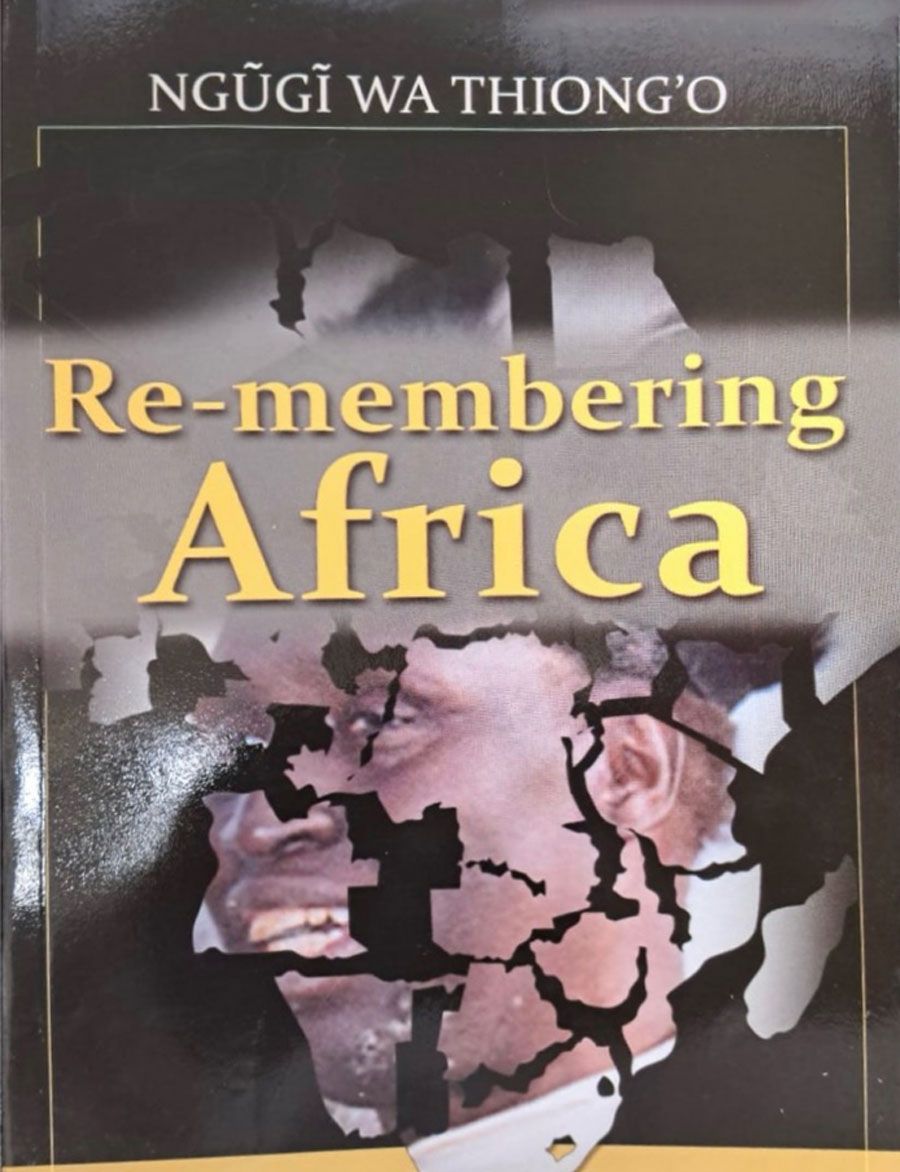
Ngugi wa Thiong’o (2009a) argued convincingly that ‘dismemberment’ was part of colonial technology of planting European memory. He gave the example of Waiyaki wa Hinga who actively led his Gikuyu people against British colonialism. He was eventually captured and removed from the centre of his people only to be ‘buried alive’ at “Kibwezi, head facing the bowels of the earth — in opposition to the Gikuyu burial rites’ requirements that the body face Mount Kenya, the dwelling place of the Supreme Deity” (Ngugi wa Thiong’o 2009a: 3). Informed by Cartesian philosophy, European colonialists targeted heads of African kings because to them the heads carried knowledge and memory. They had to be cut from the bodies as part of the broader process of dismemberment. The knowledgeable African women were simply discredited as witches. Remember that in Indo-Europe itself knowledgeable women had been burnt alive and accused of being witches during a period that Ramon Grosfoguel has correctly termed “the four genocides/epistemicides of the long 16th century” (see Grosfoguel 2013: 73-90).
Those who survived death together with magicians were discredited as demon possessed and subjected to forcible and violent conversion to Christianity. Conversion was itself a form of epistemicide. Achille Mbembe (Hi Andrea, please would you link to the Achille Mbembe page in this issue’s Off The Record) (2015: 213-214) distilled five features of Christianity as a monotheistic system with God at its apex symbolising “fantasm of the One”. The first feature is primacy (god who signified only himself and is the genesis). The second is totalisation (condensation of sovereignty that is against plurality of gods). The third is monopoly (suppression of other forms of worship/incompatibility with worship of other gods). The fourth is omnipotence (divinity and its supreme essentiality). The fifth is the ultimate (alpha and omega) (see Mbembe 2015: 214-215).
Fundamentally, according to Mbembe (2015: 231) “conversion always pre-supposes an entry into the time of the other”. Conversion is a mechanism of epistemicide. On the graveyard of African indigenous knowledges, colonialism planted European memory. The church and the school played a major role in the planting of European memory including imposition of colonial languages. What is often ignored in the analysis of the impact of missionary education on Africa is that by the time the colonialists were conquering and colonising Africa in the 19th century, Europe, where they came from, was already distancing itself from theological thought. It had been undergoing intensive secularisation since the dawn of Enlightenment. For them to then come to Africa and introduce ‘education for salvation’ was part of the broader colonial process of desocialising African people out of their cultural and historical context into zombies of colonialism.
Ngugi wa Thiong’o (1986: 16) emphasised that “the most important area of domination was the mental universe of the colonized, the control through cul- ture, of how people perceived themselves and their relationship to the world”. The missionary church and the colonial school were meant to establish effective mental control. Ali A Mazrui (1978) documented how the establishment of mission-boarding schools was meant to separate African children from the influ- ence of their parents and the home environment and how this process eventually influenced a new class formation in Africa. The French colonisers became famous for their ‘cultural arrogance’ whereas the British became well-known for their ‘racial arrogance’ and all these ‘arrogances’ combined to degrade the very humanity and cultures of Africa (Mazrui 1978: 11).
Christianisation constituted a form of education and an epistemicide simultaneously. It is not surprising that the earliest group of educated Africans consisted of Christianised ex-slaves. At the time of abolition of slavery some of these educated Christianised ex-slaves were shipped back to Africa and founded Sierra Leone and Liberia as independent republics within a colonised continent. These early Africans had imbibed Western thought and experienced Western lifestyles from the traumatic experiences of bondage, colonial schools, mission schools, and churches (July 1968). Their activism and struggles were limited to what Mazrui (1978: 12) termed ‘rebellious emulation’. They had not yet developed decolonial or anti-colonial consciousness necessary for tearing away from colonialism and Christian missionary thought. Mazrui (1978: 16) correctly noted that the influence of Western education became that of ‘psychological deruralisation’ to the extent that the educated African “became in a fundamental sense a misfit in his own village”. Dramatising the negative influence of colonial education on Africans, Ngugi wa Thiong’o (1986: 9) argued that the:
Berlin conference of 1884 was effected through the sword and the bullet. But the night of the sword and the bullet was followed by the morning of the chalk and the blackboard. The physical violence of the battlefield was followed by the psychological violence of the classroom.
It is not surprising that the early African educated elite which comprised of evangelists, bishops, reverends, nurses, and teachers were deeply seduced by the salvationist and civilisationist promises of colonial education and that being fluent in colonial languages such as French and English was part of the acquisition of knowledge itself. Mazrui (1978) provided a catalogue of the benefits of gaining colonial education within a fast changing colonial environment where anything African had to die unless it was of benefit to the project of colonialism.
The seeds of scientific and intellectual dependency are rooted in the seductive nature of colonial education as well as the epistemicides, linguicides and alienations it committed. As correctly put by Ngugi wa Thiong’o (1986: 11):
“The language of my education was no longer the language of my culture”.
The long- term consequence of colonial education has been the distortion of African consciousness as colonial education was deliberately meant to “obscure reality and force a certain perception of reality” consonant with the colonial project (Ngugi wa Thiong’o 2012: 30; see also Fanon 1968: 210). The key consequence of this process is alienation taking the form of mental dislocation of the colonised.
Emerging from this alienating terrain, modern African intellectualism has never been a simple one of enjoyment and a mere professional vocation. The activist aspect is embedded through and through. It has taken the formats of empiricism, ideological interventions, and activism simultaneously. What is disturbing, though, is that despite the fact that African intellectuals have produced numerous books and journal articles speaking directly on pertinent issues of epistemic freedom and development, these works have not succeeded in replacing those of Western theorists such as Michael Foucault, Antonio Gramsci, Max Weber and Karl Marx, even within African academies. African intellectual productions have not yet assumed dominance in the field of global knowledge in the way that Marx, Derrida, Foucault are doing currently.
The African academy has remained a site of inculcation of Western knowledge, values, ways of knowing and world views that are often taught as universal values and scientific knowledge.
The African continent is still stuck with the problem of “the place that Western thought occupies in non-Western discursive formations” (Diawara 1990: 56).
Thandika Mkandawire (1995: 2) sought to understand and explain the ideological orientation of African intellectuals and logic behind their emphasis on different issues affecting Africa and he developed the notion of ‘three generations’ of African intellectuals. The first generation of African intellectuals were the first to occupy academic positions in the universities at the time of political independence. Many of them became ardent supporters of African nationalism and un- critical celebrators of political independence. The second generation of African intellectuals comprised African scholars that were produced during the hey-day of the Marxist and neo-Marxist schools of thought, and some of them were products of African universities themselves.
What was distinctive about this group was their faithful adherence to Marxist and political economic thought. They supported African nationalism and were anti-imperialist. They were at the same time critical of the neo-colonial direction that the postcolonial state was taking. The third generation of scholars became the current young academics, most of whom were produced by African universities as well as non-African institutions and have imbibed neo-liberal, postcolonial and postmodernist thought. Most of them became critical of African nationalism, particularly its antipathy toward democracy and its disdain for human rights. But the categorisation of African intellectuals into three generations is not cast in stone, as ideological persuasions and intellectual traditions ‘criss-crossed’ the generations easily and tendentiously.
Even though African people have continued to be major consumers of ideas generated in the West and tested on African soil and on African minds, some African scholars began to engage and critique Western epistemology from an Afrocentric perspective. For instance, Archie Mafeje emphasised that “If we are adequately Afrocentric the international implications will not be lost on others” (Mafeje 2000: 66). Claude Ake added his voice to the debate on the de- colonisation of knowledge when he posited that “It is becoming increasingly clear that we cannot overcome our underdevelopment and dependence unless we try to understand the imperialist character of Western social science and to exorcise the attitudes of mind which it inculcates” (Ake 1979: 12).
At the centre of the African search for self-knowing are six core concerns and demands: complete African self-rule, self-regeneration, self-understanding, self- definition, self-knowing, and self-articulation of African issues after centuries of domination and silencing. While Achille Mbembe (2002) tried to caricature these legitimate African concerns as nativism and Afro-radicalism, these aspirations form a core part of the quest for freedom, development and identity, in a world still dominated by Western particularistic world views that have been universalised and globalised.
Black scholars from the Diaspora like Molefi Asante (1988) have questioned and critiqued Eurocentrism even more consistently than those African intellectuals based on the continent. Asante is well-known for his consistent and systematic push for ‘Afrocentricity’ not only as a direct challenge to Eurocentricity but as another epistemology that takes Africa as its departure point. Afrocentricity is “the belief in the centrality of Africans in post-modern history” and a “critical perspective placing African ideals at the centre of any analysis that involves African culture or behaviour” (Asante 1987).
Within the continent such scholars as Dani W Nabudere (2011) have also been very vocal on issues of epistemological decolonisation. He boldly and direct- ly confronted the limits of Eurocentrism and traced the historiography of African epistemology from the ‘Cradle of Humanity’, which is Africa. Nabudere em- phasised that all sources of knowledge were valid within their historical, cultural and social contexts. He used the term ‘Afrikology’ to refer to an Africa-focused epistemology that fully took into account African history, culture, and context.

But why is it difficult to break from the coloniser’s model of the world and the epistemology it produced? Ashis Nandy (1983) provided part of the answer. His concept of an ‘intimate enemy’ speaks to colonialism as that enemy that invades and resides in one’s heart, mind and body. Intimate enemies consistently survive through processes of naturalising and routinising themselves as part of camouflaging so as to claim non-existence. Nandy vividly described how colonialism existed and operated as an ‘intimate enemy’ that worked on the psychology of both colonised and colonising societies. The concept of ‘intimate enemy’ accurately captured the reality of colonialism’s “colonization of the minds in addition to bodies and it releases forces within the colonized societies to alter their cultural priorities once for all” resulting in internalisation of Eurocentrism (“The West is now everywhere, within the West and outside; in structures and minds”) (Nandy 1983: xi).
Nandy also highlighted how deceitful colonialism is as an ‘intimate enemy’. It presents itself as bringing about civilisation, progress and development as it subverts and destroys the order it found. Thus the colonialism that is invoked in Nandy (1983: xi)’s work is one “which survives the demise of empires”. As a strategy of defeating colonialism, Nandy (1983: 3) posits that: “Perhaps that which begins in the minds of men must also end in the minds of men”. This is because “colonialism is first of all a matter of consciousness and needs to be defeated ultimately in the minds of men” (Nandy 1983: 63). This is why this book is focused on epistemic freedom which speaks directly to both technologies of dismemberment and the struggles for what Nandy (1983) termed “recovery of self under colonialism”. Nandy’s analysis resonates with that of Ngugi wa Thiong’o which emphasises the process of decolonisation of the mind as the first article of freedom and documents various African and Africa Diasporic initiatives aimed at “recovery of self under colonialism” in order to “re-member” Africa after centuries of “dismemberment” (Ngugi wa Thiong’o 2009a, 2009b).

Historicism as a form of silence and dismemberment
A struggle for epistemic freedom is ranged against silences as an imperial/colonial technology of dismemberment. The first silence cascaded from the very Euro- centric idea of history and the philosophy of history. The epistemic problem that emerged out of this development was termed ‘historicism’ by Chakrabarty (2007). The problem defied Marxist critique of bourgeois society and capital, and was in fact ‘historicism’ that was reproduced by Marx. The problem of historicism is fundamentally that of Cartesian and Enlightenment reason as they spoke to what is knowledge and transcendence over the so-called irrationalities and superstitions. Here was born the Eurocentric idea of history “as the rational-secular discipline” (Chakrabarty 2007: 237). At the centre of this idea of history was the ‘spirit of science’, ‘rational outlook’, ‘free enquiry’ and faith in ‘progress’ (Chakrabarty 2007: 237).
Here were born ideas of ‘rapture’ and ‘difference’ as constitutive technologies of colonisation of time. Here was also born the monolingual language of social science that obliterated the realities of plural ways of being human and knowing. At the centre of ‘historicism’ is the story of Europe as ‘macrohistory’ of the human. Furthermore, here was born ‘irrational’ rationality within history as a knowledge system. This ‘irrationality’ manifested itself through overrepresentation of Europe if not outright dominance in historical knowledge. The long-standing consequence of historicism was to subordinate and subsume all human histories within the Western episteme and to reduce all diverse histories into mere episodes within an assumed “universal transcendental history with a capital ‘H’”. This is why Allen (2016: 25), building on the work of Latin American decolonial theorists called “for the specific project of rethinking the relationship between history and normativity that is necessary if critical theory is to be decolonized”.
Historicism as an epistemicide affected the rest of the colonised part of the world. The Caribbean scholar Édouard Glissant has systematically critiqued the Eurocentric idea of history and philosophy of history from the vantage point of the Caribbean black societies. Because of the impact of the slave trade and the experience of the ‘middle passage’, the Caribbean suffers terribly from what Glissant (1999: 63) has termed ‘nonhistory’. Like all other victims of the epistemicide known as ‘historicism’, Glissant (1999) consistently worked to undermine and unmask the notion of a coherent, progressive, and linear history (“from the shame of Fallenness to the glory of cosmic Perfection”) (see Dash 1999: xxviii). The Caribbean just like Africa fell on the margins of such a conception of history. To Glissant the totalising imperative of “a transcendental History (with a capital H)” resulted in the reproduction of a Hegelian “division of History into ahistory, pre- history and History” (see Dash 1999: xxix). This Eurocentric rendition of history into a singular ‘macrohistory’ had had a deadly effect on Africa, Latin America, Caribbean, and Asia.
With specific reference to Africa, it was actually Terence Osborne Ranger, the British liberal Africanist historian who posed the question of how ‘African’ is ‘African history’ as he reflected on methodology and methods as well as thematic concerns cascading from Western historiography and their sufficiency as tools for researching and narrating African history (see Ranger 1968, Atieno-Odhiambo 2002). He wrote posited that there was need “to examine whether African history was sufficiently Africa; whether it had developed the methods and models appro priate to its needs or had depended upon making use of methods and models developed elsewhere; whether its main themes of discourse had arisen out of the dynamics of African development or had been imposed because of their overriding significance in the historiography of other continents” (Ranger 1968: x). The debate was picked up by the Kenyan historian Allan Ogot in the 1970s and he called for a development of “philosophy of history of Africa” (Ogot 1978: 33).
The challenge of silences in African history in particular and African Studies in general has also been at the centre of the work of the Congolese historian Jacques Depelchin (2005) highlighted what he described as “the Herculean task of producing historical knowledges for a group of people who were seen by the hegemonic other as lacking history/sense of history”. Understood from the perspective of silences, the epistemic struggle is a direct confrontation with the Columbian-Hegelian-Conradian-Hugh Trevor Ropian imperial/colonial discourse, not of simple silencing but exclusion.
To deeply appreciate the importance of the struggle for epistemic freedom, it is important to understand the discursive terrain of politics of knowledge particularly such key elements as “subject-positions, institutional practices, systems of exclusion, epistemes, and so forth” (Allen 2016: 213). Political decolonisation of the 20th century did not delve deeper into the complexities of the knowledge terrain, hence it failed to deliver epistemological decolonisation (Depelchin 2005: xii). For those people who endured enslavement, colonialism, capitalist exploitation, cultural imperialism, forced religious conversion, gender and race discrimina tion as well as political domination and repression; silences constitute facts of their lives (Depelchin 2005). Depelchin (2005: 6)’s analysis confronted epistemic violence in its various guises and manifestations including those embedded in research techniques and methodologies as well as in “syndromes of discovery and abolition”.
Broadly speaking, according to Depelchin (2005: 12), African history has undergone two forms of silencing: ‘denial’ of existence right up to the 1960s and ‘recognition’ since then. Depelchin posited that: “In reality, however, it was the former which continued to dominate, but under a different form. The apparent paradigmatic shift — from denial to recognition — can be revealed as false by showing that the affirmation was paralleled by a systematic silencing of questions, themes and/or conceptualizations. So, in reality, what took place was a redefinition or reformulation of denial” (Depelchin 2005: 12). Depelchin also confronted the dominant narrative of ‘discovery’ that dominated in the story of the unfolding of modernity, imperialism and colonialism. He argued that “Nothing is ‘discovered’ until such ‘discovery’ can become part of the arsenal of the reproduction of the superiority of the discoverers” (Depelchin 2005: 13). The theme of silencing the past also pre-occupies Michael-Rolph Trouillot who distilled and delineated four major moments of silencing of history in general:
Silences enter the process of historical production at four crucial moments: the moment of fact creation (the making of sources); the moment of fact assembly (the making of archives); the moment of fact retrieval (the making of narratives); and the moment of retrospective significance (the making of history in the final instance) (Trouillot 1995: 26).
Trouillot underscored these four moments of silencing the past as he grappled with the silenced significance of Haitian Revolution of 1791-1804 that is always overshadowed by the histories of French and American Revolutions. The importance of the Haitian Revolution for Africa in particular and humanity in general is that it confronted racism, slavery and colonialism very early in the annals of modern global history. Fundamentally, the Haitian Revolution was a heroic struggle organised and prosecuted by black people whose humanity was denied and who were reduced to commodities and enslaved, and inferiorised as slaves. To Trouillot (1995: 82) the Haitian Revolution was subjected to a major silence known as the ‘unthinkable’ (“that for which one has no adequate instruments to conceptualize”).
Haitian Revolution signified a radical paradigmatic shift in the very conceptions of the human and in other ways. It directly challenged the colonial discourse of doubting the humanity of those people they reduced to slaves and that encouraged slave-owners to propagate a false view of obedient ‘Negros’ who do not think and for whom revolt was impossible. The reality of the Haitian Revolution spearheaded by the enslaved did not coincide with deeply held Eurocentric colonial and racist discourses of an enslaved people who could not imagine free- dom. The Haitian revolution broke the philosophical, epistemological and ontological Western ethno-beliefs.
Trouillot (1995: 88) correctly designated the Haitian Revolution as that moment, which is located “at the limits of the thinkable”. Not only the slave- owners but even the philosophers of Europe could not think of black enslaved people organising themselves and establishing solidarity that was capable of producing a coordinated and successful revolution. Hence, attempts were made to blame outsiders/non-existent agitators as the brains behind the revolution. Even the victory of the black slave is trivialised through emphasis on how the diseases, not the actions of the black enslaved people, made the revolution successful (“The Haitian Revolution appears obliquely as part of medical history”) (Trouillot 1995: 99). Black racial pride and black agency was unthinkable.
The Haitian Revolution is relevant for any history of black people not only because it led to the collapse of a system of slave trade but because it produced the first independent black-ruled republic of Haiti. It challenged most of what Europeans had told themselves and believed in. Trouillot (1995: 107) concluded that: “The silencing of the Haitian Revolution is only a chapter within a narrative of global domination”. The major lesson is that the silencing of the Haitian Revolution was reproduced on a world-scale and it was sustained by genocides, epistemicides, linguicides as well as outright “theft of history” to use Jack Goody’s (2006) terminology.
Silences also arise from what Amy Allen (2016) has termed the “normative foundation of critical theory”. By focusing on how the Frankfurt School, despite its claims to be critical, was silent on racism, slavery, imperialism and colonialism, Allen set out to explain the sources of this ‘quietude’. In fact, Allen is building on the work of Edward E Said who 1993 criticised the Frankfurt School in these piercing words:
Frankfurt School critical theory, despite its seminal insights into the relationships between domination, modern society, and the opportunities for redemption through art as critique, is stunningly silent on racist theory, anti-imperialist resistance, and oppositional practice in the empire (Said 1993: 278).
Said posited that the ‘silence’ was never an oversight but ‘a motivated silence’ (Allen 2016: 1). It was a silence that emerged from ideas of ‘blithe universalism’, which had normalised notions of racial inferiority of other people and routinised subordination of other cultures to those of Europe. Allen (2016: 2) has noticed that despite Said’s critique of 1993, the Frankfurt School “remains all too silent on the problem of imperialism”. In search of an explanation for this silence, Allen (2016) ventured into the “normative foundations of critical theory” as practiced by the members of the Frankfurt School. Her discovery has been that there are core Eurocentric normative beliefs on social evolution, historical progress, development and emancipation, which form the base of critical theory (Allen 2016: 3). The limits of the epistemic limits of the Frankfurt School and the blindness of its critical theory to those key concerns affecting the ‘non-Western’ world, haunts the entire Western thought and make the theorists fail to hear and comprehend the core aspects of struggles for epistemic freedom cascading from the Global South.
Rethinking thinking
The epistemic and systemic crisis that is haunting the world today, calls for re- thinking thinking itself. Cathrine Odora Hoppers and Howard Richards (2012: 8) articulated the essence of ‘rethinking thinking’ this way:
The casting of light at last onto subjugated peoples, knowledges, histories and ways of living unsettles the toxic pond and transforms passive analysis into a generative force that valorises and recreates life for those previously museumised. […]. it is a process of engaging with colonialism in a manner that produces a program for its dislocation. This dislocation is made possible not only by permitting subalterns direct space for engaging with structures and manifestations of colonialism, but also by inserting into discourse arena totally different meanings and registers from other traditions. […]. The task for rethinking thinking is therefore precisely this: to recognize the cultural asphyxiation of those numerous ‘others’ that has been the norm, and work to bring other categories of self definition, of dreaming, of acting, of loving, of living into the commons as matter of universal concern.
Hoppers and Richards delved deeper into the constitutive make-up of such disciplines as law, economics, education, and natural science in their endeavour to rethink them. They emphasised the need to change the rules that constitute the disciplines of law, education, science and economics as part of setting afoot a new thinking in the knowledge domain. Rethinking thinking, in their analysis entailed rectification of the problem of ‘epistemological disenfranchisement’ (Hoppers and Richards 2012: 84). This is necessary because knowledge constitutes the ‘software’ of coloniality.
Rethinking thinking is fundamentally a decolonial move that requires the cultivation of a decolonial attitude in knowledge production. It is informed by a strong conviction that all human beings are not only born into a knowledge system but are legitimate knowers and producers of legitimate knowledge.
Rethinking thinking is also a painstaking decolonial process of “learning to unlearn in order to re-learn” as well as an opening to other knowledges and thinkers beyond those from Europe and North America that have dominated the academy in the last 500 years (Tlostanova and Mignolo 2012). This “learning to unlearn” entails the painstaking and difficult process of “forgetting what we have been taught, to break free from the thinking programs imposed on us by education, culture, and social environment, always marked by the Western imperial reason” (Tlostanova and Mignolo 2012: 7).
Rethinking thinking also calls for what Lewis R Gordon (2006) has rendered as “shifting the geography of reason”. It is not only relevant for the Caribbean world where the Caribbean Philosophical Association (CPA) has adopted it as a motto. The imperative to shift the geography of reason arises from the reality of dismemberment of black people from the human family, which raises the fundamental problem of “what it means to be human after the restrictions placed on such a concept by modern conquest and colonization” (Gordon 2006b: 12). Shifting the geography of reason means a number of decolonial moves. In the first place, it challenges the imperial/colonial historiographical tendency of making European and North American historical experience the template of measuring other historical experiences and that Europe and North America are the only repositories of rational thinking. In the second place, it challenges the Hegelian idea of an Africa that existed outside the geographical reach of reason. In the third place, shifting the geography of reason challenges the old Cartesian view of knowledge as an individual possession and restores the situatedness of knowledge in communities and civilisations (intersubjective character of knowledge) (Nisbett 2003: Banchetti-Robino and Headley 2006).
Rethinking thinking speaks to unthinking some of the presumptions of knowledge that has been polluted by Eurocentrism so as to escape from what Paulin Hountondji (1990) termed ‘scientific dependence’ and Syed Hussein Alatas (1969; 1974) described as “the captive mind”. This rethinking thinking becomes urgent not only in the context of liberating the colonised from Eurocentricism and colonisation of the minds but because of the exhaustion of what Immanuel Wallerstein (1999: 4) terms “nineteenth century social science”.
The situation becomes worse when African scholars are dependent on an exhausted intellectual tradition and social science that is no longer useful in the analysis of the social world in general and African experience in particular. Hountondji (1990: 10) distilled 13 “indices of scientific dependence”. The first is dependence on technical apparatuses made in Europe and North America. The second is dependence on foreign libraries and documentation centres for up-to-date scientific information. The third is what he termed “institutional nomadism, a restless going to and fro” European and North American universities. The fourth dependence manifests itself as ‘brain-drain’. The fifth is importation of theory from the North to enlighten the data gathered in the South. The sixth dependence is aversion to basic research and sticking to the colonial ideology of instrumentality of knowledge. The seventh problem is in choice of research topics that is determined by interests of the North where knowledge is validated (Hountondji 1990: 12).
The eighth dependence is confinement to territorial specialisations in which African scholars are often reduced to native informants. The ninth form of dependence is that African scholars are engaged in scientific research that is of direct service to coloniality. The tenth issue relates to research into indigenous knowledge which eventually is disciplined to fit into the modes of Western science. The eleventh challenge is that of linguistic dependence on six European languages (English, French, German, Spanish, Italian and Portuguese) in teaching and research. The twelfth index of scientific dependence is a lack of communication among African scholars as most prefer “a vertical exchange and dialogue with scientists from the North than horizontal exchange with fellow scholars from the South” (Hountondji 1990: 13). The final index of dependence manifests itself through reproduction of mediocrity which makes it justifiable to look for competent scholars in the North (Hountondji 1990: 13).
What is promising though in the domain of struggles for epistemic freedom, is that younger African scholars have not given up the liberatory agenda of rethinking thinking and even unthinking some ideas introduced on Africa by colonialism and hegemonic Eurocentric thinking. For example the Nigerian decolonial feminist sociologist Oyeronke Oyewumi’s (1997) work helps us to rethink thinking on gender and the ‘woman question’.
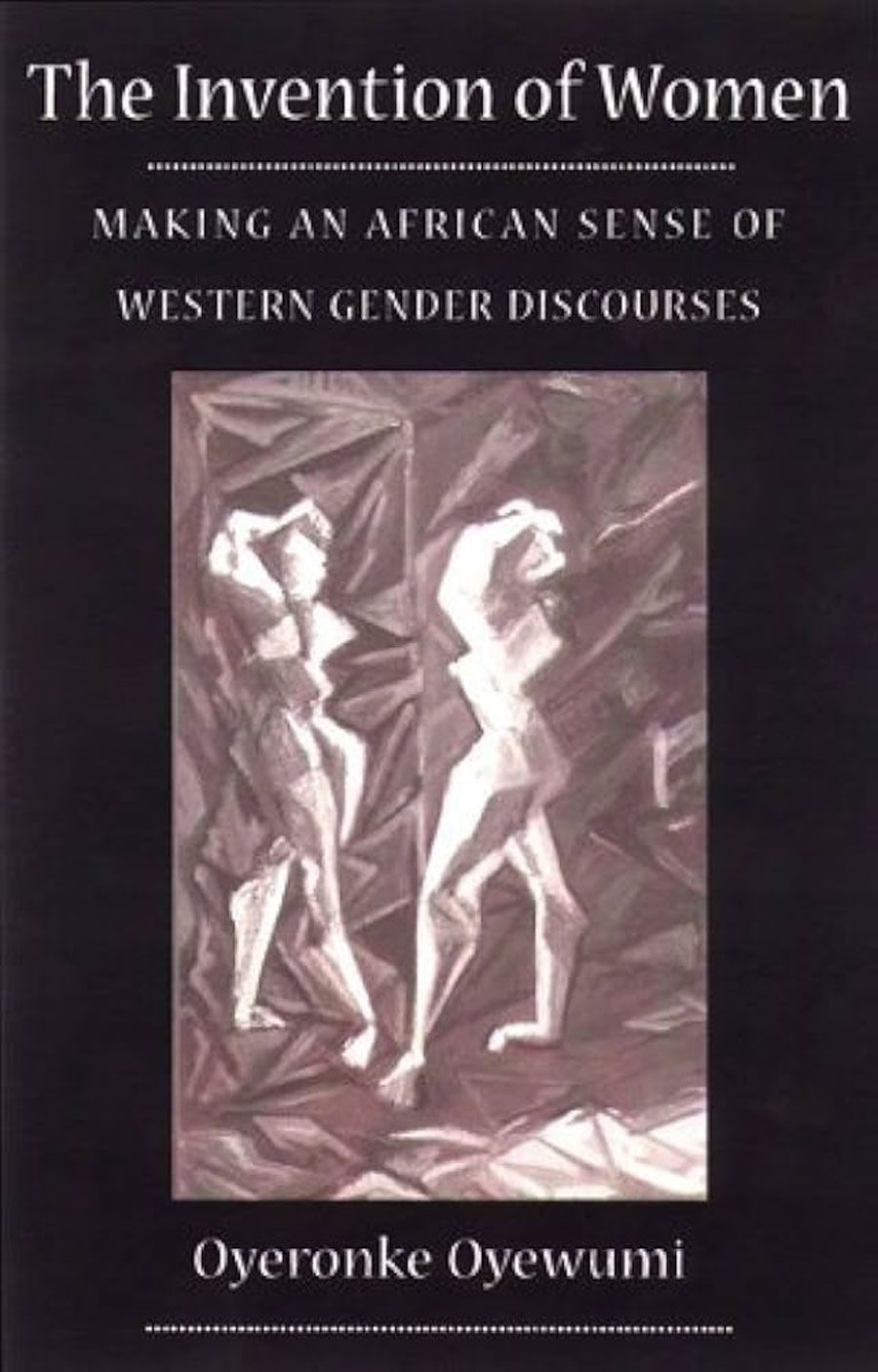
Oyewumi took African society and context seriously and eloquently demonstrated empirically and theoretically how Oyo history in West Africa underwent three process of ‘patriarchalisation’ through masculinisation of the alaafin, “feminization of certain positions, whereby the society-wide influence of females in power has been narrowed to an undefined interest, distinct from the rest of the community”, and ‘genderisation’ through invention of an essentialised category of ‘woman’ and ‘man’ that did not exist prior to colonialism in the Oyo-Yoruba society of Nigeria. Oyewumi (1997)’s work is one of the best and convincing testaments of how the very process of ‘writing history’ of Africa has been informed by hegemonic Western thought and its analytical categories such as ‘biological determinism’, centrality of ‘bodies’ as well as privileging of sense of sight (visual) over other sense to the extent of globalising ideas of ‘worldview’ over ‘world-sense’.
Oyewumi (1997)’s work directly confronted the silencing impact of imposition of Western gender categories on Africa particularly the Yoruba of Nigeria. In African studies, there is a general concern with how history writing has tended to privilege ‘his story’ over and above ‘her story’ in capturing human experiences across space and time. Oyewumi (1997) complicated this rather simplis- tic approach of merely adding the experiences of women to a world of know- ledge that wrongly assumed the universality ‘gender’ and ‘woman’ categories as transcultural and transhistorical. Oyewumi (1997: ix) posited that “The woman question is a Western-derived issue — a legacy of the age-old somatocentricity of Western thought. It is an imported problem, and it is not indigenous to the Yoruba”. In Oyewumi’s work one finds a robust, meticulously research and con- vincingly argued and first rate case of ‘rethinking thinking’ on gender in particular and African thought in general.
The significance of Oyewumi’s work is that it intervened robustly on the sociology of knowledge in general in the process directly challenging the dominant Western thought while at many levels retrieving and anchoring African thought. In the first place, Oyewumi (1997) challenges the idea of ‘gender’ as the first article of faith in thinking about any society and its organisation. She questioned the Western idea of the universal subordination of women and even rejected the universalisation of the category ‘woman’ because in the Yoruba society “there were no women — defined in strictly gendered terms — in that society” (Oyewumi 1997: xi-xiii).
According to Oyewumi (1997) there is urgent need for careful historical and sociological research on Africa that is not informed by existing analytical categories borrowed from Europe and America. She identified some of the key problems of history, theory and methodology that are themselves colonised. Oyewumi (1997: x-xi) identified the core components of Western thought as privileging not only ‘body-based categories’ but the sense of sight in its interpretation of human phenomena.
One of her points is that African scholars must be conscious of the fact that “all concepts come with their own cultural and philosophical baggage, much of which becomes alien distortion when applied to cultures other than those from which they derive” (Oyewumi 1997: xi). Oyewumi (1997: xi) posed the fundamental question: “What are the relationships between, on the one hand, bio- anatomical distinctions and gender differences as part of social reality and, on the other hand, gender constructs as something that the observer brings to a particular situation?” Her response based on her meticulous sociological research on the Yoruba society is that:
The Yoruba case provides one such different scenario; and more than that, it shows that the human body need not be constituted as gendered or be seen as evidence for social classification at all times. In precolonial Yoruba society, body- type was not the basis of social hierarchy: males and females were not ranked according to anatomic distinction. The social order required a different kind of map, not a gender map that assumed biology as the foundation for social ranking (Oyewumi 1997: xii).
Oyewumi is not in any way creating the impression of a golden age of Yoruba society that was a domain of pristine village democracies cascading from absence of any form of hierarchisation. Instead she launched a daring intellectual challenge to the existing feminist discourses even revealing a fundamental contradiction in their understanding of such concepts as gender (social construction) and sex (biological construction). The contradiction, if not feminist paradox, is here: in the very celebrated “fundamental assumption of feminist theory is that women’s sub- ordination is universal” which universality of “gender asymmetry suggests a bio- logical basis rather than a cultural one, given that the human anatomy is universal whereas cultures speak in myriad voices” (Oyewumi 1997: 10). Oyewumi proceeded to unpack this paradox in this manner:
That gender is socially constructed is said to mean that the criteria that make up male and female categories vary in different cultures. If this is so, then it challenges the notion that there is a biological imperative at work. From this standpoint, then, gender categories are mutable, and as such, gender then is denaturalized (Oyewumi 1997: 10).
Oyewumi’s point is very important for rethinking thinking on Africa because it revealed how:
In fact, the categorization of women in feminist discourses as homogeneous, bio-anatomically determined group which always constituted as powerless and victimized does not reflect the fact that gender relations are social relations and, therefore, historically grounded and culturally bound. If gender is socially constructed, then gender cannot behave in the same manner across time and space. If gender is a social construction, then we must examine the various cultural/architectural sites where it was constructed, and we must acknowledge that variously located actors (aggregates, groups, interested parties) were part of construction. We must further acknowledge that if gender is a social construction, then there was a specific time (in different cultural/architectural sites) when it was ‘constructed’ and therefore a time before which it was not. Thus, gender, being a social construction, it is logical to assume that in some societies, gender construction need not have existed at all (Oyewumi 1997: 10).
At another level, this generalisation about powerless, disadvantaged and victimised women across the world might be taken to be another form of silence in which the world of the Yoruba society is ignored. But Oyewumi is careful not to challenge one generalisation while creating another based on one case study. She is very clear on this:
Although it is clear that findings of this study are applicable to other African societies, I hesitate to apply them broadly, primarily because I do not want to fall into the common trap of erasing a multitude of African cultures by making facile generalizations, a process that results in unwarranted homogenization. The erasure of African cultures, a major defect of many studies on Africa, motivates my efforts not to make a simplistic general case about Africa from the Yoruba example (Oyewumi 1997: xiv).
What is important about Oyewumi’s work is that in her critique of Western-centric ‘body-reasoning’ approaches to society that carried gender differentiation as a major lens revealed how “scholars create gender categories”, how any simplistic and uncritical deployment of gender lens “necessarily write gender into that society” under study and how “in actuality, the process of making gender visible is also a process of creating gender” (Oyewumi 1997: xv). Thus she concluded in these wise words:
The present book has cleared the way for asking first-order, foundational questions about gender and difference in Yoruba society. It has shown that our interest in gender in Yorubaland cannot be divorced from the West’s domination of both the constitution of the academy/scholarship and the socio-political and economic world spheres. Ultimately, this study raises the question of whether it is possible to have independent research questions and interests given the Western origins of most disciplines and continued Western dominance of the world, for now (Oyewumi 1997: 179).
Decolonising methodology
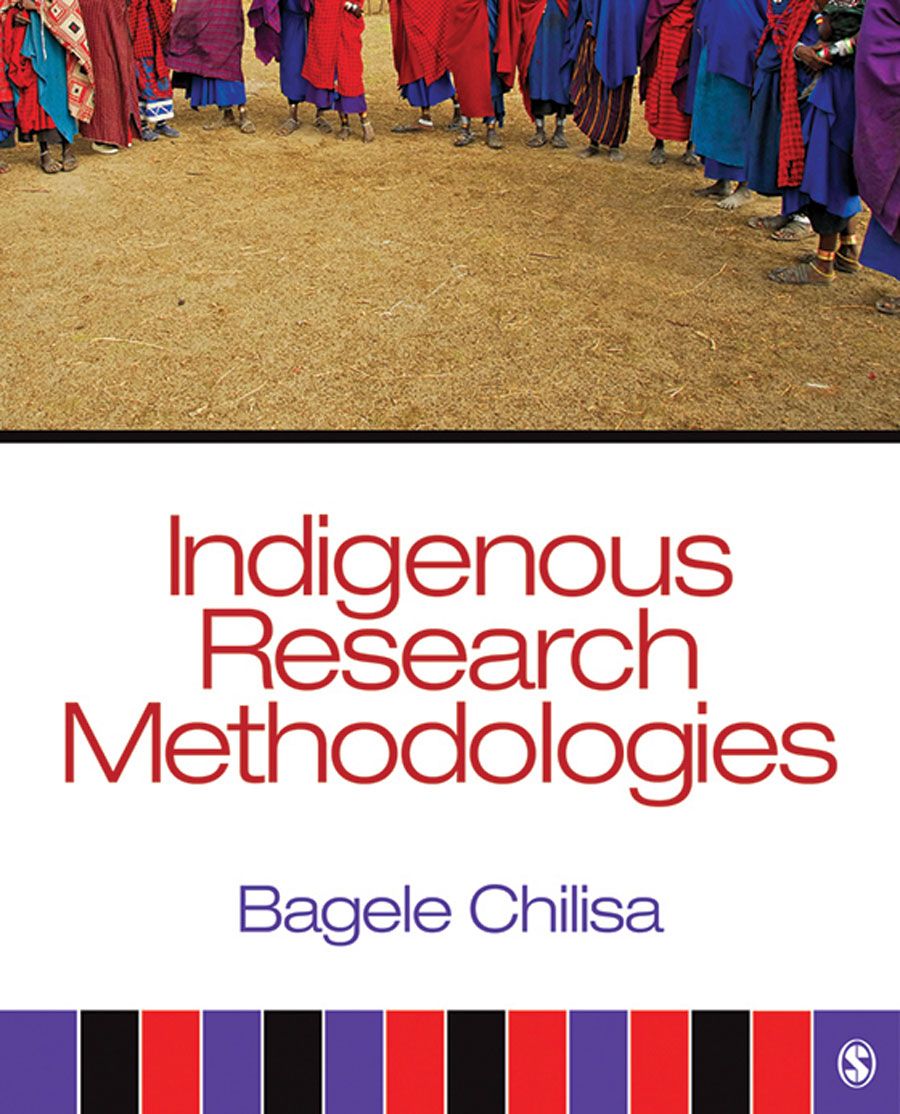
Rethinking thinking cannot be realised without decolonising methodology and research. It is here that the impressive work of Linda Tuhiwai Smith (1999) and Bagele Chilisa (2012) become indispensable. Smith and Chilisa’s work takes us into the depth of the ‘sacred’ field of research and methodology and they excavate the dirty colonial history embedded in the very activities of researching. While Smith brought the world of the indigenous people of New Zealand into the world of research, Chilisa brought the world of the indigenous people of Africa into the world of research. It was Smith (1999) who boldly declared that ‘re-search’ was the ‘dirtiest’ word because it involved enquiring into the secrets and scared lives of those who were its objects.
Chilisa (2012: xv) departs from the questions of ‘social justice’ and ‘human rights’ arising from the very research process. The convergence of Smith and Chilisa’s work is on the call for decolonising research methodologies as a process towards achievement of epistemic freedom by those peoples such as women, minorities, indigenous people, and formerly colonised, whose knowledges remain marginalised. They both delved deeper into cultures, philosophies, histories, and power dynamics embedded in research and methodology.
Chilisa’s work highlighted how mainstream research conducted on those societies considered being ‘non-Western’ still ignored other ways of knowing and other knowledge systems. This means that the struggles of decolonising and indigenising research methodologies form an important part of the broader struggles for epistemic freedom. Chilisa (2012: 3) argued that:
Social science research needs to involve spirituality in research, respecting com- munal forms of living that are non-Western and creating space for inquiries based on relational realities and forms of knowing that are predominant among non-Western Other/s still being colonized.
Chilisa formulated a useful definition of decolonisation from the perspective of research:
Decolonization is thus a process of conducting research in such a way that the worldviews of those who have suffered a long history of oppression and marginalization are given space to communicate from their frames of reference. It is a process that involves ‘researching back’ to question how the disciplines — psychology, education, history, anthropology, sociology, or science — through an ideology of Othering have described and theorized about the colonized Other, and refused to let the colonized Other name and know their frame of reference (Chilisa 2012: 14).
Understood from a research and methodological perspective, decolonisation entails ‘deconstruction and reconstruction’, that is, “destroying what has wrongly been written — for instance, interrogating distortions of people’s life experiences, negative labelling, deficit theorising, genetically deficient or culturally deficient models that pathologises the colonized Other — and retelling the stories of the past and envisioning the future” (see Smith 1999; Chilisa 2012: 17). At the centre of this process is ‘recovery and discovery’ (Chilisa 2012: 17).
Decolonisation is also about attainment of “self-determination and social justice”, that is, seeking “legitimacy for methodologies embedded in histories, experiences, ways of perceiving realities, and value systems” on the one hand and on the other, giving “voice to the researched and moves from deficient-based orientation” to “reinforcing practices that have sustained the lives of the researched” (Chilisa 2012: 17-18; see also Smith 1999). Chilisa’s work articulated what she termed “a postcolonial indigenous research paradigm” as “a framework of belief systems that emanate from the lived experiences, values, and history of those belittled and marginalised by Euro-Western research paradigms” (Chilisa 2012: 19). To Chilisa (2012: 20): “A postcolonial indigenous research is thus informed by relational ontologies, relational epistemologies, and relational axiology”.
Conclusion: Towards a five-way-forward in epistemic freedom
This conceptual overview of the dynamics of epistemological decolonisation in the 21st century and the trajectories of struggles for epistemic freedom enables a necessary articulation of a five-way-forward beyond epistemic coloniality. The first is ‘returning to the base’/‘locus of enunciation’. This way-forward is predicated on the re-education process after centuries of miseducation. Ngugi wa Thiong’o (2016) defined ‘the base’ as ‘the people’ and he elaborated that:
A return to the base, the people, must mean at the very least the use of a language and languages that the people speak. Any further linguistic additions should be for strengthening, deepening and widening this power of the languages spoken by the people.
He urged African academics and intellectuals not to remain “outsiders in our own land” through reconnecting “with the buried alluvium of African memory — that must become the base for planting African memory anew in the continent and the world” (Ngugi wa Thiong’o 2016: 76). The starting point is to be clear that Africa is the base from which we look at the world. This repositioning of our world- sensing entails taking the African archive as the starting point in our research, teaching and learning. In short, a return to the base fundamentally entails taking ourselves seriously and confidently thinking from where we are located, that is, accepting Africa as a legitimate epistemic centre from which we make sense of the world. This way we begin to resolve the problems of intellectual extraversion and epistemic dependence. The solution lies also in privileging what Ramon Grosfoguel (2007) articulated as ‘locus of enunciation’, that is, the geo-political, body- political and social location from which the world has to be seen and interpreted clearly.
The second way-forward is that of shifting the geo- and bio-of knowledge. Because knowledge has continued to radiate from a hegemonic centre despite the existence of a globalised world, there is an urgent need to ‘provincialise’ Europe and North America while ‘deprovincialising’ Africa. The fact is that what today masquerades as the ‘global knowledge economy’ has a hegemonic centre from which it circulates — that centre is Europe and North America. This approach helps to rectify the marginality of knowledges from Africa and the Global South within the so-called ‘global knowledge economy’. This marginalisation of African scholarship is sustained by a deliberate uneven division of intellectual labour rooted in imperialism and colonialism, in which scholars of Africa and the rest of the Global South have been reduced to hunter-gatherers of raw data that is turned into theories in the Global North. African scholars become mainly ‘native informants’ as well as consumers of theories, concepts and methodologies cascading from the Global North (Hountondji 1997).
Thus, part of the practical solutions includes systematically shifting the geography and biography of knowledge partly because the knowledges that took us to this current phase of epistemic/systemic crisis cannot be the same knowledges that pull us out of this crisis partly due to the fact that those considered to be giants in the modern academy still come from Europe and North America. We have to change the giants on whose shoulders we stand in terms not only of their geography of origin but also their race, gender and generation, if we are to attain the desired ‘ecologies of knowledges’ (Santos 2014; Ndlovu-Gatsheni 2018).
The third way forward entails a double-move of decolonising the normative foundations of critical theory so as to enable rethinking thinking itself. We have to build on the work of such giants as Edward E Said (1993) who delved into the necessary questioning of the very normative foundations of dominant critical theory. Said (1993) revealed how the revered Frankfurt School’s critical theory was “stunningly silent on racist theory, anti-imperialist resistance, and oppositional practice in the empire”. This limit made the Frankfurt theorist to uncritical predic- ate their ideas on false universalism, which was itself, grounded on ‘inequality of races’ and subordination of other parts of the world. What blinded the otherwise critical theorists of the Frankfurt School was the normative foundation of their thinking.
In a recent publication influenced by the pioneering work of Said, Amy Allen (2016: 3) noted that the Frankfurt scholars’ fidelity to historical ideas of progress is “the biggest obstacle to the project of decolonizing their approaches to critical theory”. What most Eurocentric theorists fail to accept is that the very pro- cesses of progress, modernity, development, and even emancipation enabled dehumanisation, enslavement, colonialism, imperialism, oppression, exploitation, and domination of two-thirds of the world’s population (Allen 2016: 3).
The fourth way forward entails a critical decolonial review the relevance of thinking itself. Immanuel Wallerstein (1999: 4) argued that it is a habit in scholarship to rethink issues in the context of new evidence that “undermines old theories and predictions do not hold”. He went further to posit that “we need to unthink nineteenth-century social science, because many of its presumption — which, in my view are misleading and constrictive — still have far too strong a hold on our mentalities” (Wallerstein 1999: 4). According to Wallerstein (1999: 4), the key “presumptions” of the “nineteenth-century social science”, which were, once “liberating of the spirit, serve today as central intellectual barrier to useful analysis of the social world”.
Wallerstein’s concerns were shared by Patrick Chabal (2012: 335 who concluded that “The end of conceit is upon us. Western rationality must be re-thought”. It is the same concerns that provoked Jean and John L Comaroff (2012: 1-2) to argue for a paradigm shift from the Western Enlightenment “epistemic scaffold” of knowledge to the Global South in general and Africa in particular as an epistemic site from which the world is understood and interpreted. Thus, the imperative of rethinking and even unthinking ‘thinking itself ’ is part of the necessary recognition of the limits and problems of the current knowledge and pedagogies.
In rethinking thinking itself we have to confront directly the very idea of history and philosophy of history which still fails to disconnect itself from the illusion of Europe as the centre of the world and the notions of transitions cascading from the idea of progress. Rethinking thinking itself enables us to delve deeper into the very constitutive formation of modern disciplines so as to assess whether they are still fit for purpose. We are emboldened in doing this by the insights from the French historian of science Michel Foucault (1970: 344-345) who reminded us that what exist as modern disciplines in humanities did not develop naturally as part of ‘order of things’ but were invented in relation to specific kinds knowledge that was needed by society. The clear epistemological message is that the epistemic and systemic crisis upon us invites us to rethink and even unthink the ‘order of knowledge’.
The fifth and final way forward entails learning to unlearn in order to re-learn. It speaks to the challenges of desocialisation and re-socialisation in the domain of knowledge as well as teaching and learning. This challenged arose from a context where missionary and colonial education taught Africans a lot of wrong things including negative perceptions of ourselves and our continent. This educa- tion taught us that white people were superior and black people were inferior. The forcible imposition of colonial languages like French and English as languages of teaching and learning created an impression that their mastery was a sign of being intelligent.
Consequently, many educated African people distanced themselves from their indigenous African languages and ancestors whom the Christian missionaries disparaged as ‘demons’. This harm that was imposed on African people cannot be reversed unless African people deliberately embark on the painstaking process of “learning to unlearn in order to re-learn”. Tlostanova and Mignolo (2012: 7) defined “learning to unlearn” as “to forget what we have been taught, to break free from the thinking programmes imposed on us by education, culture, and social environment, always marked by the Western imperial reason”. Decolonial pedagogy has to facilitate this unique pedagogy of unlearning as part of epistemological decolonisation which results in the removal of that colonial/Eurocentric hard disk of coloniality together with its software.
Ake, C (1979), Social as Imperialism: The Theory of Political Development. Ibadan: Ibadan University Press.
Alatas, S H (1969), “The Captive Mind and Creative Development”, in Madhava, K B (ed), International Development. New York: Oceania Publications.
Alatas, S H (1974), “The Captive Mind and Creative Development”. International Social Science Journal, Vol 36, No 4, pp 691-699.
Allen, A (2016), The End of Progress: Decolonizing the Normative Foundations of Critical Theory. New York: Columbia University Press.
Amin, S (1968), Le Developpement Du Capitalisme en Cote d’Ivoire. Paris. Minuit.
Amin, S (1973), Neo-Colonialism in West Africa: Translated by Francis McDough. New York: Monthly Review Press.
Amin, S (1974), Accumulation on a World Scale: Translated by Brian Pearce. New York: Monthly Review Press.
Amin, S (1990), Delinking: Towards a Polycentric World: Translated by Michael Wolfers. London: Zed Books.
Amin, S (2009), Eurocentrism: Modernity, Religion, and Democracy: A Critique of Eurocentrism and Culturalism. New York: Monthly Review Press.
Asante, M K (1987), The Afrocentric Idea. Philadelphia: Temple University Press. Asante, M K (1988) Afrocentricity. New Jersey: Africa World Press.
Atieno-Odhiambo, E S (2002), “From African Historiographies to an African Philosophy of History”, in Falola, T and C Jennings (eds), Africanizing Knowledge: African Studies Across the Disciplines. New Brunswick and London: Transaction Publishers, pp 13-63.
Banchetti-Robino, M P and C R Headley (2006), “Introduction: Charting the Shifting Geography of Reason”, in Banchetti-Robino, M P and C R Headley (eds), Shifting the Geography of Reason: Gender, Science and Religion. New Castle: Cambridge Scholars Press, pp 1-9.
Bhambra, G K (2007), Rethinking Modernity: Postcolonialism and the Sociological Imagination. New York: Palgrave Macmillan.
Chabal, P (2012), The End of Conceit: Western Rationality after Postcolonialism. London & New York: Zed Books.
Chakrabarty, D (2007), Provincializing Europe: Postcolonial Thought and Historical Difference: Second Edition. Princeton, NJ: Princeton University Press.
Chen, K-H (2010), Asia as Method: Toward Deimperialization. Durham and London: Duke University Press.
Chilisa, B (2012), Indigenous Research Methodologies. Los Angeles/London/New Delhi: Sage. Comaroff, J and J L Comaroff (2012), Theory From the South Or, How Euro-America Is Evolving Toward Africa. Boulder and London: Paradigm Publishers.
Dash, J M (1999), “Introduction”, in Glissant, E, Caribbean Discourse: Selected Essays: Translated and with An Introduction by J. Michael Dash. Third Edition. Charlottesville: University Press of Virginia, pp xi-xlv.
Depelchin, J (2005), Silences in African History: Between the Syndromes of Discovery and Abolition. Dar es Salaam: Mkuki na Nyota Publishers.
Diawara, M (1990), “Reading Africa through Foucault: V. Y. Mudimbe’s Reaffirmation of the Subject”, October, Vol 55, pp 65-96.
Du Bois, W E B (1903), The Souls of Black Folk. New York: Dover Publications, INC.
Falola, T ( 2001), Nationalism and African Intellectuals. New York: The University of Rochester Press.
Fanon, F (1968), The Wretched of the Earth. New York: Grove Press.
Foucault, M (1970), The Order of Things: An Archaelogy of Human Science. London: Tavistock.
Glissant, E (1999), Caribbean Discourse: Selected Essays: Translated and with An Introduction by J.
Michael Dash. Third Edition. Charlottesville: University Press of Virginia.
Goody, J (2006), The Theft of History. Cambridge: Cambridge University Press.
Gordon, L R (2006), “Foreword”, in Banchetti-Robino, M P and C. R. Headley (eds), Shifting the Geography of Reason: Gender, Science and Religion. Newcastle: Cambridge Scholars Press.
Grosfoguel, R (2013), “The Structure of Knowledge in Westernized Universities: Epistemic Racism/Sexism and the Four Genocides/Epistemicides of the Long 16th Century”, Human Architecture: Journal of the Sociology of Self-Knowledge, Vol XI, No 1, Fall, pp 73-90.
Headley, J M (2008), The Europeanization of the World: On the Origins of Human Rights and Democracy. Princeton and Oxford: Princeton University Press.
Hoppers, C O and Richards, H (2012), Rethinking Thinking: Modernity’s ‘Other’ and the Trans- formation of the University. Pretoria: UNISA Press.
Hountondji, P J (1990), “Scientific Dependence in Africa Today”. Research in Africa Literatures, Vol 21, No 3, pp 5-15.
Hountondji, P J (1996), African Philosophy: Myth and Reality: Second Edition. Translated by Henri Evans. Bloomington: Indiana University Press.
Hountondji, P J (2002), The Struggle for Meaning: Reflections on Philosophy, Culture, and Democracy in Africa. Athens: Ohio University Research in International Studies Africa Series No 78.
Hountondji, P J (ed) (1997), Endogenous Knowledge: Research Trails: Translated by Ayi Kwesi Armah. Dakar: CODESRIA Books.
July, R W (1968), The Origins of Modern African Thought: Its Development in West Africa During the Nineteenth and Twentieth Centuries. London: Faber and Faber.
Mafeje, A (2000), “Africanity: A Combative Ontology”, CODESRIA Bulletin, No 1, pp 66-67.
Mazrui, A A (1978), Political Values and the Educated Class in Africa. Berkeley and Los Angeles: University of California Press.
Mbembe, A (2002), “African Modes of Self-Writing”, Public Culture, Vol 14, No 1, pp 239-273. Mbembe, A (2015), On the Postcolony. Johannesburg: Wits University Press.
Mignolo, W D (2007), “Delinking: The Rhetoric of Modernity, the Logic of Coloniality and the Grammar of De-Coloniality”, Cultural Studies, Vol 21, No 2-3, pp 449-514.
Mkandawire, T (1995), “Three Generations of Africa Scholars: A Note”, CODESRIA Bulletin, No 2.
Mveng, E (1983), “Recents Developments de la Theologie Africaine”, Bulletin of African Theology, Vol 5, No 9, pp 138-156.
Nabudere, D W (2011), Afrikology: Philosophy and Wholeness: An Epistemology. Pretoria: Africa In- stitute of South Africa.
Nandy, A (1983), The Intimate Enemy: Loss and Recovery of Self Under Colonialism. New Delhi: Oxford University Press.
Ndlovu-Gatsheni, S J (expected in 2018), Epistemic Freedom in Africa: Deprovincialization and Decolonization. London and New York: Routledge.
Ngugi wa Thiong’o (1986), Decolonizing the Mind: The Politics of Language in African Literature. Oxford: James Currey.
Ngugi wa Thiong’o (1993), Moving the Centre: The Struggle for Cultural Freedoms. Oxford: James Currey.
Ngugi wa Thiong’o (2009a), Re-Membering Africa. Nairobi, Kampala, Dar es Salaam: East African Educational Publishers Ltd.
Ngugi wa Thiong’o (2009b), Something Torn and New: An African Renaissance. New York: Basic Civitas Books.
Ngugi wa Thiong’o (2012) Globalectics: Theory and the Politics of Knowing. New York: Columbia University Press.
Nisbett, R (2003), The Geography of Thought: How Asians and Westerners Think Differently … and Why. New York: The Free Press.
Ogot, A (1978), “Three Decades of Historical Studies in East Africa, 1949-1977”, Kenya Historical Review, Vol 6, No 1-2, pp 22-33.
Oyewumi, O (1997), The Invention of Women: Making an African Sense of Western Gender Discourses. Minneapolis and London: University of Minnesota Press.
Quijano, A (2007), “Coloniality and Modernity/Rationality”, Cultural Studies, Vol 21, No 2-3, (March/May), pp 168-178.
Ranger, T O (1968), “Introduction”, in Ranger, T O (ed), Emerging Themes in African History. Nairobi: East African Publishing House, pp i-xxxv. Said, E E (1993), Culture and Imperialism. New York: Vintage.
Santos, B de S (2007), “Beyond Abyssal Thinking: From Global Lines to Ecologies of Knowledges”, Review, Vol XXX, No 1, pp 45-89.
Santos, B. de S (2014), Epistemologies of the South: Justice Against Epistemicide. Boulder, CO and London: Paradigm Publishers.
Smith, L T (1999), Decolonizing Methodologies: Research and Indigenous Peoples. London and New York: Zed Books.
Subrahmanyam, S (1997), “Connected Histories: Notes Towards a Reconfiguration of Early Eurasia”, Modern Asian Studies, Vol 31, No 3, pp 735-762.
Subrahmanyam, S (2005), Explorations in Connected Histories: Mughals and Franks. Oxford: Oxford University Press.
Terreblanche, S (2014), Western Empires, Christianity, and the Inequalities Between the West and the Rest 1500-2010. Johannesburg: Penguin Books.
Tlostanova, M V and W D Mignolo (2012), Learning to Unlearn: Decolonial Reflections from Eurasia and the Americas. Columbus, OH: The Ohio State University Press.
Trouillot, M-R (1995), Silencing the Past: Power and the Production of History: With a New Foreword by Hazel V. Carby. Boston: Beacon Press.
Wallerstein, I (1997), “Eurocentrism and Its Avatars: The Dilemmas of Social Science”. New Left Review, No 226, Nov-Dec, pp 93-104.
Wallerstein, I (1999), “Introduction: Why Unthink?”, in Wallerstein, I (ed), Unthinking Social Science: The Limits of Nineteenth Century Paradigms. Cambridge: Polity Press, pp 1-26.
| 1. | ↑ | The concept of “the Restern world” is borrowed from Terreblanche (2014). |