NOKUTHULA MAZIBUKO
Spring Offensive
Chapter 6 A People’s War
Zimbumbulu zamabhunu
angeke zisenzento
angeke siwulahl’ uMkhonto weSizwe
The ANC pronounced 1985 “The Year of the Cadre”, by calling on communities to form mobile military units. In his January 8th speech Oliver Tambo stated:
The strength of any organisation lies in the calibre of its individual members and units. In order to advance in keeping with the momentum of our struggle we must improve the quality and expand the quantity of our membership. We need cadres of unquestionable loyalty, dedication and understanding of our struggle. In order to achieve such a high standard and spur our nation into a greater onslaught on the enemy and its institutions, we declare this year, 1985, the Year of the Cadre!
Inspired after hearing Tambo’s speech on Radio Freedom, many young people aspired to become the trained and disciplined cadre envisioned by the ANC, by forming small underground cells. These used rudimentary homemade weapons to launch attacks on police stations and military patrols. Like many others, Nhlanhla and Hlula were ready to graduate from throwing stones and petrol bombs at state buildings and vehicles, to more intense armed struggle. So when they made contact with Umkhonto weSizwe (MK, the ANC’s military wing) via a cadre they knew only as Ntsimbi, they did not hesitate to form an underground cell.
Ntsimbi, a mercurial, mysterious man in his thirties, explained that he traveled around the country locating comrades who were ready to fight, and he equipped them with more skills and weapons. He was aware that Nhlanhla, Hlula and others were already part of the youth movements, and had taught themselves to make and use petrol bombs; his job was to train them to use a wider range of weapons more effectively.
In the main, the training sessions with Ntsimbi happened after dark, in the veld not far from Regina Mundi church. They also trained in other parts of Soweto, and in Swaziland. The unit under Ntsimbi, included Hlula’s cousin, Veli Msimang, and friends Jabu Mnyandu and Bafana “DiBabzo” Mzobe. Hlula was made commander of the unit, and Nhlanhla commissar. None were allowed to tell anyone about being part of an underground cell.
Hlula and Nhlanhla’s unit was formed at a time when police brutality and the killing of activists was escalating. There were daily funerals in Soweto, and in the whole country. Funerals became platforms to continue the struggle. Even after the July 21st, 1985 State of Emergency was declared and mass funerals banned, comrades continued to use funerals as platforms to mobilise support against the apartheid state. Many comrades were killed. When a young activist from St Matthews was killed by police, his classmates arranged the funeral, and kept vigil with his grieving family. Students from St. Matthews were extremely angry, and the funeral was used to further conscientise them. Comrades took turns carrying the coffin on their shoulders as they toy-toyid from Phiri to Doornkop cemetery, some five kilometers away, to bury their comrade.
Comrades from Soweto, Duduza, Alex, Mamelodi, and the whole PWV area, traveled to bury each other. Dressed in hamba kahle comrade t-shirts and clenched fists, they raised dust determined to bring down the apartheid state.
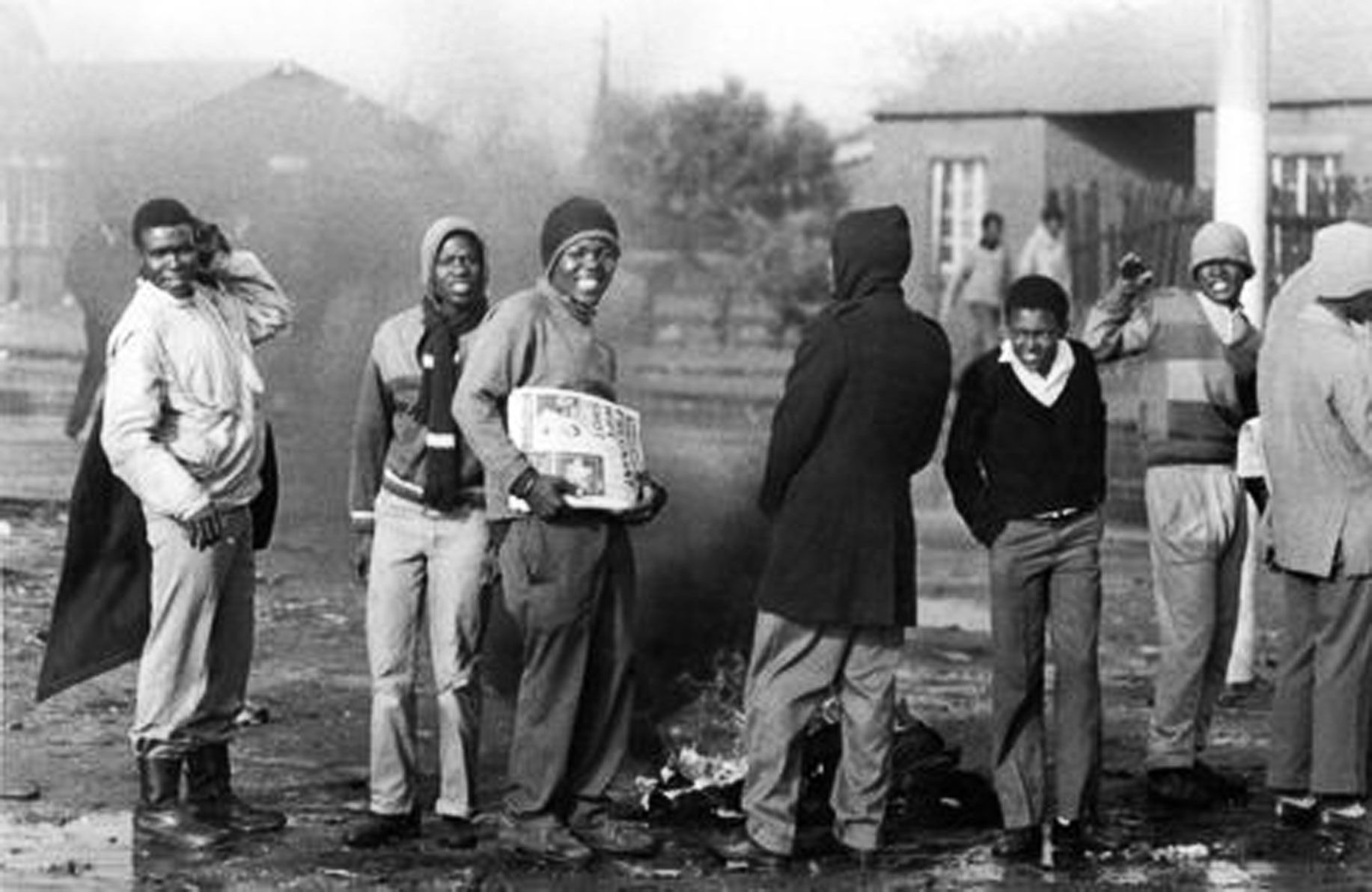
In the heated mid-80s climate, activists intensified attacks against apartheid related machinery. Units like those to which Nhlanhla and Hlula belonged conducted sporadic grenade attacks on passing caspirs and police stations. Typically, the youths would go jogging around the township looking for targets to ambush. After spotting and casing a target, they would wait for the commander’s call before throwing the grenades and dispersing. Most attacks happened at night, to prevent civilian casualties.
At their homes Hlula, Veli, Nhlanhla and DiBabzo’s dads could sense that the young mens’ level of political involvement was reaching dangerous levels. The fathers called a meeting at the Msimang home to talk to their sons. They were worried that their activities were becoming too risky. They advised the young men to tone down. The young men listened carefully to their fathers, as pre-discussed. They then engaged their fathers, by acknowledging that the situation they were all in was far from desirable; however, they pointed out that they had no choice but to fight.
They advised that if more people joined the struggle, the fight would not last as long and they could then all lead safe lives. Hlula remembers that by the end of the meeting they had convinced the fathers to organize themselves into civic structures. The civic structures were part of the M-plan which had been masterminded by the ANC in the 50s, where communities were encouraged to form themselves into street committees so that political mobilization would be structured and effective. When the meeting ended, there was a plan around which of the fathers would contact the Soweto Civic Association and get information about forming a more localized Rockville Civic Association. Meetings would be called to get the community to organize themselves. (As part of the Rockville Civic structures, Bab’ Msimang became known as “Chairman Mao” because he became chairman of this and that.) The fathers agreed on technicalities such as who would book a venue, who would print pamphlets etc. Money came through from organisations like the SACC. Sometimes it was money from personal pockets that helped arranged Civic meetings.
However, not all parent child disagreement about political involvement were solved as easily. Many parents feared for their children’s lives and tried to dissuade them from participating in rallies and exposing themselves to being shot and killed, or at the very least arrested.
Chapter 8 Towards Limpopo
Wawungekho mzukwana siwela iLimpopo
Izibham bha bham izibham
Ezomkhont’ izintombi sezishaya ibazooka
By 1986, it was getting more and more dangerous for Hlula, Nhlanhla and the rest of their cell members to operate as police knew who some of the comrades around Rockville were. When they heard that their trainer Ntsimbi had been captured at a local house during a vicious shoot out, they planned to leave the country. The cell decided that, Hlula and Nhlanhla be the first to go.
An upcoming World Council of Churches Children of War Tour to the USA, for which Nhlanhla had recently been selected, would be a convenient cover for him to leave the country. If the South African Police were planning to pounce, they would probably try to stop him leaving the country at the airport. So the young men decided that they should leave by bus, a day before the start of Nhlanhla’s tour. Difficult decisions about who to tell and who to involve had to be made quickly. Hlula suggested that they leave as though on a visit, going to Zimbabwe where they could try to find the ANC, and that Nhlanhla could then proceed on the children’s tour from there.
A week before their planned departure, they told their parents of their imminent exile. In an emotional meeting, the parents felt that the young men should be sent to Australia where they could be looked after by the Christian Women’s Grail movement. Nhlanhla and Hlula saw a unique opportunity in their parents’ suggestion to go to Australia. If they pretended to go along with the plan, a rumour would spread that they’d given up on the struggle and chosen to be safe in Australia, thus making it easier for them to come back undetected to do underground work. They agreed that Nhlanhla’s mother, Mam’ Zodwa and his five-year-old sister Nonkululeko, accompany them, so as to make the trip seem like a family outing. The young men did not tell their parents that when they arrived in Zimbabwe, they would not get on board the Australia bound plane, but would instead go in search of the ANC and continue to re-enter South Africa through its borders. They had to appear convincing since, although their parents knew that they were activists, they had no clue that they had been recruited into the underground.
It was critical that the news and details of the imminent departure remain only with the two families. Saturday, November 5th, Guy Fawkes Day, 1986 was the day set for leaving. The week passed quickly with Nhlanhla and Hlula finding it difficult to contain their excitement; they went through their plans over and over trying to think of ways to avoid anything going wrong. Because they were hiding in different places, they were not in constant communication. Nhlanhla spent the week at his aunts’ houses in Pimville and Phefeni, while Hlula lived with various friends, and comrades.
The friends woke up early on the morning of departure, ready to face the journey. The November sky was overcast, preparing for afternoon showers. They met, as planned, at Hlula’s house – bags packed with a pair of trousers each, two t-shirts, and two jerseys. When Jabu, Babzo and Veli, arrived to say goodbye, they discussed the need for them to lie low for a few weeks, or even months. Babzo and Hlula had already started new underground cells as an extension, and they would now have to cut themselves off from these for a while. Nhlanhla and Hlula were briefly visited by their girlfriends and fellow comrades, who had no clue that the two were leaving. Hlula was particularly heartbroken about leaving his girlfriend behind, as they were deeply in love. Nhlanhla was ready to go, as he doubted the wisdom and ability to adequately pursue romance and freedom simultaneously.
At three in the afternoon, the Mabasos and Msimangs fetched their sons, and took them to attend Catholic mass at the Grail Center in Parktown. After mass, the young men said their final goodbyes to Mama and Bab’ Msimang, Sabelo, comrade Sisa and to Grail members Marilyn, Emilia, Innes, Emma and Pam. Bab’ Mabaso drove the young men, Mam’ Zodwa and Nonkululeko to the bus station in Pretoria. The bus departed for Harare at 9pm.
With Nonkululeko wrapped in a blanket on her lap, Mam’ Zodwa prayed intermittently for the whole nine-hour trip. The young men tried to keep their minds off the trip by exchanging a walkman, playing love songs by the Manhattans, over and over. The bus traveled slowly, stopping to pick up more passengers as it made its way through the various towns: Potgietersrus (now Mokopane), Pietersburg (now Polokwane), Louis Trichardt (now Makhado), and finally, as dawn was breaking, Messina (now Musina).
The South African police at the border were nearing the end of their night shift, and were quite eager to go home and rest. They looked at the African woman carrying the child too big to be carried, and followed by two tired looking boys. They looked through the passports. “How long?” the one with the stamp barked. “We’re just visiting for a few days..five days” Mam’ Zodwa answered, trying to keep her voice even, all the time praying for guidance and protection. After ten long minutes of the policeman scrutinizing, writing and stamping, the family was allowed through; they boarded the bus to cross the one or so kilometer of no man’s land towards the Zimbabwe side of the border. The Zimbabwean police were quick and disinterested in the South African visitors who were probably going to see relatives for a few days; not questioning that the young men would be missing school, as they knew that schooling in their neighbouring country had come to a virtual stop. Scholars were engaged in a war against the state, and were constantly boycotting classes. Nhlanhla and Hlula couldn’t contain their joy and relief as soon as their passports were stamped through; they gave each other a hand-slap and exclaimed, “siyiwelile iLimpopo” (we’ve crossed the Limpopo!). Hlula phoned home, telling his brother Mazwe in code to notify the others that they had crossed safely. The time was six o’clock in the morning on the 6th of November. They still had another nine hours to travel north to Zimbabwe’s capital Harare. Their gratitude and happiness at having left South Africa safely was tremendous. The young men slept most of the way to Harare, where they made contact with the ANC. Nhlanhla proceeded to the Children of War Tour, and Hlula left for the ANC headquarters in Lusaka, where he tried, unsuccessfully to convince Oliver Tambo to allow them to stay and fight with MK. The friends were persuaded by the ANC to follow their parents’ plan and finish Matric in Australia. They had to wait a year, before resuming underground work, and growing the structures they had started back home in Soweto.
