MUSA SITHOLE
In Defence of Afropessimism: Aryan Kaganof’s Miseducation(reading) of Frank B. Wilderson III – ANTIBLACKNESS AND THE QUESTION OF PALESTINE
In his essay “On Power and Powerlessness: Genocide in Gaza Through the Lens of Afropessimism and Decay Studies,” Aryan Kaganof attempts a powerful reading of the slaughter in Gaza: the annihilation of a people, the architecture of elimination, the collapse of infrastructures and futures. It is an essay of urgency and moral anguish, yet it stops at the precipice of its own metaphor. What is described as “powerlessness” risks becoming aesthetic rather than structural. The invocation of Afropessimism gestures toward depth but never descends into it. The text mourns but does not dismantle.
Afropessimism by Frank B. Wilderson III.
There is a fissure in his analysis which opens onto a deeper severance, one that must be confronted if we are to think rigorously and not merely rhetorically about the Palestinian catastrophe. That fissure is the refusal (or inability) to reckon fully with the ontological axis of anti-Blackness as laid out by Frank B. Wilderson III. Wilderson insists that Blackness is not one among many subordinations; it is the paradigmatic site of social death, the foundational exclusion against which the category of the human is established. He writes that slavery did not “end” but was transmuted into the figures of fungibility, disappearance, object, cast-away. In his terms: “To be Black is to be socially dead.”
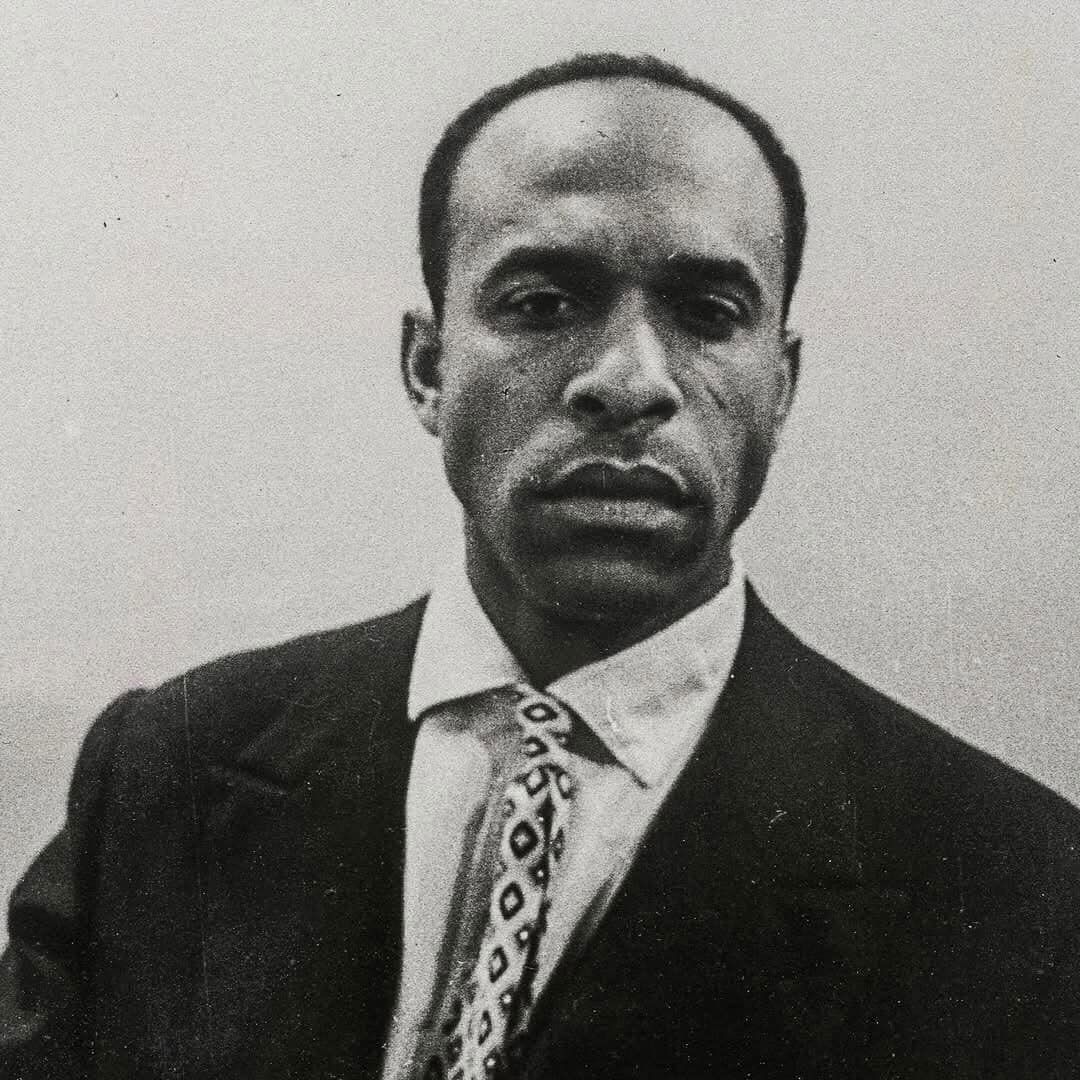
I have also attempted to bring Frantz Fanon into this terrain to reopen the wound that Kaganof only traces at its surface. Fanon did not theorise the colonised as metaphor; he theorised them as a condition, as a fracture, as a consequence of Europe’s metaphysical lie. In The Wretched of the Earth, Fanon warns that the coloniser’s world is “a world cut in two,” a compartmentalised geography where the colonised is not only confined but ontologically mutilated.
But Fanon would remind us that the colonised do not merely suffer; they are coerced into complicity with their own disfiguration. The colonised mind becomes a battlefield in which Europe’s categories reproduce themselves through despair.
This is where Kaganof’s alignment of the Palestinian with the “Black” position, through the lexicon of Afropessimism, becomes perilous. Fanon’s distinction is exact: the colonial subject can still dream of liberation, however deferred; but the Black, under the regime of anti-Blackness, is not permitted even that dream. The Black is not a subject of history but its negation, a body through which history narrates its own superiority. This is the tension which Wilderson also exposes and refuses to soften. In his dialogue with the “Palestinian question,” Wilderson asserts that to analogise Gaza to the plantation is to flatten ontology into circumstance. For him, the Black is not oppressed as a people but erased as a category of the human. The Palestinian, however dispossessed, remains within the realm of political recognition; the Black remains beneath its floor.
Kaganof applies Afropessimism to the Palestinian condition; he draws the analogy: Palestinians are positioned like “Black” people under racial capitalism, rendered ungrievable, fungible and expendable. Here is where things must be sharpened. Wilderson would reject the analogy because it obscures the specificity of anti-Blackness rather than enlarging solidarity. In a pointed passage, he recounts a Palestinian friend’s remark: “the shame and humiliation runs even deeper if the Israeli soldier is an Ethiopian Jew” That remark triggers a revelation in Wilderson: that in the unconscious of Palestinian insurgents, the same antagonism toward Blackness appears as in the minds of Israeli state society.
Thus, the question: What does it mean for Palestinians to be likened to Blacks under structural non-humanity when Palestinians themselves may participate in anti-Blackness? Wilderson refuses simple analogies. He holds that comparison across subordinated groups, when it evokes “we all victims” logic, effaces the ontological horizon of anti-Blackness and reproduces its grammar.
Kaganof’s move is poetic and urgent: Gaza as geography of entrapment, genocide not just of bodies but of memory, life, air. That remains valid. His invocation of decay studies, ruination as method, and collapse as infrastructure of violence is compelling, and I am being generous here. But his analogical extension to Palestinians as Afro-positional figures risks flattening the systemic architecture Wilderson describes. It allows a false equality: Palestinians suffer, yes, they are wandering in the ruins of the world that has decided who matters. But to frame their suffering as coterminous with the Black structure of fungibility is to misrecognise the layering of sovereignty, settler colonial difference, race, and anti-Blackness.
We should say plainly: The genocide in Gaza is genocide.

The refusal of recognition, the collapse of infrastructure, the nighttime of the world in which Gaza lives, Kaganof captures that. But if we accept the Wilderson frame strictly, then Palestinians do not occupy the ontological position of the irredeemable “social death” that defines Blackness. They remain within, at least notionally, the human subject-category, the subject who can suffer, be recognised, have rights (even if selectively). That difference matters politically. If we refuse it, we might cascade into a humanitarianism that universalises violence and erases hierarchies of disposability.
From the vantage of Wilderson, a Palestinian state or sovereignty cannot simply reverse the equation of disposability; it may inherit the structures of anti-Blackness. He warns: “Yeah we’re going to help you get rid of Israel, but the moment that you set up your shit, we’re going to be right there to jack you up, because anti-Blackness is as important and necessary to the formation of Arab psychic life as it is to the formation of Jewish psychic life.”
Hence, a brutal implication: If one cares about justice, one must attend to the axis of anti-Blackness as the ground of global power-machinery. One must insist on the irreducibility of Black social death even when the death of Palestinians stings and outrages. To conflate them is to collapse analytic precision and to enable forms of solidarity that evaporate under scrutiny. True solidarity requires recognition of difference of position, of structure, of ontology, not just alignment of pain.
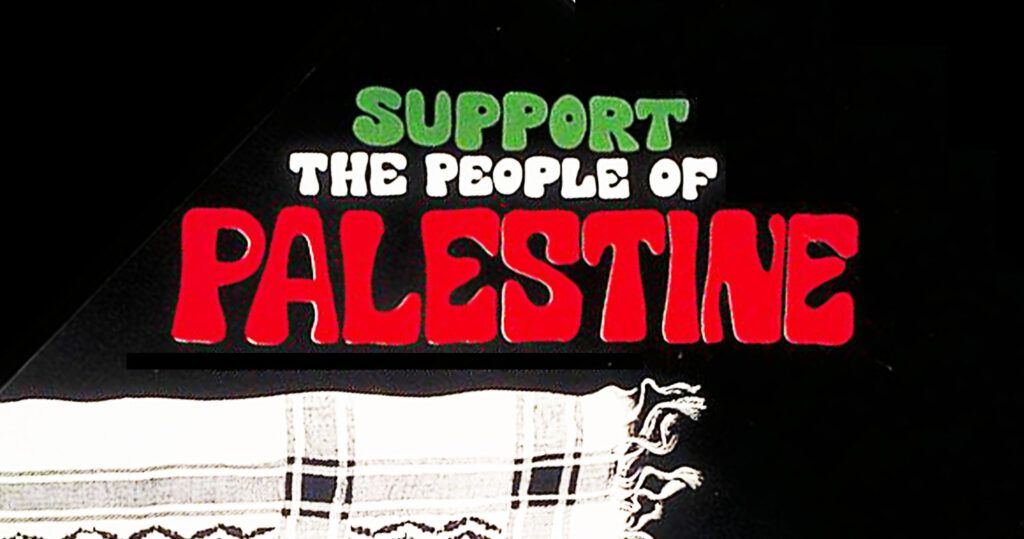
In response to Kaganof: Yes, document the ruination. Yes, indict the architecture of erasure. But also: name the asymmetry. Do not stop at Gaza as a parable of structural violence; interrogate the world-system’s foundational architecture in which Blackness is the zero point. Egypt, Israel, the West, the Arab regimes, they all sustain themselves on paradigms of who matters and who is disposable. And Palestine cannot be set in symmetrical relation to Black disposability without losing something of its analytic truth and political potential.
This is the brutal fact: The world has designated some lives as ungrievable. Black lives sit at that core. The Palestinian catastrophe takes shape in relation to that core but does not dissolve it. Any analysis that ignores that distinction will beautify catastrophe rather than clarify it. All eyes on occupied Azania (South Africa), Sudan, Congo, Haiti, Jamaica, Somalia and all other Black people who are fighting settler-colonialism worldwide. Izwe Lethu!
Oct 31, 2025