MARK WALLER
It’s time to make arts and culture serve the people
Amidst the polycrisis permeating South African society, it is becoming increasingly difficult to identify the areas that need to change the most. A profound transformation is needed across the board. The government’s lack of direction has long since failed the people.
While attention is understandably focused on the major issues of unemployment, poverty and crime, the crisis runs deeper. The neglect of the arts and the humanities more widely points to an interrelated malaise, the escape from which requires a big reorientation of their place in education and community life through the creation of alternative forms of self-development.
If we’re going to reverse the country’s downward slide under neoliberal hegemony and take it in a new direction, the creative energies of even the most marginalised communities will need to be developed and enabled to flourish. There is little to suggest that this will happen under the current policy and funding regime. We need to rethink how we envision the role of the arts and creativity in communities, particularly among young people. This is an area in which Timbila has the experience and potential to make a real impact. We’ll come back to that a little later, but first, let’s look at some context.
Of all the policy sectors, arts, culture and heritage receive special attention in the form of lip service and supportive rhetoric from the government and political parties. No one is going to claim that this triadic sector is unimportant. In fact, it is held in high regard, at least on paper, and is presented as the basis of nation-building, social cohesion and economic development. Certainly, in terms of tourism, for example, it is showcased and aesthetically polished. But it’s also superficial and performative.
Though not the smallest of the government departments, the Department of Sports, Arts and Culture (which includes activities that fall under the bracket of heritage) has a meagre budget, given the supposed importance attached to its mandate, amounting to a little over R6-billion, 0.3 per cent of overall government expenditure. This is more than most other African countries spend on arts and culture, based on the scanty data available for comparison, and far less than the ideal one per cent benchmark proposed by UNESCO.
The output contains plenty of programme and funding support activities, awards, exhibition sponsorship, and indigenous language development. Limited funding channels support arts organisations and individuals, subject to selection criteria. The department also links up with funds that support the arts through competitions focused on the search for excellence. And so on.
Debilitating neglect
It exists in a bubble, seemingly divorced from the rest of society. Despite all the fine talk about cherishing culture and the arts and the crucial role they play in nation-building, there’s a big gap between spouted ideals and material realities.
Why, for instance, is it that art teaching receives so little attention in the primary school curriculum? Primary school kids receive a couple of periods of ‘creative arts’ a week, as part of their ‘life orientation’ studies. They practice copying or colouring ready-drawn pictures, learn the names of famous artists, and they have a few lessons in Grade 6 on elements of Western musical notation.
There are no periods devoted to learning to paint or draw, no clay modelling or collage making, sewing or embroidery, video making, photography, music making, and no teaching about the history and current character of art in South Africa, across the continent and beyond. This isn’t only a problem of resources. It’s about priorities, which then turns into a problem of resources. A 2023 study found that ‘curricular pressure’ squeezes out art teaching, and there are generally no teachers trained in art education. The subject is taught by generalist teachers who, through no fault of their own, know little about the arts, let alone how to practice any of them.
As a result, kids are deprived of a crucial area of personal development. Without art education that focuses on doing and making, children have little opportunity to learn how use their hands and imaginations to paint, draw and create things that reflect and project their inner worlds and ideas. This is not about nurturing top artists, but about developing the creative potential that lies in everyone given half a chance. The same applies to creative writing in all the languages that are supposed to be taught in South African schools.
The school curriculum, especially at high school, worthily focuses on maths, science, technology and economics. The stolidly bourgeois idea is that because the country needs technocrats in these areas to industrialise, grow the economy and create jobs, they should be given priority. The creative arts get sidelined and degraded. They’re considered soft topics akin to hobbies. As Es’kia Mphahlele, said:
“The arts have been served by alternative institutions primarily because the state has never been interested in using schooling to promote creativity.”
What the architects of the curriculum fail to understand is that unless the creative imagination of children is encouraged to grow through hands-on learning and practice, our scientists, economists, and the like will lack the ingenuity, vision and inspiration needed to boost innovation. The creative arts are about much more than the sum of their parts or the specifics of doing them. They sharpen our sensibilities, creating a subtle yet crucial knock-on effect across many areas of life that is often overlooked.
The history void
There’s another area where the arts are sorely needed: heritage, embracing history and memory. This intersects with another conspicuous problem with the school curriculum. In a country plagued by crises largely rooted in historical legacies, it is astonishing that history is neither a compulsory nor a high-profile subject. It seems that schools can choose how much attention they pay to it and which textbooks they use. This does not seem to do justice to South African history, the history of Africa, or the colonialism and imperialism of the minority world.
The story of the anti-apartheid struggle is generally glossed over if it is mentioned at all. Mandela is generally sentimentalised. There is little detail or context, and nothing much on the armed struggle or, say, the role of sanctions in isolating the apartheid regime. Unsurprisingly, the role of arts and culture in the liberation struggle is not covered in the history textbooks provided for schools. There are now moves afoot to make history teaching compulsory, and it is hoped that this may result in a more comprehensive and veracious curriculum.
A country whose people are ignorant of the past and their own history is ill-equipped to understand the present and construct any sort of future. This especially concerns the young people, but also the early 1990s generation, people who have no direct memory of what South Africa was emerging from when it held its first democratic elections.
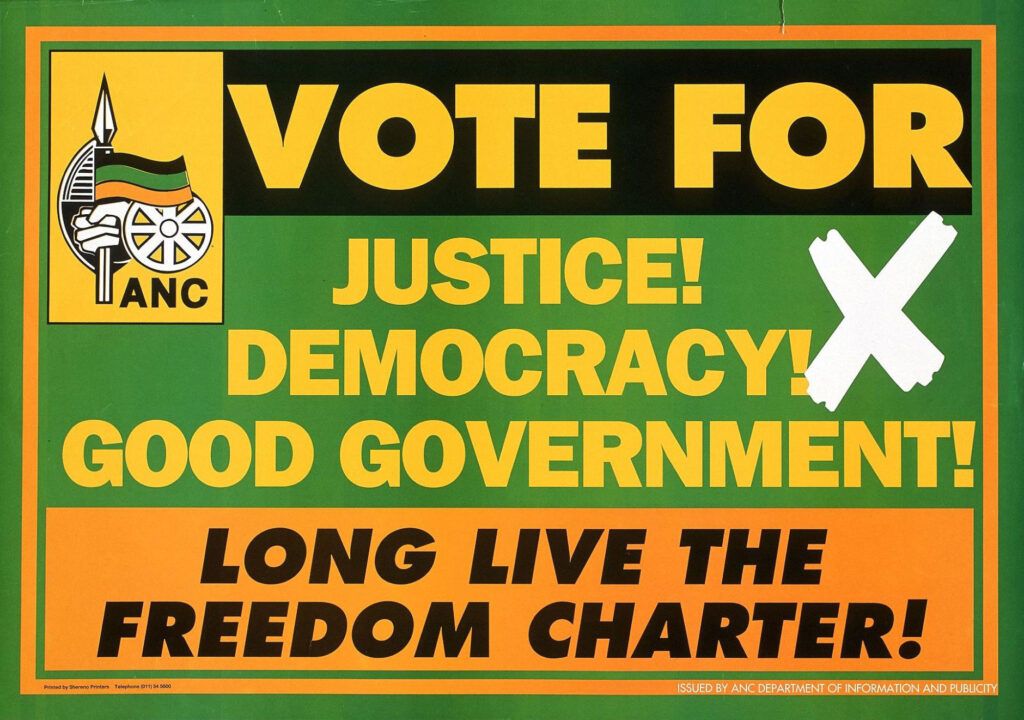
Heritage isn’t just about celebrating cultural traditions, as the annual Heritage Month programmes suggest, but about knowing how those traditions have endured in struggle and what ones have been eroded by the cultural hegemony of colonial and apartheid rule. It is about understanding history through memory and the oral transmission of recalled experience. As Mokubung Nkomo wrote a few years ago:
It bears remembering that memory dates back to time immemorial, it is multifaceted and multilayered (personal, familial, historical, social, political, etc). There are museums and monuments that are embodiments of the heritage of societies. Memories are often curated in physical structures, as in museums and monuments, but sometimes they are ideational, as in the collective experiences of a people, especially if the experiences were traumatic.
This has everything to do with how histories are constructed, developed and taught, intertwining with heritage conceived as a dynamic process. The danger is that heritage, at least in the way it is currently depicted and packaged for fast consumption, becomes sentimentalised and ossified, rather than something that is continually replenished. This links directly to the scandalous history void in South African society. It also ties up with the lack of meaningful art education across primary and secondary schools.
These blank spaces are not inadvertent failings that simply require more attention. They exist within the dull compulsion of neoliberal capitalism, which continually dumbs down culture, blunts or excludes critical voices, practises class apartheid (intersecting with ‘traditional’ spatial and income apartheid) and relegates large portions of the population, deemed beyond the scope of wage labour exploitation, to the social scrapheap. In this setting, historical amnesia is an enormous asset, enabling various degrees of social conditioning predicated on sheer ignorance. The depletion of the arts and aesthetics in education proceeds apace with this trend.
There are, of course, countercurrents and pushbacks both in the political sphere and more broadly that negate this miserable mega trend. There’s plenty of anger and frustration at the way things are going. Niche arts events and initiatives abound, particularly among communities of middle-class creatives. And in poor communities there are masses of happenings where dress, music, and dance often mixing traditional and new styles abound. People are naturally creative and expressive. None of this can be kept down, thankfully. Social media, too, is often a wonderful stage for young creatives.
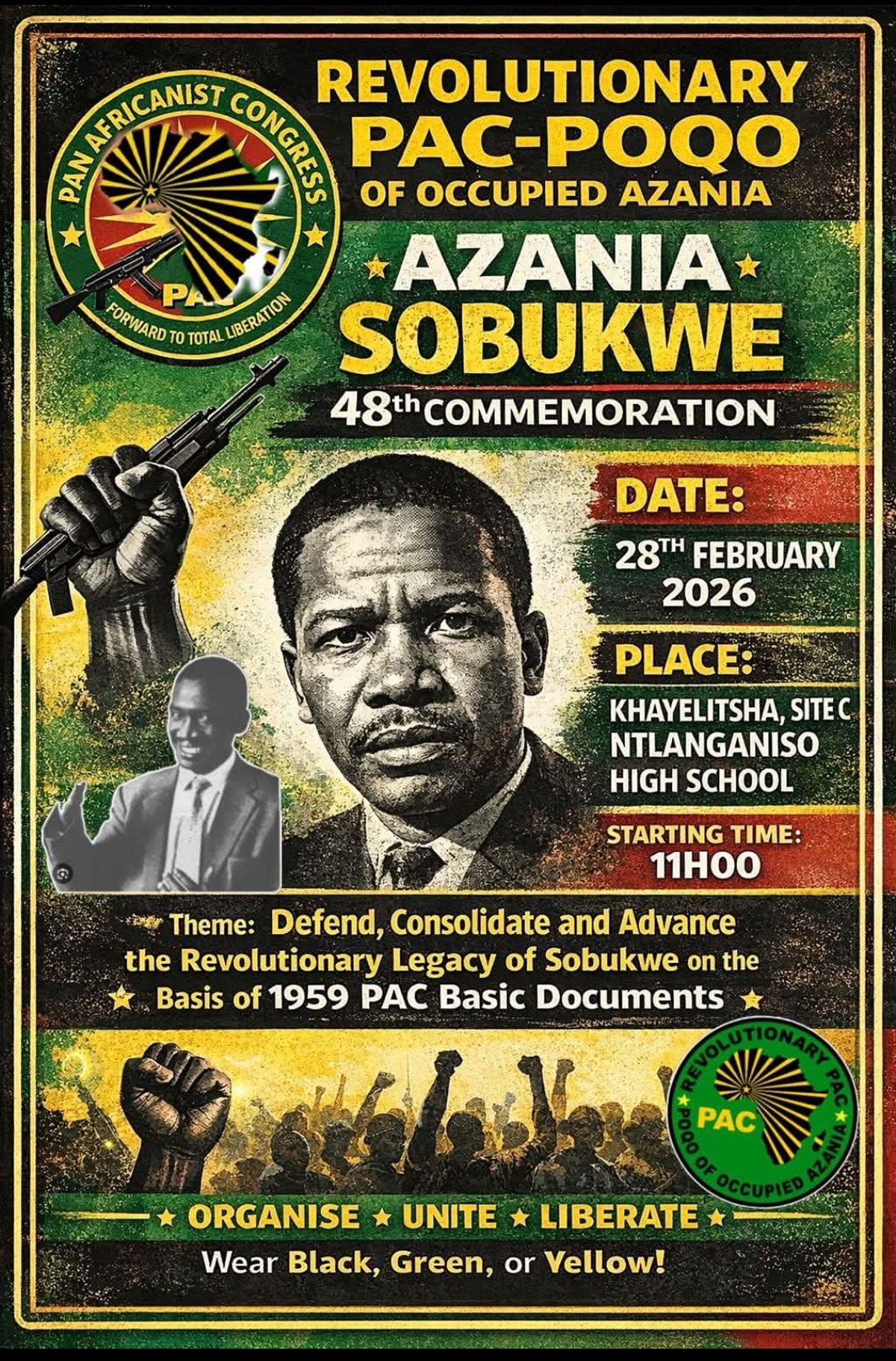
Despite some excellent individual initiatives, what’s missing is an overall conception of nurturing the arts and heritage at the most basic community level, in the neglected towns and villages across the country, in addition to the larger urban township settings. To develop this means starting from within these communities, working with local people, young and old, and using local facilities. It requires scraping together material resources, bringing in outside voluntary expertise, getting donations, crowd funding.
The Timbila model
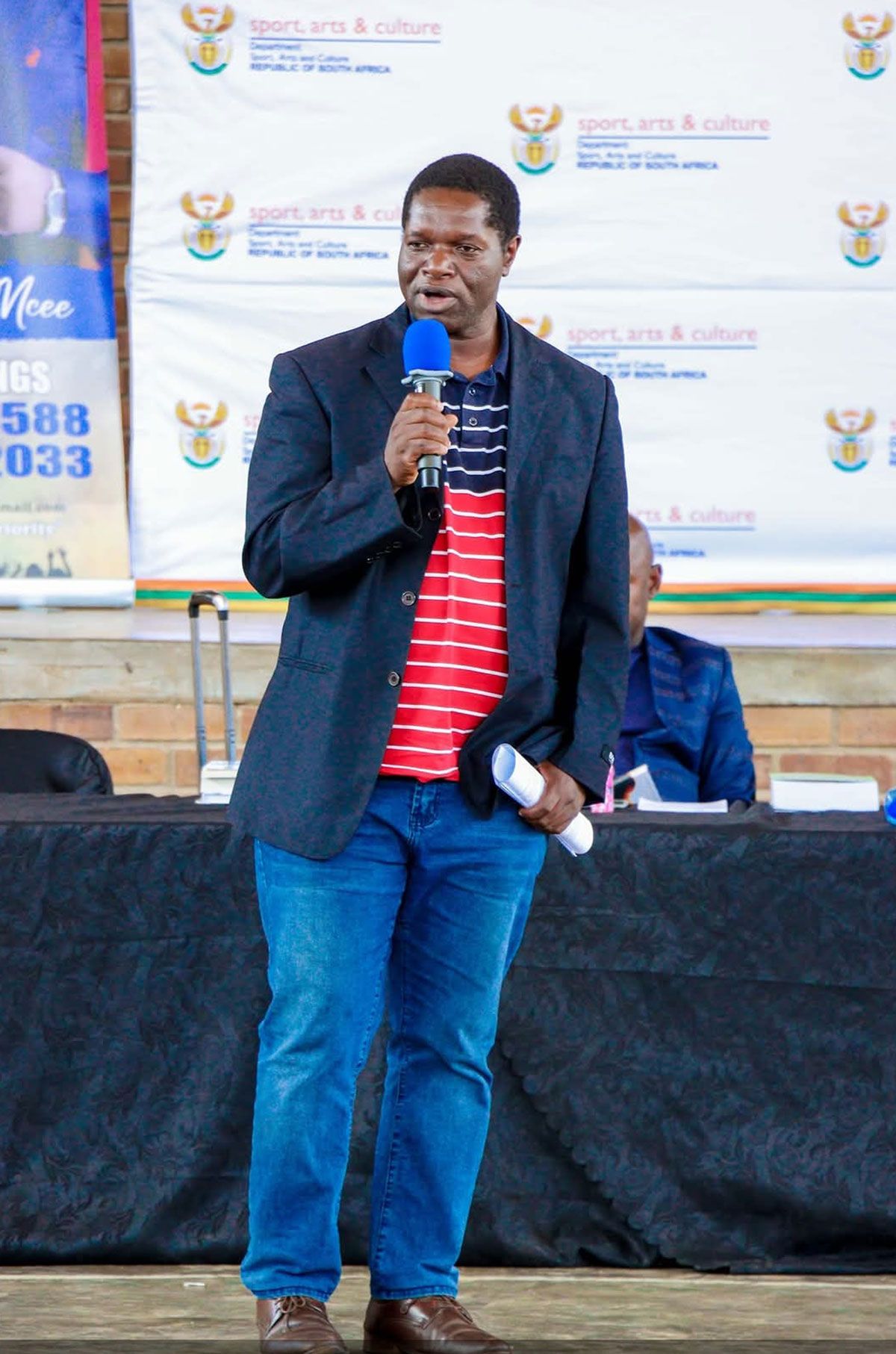
A powerful example of what community-based arts development can achieve exists in Limpopo Province, where the Timbila Poetry Project has been operating for over twenty-five years. Founded by the poet and author Vonani Bila, Timbila represents exactly the kind of self-reliant, grassroots cultural initiative that could help address the yawning gap left by the absence of arts, history and heritage education. What makes Timbila particularly instructive is that it has not only survived but continues to grow and produce tangible results.
In April 2025, Timbila Publishing released a monumental 1,348-page English-Xitsonga dictionary that took eight years to complete, a massive achievement in indigenous language preservation and regeneration.
Timbila is run as a non-profit organisation and it aims to nurture and develop poetry by emerging South African writers, with a writing model that fuses people’s culture, economics, politics and history. It has also attracted visual artists and filmmakers. This is cultural work embedded in community reality.
The sustainability model Timbila has developed over two and a half decades offers valuable lessons. It combines multiple revenue streams rather than depending on the whims of government and donor funding periods. These include strategic grant applications to sources like the National Lottery Distribution Trust Fund, which funded their high-quality Sepedi anthology during the Indigenous Languages Publishing Programme.
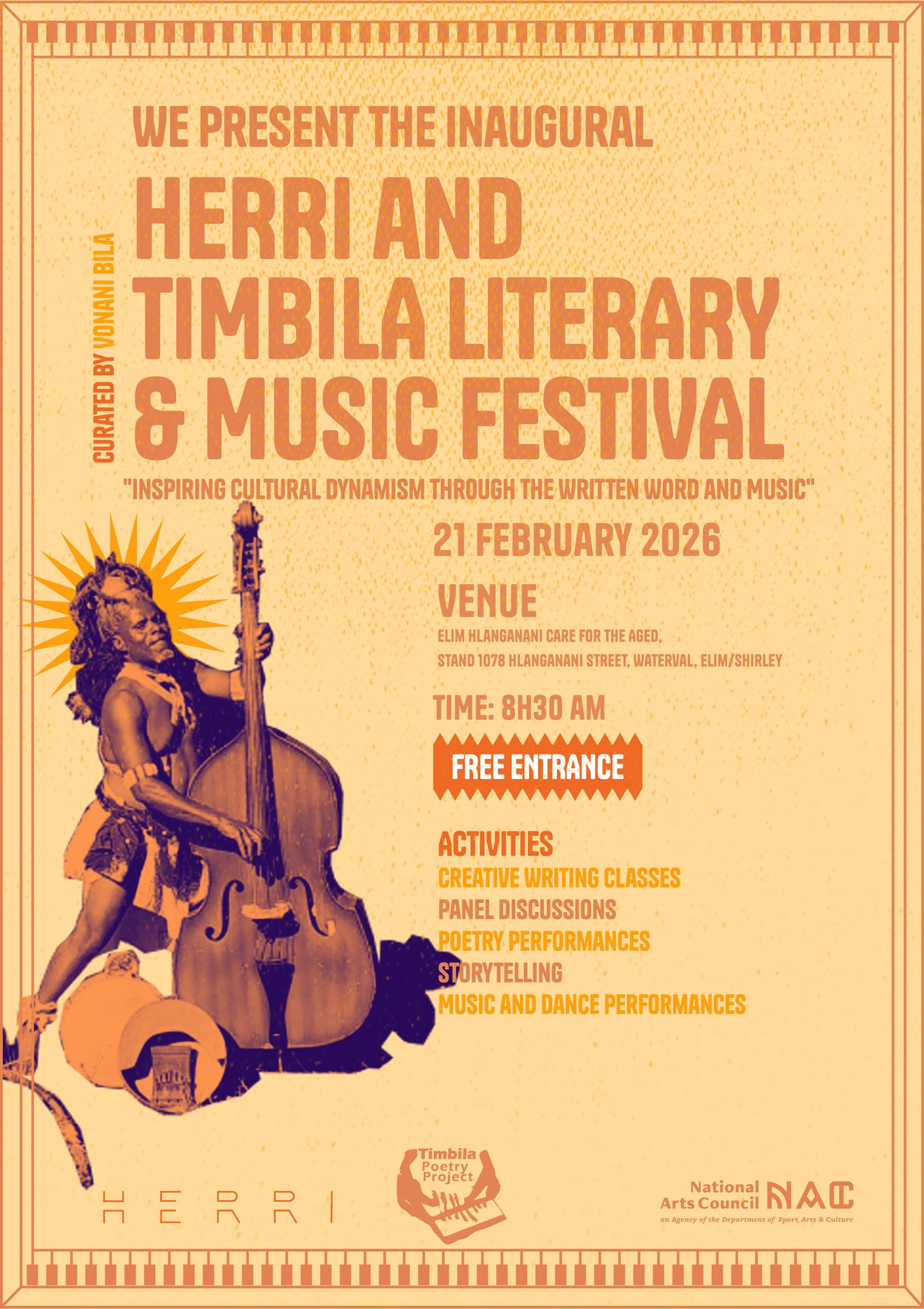
Timbila also curates the Vhembe International Poetry festival and has created educational content, including eight storybooks for newly literate adult readers in Xitsonga, Northern Sotho and English. More recently, Timbila partnered with Herri in late February to hold the inaugural Herri and Timbila literary and music festival in Elim, Limpopo.
Perhaps most remarkably, Timbila has built physical infrastructure in the form of the Timbila Writers’ Village in Shirley Village. This writers’ retreat provides residencies to writers and researchers working on long-term projects, creating a tangible community asset that can generate income and attract support. Vonani Bila has also been instrumental in getting the works of marginalised poets into circulation, holding workshops and actively encouraging new voices from communities that would otherwise remain invisible in the literary landscape.
The longevity and productivity of Timbila demonstrates that community-based arts initiatives can be viable and impactful when they are rooted in local culture, diversify their funding sources, build incrementally, and maintain focus on practical outcomes. By concentrating on indigenous languages, Timbila has accessed specialised funding streams while serving communities whose cultural expression is marginalised in mainstream institutions.
Timbila shows that sustainability comes not from waiting for adequate government support or pursuing the hollow rhetoric of arts-as-nation-building, but from patient, persistent community organising that combines cultural authenticity with practical income generation.
For communities looking to develop their own arts cooperatives, particularly in spoken word poetry and creative writing, Timbila offers a formative model that could be built on and broadened to encompass other forms of art, as well as living heritage and oral history. The model shows that with committed leadership, diversified funding, a focus on underserved communities, and a willingness to build slowly over time, grassroots cultural institutions can not only survive but also become nationally significant.
Perhaps one of the main lessons from Timbila’s experience is that in order to begin to thrive, the development of community arts and culture needs to nurture basic self-reliance and self-sustainability. There is a massive amount of talent locked up, neglected, unrealised in our communities. The system, with its narrow focus on what counts as art, culture and heritage, won’t come to the aid of these communities culturally or in other respects. We have to follow other paths, build on existing knowledge and blend it with new methods to foster cultural confidence and independence and enable people to realise their creative potential and flourish.