LWAZI LUSHABA
A Video Call with Kopano Ratele on Politics and the Black Psyche, 22 July 2024
LL: I’m really sorry, comrade. There was some slight work being done in the building. Okay. And so I had to wait it out, you know, otherwise we wouldn’t have heard each other.
KR: We’re glad you are here.
LL: Absolutely. Professor Kopano. Glad you’re here too.
KR: So let’s launch into it. Greetings and I am deeply humbled and appreciative, Professor Lushaba, that you have made this time. I appreciate this. It is a surprise that we’ve never met in person.
LL: I think I bumped into you once a while back.
KR: But, you know, so these three meetings we’ve had online just satisfy me really deeply and in the context of intellectual work, not just fighting in bodily person. So intellectual work is a really important part of our lives. So today, two questions. You have thought a lot about connections between disciplines. You are a generalist, a general intellectual in a way. Can you make the connections for us between political studies, which is the discipline in which you work, and psychological studies and psychology, you might say, psychology in the narrow sense, and psychology in the sense of the psyche. But psychology is a discipline. Yeah. The connections between politics, political studies and psychological studies, but also the psyche. Could you say more about your thinking on these connections?
LL: Yeah, I have quite a lot that I’m going to say. So, at a point when you think I’ve said too much, just let me know. So let’s begin in a very disciplinary narrow sense, political science, very much like the modern disciplines in the universities, is a fairly recent discipline. But quite unlike the other disciplines, its practitioners have been very shy to admit that its scope is very narrow. You know, Chuma Fe calls political science, the poorer cousin of the social sciences. Calls it the poorer cousin, is because, you know, it’s content is very limited. It begins as a study of government, specifically government institutions. And it begins in America, of course, in the 1920s. And its focuses solely on the executive, the legislature, the judiciary, and any other legally instituted, you know, institution of government. So it was not concerned with other institutions that are not legislated. So its scope is very narrow. It tries to expand its scope, you know, from the 1960s with the Behavioral 10, which often people think that it’s a 10 to study of behaviour. No, it’s actually, you know, the moment when, you know, social sciences, particularly political science, integrates statistics in its study, you know, and it’s an attempt to make it itself scientific. You know, in fact, as in the language of that time it was said, it was that the method of the natural sciences, you know, needed to be integrated into political science so that political science could reach, you know, scientific conclusions that are true across space and time, just like the natural sciences. So at that point, it tries to expand a little, its scope, but somehow the walls, you know, were very strong. It was very difficult to knock them down at a point. Basically, the discipline found it hard, you know, to justify itself in that very strict narrow sense by this event. You know, it was a discipline that had gone into disfavour. What salvages it is its borrowing, it’s growing out of its own foundations. And so we began to have things called disciplinary approaches to the study of politics, which was basically the integration of economics into politics, which gave us political economy, the integration of sociology into politics. It gave us political sociology, you know, and so on and so forth.

Now, one of those, you know, disciplinary approaches to political science was the integration of psychology into politics, which then gave us political psychology, you know? So that’s one way in which political science has come, you know, or its path has come to cross psychology. Subsequent to that, you know, there was a much more fruitful, that path, by the way, we need to say that original first path of, you know, disciplinary approach to the study of politics, bringing psychology in was not very productive. It didn’t bring much to the discipline.
I think it’s the second encounter between political science in the narrow disciplinary sense and psychology that brings us more fruition. It is when a part of psychology, psychoanalysis, you know, comes into, into political science. And it is only at that point when political science begins to take seriously the lessons from psychoanalysis that you’ll find a much more fruitful interaction, you know, between political science and psychology. So this is the moment when, you know, political science will begin to take seriously, people like Freud. So Lacan sits at precisely the junction where he’s the one who brings it to us, but also he’s the one to study, you know, as a psychoanalyst, if that makes sense. You know, so people like Lacan, you know, and, several other psychoanalysts that was a much later development, you know, than the first one. And that has proven very useful.
And, you know, if we were to fast forward, you know, it is precisely that encounter that has enabled us to read Fanon, for instance, in a much more productive way, you know, than we often did. Because you see, the reading of Fanon in times past was very, you know, strict political science kind of nationalism, the critique of nationalism. There was very little concern with the psychology of the oppressed, you know?
So it was, it was that second encounter when psychoanalysis comes into political science that, you know, as a discipline there is a much more fruitful encounter. I think there is a much larger encounter that is inclusive of both the psyche, as you say, and the discipline. And I think that that’s where I think we should look for much more progressive, because the study of psychoanalysis also has not in as much as it has been fruitful in terms of disciplinary development of the discipline, it has not always yielded productive politics. You know, it has at times given us very, you know, uh, reactionary is now an overused word, but, you know, not so helpful way of reading politics.
I mean, if you think of Mannoni, for instance, you know, you know, what’s the title? Caliban, Caliban and Prospero. So if you think of Mannoni, for instance, but there are several others. So the point I’m just making is that it’s not always been, it has not always given us a progressive way of thinking. I think that where lies a much more in my thinking, you know, a much more progressive event, you know, forward moving and looking, you know, kind of, you know, encounter is in that space that is indifferent to whether this is about the psyche generally, or it’s about the discipline as it understands itself. I think that once we, you know, become indifferent to those boundaries, that’s when we’re likely to find, you know, a much more interesting encounter.

Let me get onto it. What is that encounter? Let me try and begin from an example. Now, if you think about colonialism, and you be specific and think about colonialism in South Africa or in Africa, colonialism was not always a military project. It was not.
Colonialism did not for its own reproduction, depend solely on physical violence.
In fact, in colonies of domination where you had fewer colonizers than the colonized, it actually depended on something else other than physical violence, because obviously the scales here were tipped in favor of the colonized because you had very few colonial administrators. And so there is a certain supposition, or rather there is a certain way of thinking about colonialism that hinges on the violence, the physical manifestations, you know, of that violence.
In order to reproduce itself, colonialism depended on something else.
And so it had to turn itself into a different kind of warfare, which was a psychological warfare rather than just, you know, physical violence in South Africa. That psychological warfare was perhaps even much more pronounced than in many other, you know, I haven’t looked closely, but my inclination is to say that it was in South Africa that you found that psychological warfare even more, you know, aggressive and assertive than in other colonies in the continent. But, you know, like I say, it’s a hunch.
LL: Now, what was this psychological warfare again? Let’s try and ground it in literature. There is a book titled An African Survey, which is a big compendium by Lord William Malcolm Hailey who was a British colonialist. And in 1945, he publishes this big compendium titled, An African Survey, and in the first part of An African survey he tells us that at the start of colonialism, particularly in Europe, not just British colonialism, all, you know, European colonies had to establish schools where settlers were first sent before they came to the colonies. And so they did not just leave and get onto the ship and come to settler colonies in the continent. You know, they first had to go through training.
LL: Now, unfortunately, it doesn’t tell us what they learned in these schools, but it is fairly easy to tell because America actually tells us, because, you know, the literature in America is much more open about what they learned in those groups. So all settlers were prepared for their relationship, their everyday encounter with the colonized. There was to be an acceptable way of behaviour that all the settlers had to display in their relationship with the black colonized. And as the training went in those schools, it was like, it was, this is not your individual volition because if you let yourself behave otherwise you are going to endanger the whole colonial project. So if you decide to be friendly to the colonized or to the meetings, or if you try, you know, to have a much more equal relationship with the colonized, it is not only your life that we are going to put in danger, but you are going to jeopardize the whole enterprise, which is colonialism, which is then to say all the settlers who came into the continent.
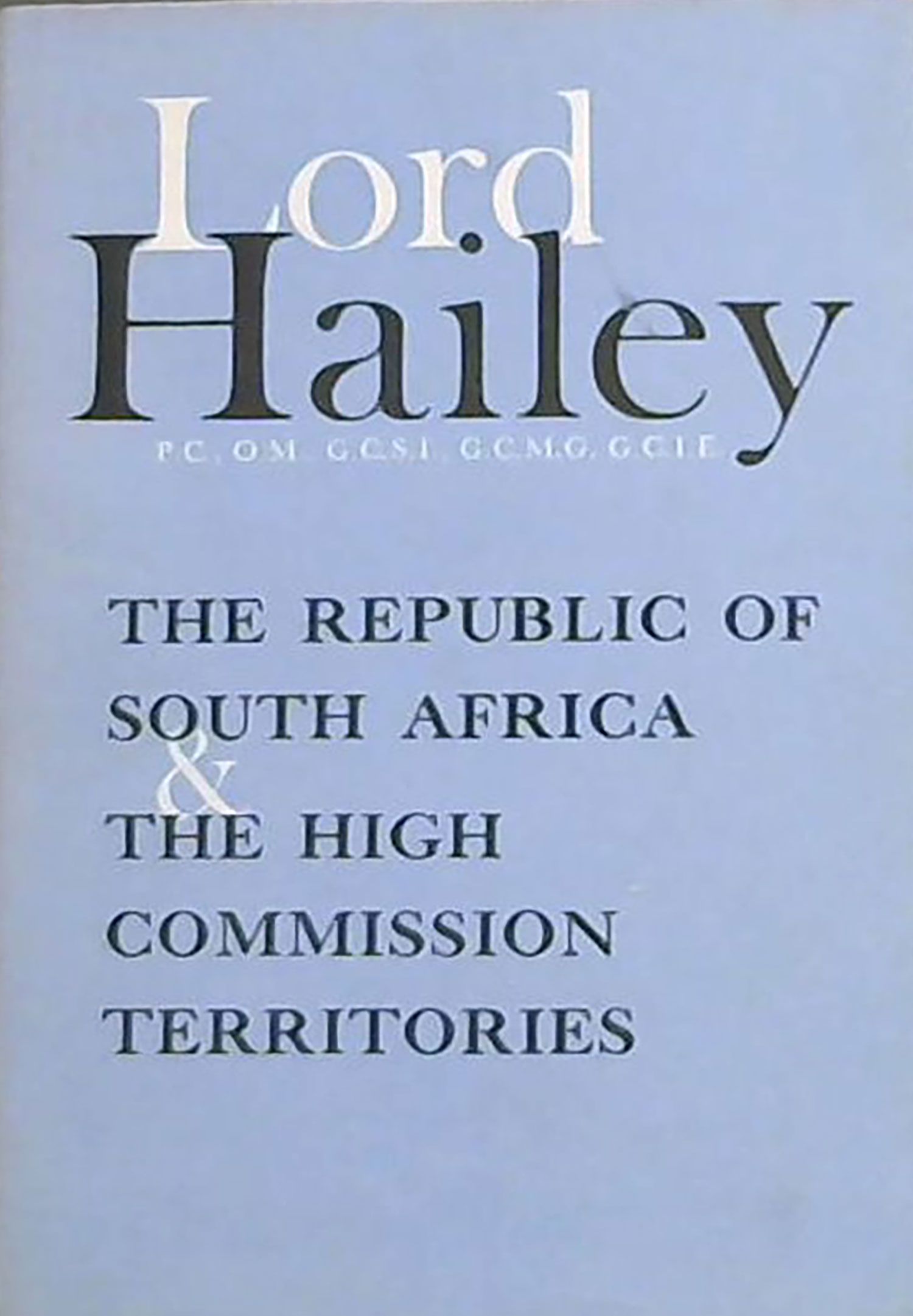
LL: By the way, you know, the interesting thing about that compendium is that Lord Hailey lists these schools in France, in Germany, in England, you know, all the former European colonial states, each one of them had these schools, and they are listed, and this is where all of those who wanted to go and settle, you know, in the colonies other than the official, you know, colonial officials who were trained of course formally in other institutions, but every other person had to go through that initiation.
Now, this is where the psychology of the oppressor was ingrained in their minds, how the oppressor ought to behave in relation to the oppressed.
And as I’ve said this, it was emphasized that it’s not your individual volition. If the native calls you, “sir”, you don’t have to say to the native, “no, call me by name”, because it’s not what you elect. It is for the good of the project. If the native genuflects when he or she greets you. It is not only of course that they were told what the native might do, but they were also told what they should expect in the everyday behaviour of the native towards them. And they had to demand that kind of subservient behaviour from the native.

This would govern, for almost a century, the relations, the everyday relations between the colonizer and the colonized. This is why structurally they miss it when they study colonialism in terms of institutions, or in terms of the economy, in terms of, you know, all those phenomenologists people, like, you know, Albert Memmi have told us, it is in the everyday relations between the colonizer and the colonized that you find the most telling, you know, psychological effects of colonialism. Because this of course, was over time ingrained, and the colonialists came to believe it. So the myths that today you find perpetuated. I do not know about the institution you are in, but at UCT you find it quite a lot.
So there’s a method, UCT, that the reason why you don’t find many black south Africans at postgraduate level is because they’re lazy. Or if they’re not lazy, they elect to go and work, you know, rather than pursue post grad studies, they elect to go and work.
But you get a sense that the second one is an afterthought. Mainly it is that we are thought of as being lazy. That’s why we’re not at post grad level. Now, that’s not new. You see, this is part of the old psychological warfare about the native who’s lazy. You know, about the native, who’s loud, and therefore this is how the colonizer has to relate, you know, with the native.
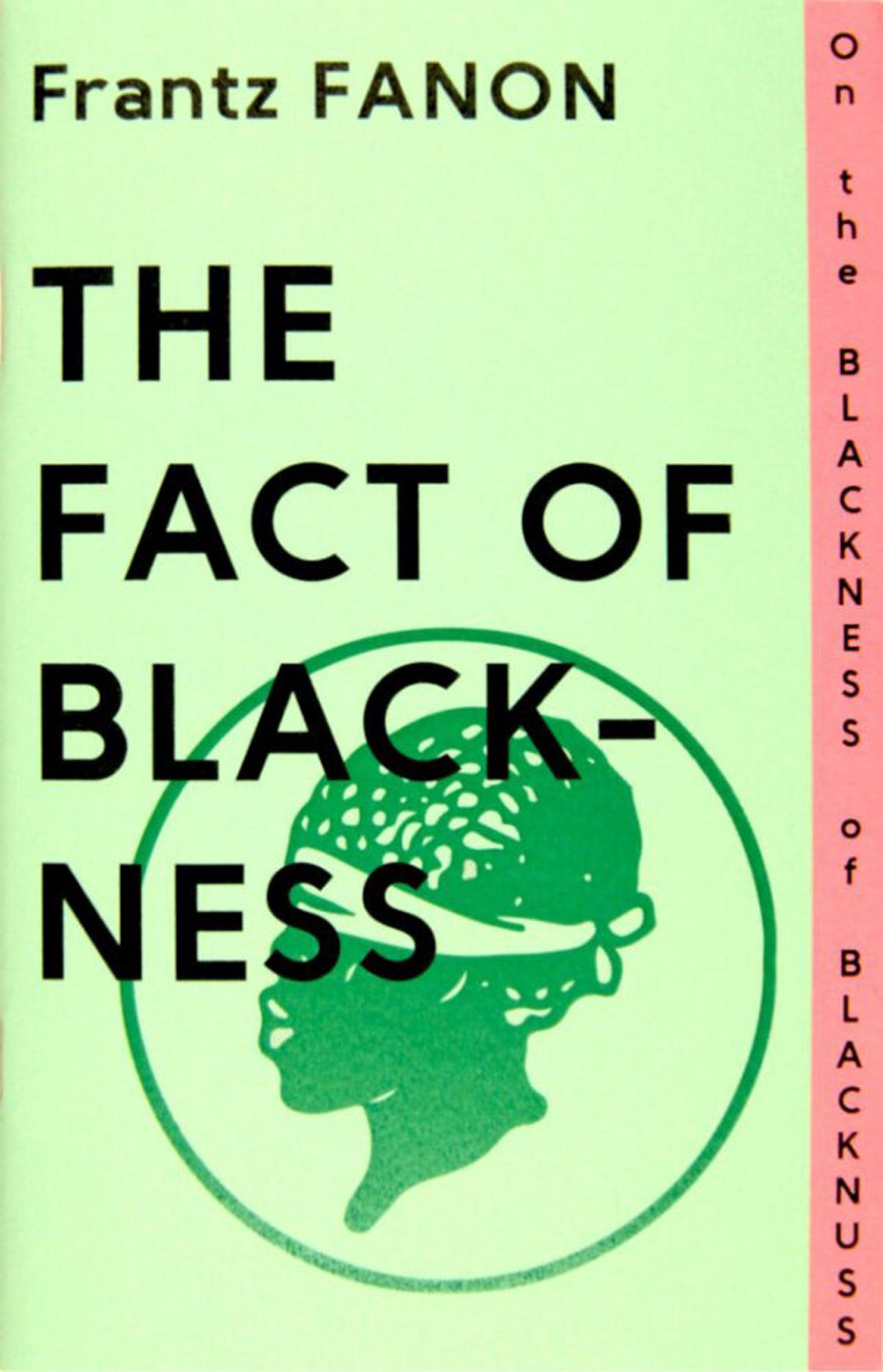
LL: Now, this would determine the kind of relations between the colonizer and the colonized. Of course, it would grow into formal studies of the psychology of the native. You know, it begins in this way, but then it enters the formal boundaries of, you know, the discipline of psychology. So there is a certain mutuality that is indifferent to the boundaries here as you are going to see. So the point in all of this is that colonialism was not sustained solely by military or physical violence. It was also psychological warfare. This is the coming together of psychology broadly defined. And politics where the political project depends for its reproduction. Remember the famous phrase, “as every social formation produces, it must also reproduce the conditions of its own reproduction”. This is how colonialism reproduces the conditions of its own reproduction at the level of the psyche.
POSTSCRIPT
“All who appear suspicious, hostile and dangerous to the good bourgeois,” Stirner said, “could be brought together under the name ‘vagabond’; every vagabond way of life displeases the bourgeoisie. And there are also intellectual vagabonds, to whom the hereditary dwelling place of their fathers seems too cramped in and oppressive for them to be content any more with its restricted space and so go to find more space and light far away. Instead of remaining curled up in the family cave stirring the ashes of moderate opinion, instead of accepting what has given comfort and relief to thousands of generations as irrefutable truth, they go beyond all the boundaries of tradition and run wild with their impudent criticism and untamed mania for doubt. These extravagant vagabonds form the class of the unstable, the restless, the volatile, formed from the proletariat; and when left to give voice to their unsettled natures, they are called unruly, hot heads, fanatics…”
Renzo Novatore (Abele Rizieri Ferrari ) paraphrasing Max Stirner (Johann Kaspar Schimdt)