IGNATIA MADALANE
Not on the List
I left home before the sun was fully awake. Gogo stood at the door with her shawl tight around her shoulders. Her hands were shaking as she packed my food into a small plastic bag. Pap and fried chicken. She said it would last longer that way. Gogo always thought about things lasting. Food. Life. Me.
“Uzoziphatha kahle,” she said. You will look after yourself. I nodded, even though I did not know how to do that without her.
My whole life fitted into one small bag. Clothes. Soap. Toothbrush. One pair of shoes. When I hugged her, I held her longer than usual. She smelled like firewood and cooking oil. I wanted to carry that smell with me to the city.
In the taxi, my heart was beating too fast. I kept touching my bag to make sure it was still there. I thought of Gogo sitting alone in the house, listening to the radio, waiting for my call. I promised myself I would not cry. I was a university student now. Strong people do not cry.
When I arrived, the city swallowed me. Noise everywhere. People shouting. Taxis hooting. Vendors pulling at my sleeve. I felt small, like I had walked into a storm without knowing how to swim.
“Ngena la! Woza la!”
I held my bag tightly. A man offered me a taxi. R300. I almost laughed, but my stomach turned. That was more money than I had for days of food.
“No, thank you,” I said and walked away fast. I remembered Mandla’s warning. Not everyone who smiles means well. I remembered Gogo saying, “Open eyes are better than open hands.”
I asked a security guard for directions. He pointed without looking at me and said nothing else. I walked. My legs were tired but I kept walking. Gogo walked far for me, I told myself. I can walk for myself.
At one point a woman shouted at me, calling me “my darling.” Her lipstick was too bright. Her eyes too sharp. I walked faster. My heart climbed into my throat.
“Gogo,” I whispered. “Help me.”
When I reached the gates, I felt proud. Like I had crossed a river without drowning. For a moment, I stood taller. I had made it.
Registration was long and confusing. Offices. Queues. Papers. Stamps. People speaking fast. I nodded even when I did not understand.
Poor people learn early how to hide confusion. We learn how to pretend we belong.
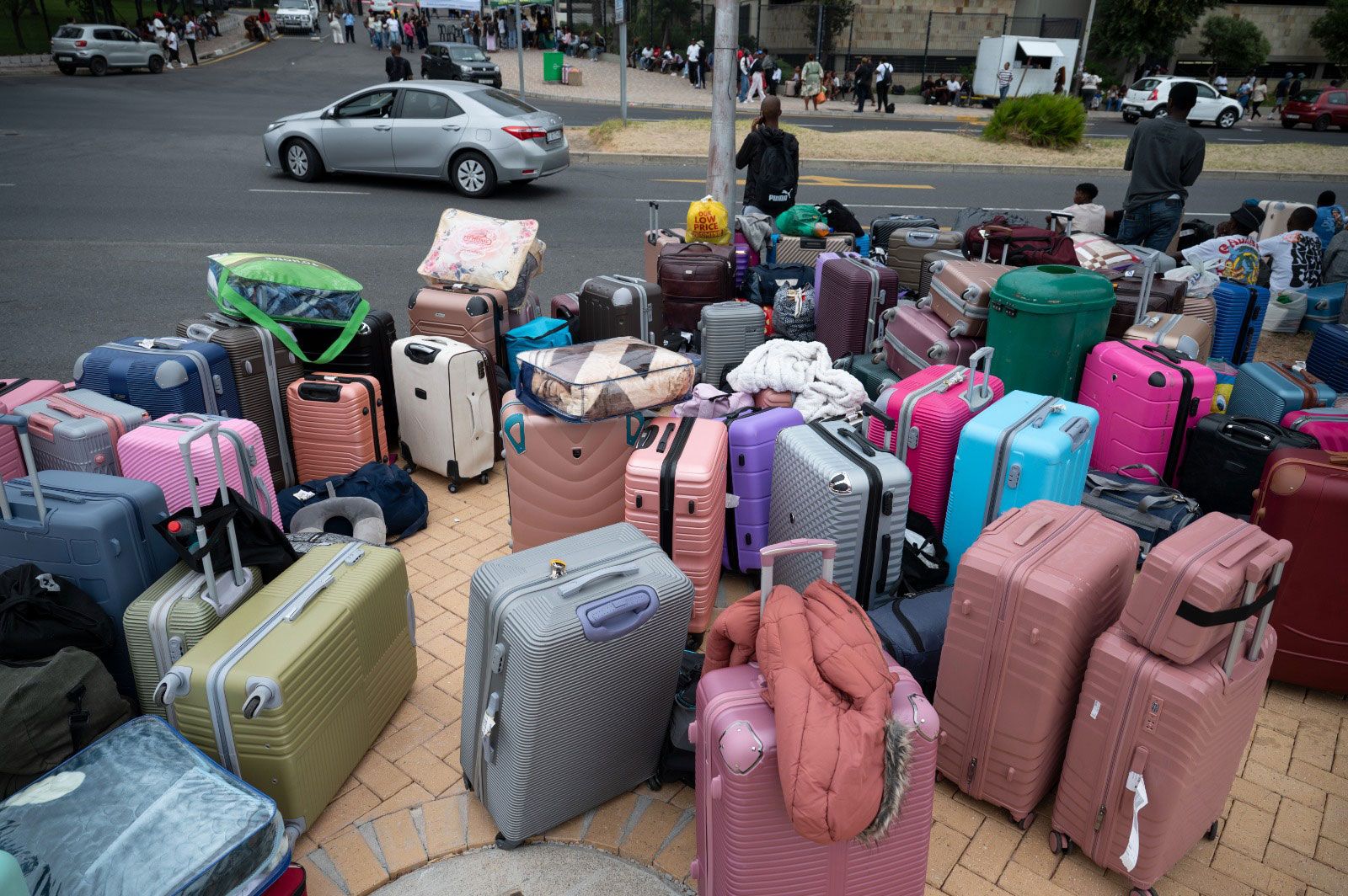
By the time I finished, my stomach was empty and my body was heavy. I went to the residence office with hope beating in my chest. This was the last step. A bed. A room. A place to breathe.
The counter was high. I had to stand on my toes to be seen. The woman behind it did not look at my face, only at my papers. I borrowed a pen from the student behind me because mine had no ink. I felt their eyes on my back.
She typed my name.
She frowned.
She typed again.
“You are not on the list,” she said.
I smiled because I thought she was joking. She did not smile back.
“I… I have a scholarship,” I said. “I was told I would have accommodation.”
She shook her head. “You are not on the residence system.”
Something inside me dropped.
Not loudly.
Quietly.
Like a stone into deep water.
“So where do I sleep?” I asked.
She sighed. “You need to take it up with administration.”
“But administration is closed.”
“That is policy,” she said. “There is nothing we can do.”
Policy.
Nothing we can do.
Those words were heavier than my bag.
I stood there for a moment too long. People behind me cleared their throats. I moved away slowly, as if I was the problem blocking their progress.
Outside, I sat on the steps with my bag between my legs. Students passed by laughing. Some complained about slow Wi-Fi. Others argued about what to eat. I watched them and wondered how many of them knew what it felt like to have no place to put your body at night.
I held my phone.
Gogo’s name was right there.
One press away.
My finger hovered.
My chest tightened.
If I called her, her heart would break in that quiet way old hearts break.
If I called her, she would blame herself.
If I called her, she would feel helpless.
So I put the phone down.
That was the hardest thing I did that day.
I felt anger then, small but hot.
I had worked too hard to be erased by a list.
I had crossed too many roads to be told I did not exist.
Shame followed the anger.
Shame always follows anger when you are poor.
I pressed my hands together the way Gogo used to when she prayed.
“UNkulunkulu akakushiyi,” she always said. God does not abandon you.
But I felt abandoned.
By the city.
By the university.
By a system that said I was good enough to study, but not important enough to be sheltered.
A girl from the SRC stopped when she saw me sitting there.
“What’s wrong?” she asked.
I told her. My voice was thin. I hated that.
She made calls. She argued. She sighed. Then she said, “My cousin can take you for tonight.”
For tonight.
Not forever.
Just tonight.
She put R70 into my hand. I stared at the money like it was something holy. I had not asked. She had seen.
That night I slept on a mattress on the floor in a stranger’s house. The ceiling was unfamiliar. The sounds were unfamiliar. But I was safe.
Before I closed my eyes, I saw Gogo’s hands. Wrinkled. Warm. Strong. I whispered, “I am still alive, Gogo.”
The next days were slow. Explaining myself again and again. Being polite while being scared. Being brave while being tired. Being invisible while needing help.
I learned something then.
Poverty is not only about having nothing. It is about being made to feel like you do not belong where your dreams take you. It is about being treated as a mistake.
But I learned something else too.
Even when systems fail, people can still choose kindness.
And sometimes, kindness is enough to keep you breathing.
I was not on the list.
But I was still here. And tomorrow, I would try again.
“Not on the list” is a true South African tale that most black students can relate to. My own son is enrolled at UP but the university couldn’t shelter him. We found him a private accommodation at an accredited student facility, but for the past four days, there hasn’t been electricity at that residence. I have paid a lot of money to secure his accommodation, but he is crammed in a small room with four other first year students. In their so-called fully furnished room, there is a fridge, stove, etc, but no hot water, no comfort. It’s dark at night, and reaching 8th floor and knowing it’s dark is torture.
These are some thoughts I had after reading Ignatia’s story. So I like it a lot. It is simple, uses accessible language. It explores youth marginalisation convincingly. It breaks down the complex politics and economics of education without quoting theorists. I hope this story will attract the youth to begin to follow herri, and for them to be more active in shaping their own future (like the Fees Must Fall generation).
Best regards,
Bila