BONGANI TAU
Ukuqophisa umlandu: Using fashion to re-locate Black Psyche in a Township
“Design is never neutral. Every image, typeface, building, colour and layout decision is a political act, framing how we remember, who we value, and what futures we imagine.”
— Bongani Tau, @abengoni, Instagram 2025
Ukulanda is to fetch. When a person dies far away from home, we perform a ritual to fetch “ukulanda”, their spirit, and relocate it to a place of belonging.
I wanted to write another essay that performs knowing. But I am typing this in a fifteen-seater minibus taxi, surrounded by fourteen other beautiful and bright minds with hopes and dreams. So I am going to ground this.
Dreams that will take miracles to reach. When you see the blueprints of the long past (about and for our lives), you grow pessimistic. To me, the words “Domination must envelop the subjugated, the colonised, and maintain them in a more or less permanent state of trance, intoxication, and convulsion so that they are incapable of thinking lucidly for themselves” are not only true but real. I grew up in Daveyton, the township model of Apartheid.
But here I am, mid-journey, mid-dream, typing in a fifteen-seater taxi, surrounded by lives that have already been written in scripts we did not author. Like Ngũgĩ wa Thiong’o once said, “Colonialism normalizes the abnormal.” We were born into what was already made to feel natural: inequality, containment, erasure. This essay, then, is not only performance—it is recovery. Ukulanda. A return to language, to dress, to memory, to self.
I have seen brothers and sisters fall off the deep end, priesthoods, and be played out of institutions built to “build society.” Around me is what Le Corbusier might have called a “machine city” — for machine people, with machine hearts, and machine mindsets. Laboratories of capitalism.
Ngũgĩ warned that “the biggest weapon wielded by imperialism… was the cultural bomb.” It erases history, disorients identity, and ultimately, causes a people to doubt the validity of their names, languages, spaces, and selves. The township, as spatial design and psychic weapon, embodies this bomb-displacing not just bodies but dreams.
Indlebe yam liyaluma. Angikuzwa ukuthi uthini?
I see ethnic groups, separated and infiltrated by linguists who determined what counted as ‘language’ versus pidgin or creole (what needed to be discarded). They fixed lingua francas and measured ‘literacy’ through tongues foreign to the very subjects under study. Some almost homogenised the entire country, “incorporating” Black people into Afrikaans — itself a creole — were it not for ukuhlabelela kukaThembekile Mkhize in ’76, signalling the start of a revolution.
Umzimba wami ubambekile. Ijele likabani leli?
The township is a fascinating invention. It is the living blueprint of modernity/coloniality, where the logic of the pharmakon — both poison (for blackness) and cure (for whiteness, since race was the scalpel used to remove blackness from whiteness surgically) — quietly plays out. As in Bernard Mandeville’s Fable of the Bees, some are sacrificed for the so-called greater good.
Domesticated. Contained. Adam Smith’s classical idea that labour makes the nation rich found fertile ground here, so long as that labour came from Black bodies on the fringes.
Townships like Daveyton were never accidents. They were laboratories for the national project: to “civilise” the majority while constructing an identity that served Western economic and cultural interests. The logic of apartheid shaped them. Engineered with precision to contain, monitor, and control Black life. Streets were gridded not just for transport but for surveillance. Houses were small by design, reinforcing scarcity and dependence. Schools were not places of liberation but tools of compliance. If Dostoevsky’s Crime and Punishment and Baldwin’s The Fire Next Time were the original shows, this was the terrible spoof.
Here, all forms of design were mobilised to devalue Black life and maintain it in a permanent state of umsangano wokuphila emhlabeni wamanga. Amanga as Western ideologies working on and undermining Black thought, psyche, intellect, episteme, aesthetics, and humanity.
As a resident and researcher curating traces of Daveyton in the digital realms, I am beginning to see how central memory is not just as recollection, but as a living collection of traditions, rites of passage, aesthetic sensibilities, pedagogy, and expressions that shape identity. My work moves between past and present, archiving what has been, observing what is, and imagining what could be. Through experimental ideas, lectures, and workshops, I aim to seed new ways of thinking while facilitating the transfer of skills that keep our culture evolving.
Ukuqophisa umlandu — return to sender
UDarkie akayitholi inkululeko ngoba namanje basamudukisela umkhondo.
When you close people into a confined space and strip away their traditions and gods, you disorient them.
This essay is not only my voice. To trace umlando is to recognise that knowledge is never held by one but carried through many. I therefore turn to those whose practices illuminate other ways of seeing and knowing: artists, thinkers, and makers who resist the colonial matrix in their registers. Their work speaks as both testimony and method, expanding what it means to remember, to design, and to imagine otherwise.
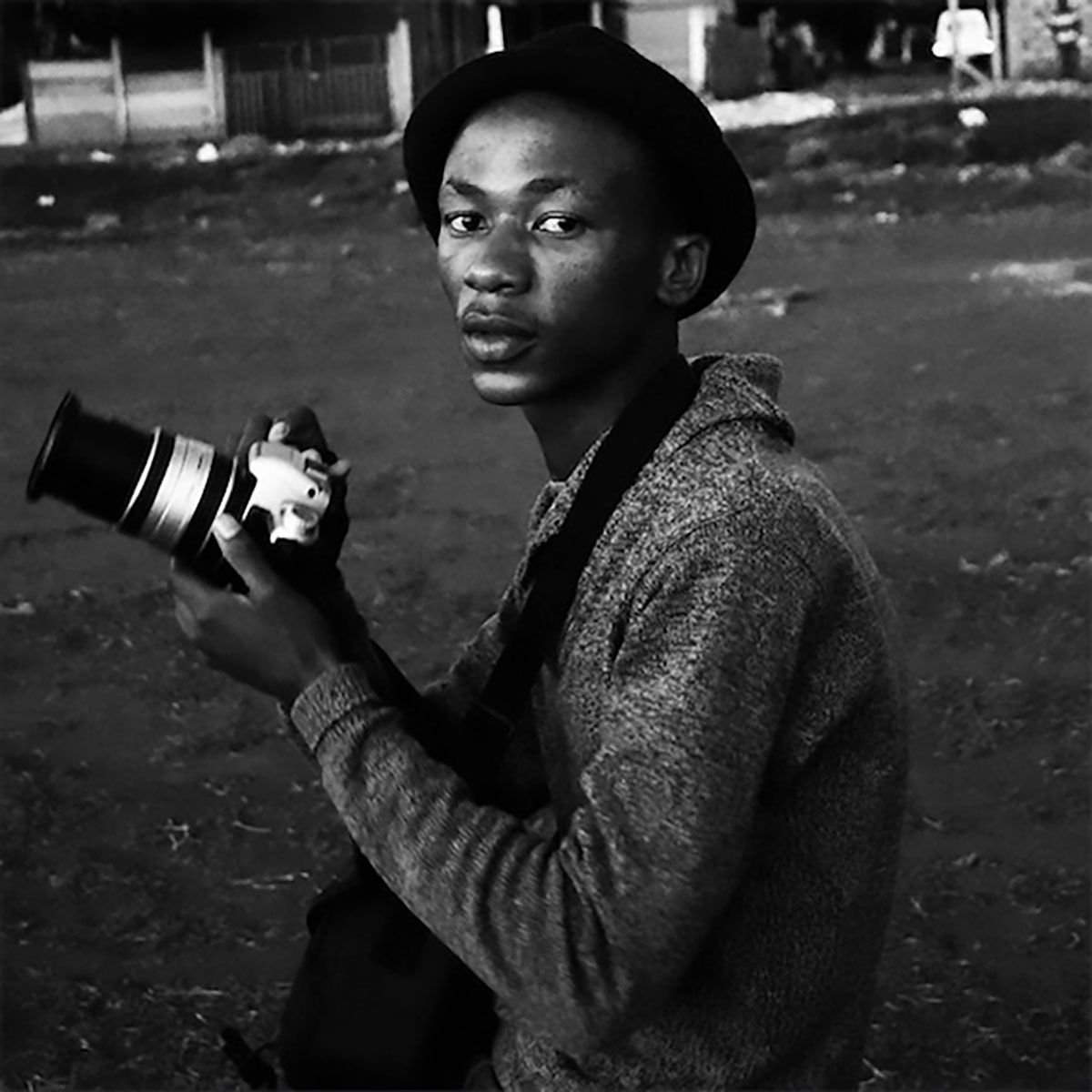
Everyday Image: Lindokuhle Sobekwa
I first met Lindokuhle Sobekwa for an interview about his FNB Art Prize–winning work, and I have been following his practice since. Raised in Katlehong, a township intimately tied to Daveyton, he has become one of the most incisive visual voices of his generation. Trained through Of Soul and Joy and the Market Photo Workshop, he treats photography not as mere evidence but as a means of re-collecting what colonial design sought to disorient.
Ngũgĩ believed that “language as culture is the collective memory bank of a people’s experience in history.” Photography, like language, can restore what was scattered. It can recall, re-collect, and relocate the psyche, one shutter, one story at a time.
His practice has earned international recognition: Magnum Photos membership, the FNB Art Prize (2023), and the solo Umkhondo: Going Deeper (Johannesburg Art Gallery, 2024–25). Developed with collaborators such as Simone Leigh, Lebohang Kganye, and mentor Bieke Depoorter, the project weaves images, family archives, and oral testimony into a resistant cartography of memory. It reconnects him to histories suppressed, enabling identities beyond the township and offering a visual language through which others might navigate the fractured design of Black life.
At the heart of Umkhondo: Going Deeper lies Sobekwa’s search for his sister, Ziyanda, who disappeared when he was young. The exhibition threads together photographs, handwritten notes, and family archives to reconstruct fragments of her life and absence. What emerges is not only a portrait of personal loss but also a meditation on how memory itself can resist erasure. By bringing Ziyanda’s traces into the gallery space, Sobekwa transforms private grief into collective reckoning and an insistence that even what is dislocated or silenced can be made visible, legible, and shared.
Sobekwa shows us that seeing is never passive; it is a way of assembling what was scattered, of retrieving knowledge designed to be erased. His practice is one example of how we defy the colonial matrix by re-collecting memory and re-imagining selfhood.
Fashion as a technology to escape the marching arrows of time
Photography is one tool of resistance. Performance, dress, and embodied ritual have long served similar purposes, staging memory and invention in ways that re-route Black life beyond its imposed confines. I was reminded of this recently at the Market Theatre, watching Roland Gunst’s Spirit Capital, curated by Nisha Merit.
What these fashion rituals demonstrate is not frivolity, but futurity. Like mother tongues once banned from classrooms, these styles speak. They are grammar and gospel forms of knowing, forms of saying we are here. Ngũgĩ believed that “we must reconnect to our base and then connect to the world from there.” Sapologie and izikhothane do precisely this: styling the base into brilliance.
The performance examined how Congolese bodies, once domesticated within the Tropical Bungalow housing scheme imposed by Belgian colonialists, deployed dress and performance to subvert their conditioning. In doing so, they refused the categories through which they had been subdued and invented cultural and theatrical strategies of liberation.
This genealogy leads us to Sapologie (La Sape). This tradition illustrates two interlocking truths: first, the colonial project’s fragility, its obsessive need to inscribe boundaries and immortalise categories through design. Second, the dynamism of the undomesticated imagination is the capacity of oppressed peoples to transcend barriers through theory, performance, and aesthetic invention.
Here, a critical parallel emerges with izikhothane, a youth culture that unfolded within South African townships, those existensminimum spaces of “machine-domesti-city.” Though geographically distant and historically distinct from La Sape, both were dismissed by the disciplinary gaze of economics as “conspicuous consumption.” Yet both reveal how spectacle, style, and embodied performance operate as technologies of refusal, disrupting colonial scripts and re-coding Black life through joy and invention.
What Spirit Capital and its afterlives teach us is that memory is a contested terrain. Forgetting can be strategic, discarding identities that no longer serve us just as remembering can be insurgent, clinging to what was intended to be erased. The essential questions are not only about what to remember but also about what to forget: what can we learn from these traditions that defied spatial and colonial categorisation? What occurs when we begin to “forget” that we were ever colonised?
Ukuqophis’umlando ngendwango
“Fashion is part of the process by which the unequal distribution of power within society is constructed, maintained and experienced as legitimate; but fashion can also be used to contest one’s position within society.”
Dr Christine Shaw – Checinska
Ukuqophis’umlando ngendwango emerges as a counter-gesture to the punitive regimes of modernity/coloniality that sought to “civilise” and domesticate Black bodies into objects of utility within the ghetto, through both fashion and spatial design. Identified by anthropologist Jean Comaroff as ‘exceeding the colonial commodification and control of bodies in the so-called civilising mission’, dress and its adaptive capacities became important sites of both acts of compliance and resistance. It is also the alignment of worlds, where distinct modalities and epistemes converge, carrying knowledge from the future (kwabaphambili) and the passed (what has been kept alive).
In this sense, fashion becomes a technology of time travel: a medium to broadcast presence, recall memory, and seed the (k)new Afro-avantgarde. From here, we can see how practices like
Pex and umblaselo operate as more than style; they are technologies in themselves, rewriting the rules imposed on Black life and opening ways to transcend inherited limits.
Eiselen Street and Pex
To grasp this, we must return to Daveyton itself, to the infrastructures designed to contain Black life. Eiselen Street carries a name heavy with history. Dr. W\.M. Eiselen was not merely an anthropologist; he co-authored Bantu Education, the system engineered to “train” Black people for labour rather than liberation. His blueprint was exact: control space through townships, control thought through curriculum, and control identity through dress, uniforms, overalls, the garments of domestication. Apartheid’s user manual was simple: maintain the body, control the future.
But then came Pex.
What this reveals is the deeper terrain of struggle: not only over land or labour, but over the very psyche of the Black subject. If Eiselen’s township was engineered as a theatre of subjugation, Pex staged its psychic reversal, remapping consciousness through spectacle.
The Pex movement carried its rituals. Watching it unfold is not unlike the summoning work of shinobi in anime: gestures, postures, and performances that mirror, in uncanny ways, the movements of izikhothane. This summoning was not empty showmanship; it recalled the ancient villages where dress, song, recitals, and choreographed combinations connected communities to forces and Other(ed) ideas beyond themselves. Daveyton’s youth turned Eiselen Street into a stage. Congolese bodies, confined within the sterilised domination of the Tropical Bungalow, reclaimed spirit and agency through dress, performance, and un-naming of imposed categories, fashioning strategies of liberation through artful embodiment. Throughout history dress has never been neutral.
The Bavarian Illuminati used clothing to rewire allegiance and identity; secret orders and spiritual systems made dress central to initiation, and ukuthwasa itself rests on this principle. Pex functioned as its order, its curriculum, offering Daveyton’s youth a way to reprogram not only how they looked but how they lived. It was a spiritual technology: rerouting Black life through joy, spectacle, and refusal. Even the act of pouring Ultramel on the street can be read as a shadow ritual, an echo of older intersectional rites designed to disorient the enemy.
Yet it must be said: Pex is not unique. Its name is South African, yes, but its logic is global. It carries local nuance, yes but it also echoes across cultures and centuries. Historian Richard White’s concept of the “middle ground” offers a powerful way to understand such moments: when disparate worlds meet and, despite unequal power, forge new systems of meaning and exchange. The middle ground is a space of both tension and creativity.
<insert image of Sir John Caldwell> <Insert image of Thabelang> <insert image of Sape> Europe vs Native A Indians; Dutch vs native SA; Belgium vs natives
Mblaselo vikela umoya wami
UMblaselo is a distinctive style of patchworked trousers that interrupted and interceded the radical disavowal of cultural dress traditions imposed by the colonial fashion hegemony (de Greef, 2020).
<insert images from Erica de Greef(ask nicely)>
If Pex operated as a curriculum of refusal, uMBlaselo functions as an archive of survival. Originating in the mining hostels of mid-twentieth-century Johannesburg, these trousers were fashioned by migrant workers who re-stitched the very garments of their containment.
UMBlaselo, a distinctive pair of trousers first fashioned in the mining hostels of
mid-twentieth-century Johannesburg, has become both a material archive and a cultural repertoire. Its patchwork seams, appliqué pockets, and bright braid interrupted the colonial drive to domesticate Black dress traditions, making visible a different sartorial logic of survival and creativity.
In her essay Curating Fashion as Decolonial Practice: Ndwalane’s Mblaselo and a Politics of Remembering, Dr. Erica de Greef situates the trousers within museum and exhibition contexts, reading them as disruptive objects that resist Western fashion chronologies and exceed disciplinary classification. For her, uMblaselo indexes what Rolando Vázquez calls an “epistemic and aesthetic outside of modernity,” a genealogy of refusal that unsettles colonial archives.
My work, grounded in Daveyton, traces the umBlaselo as it circulates in lived practice. Through interviews with Patrick Tshabalala and others, I encountered the trousers not as static artefacts but as embodied inheritance. Tshabalala describes them as “indigenous luxury” archives passed down across generations, coded with protection, ancestral presence, and pre-colonial precepts. To wear umBlaselo is, for him, to activate memory: each colour, each patch invoking not only style but a cosmology of care.
Here, the psyche finds another home. The stitches re-map consciousness, grounding Black being in ancestral memory and protective colour codes. The uMblaselo is not simply cloth; it is psyche relocated, a portable archive against erasure.
Let’s go through what some of these colours mean: uMblaselo dictionary
These are not mere symbolic associations; they are frequencies, material vibrations that resonate with ancestral memory and psychic force. UMblaselo, stitched from survival and defiance, activates energies embedded in the very fabric. To wear it is to clothe the mind, to signal alignment with powers seen and unseen.
Red – signals sacrifice and vitality, often tied to ancestral presence and the energies that protect against harm.
Blue – invokes spiritual protection, evoking the sky, and iydalwa zakhabo baba.
Green – represents fertility and continuity, linking the wearer to land, iydalwa zakhabo mama renewal, and the endurance of life across generations.
White – sanctity.
Leopard print – spiritual sovereignty that borrows from precolonial royal wear. UMblaselo looks good nje, period.
<Insert images of people wearing uMblaselo.>
I am still in Bhokoloshe’s 16 seater. The journey was an hour long today, traffic.Well, on the bright side, it gave me time to think about all the books I read on these daily commutes. To pen parallels and open Other paths. The same way reading Reading Dr. Simangaliiso Samuel Malinga’s PhD thesis in Historical Studies (Rand Afrikaans University) ignited something in me.
While I conclude this essay in this long afternoon commute still surrounded by these radiant minds. I ask myself who they see themselves as, whose lens they see their lives and how that affects how they show up.
I wish to end with the words of Leopold Sedhar Senghor. They’ve reframed my perspective about a lot of things, and maybe they can do the same for you.
Black mask, red mask, you black and white masks,
Rectangular masks through whom the spirit breathes, I greet you in silence!
And you too, my panterheaded ancestor.
You guard this place, that is closed to any feminine laughter, to any mortal smile.
You purify the air of eternity, here where I breathe the air of my fathers. Masks of maskless faces, free from dimples and wrinkles.
You have composed this image, this my face that bends over the altar of white paper.
In the name of your image, listen to me!
Now while the Africa of despotism is dying – it is the agony of a pitiable princess,
Just like Europe to whom she is connected through the navel.
Now turn your immobile eyes towards your children who have been called
And who sacrifice their lives like the poor man his last garment
So that hereafter we may cry ‘here’ at the rebirth of the world being the leaven that the white flour needs.
For who else would teach rhythm to the world that has died of machines and cannons?
For who else should ejaculate the cry of joy, that arouses the dead and the wise in a new dawn?
Say, who else could return the memory of life to men with a torn hope? They call us cotton heads, and coffee men, and oily men.
They call us men of death.
But we are the men of the dance whose feet only gain power when they beat the hard soil.”
Maybe this essay is the cultural work Ngũgĩ meant when he said “language carries culture, and culture carries… the entire body of values by which we come to perceive ourselves and our place in the world.”
If fashion is time travel, then this essay is ukulanda: we fetch what was lost, not to bury it, but to re-thread it into life